
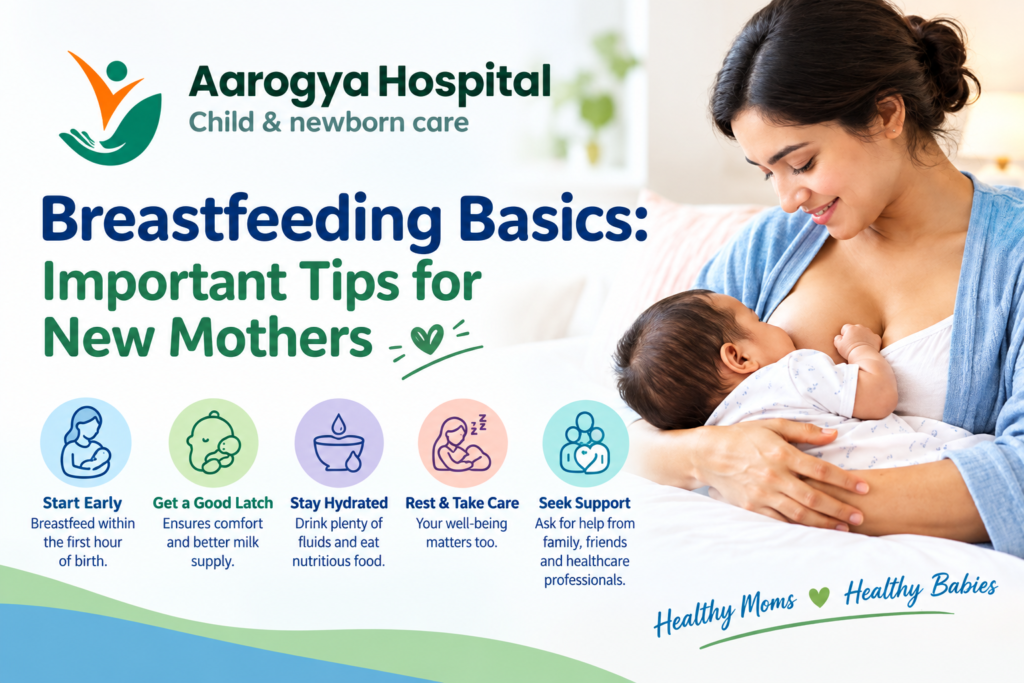
Breastfeeding Basics: Important Tips for New Mothers
Becoming a mother is a beautiful experience. However, the first few days with a newborn can bring many questions. One common question is, “How should I breastfeed my baby?” Breastfeeding is an important part of newborn care. Breast milk gives your baby important nutrients. It also supports healthy growth and development. However, breastfeeding can take time to learn. With simple guidance, mothers and babies can slowly find a comfortable routine.
In this breastfeeding guide for new mothers, we will cover simple breastfeeding basics. We will also share useful breastfeeding tips for new mothers. In addition, you will learn about feeding positions, feeding frequency, and signs that your baby is getting enough breast milk.
What Is Breastfeeding?
Breastfeeding means feeding your baby with breast milk. Breast milk contains nutrients that support your baby’s early growth. In addition, breastfeeding can provide comfort to your baby. It can also help create a close bond between mother and baby.
Every mother and baby is different. Therefore, do not worry if breastfeeding feels difficult at first. With practice and support, feeding can become easier. Learning the right breastfeeding technique can also make feeding more comfortable.
Breastfeeding Benefits for Babies
Breast milk can provide many benefits during the early months of life. Some important breastfeeding benefits for babies include:
- Provides important nutrients for growth
- Supports the baby’s developing immune system
- Is easy for most babies to digest
- Provides fluids and nourishment
- Supports healthy growth and development
- Helps create a close bond between mother and baby
Also, breast milk changes as your baby grows. This helps provide nutrients for different stages of early development.
Benefits of Breastfeeding for Mothers
Breastfeeding is helpful for babies. However, it can also provide benefits for mothers.
Some benefits of breastfeeding for mothers include:
- Helps create a strong bond with your baby
- Makes feeding simple and convenient
- Reduces the need to prepare bottles for every feed
- Helps the uterus return toward its normal size after birth
- Supports recovery after delivery
Most importantly, breastfeeding can give mothers and babies time to relax and bond.
Breastfeeding Tips for New Mothers
The first few days can feel difficult. This is especially true if you are breastfeeding for the first time. However, these simple breastfeeding tips for new mothers can help.
1. Start Breastfeeding Early
If possible, start breastfeeding soon after birth. Also, early skin-to-skin contact can help you and your baby feel comfortable.
2. Watch for Hunger Signs
Do not wait until your baby cries loudly. Instead, watch for early hunger signs.
For example, your baby may:
- Move their head
- Open their mouth
- Put their hands near their mouth
- Make sucking movements
Therefore, try to start feeding when you notice these signs.
3. Make Yourself Comfortable
First, choose a comfortable chair or bed. Then, support your back and arms. A feeding pillow may also help. In addition, make sure your baby is close to your body during feeding.
4. Check Your Baby’s Latch
A good latch is important for comfortable feeding. Your baby’s mouth should take in a good part of the areola. It should not take only the nipple.
If breastfeeding is painful, ask for help. Similarly, talk to a doctor or lactation professional if your baby has trouble staying attached.
5. Keep Your Baby Close
Hold your baby close during feeding. Also, keep the baby’s head, neck, and body in a comfortable straight line. This position can help your baby feed more easily.
6. Do Not Compare Your Baby With Others
Every baby has a different feeding pattern. Some babies feed quickly. Others take more time. Also, feeding patterns can change as your baby grows. Therefore, focus on your baby’s needs instead of comparing your baby with others.
How to Breastfeed a Newborn
If you are wondering how to breastfeed a newborn, start by sitting in a comfortable position. First, bring your baby close to your body. Keep the baby’s head and body in a straight line. Then, bring your baby toward your breast. Avoid leaning your body forward.
Next, touch your nipple gently to your baby’s upper lip. When your baby opens their mouth wide, bring the baby closer to the breast. During feeding, watch for regular sucking and swallowing. If the latch hurts, gently break the suction. Then, try again. Remember, breastfeeding is a skill. Both the mother and baby need time to learn it.
Correct Breastfeeding Position
Finding the correct breastfeeding position can make feeding easier. It can also help you and your baby stay comfortable.
Some common breastfeeding positions include:
Cradle Position
In this position, your baby’s head rests in the bend of your arm. The baby stays on the same side as the breast being used.
Cross-Cradle Position
Here, the baby’s head is supported by the opposite arm. Therefore, this position can give you more control over your baby’s head. It may also be helpful when you are learning how to latch your baby.
Football Hold
In this position, the baby stays beside the mother. The baby’s body is supported along the mother’s arm. Some mothers may find this position comfortable after delivery.
Side-Lying Position
In this position, the mother and baby lie on their sides while feeding. However, always follow safe sleep guidance. After feeding, place your baby on their back in their own safe sleep space. The best position is one that keeps you comfortable. It should also help your baby latch well.
Proper Breastfeeding Technique
A proper breastfeeding technique starts with a comfortable position. It also includes a good latch.
Here are some simple tips:
- First, keep your baby close to your body.
- Next, keep the baby’s head and body aligned.
- Make sure your baby’s mouth opens wide before latching.
- Keep your baby’s chin close to the breast.
- Watch for regular sucking and swallowing.
- Breastfeeding should not cause ongoing or severe pain.
If you have repeated pain, cracked nipples, bleeding, breast swelling, or fever, speak with a healthcare professional. Also, ask for help if you have concerns about your baby’s feeding.
Breastfeeding Frequency for Newborns
Newborn babies usually need frequent feeds. This is because their stomachs are small. Also, breast milk is easy to digest. Many newborns breastfeed around 8 to 12 times in 24 hours. However, feeding patterns can vary.
So, how often should a newborn breastfeed?
Usually, feed your baby when they show hunger signs. Instead of following a strict clock, watch your baby’s needs.
Your pediatrician can also guide you. The advice may depend on your baby’s age, weight, health, and feeding pattern.
How Often Should a Newborn Breastfeed?
There is no single feeding schedule for every newborn. Therefore, do not worry if your baby’s routine is different from another baby.
Some babies may want to feed more often. Also, some babies may feed several times within a short period.
Instead, look at your baby’s overall health. Check wet diapers, stool patterns, feeding behavior, and growth.
In addition, regular pediatric check-ups can help. Your pediatrician can monitor your baby’s weight and growth. You can also ask questions about feeding during these visits.
Signs Baby Is Getting Enough Breast Milk
Many new mothers worry about whether their baby is getting enough milk. Fortunately, there are some signs you can watch for.
Common signs baby is getting enough breast milk include:
- Your baby feeds regularly.
- You can hear or see swallowing during feeds.
- Your baby appears satisfied after many feeds.
- Your baby has regular wet diapers.
- Your baby’s weight increases as expected.
- Your baby is active and alert when awake.
In the first few days, diaper patterns can change. This can happen as your milk supply increases. Therefore, speak with your pediatrician if you are unsure about your baby’s feeding or diaper pattern.
If your baby is very sleepy during feeds, does not feed well, or has fewer wet diapers than expected, contact your pediatrician. Also, seek advice if your baby is not gaining weight.
When Should You Talk to a Pediatrician?
Breastfeeding problems can happen. However, getting help early can make things easier.
Talk to a pediatrician if:
- Your baby is not latching properly.
- Your baby refuses several feeds.
- You are worried about your baby’s weight.
- Your baby is very sleepy during feeds.
- Your baby is difficult to wake for feeds.
- Your baby has fewer wet diapers than expected.
- Breastfeeding causes ongoing pain.
- You have concerns about your milk supply.
- Your baby is not feeding well.
In addition, regular check-ups are useful even when your baby seems healthy. These visits help your doctor monitor growth, feeding, development, and overall health.
Why Regular Pediatric Check-Ups Matter
Newborns grow and change quickly during the first few months. Therefore, regular pediatric check-ups are important.
During a check-up, your pediatrician may check your baby’s:
- Weight and growth
- Feeding pattern
- General health
- Development
- Vaccination needs
- Sleep and daily routine
Also, parents can ask questions during these visits. For example, you can ask about breastfeeding, nutrition, sleep, crying, and newborn care.
Breastfeeding: Give Yourself Time
Breastfeeding may feel natural. However, learning it can still take time. So, do not worry if you and your baby need practice. Start slowly and focus on comfort.
Also, watch your baby’s hunger signs. Focus on a good latch and a comfortable position. If you face problems, ask for professional help. You do not have to manage breastfeeding problems alone. Every baby is different. Similarly, every mother has a different breastfeeding journey.
Conclusion
Breastfeeding is an important part of newborn care. It can provide benefits for both babies and mothers. Learning the breastfeeding basics can also help new mothers feel more confident. From choosing the correct breastfeeding position to understanding breastfeeding frequency for newborns, simple steps can help.
Also, knowing the signs baby is getting enough breast milk can give parents more confidence. If you have concerns about breastfeeding, your baby’s growth, or newborn health, speak with a pediatrician. In addition, regular pediatric check-ups can help you track your baby’s growth and development. For child and newborn care in Chandigarh, Aarogya Hospital provides pediatric and neonatology services. The hospital is located near PGI, U.T., Khudda Lahora, Chandigarh.
Aarogya Hospital – Child & Newborn Care
Location: Near PGI, U.T., Khudda Lahora, Chandigarh 160103
Phone: +91 94172 05566 | +91 89881 13819
Website: Aarogya Hospital Chandigarh
About Aarogya Hospital
Aarogya Hospital is a pediatric hospital in Chandigarh. It provides pediatric care and newborn care. In addition, the hospital offers neonatology, vaccination, growth monitoring, and other child health services. Parents can contact Aarogya Hospital for appointments and child health concerns.
Frequently Asked Questions
1. How often should a newborn breastfeed?
Many newborns breastfeed around 8 to 12 times in 24 hours. However, every baby is different. Therefore, feed your baby when they show hunger signs. If you have concerns, speak with your pediatrician.
2. What are the signs baby is getting enough breast milk?
Regular feeding is one sign. Also, swallowing during feeds, regular wet diapers, expected weight gain, and an active baby can be helpful signs.
3. What is the correct breastfeeding position?
The correct breastfeeding position should keep your baby close and comfortable. It should also allow a good latch. Common positions include cradle, cross-cradle, football hold, and side-lying.
4. Is breastfeeding painful?
Some tenderness can happen while learning. However, ongoing or severe pain should not be ignored. A poor latch can sometimes cause pain. Therefore, ask a healthcare professional for help if the pain continues.
5. When should I take my newborn for regular pediatric check-ups?
Your pediatrician can advise you about the right timing. The schedule may depend on your baby’s age, health, growth, and vaccination needs. Regular check-ups help monitor your baby’s health and development.
6. Where can I get pediatric care in Chandigarh?
Aarogya Hospital provides pediatric and newborn care in Chandigarh. The hospital also provides neonatology, vaccination, growth monitoring, and pediatric care.