
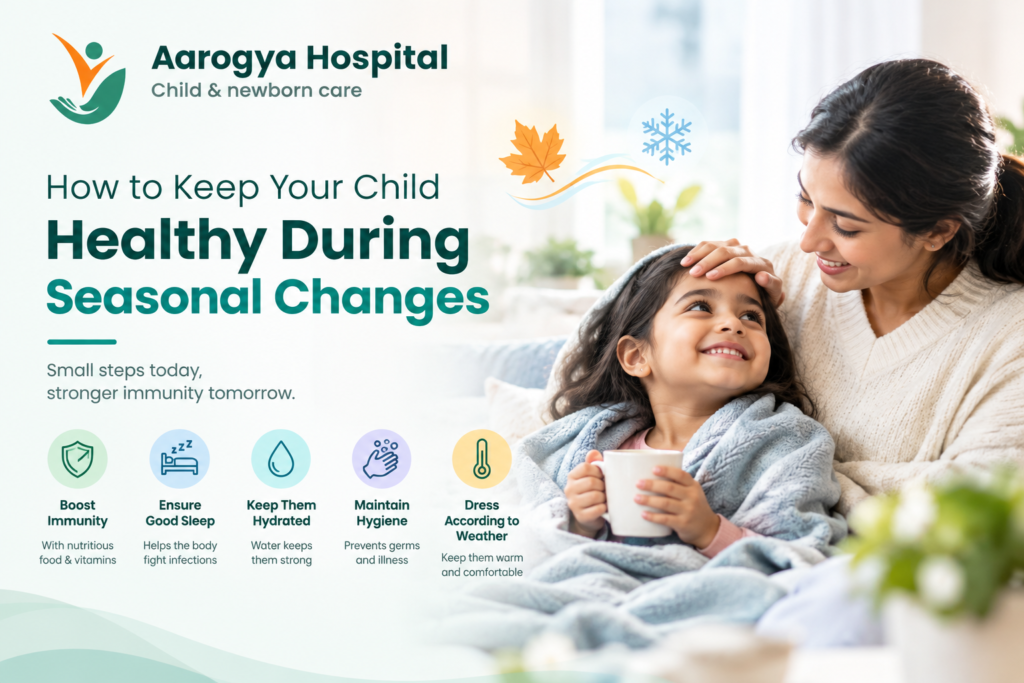
How to Keep Your Child Healthy During Seasonal Changes
“During this time, seasonal changes can affect your child’s health.” When the weather changes, children may become more likely to have a cold, cough, fever, sore throat, or allergies. This is common, especially when children go to school or spend time with other children.
The good news is that simple daily habits can help keep your child healthy. A healthy diet, good sleep, clean hands, enough water, and timely medical care can make a big difference.
Why Do Children Get Sick During Seasonal Changes?
Children can get sick more often when the weather changes. During this time, they may come in contact with viruses, allergens, and other germs.
For example, a child may have:
- Runny or blocked nose
- Cough
- Sneezing
- Sore throat
- Mild fever
- Body pain
- Tiredness
- Stomach problems
- Skin allergies
Colds and other infections are common in childhood. Children who spend time in school or daycare can also come in contact with germs more easily. So, parents should take a few simple steps to protect their child’s health.
1. Give Your Child Healthy Food
Good food helps your child grow and stay active. During seasonal changes, try to give your child fresh and healthy meals.
Add foods such as:
- Fresh fruits
- Green vegetables
- Dal and pulses
- Milk and dairy products
- Eggs, if suitable for your child
- Nuts and seeds, if age-appropriate
- Homemade meals
Try to limit packaged snacks, sugary drinks, and very oily foods. Also, make sure your child eats meals at regular times. A healthy eating routine can support overall health and growth.
2. Make Sure Your Child Drinks Enough Water
Children may forget to drink water when they are busy playing or studying. Therefore, parents should remind them to drink water during the day.
The amount of water a child needs can vary based on age, activity, food, and weather. Along with water, children can get fluids from healthy foods and drinks suitable for their age.
3. Encourage Good Hand Washing
Hand washing is one of the easiest ways to reduce the spread of germs.
Teach your child to wash their hands:
- Before eating
- Using the toilet
- Coming home from school
- Playing outside
- Coughing or sneezing
- After touching dirty surfaces
“Also, teach your child to wash their hands properly with soap and water.” This simple habit can help reduce the spread of infections.
4. Make Sleep a Priority
Children need good sleep for healthy growth and daily activity. So, create a simple bedtime routine. Try to keep the sleeping and waking time regular. Also, keep screens away from bedtime when possible. A calm room and a fixed routine can help your child sleep better.
If your child is often tired, has trouble sleeping, or shows other health concerns, talk to a pediatrician.
5. Dress Your Child According to the Weather
During seasonal changes, the temperature can change quickly. Therefore, dress your child according to the weather. “During cold weather, make sure your child wears warm and comfortable clothes. In hot weather, choose light and comfortable clothes.
Do not cover your child with too many layers when the weather is warm. At the same time, keep them warm when the temperature drops. “Therefore, the main goal is to keep your child comfortable.”
6. Keep Your Home Clean
“Also, a clean home can help reduce contact with germs.”
Parents should regularly clean commonly touched surfaces such as:
- Door handles
- Tables
- Toys
- Study areas
- Bathroom surfaces
Also, wash bed sheets and pillow covers regularly. If someone at home has a cold or cough, encourage good hand washing and avoid sharing personal items when possible. Good hygiene can help reduce the spread of infections.
7. Do Not Ignore Vaccination
Vaccination is an important part of child healthcare. Vaccines help protect children from many serious infections. Parents should follow the vaccination schedule recommended by their child’s doctor. If you are not sure whether your child’s vaccinations are up to date, speak with a pediatrician.
8. Encourage Outdoor Play
Children need regular physical activity. Outdoor play can help children stay active and support healthy growth. However, parents should check the weather before sending children outside. On days with very high heat, poor air quality, or extreme cold, indoor play may be a better option. Make sure your child takes enough water and gets proper rest after physical activity.
9. Watch for Cold, Cough, and Allergy Symptoms
Seasonal changes can bring symptoms such as sneezing, a runny nose, cough, and blocked nose.
Sometimes, it can be difficult to know if your child has a common cold or an allergy. Colds are caused by viruses, while seasonal allergies can cause symptoms such as sneezing, a runny nose, and itchy or watery eyes. If symptoms continue, become worse, or worry you, speak with your child’s doctor.
10. Do Not Give Medicines Without Medical Advice
Parents should avoid giving medicines to children without proper medical advice. For example, antibiotics do not treat viral infections such as most common colds. Using antibiotics when they are not needed can also cause side effects. Therefore, if your child is unwell, ask a pediatrician about the right care and treatment.
When Should You Take Your Child to a Doctor?
Most common childhood illnesses get better with proper care. However, parents should not ignore symptoms that are severe, unusual, or getting worse.
Talk to a doctor if your child has:
- Trouble breathing
- Very high or long-lasting fever
- Severe weakness
- Repeated vomiting
- Signs of dehydration
- Severe pain
- Unusual sleepiness
- Symptoms that are getting worse
- Any symptoms that cause you serious concern
For babies and very young children, parents should be extra careful about changes in feeding, breathing, activity, and behaviour.
Special Care for Newborns During Seasonal Changes
Newborn babies need special care because they are very young and need close attention.
Parents should:
- Keep the baby comfortable according to the weather.
- Follow the baby’s feeding routine.
- Keep hands clean before touching the baby.
- Keep sick people away from the baby when possible.
- Follow the baby’s vaccination and doctor visits.
- Watch for changes in feeding, breathing, or activity.
If you are worried about your newborn’s health, speak with a qualified doctor.
Aarogya Hospital provides pediatric and newborn care in Chandigarh, including Neonatology services for newborn babies. The hospital website also lists vaccination, growth and development monitoring, nutritional counselling, and 24×7 emergency pediatric care among its services.
Why Choose Aarogya Hospital for Child Care in Chandigarh?
“Moreover, Aarogya Hospital focuses on child and newborn healthcare.” Its services include Pediatrics and Neonatology, along with vaccination, newborn care, nutritional counselling, and emergency care. For parents looking for a Neonatology hospital in Chandigarh, getting timely medical advice can be important when a newborn has health concerns.
The hospital also provides 24×7 emergency services, according to its website.
Simple Seasonal Health Checklist for Parents
Here is a simple checklist that parents can follow:
- Give your child healthy food.
- Encourage regular water intake.
- Make sure your child gets enough sleep.
- Teach proper hand washing.
- Keep toys and common surfaces clean.
- Follow the vaccination schedule.
- Dress your child according to the weather.
- Encourage safe physical activity.
- Watch for changes in your child’s health.
- Speak to a pediatrician when needed.
These small habits can help your child stay healthy and active
Quick Answer: How Can I Keep My Child Healthy During Seasonal Changes?
To keep your child healthy during seasonal changes, give them healthy food, enough water, proper sleep, regular physical activity, and good hygiene. Keep vaccinations up to date and dress your child according to the weather. Also, watch for signs of illness and contact a pediatrician if symptoms are severe or getting worse.
Conclusion
Seasonal changes are a normal part of the year, and children may sometimes become sick during these periods. However, simple habits can help support your child’s health.
Good food, clean hands, enough sleep, regular activity, vaccination, and timely medical advice are important for healthy growth.
If your child or newborn needs medical attention, Aarogya Hospital offers pediatric and newborn care in Chandigarh, including Neonatology services.