
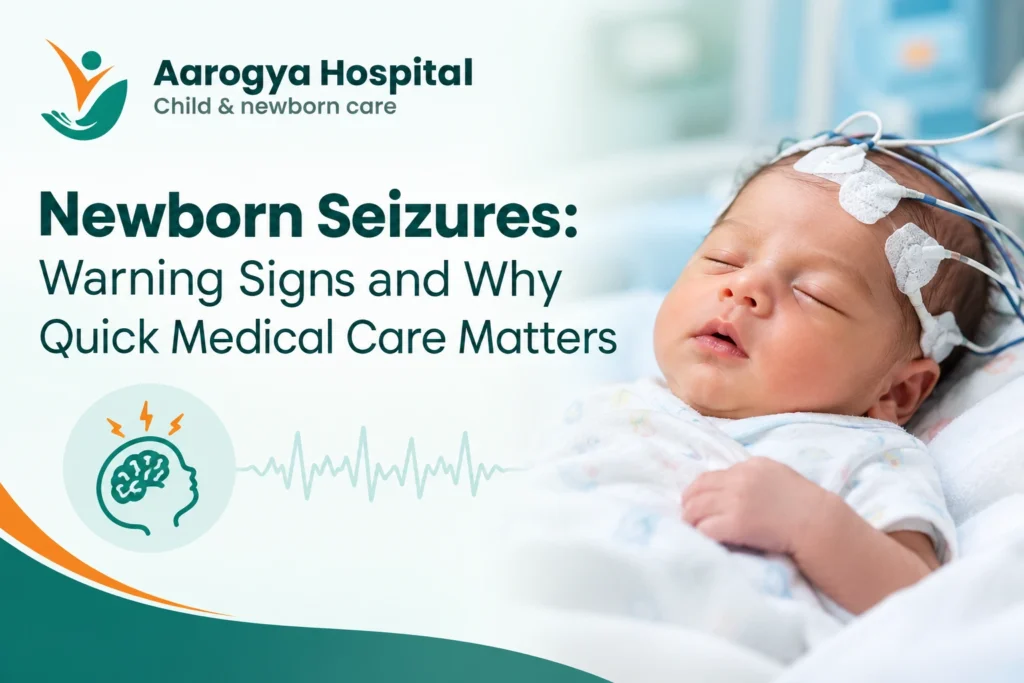
Newborn Seizures: Warning Signs and Why Quick Medical Care Matters
When a newborn baby acts differently, parents may feel worried. Some baby movements are normal. However, unusual movements may sometimes mean that the baby has a health problem.
Newborn seizures need quick medical care. They may not always cause strong shaking. Instead, a baby may have repeated jerking movements, unusual eye movements, or sudden changes in breathing.
Aarogya Hospital in Chandigarh, near PGI, provides newborn and NICU care. If you live in Chandigarh, near Panchkula, or near Mohali, knowing the warning signs of seizures can help you get medical help for your baby quickly.
What Are Newborn Seizures?
Newborn seizures happen when there is unusual electrical activity in a baby’s brain. They can occur during the first 28 days after birth.
A newborn baby’s brain is still growing. So, seizures may look different from those in older children or adults. Some signs may be very small and difficult to notice.
Newborn seizures may happen for several reasons, such as:
- Low blood sugar
- Lack of oxygen around birth
- Serious infections
- Bleeding or injury in the brain
- Changes in blood salts, such as sodium or calcium
- Certain health conditions present from birth
However, unusual movements do not always mean a baby has a seizure. A doctor must examine the baby to find out what is causing these movements.
What Are the Warning Signs of Newborn Seizures?
Newborn seizures do not always cause the whole body to shake. Instead, parents should watch for unusual movements that happen repeatedly.
1. Repeated Jerking of the Arms or Legs
Your baby may have repeated jerking movements in one arm, one leg, or several parts of the body.
Watch if the same unusual movements happen again and again. If you think your baby is having a seizure, seek medical help immediately.
2. Unusual Eye Movements
During a seizure, your baby’s eyes may roll upwards, turn to one side, or stare strangely. If these eye movements happen repeatedly, seek urgent medical help.
These signs may be hard to notice. Look for eye movements that seem different from your baby’s usual behaviour.
3. Repeated Mouth Movements
Some newborn seizures may also cause repeated lip-smacking, chewing movements, or unusual tongue movements.
These signs can sometimes be difficult to recognise. Therefore, if you notice them repeatedly, seek medical advice urgently.
4. Sudden Stiffness or Unusual Body Movements
Your baby may suddenly become stiff or hold the body in an unusual position. Some babies may also make repeated movements that are not normal for them.
Do not assume these signs are harmless, especially when they happen more than once.
5. Changes in Breathing or Skin Colour
A baby may have unusual breathing, pauses in breathing, or changes in skin colour during a seizure. The lips or skin may look blue or grey.
This is an emergency. Get emergency medical help immediately if your baby has trouble breathing, turns blue or grey, or does not respond normally.
Why Do Newborn Seizures Need Quick Medical Care?
Newborn seizures can indicate a serious health problem. Therefore, seeking prompt medical care helps doctors identify the cause and begin the appropriate treatment as early as possible.
Some possible causes include:
- Low blood sugar: The baby’s blood sugar may fall too low.
- Lack of oxygen: The brain may not get enough oxygen around birth.
- Infections: Serious infections, such as meningitis, can cause seizures.
- Brain injury or bleeding: Problems affecting the brain may trigger seizures.
- Changes in blood salts: Low or high levels of certain minerals may cause seizures.
Doctors cannot find the exact cause by looking at the movements alone. Your baby needs medical assessment, even if the movements stop on their own.
What Should Parents Do If They Suspect a Seizure?
If you think your newborn is having a seizure, act quickly.
- Get emergency medical help. Do not wait to see if the movements stop.
- Keep your baby safe. Place your baby on a safe, flat surface away from nearby objects.
- Do not hold the movements back. Never try to stop the jerking by holding your baby’s arms or legs.
- Do not put anything in the mouth. Never give milk, water, food, or medicine by mouth during a suspected seizure.
- Watch the signs. If it is safe, note when the episode starts, how long it lasts, and which body parts move.
- Check breathing and skin colour. If your baby is not breathing normally or becomes unresponsive, call emergency services and follow their instructions.
If another adult is present, they may record a short video of the movements if it is safe to do so. However, recording must never delay emergency care.
How Do Doctors Check for Newborn Seizures?
Doctors check your baby’s symptoms, birth history, and overall health. They may also suggest tests to find the cause.
1. Physical Examination
Doctors check your baby’s breathing, heartbeat, movements, and response to touch or sound.
2. Blood Tests
Additionally, blood tests can help doctors check your baby’s blood sugar, mineral levels, signs of infection, and other possible causes.
3. EEG Monitoring
An electroencephalogram (EEG) records the brain’s electrical activity. It helps doctors check whether unusual movements are seizures.
Doctors may use continuous EEG monitoring when needed because some newborn seizures are difficult to see.
4. Other Tests
Depending on your baby’s condition, doctors may recommend brain scans or tests for infections. Therefore, the tests will vary based on your baby’s symptoms and the suspected cause.
How Are Newborn Seizures Treated?
Treatment depends on what is causing the seizures and how unwell the baby is.
Doctors may:
- Treat low blood sugar.
- Correct problems with blood salts.
- Give treatment for infections.
- Prescribe anti-seizure medicines when needed.
- Provide breathing support and close monitoring.
Some babies may need care in a Neonatal Intensive Care Unit (NICU). In such cases, the NICU helps the medical team monitor the baby closely and provide the necessary medical support.
Early treatment can help doctors manage the cause and reduce the risk of further problems. However, recovery depends on the cause, the baby’s condition, and the response to treatment.
Newborn Care at Aarogya Hospital, Chandigarh
When a newborn shows possible signs of a seizure, quick medical attention is important. Parents should not delay treatment to travel to another city.
Aarogya Hospital in Chandigarh, near PGI, provides newborn and paediatric care, including NICU services. Additionally, families looking for newborn care in Chandigarh, near Panchkula, or near Mohali can contact the hospital to learn more about its available services.
If your baby has repeated jerking, unusual eye movements, sudden stiffness, breathing problems, or reduced responsiveness, seek urgent medical care immediately. In particular, breathing difficulties or a lack of response require emergency attention.
Do not wait for the symptoms to become worse.
Act Quickly When Your Newborn Needs Medical Help
Newborn seizures can be hard to recognise. However, knowing the warning signs can help parents act quickly.
If you notice unusual or repeated movements in your newborn, seek medical advice urgently. Moreover, if you suspect your baby is having a seizure, seek emergency medical care immediately.
For newborn care and NICU-related enquiries, contact Aarogya Hospital in Chandigarh, near PGI. Please confirm service availability directly with the hospital.
Follow Aarogya Hospital on Instagram and Facebook for more newborn health information.
Frequently Asked Questions
Are newborn seizures easy to recognise?
No. Some seizures cause jerking movements, while others cause unusual eye or mouth movements. Doctors may need to use EEG monitoring to confirm whether the movements are seizures.
Can newborn seizures happen during sleep?
Yes. Seizures can happen when a baby appears to be sleeping. However, some normal sleep movements can also look unusual. Repeated or concerning movements need medical assessment.
Are all newborn jerking movements seizures?
No. Babies can have normal startle movements and small jerks during sleep. However, parents should not try to identify the cause at home if the movements are unusual or repeated.
Can newborn seizures be treated?
Yes, many causes of newborn seizures can be treated. For example, doctors may give medicines, treat infections, or correct low blood sugar and other medical problems. However, the right treatment depends on the underlying cause.
When should parents seek emergency care?
If you suspect your newborn is having a seizure, seek emergency medical care immediately. Moreover, if your baby has breathing problems, develops blue or grey skin, or does not respond, call emergency services without delay.
Where can parents find newborn care near Chandigarh, Panchkula, and Mohali?
Aarogya Hospital is in Chandigarh, near PGI, and provides newborn and NICU-related care. Contact the hospital to confirm the services available. If your baby may be having a seizure, go to the nearest suitable emergency department without delay.