A Simple Guide for Parents to Know Emergency Signs in Children
Children can become sick or get hurt at any time. Sometimes, small health problems get better with simple care at home. However, some health problems need quick medical help.
As a parent, you should know when your child needs emergency care. Getting medical help on time can prevent serious problems and keep your child safe.
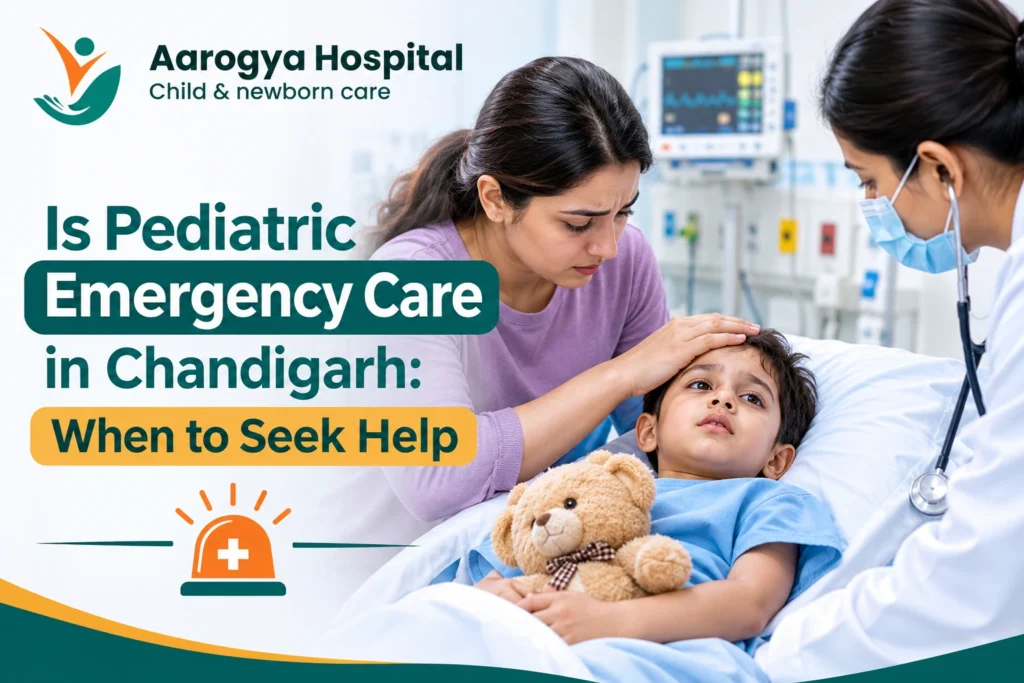
If you are looking for pediatric emergency care in Chandigarh, knowing the warning signs can help you take the right steps.
Aarogya Hospital in Chandigarh provides medical care for children who need attention. Families from Chandigarh, Panchkula and Mohali can contact the hospital to learn about its available medical services.
What Is Pediatric Emergency Care?
Pediatric emergency care means quick medical help for children who suddenly become sick or get badly hurt.
It covers babies, toddlers and older children.
Children may not always be able to tell you what is wrong. Therefore, parents should watch for changes in their child’s behaviour, breathing, eating and daily activities.
Some common emergencies in children include:
- High fever with serious symptoms
- Trouble breathing
- Severe water loss from the body (dehydration)
- Seizures or fits
- Serious falls or injuries
- Severe allergic reactions
- Repeated vomiting
- Sudden loss of consciousness
- Severe stomach pain
These problems may need quick medical help.
10 Warning Signs That Your Child Needs Emergency Medical Care
Knowing these signs can help parents act quickly. Here are 10 warning signs you should never ignore.
1. Trouble Breathing
Breathing problems can become serious very quickly in children.
Look for these signs:
- Fast or difficult breathing
- Chest moving inward while breathing
- Noisy breathing or wheezing
- Blue or grey lips and skin
- Trouble crying, talking or drinking milk because of breathing problems
If your child has trouble breathing, get emergency medical help immediately.
2. High Fever with Other Serious Signs
Fever is common in children. It usually happens when the body fights an infection. However, fever with other serious signs may need quick medical help.
Look for these signs:
- Too much sleep or trouble waking up
- Seizures or fits
- Trouble breathing
- A rash that does not fade when pressed
- Severe headache or a stiff neck
- Signs of water loss from the body
Important: A baby younger than 3 months with a temperature of 38°C or higher needs urgent medical attention.
3. Seizures or Fits
A seizure can cause sudden shaking or stiffness in the body. Your child may also stop responding for a short time.
If your child has a seizure:
- Place your child on their side when possible.
- Move hard or sharp objects away.
- Do not try to stop the shaking.
- Never put anything inside your child’s mouth.
- Check how long the seizure lasts.
Call emergency services if this is your child’s first seizure or if it lasts more than 5 minutes.
Also, get emergency help if your child has trouble breathing or does not become alert again.
4. Severe Dehydration (Water Loss)
Children can lose too much water because of vomiting, loose motions or fever.
Common signs include:
- Very dry mouth and tongue
- Fewer wet nappies or less urine
- Sunken eyes
- No tears while crying
- Unusual weakness or sleepiness
- Trouble drinking fluids
Severe water loss can be dangerous. Therefore, get urgent medical help if you notice these signs.
5. Repeated Vomiting or Severe Loose Motions
Children may vomit because of an infection or stomach problem. However, repeated vomiting and loose motions can cause the body to lose too much water.
Contact a doctor if your child:
- Cannot keep fluids down
- Has blood in vomit or stool
- Has severe stomach pain
- Shows signs of water loss
- Becomes very weak or sleepy
Do not ignore these signs, especially in babies and young children.
6. Serious Falls or Head Injuries
Children may fall while playing or running. Most small falls are not serious. However, some head injuries need quick medical help.
Look for these signs:
- Loss of consciousness
- Repeated vomiting after a head injury
- Severe or increasing headache
- Strange behaviour or confusion
- Seizures or fits
- Trouble walking or keeping balance
- Bleeding that does not stop
If your child has a serious head injury, get emergency medical help immediately.
7. Severe Allergic Reactions
Some children may have an allergic reaction after eating certain foods, taking medicines or getting insect bites.
Warning signs include:
- Swelling of the lips, tongue or throat
- Trouble breathing
- Sudden dizziness or collapse
- Skin rashes with other symptoms
- Repeated vomiting with signs of an allergy
A severe allergic reaction is called anaphylaxis. It is a medical emergency.
If your child has a prescribed adrenaline auto-injector, use it immediately. Then call emergency services.
8. Sudden Unconsciousness or Extreme Sleepiness
If your child suddenly becomes unconscious, is hard to wake up or does not respond normally, get emergency help immediately.
This may happen because of an infection, injury, low blood sugar or another serious health problem.
Do not wait for your child to get better on their own.
9. Severe Stomach Pain
Mild stomach pain can happen because of gas, constipation or digestion problems.
However, severe or long-lasting stomach pain needs medical attention.
Look for these signs:
- Severe pain that does not get better
- A swollen or hard stomach
- Repeated vomiting
- Blood in the stool
- Stomach pain with fever
- Trouble walking because of pain
A doctor can check your child and find the reason for the pain.
10. Serious Cuts, Burns or Bleeding
Children may get cuts, burns or other injuries while playing or doing daily activities.
Get emergency medical help if your child has:
- Heavy bleeding that does not stop
- Deep cuts
- Serious burns
- A possible broken bone
- Severe pain or swelling
- An injury to the head, neck or chest
If there is heavy bleeding, press a clean cloth firmly against the wound while arranging emergency help.
When Should Parents Take Their Child to the Emergency Department?
Not every illness needs an emergency hospital visit. However, parents should not wait when serious signs appear.
Here is a simple guide to help you decide what to do.
Child’s Symptoms | What Parents Should Do |
Mild cough or cold | Watch the symptoms and contact a doctor if needed. |
Fever but child is active | Check the temperature and offer fluids. |
Trouble breathing | Get emergency medical help immediately. |
First-time seizure | Get emergency medical help immediately. |
Severe water loss | Get urgent medical help. |
Unconsciousness | Call emergency services immediately. |
Serious head injury | Get urgent medical help. |
Severe allergic reaction | Use prescribed adrenaline and call emergency services. |
If you are not sure about your child’s health, speak to a healthcare professional.
For life-threatening emergencies, call 112 in India or go to the nearest emergency department. Do not wait for a routine appointment.
What Should Parents Do Before Reaching the Hospital?
The right steps can help keep your child safe while you arrange medical care.
Follow these simple tips:
- Stay calm and watch your child’s symptoms.
- Check if your child is breathing normally.
- Note when the symptoms started.
- Carry old medical reports and prescriptions.
- Tell the medical team about any allergies.
- Share details of medicines your child takes.
- Do not give medicines without proper medical advice.
- Never give food or water to an unconscious child.
If your child is unconscious or has trouble breathing, call emergency services immediately.
Why Is Early Pediatric Emergency Care Important?
A child’s health can sometimes get worse quickly. Therefore, getting medical help early is very important when serious signs appear.
Early pediatric emergency care helps doctors:
- Find the reason for the problem.
- Check your child’s health.
- Give the right treatment.
- Check breathing and heart rate.
- Find serious health problems early.
- Tell parents what to do next.
Getting medical help on time can help control health problems and lower the risk of serious complications.
Pediatric Emergency Care at Aarogya Hospital, Chandigarh
When your child needs medical help, it is important to contact a hospital with suitable medical facilities.
Aarogya Hospital is located in Khudda Lahora, near PGI Chandigarh. The hospital provides medical care for children and families who need attention.
Its medical facilities help doctors check and treat different health problems in children.
Families looking for a children’s hospital in Chandigarh, near Panchkula and Mohali, can contact Aarogya Hospital to ask about its pediatric and emergency services.
The hospital also provides care for newborn babies. This includes premature babies and newborns who need special medical attention.
Conclusion
Children can become sick or get hurt at any time. Therefore, parents should know the warning signs and get medical help without delay.
Trouble breathing, seizures, unconsciousness, severe water loss and serious injuries need immediate medical attention.
If you are looking for pediatric emergency care in Chandigarh, you can contact Aarogya Hospital, near Panchkula and Mohali, to ask about its available medical services.
Your child’s health is important. Knowing the warning signs and getting help on time can help keep your child safe.
Follow us on Instagram and Facebook for more health tips and parenting advice.