
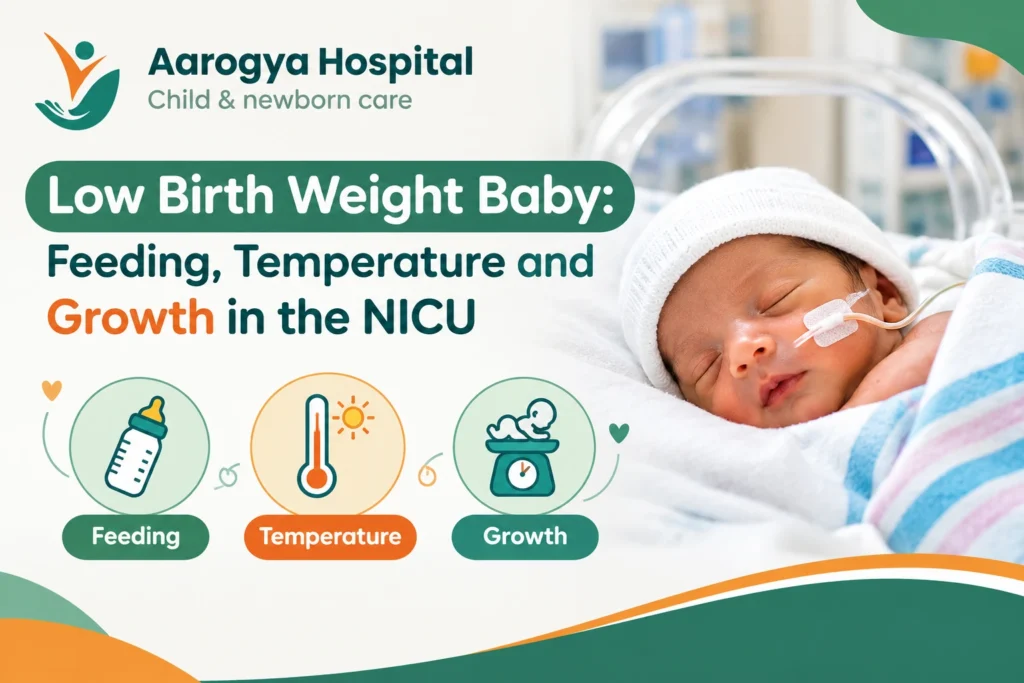
Low Birth Weight Baby: Feeding, Temperature and Growth in the NICU
A low birth weight baby needs extra care to grow and stay healthy. These babies may need help with feeding, keeping warm, and gaining weight. Therefore, some babies need care in a Neonatal Intensive Care Unit (NICU).
At Aarogya Hospital in Chandigarh, doctors check each baby’s health, feeding, body temperature, and growth. The care plan depends on the baby’s weight at birth, weeks of pregnancy, and medical needs.
What Is a Low Birth Weight Baby?
A low birth weight baby is a newborn who weighs less than 2,500 grams (2.5 kg) at birth. This applies even if the baby is born at full term.
There are several reasons why a baby may have a low birth weight. For example, the baby may be born early or may not grow well inside the womb.
Common causes include:
- Birth before 37 weeks of pregnancy
- Slow growth inside the womb
- Problems with the placenta
- Certain health problems in the mother
- Pregnancy with twins or triplets
However, not every low birth weight baby needs NICU care. Doctors check the baby’s breathing, feeding, temperature, blood sugar, and overall health before deciding on the right care.
Why Does a Low Birth Weight Baby Need NICU Care?
Low birth weight babies may need more time to adjust to life outside the womb. They may find it difficult to stay warm, feed properly, or maintain normal blood sugar levels.
Therefore, doctors may recommend NICU care if the baby needs extra monitoring or treatment.
NICU care may include:
- Checking breathing and heart rate
- Keeping the baby warm
- Helping with breast milk feeding
- Checking blood sugar levels
- Monitoring weight gain and growth
- Finding and treating health problems
Some babies need only a short period of monitoring. Others may need more specialised care, depending on their health.
1. Feeding a Low Birth Weight Baby in the NICU
Feeding is an important part of caring for a low birth weight baby. Proper nutrition helps the baby grow, develop, and recover.
However, some babies may be too small or weak to breastfeed properly. This is more common in babies born early.
Breast Milk for Low Birth Weight Babies
Mother’s breast milk is usually the preferred food for newborns, including premature and low birth weight babies.
It provides important nutrients that help the baby grow. It also contains protective factors that help the baby fight infections.
If the baby cannot breastfeed directly, the mother can express her breast milk. The NICU team will decide how to feed the baby safely.
Feeding Methods in the NICU
The feeding method depends on the baby’s age, health, and ability to feed.
Common feeding methods include:
- Direct breastfeeding: The baby feeds directly from the mother’s breast when they can suck, swallow, and breathe safely.
- Expressed breast milk: The baby receives the mother’s milk without feeding directly from the breast.
- Tube feeding: A small tube carries milk into the baby’s stomach when they cannot feed safely by mouth.
- Nutrition through a vein: In some cases, nutrients are give through a vein when milk feeding is not enough or is not yet possible.
Some premature babies also need extra nutrients to support healthy growth. Doctors may add special nutrients to breast milk when needed.
How Often Should a Low Birth Weight Baby Be Fed?
Feeding times depend on the baby’s weight, age, health, and feeding method.
Some babies need small feeds more often. Others may need feeding through a tube until they can feed by mouth.
Therefore, parents should follow the feeding plan given by the NICU team. Every baby has different feeding needs.
2. Keeping a Low Birth Weight Baby Warm in the NICU
Low birth weight babies can lose body heat quickly. This is because they have less body fat and may find it difficult to control their body temperature.
Therefore, keeping the baby warm is an important part of NICU care.
Why Is Keeping the Baby Warm Important?
A baby’s body uses energy to stay warm. If the baby becomes too cold, the body uses more energy and oxygen to produce heat.
As a result, being too cold can affect blood sugar, breathing, and overall health.
Keeping the baby warm helps save energy for growth and recovery.
How Do Doctors Keep Babies Warm in the NICU?
Doctors and nurses use different methods to keep babies warm, including:
- Incubators: These provide a warm, controlled space for the baby.
- Radiant warmers: These keep the baby warm while doctors provide treatment.
- Temperature checks: Nurses check the baby’s temperature regularly and adjust care when needed.
- Kangaroo mother care: This involves placing the baby against a parent’s bare chest for skin-to-skin contact. It can help keep the baby warm and support breastfeeding when the baby is stable enough.
The NICU team checks the baby’s temperature regularly to make sure it stays within the recommended range.
Parents should never use heating pads or hot water bottles to warm a newborn without medical advice.
3. Monitoring Growth and Weight Gain in the NICU
Weight gain helps doctors understand how well a low birth weight baby is growing. However, weight is not the only thing they check.
Doctors also measure the baby’s length and head size. They check feeding, hydration, and overall health, too.
How Do Doctors Check Weight Gain?
The NICU team weighs the baby regularly. How often they do this depends on the baby’s condition and the hospital’s care plan.
Some weight loss during the first few days after birth can be normal. However, low birth weight and premature babies need careful monitoring.
As feeding improves, doctors check whether the baby is gaining enough weight for their age and health needs.
What Helps a Low Birth Weight Baby Gain Weight?
Several things help a baby grow well:
- Enough breast milk or prescribed nutrition
- Feeding at the recommended times
- Keeping the baby at a stable temperature
- Treating infections and other health problems
- Regular weight and growth checks
- Support for breastfeeding and expressing milk
Some babies need extra nutrition because they require more support to grow.
Doctors may change the feeding plan as the baby grows. There is no single weight gain target for every newborn. Therefore, parents should discuss their baby’s growth chart and feeding needs with the doctor.
4. Common Health Problems in Low Birth Weight Babies
Low birth weight babies may face some health problems, especially if they are born early.
These problems may include:
- Difficulty sucking or feeding
- Low blood sugar
- Trouble staying warm
- Breathing problems
- Jaundice, which causes yellowing of the skin and eyes
- Higher risk of infections
- Slow weight gain
However, not every baby develops these problems. Early medical checks help doctors find problems and provide treatment when needed.
5. When Can a Low Birth Weight Baby Go Home?
A baby does not always need to reach a fixed weight before going home. Instead, doctors check whether the baby is ready for home care.
Usually, doctors consider discharge when the baby can:
- Keep their body temperature stable
- Breathe safely without hospital-level support
- Take enough milk through a suitable feeding method
- Show steady growth and good hydration
- Maintain stable blood sugar when needed
- Stay healthy without further hospital treatment
Before discharge, the medical team explains feeding, weight checks, follow-up visits, and warning signs.
Parents should contact a doctor promptly if the baby feeds poorly, becomes unusually sleepy, has breathing problems, develops a fever or unusually low temperature, or has fewer wet nappies than expected.
6. Caring for a Low Birth Weight Baby After NICU Discharge
Care continues even after the baby leaves the NICU. Regular feeding, medical check-ups, and a safe home environment help support healthy growth.
Parents can follow these simple steps:
Follow the feeding plan: Feed your baby as advised by the doctor. If you express breast milk, follow the recommended storage and handling instructions.
Attend follow-up visits: Regular check-ups help doctors monitor your baby’s weight, length, head size, feeding, and development.
Keep your baby comfortable: Dress your baby according to the temperature. Avoid overheating and follow your doctor’s advice about skin-to-skin care.
Follow safe sleep practices: Always place your baby on their back to sleep. Use a firm, flat sleep surface and keep pillows, loose blankets, and soft toys out of the sleep area.
Protect your baby from infections: Wash your hands before handling your baby. Also, keep your baby away from people who are unwell.
Know the warning signs: Seek urgent medical care if your baby has trouble breathing, blue or grey lips, or is difficult to wake. A temperature of 38°C or higher in a baby under three months also needs urgent medical assessment.
Low Birth Weight Baby Care at Aarogya Hospital, Chandigarh
Low birth weight babies may need extra help with feeding, staying warm, and gaining weight. Early medical checks help doctors understand the baby’s needs and plan suitable care.
Aarogya Hospital in Chandigarh provides newborn care based on each baby’s medical condition. The medical team can assess feeding problems, monitor growth, and decide whether specialise newborn care is need.
For families looking for newborn care near PGI Chandigarh, an early medical assessment can help identify the right level of care.
If your baby was born with a low birth weight or is having trouble feeding or gaining weight, consult a qualified paediatrician or neonatologist.
Conclusion
Low birth weight babies may need extra support to feed well, stay warm, and grow properly. With the right nutrition, regular check-ups, and timely medical care, doctors can support each baby’s growth and development.
Therefore, if your newborn has feeding problems or is not gaining enough weight, consult a paediatrician or neonatologist for proper advice and care.
Aarogya Hospital, Chandigarh, provides newborn assessment and care according to each baby’s medical needs.
Follow Aarogya Hospital on Instagram and Facebook for more newborn care information.
Frequently Asked Questions
What is consider a low birth weight baby?
A newborn weighing less than 2,500 grams (2.5 kg) at birth is considerd a low birth weight baby. This applies regardless of how many weeks the pregnancy lasted.
Do all low birth weight babies need NICU admission?
No. Some babies are healthy and stable enough to receive care without NICU admission. Doctors decide based on the baby’s breathing, temperature, feeding, blood sugar, and overall health.
Is breast milk good for low birth weight babies?
Yes. Mother’s breast milk is usually the preferred source of nutrition. It provides important nutrients and protective factors. However, some babies may need extra nutrients under medical supervision.
How do low birth weight babies stay warm?
Doctors may use an incubator or radiant warmer to keep the baby warm. Skin-to-skin contact may also help when the baby is stable and the medical team recommends it.
How do doctors monitor growth in a low birth weight baby?
Doctors regularly check the baby’s weight, length, head size, feeding, and overall health. They compare these measurements with the baby’s age and growth pattern.
When should parents consult a doctor about a low birth weight baby?
Therefore, consult a doctor if your baby feeds poorly, gains weight slowly, has fewer wet nappies, or seems unusually sleepy. However, if your baby has breathing problems, blue or grey lips, or difficulty waking up, seek urgent medical attention immediately.