Ayushman Bharat empanelled Chandigarh

Aarogya Hospital

Signs Your Child Needs Immediate Medical Attention
BLOG

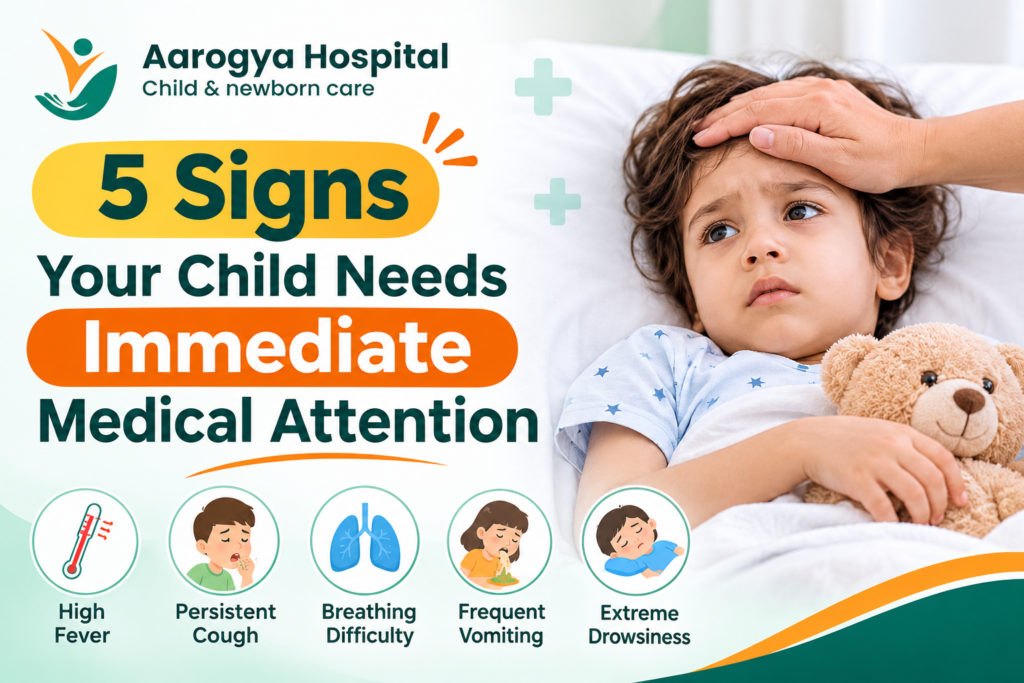
5 Signs Your Child Needs Immediate Medical Attention

Every parent worries when a child falls sick. Most illnesses are mild, and they pass with rest and simple care. However, some symptoms are serious and cannot wait. In these cases, quick action can save your child’s life. This guide explains five clear warning signs. Moreover, it tells you what to do next. If you live in or near Chandigarh, you can reach our 24×7 emergency service at any hour. 1. Trouble Breathing Breathing problems are always an emergency. Therefore, never wait and watch if your child struggles to breathe. Look for these signs: Fast breathing, even when your child is resting The belly or chest pulling in with each breath Flaring nostrils A grunting sound while breathing Blue or grey lips and face Pneumonia, asthma and severe infections can all cause these signs. According to the World Health Organization, pneumonia is a leading cause of death in young children worldwide. Early treatment, however, greatly improves recovery. What to do: Keep your child calm and upright. Then, take your child to a hospital at once. 2. High Fever or Fever in a Young Baby A fever is the body’s way of fighting germs. Still, some fevers need urgent care. Go to the hospital right away if: Your baby is under 3 months old and has a temperature of 100.4°F (38°C) or higher The fever lasts more than three days The fever stays very high despite medicine Your child has a stiff neck, a rash or a severe headache Young babies can get very sick very fast. For this reason, even a mild fever in a newborn needs a doctor’s check. The American Academy of Pediatrics also advises quick care for fever in infants. In addition, a stiff neck with fever can point to meningitis, which needs emergency treatment. What to do: Check the temperature, then call your pediatrician. For a newborn, call the hospital first, and our neonatology and NICU team will guide you on safe transfer. 3. Seizures or Fits A seizure can be scary to watch. Your child may shake, stiffen, stare blankly or lose awareness. Some seizures come with a high fever, while others have no clear cause. Seek emergency care if: It is your child’s first seizure The seizure lasts more than five minutes Your child does not wake up fully afterward Seizures keep coming back What to do: Lay your child on one side. Next, move hard objects away. Do not put anything in the mouth. After that, note the time and rush to the hospital. 4. Signs of Dehydration Children lose water quickly through vomiting, loose motions and fever. As a result, dehydration can turn serious within hours. Warning signs include: No urine for 6 to 8 hours A dry mouth and no tears when crying Sunken eyes A sunken soft spot on a baby’s head Cold hands and feet Constant vomiting or bloody stools Gastroenteritis is a common cause. Therefore, give small sips of oral rehydration solution (ORS) while you travel. If your child cannot keep any fluids down, however, hospital care with IV fluids may be needed. 5. Extreme Sleepiness or Unusual Behavior A sleepy child after an illness is normal. In contrast, a child who is hard to wake is not. This sign often means the illness is affecting the brain or the whole body. Act quickly if your child: Is very floppy or weak Does not respond to your voice or touch Seems confused or cannot recognize you Cries without stopping, or will not feed Has a sudden, severe headache Infections, low blood sugar, head injury and poisoning can all cause these changes. Consequently, trust your instincts. You know your child best, so if something feels wrong, get help. When to Go to the Hospital Go straight to the emergency room if your child has any of the signs above. Likewise, seek help for: A serious fall or head injury Swallowing medicine, chemicals or a coin Heavy bleeding A severe allergic reaction with swelling or hives Do not wait for morning. Delays can make treatment harder. Why Choose Aarogya Hospital for Your Child Aarogya Hospital is located near PGI, Khuda Lahora, Chandigarh. Here is how we help families: Pediatrics: Specialist care for infants and children 24×7 Emergency: Round-the-clock urgent care Level III NICU: Advanced care for premature and sick newborns In-house Laboratory: Quick, reliable test reports Ayushman Bharat PM-JAY: Cashless treatment for eligible families Our care is led by DM Neonatology consultants, including Dr. Gagan Mahajan. In addition, our hospital is NABH Entry Level certified and NNF accredited. Frequently Asked Questions Which fever in a child is an emergency?  Any fever in a baby under 3 months is an emergency. For older children, a fever lasting over three days, or one with a rash, stiff neck or drowsiness, needs urgent care. How do I know if my child’s breathing is abnormal?  Watch for fast breathing, chest pulling in, grunting and blue lips. If you see any of these, go to the hospital immediately. Should I give medicine before going to the hospital?  You can give ORS for dehydration. However, avoid giving other medicine without a doctor’s advice, especially to infants. Is Aarogya Hospital open at night?  Yes. Our emergency service runs 24×7. Please contact us for OPD timings.  Any fever in a baby under 3 months is an emergency. For older children, a fever lasting over three days, or one with a rash, stiff neck or drowsiness, needs urgent care.  Watch for fast breathing, chest pulling in, grunting and blue lips. If you see any of these, go to the hospital immediately.  You can give ORS for dehydration. However, avoid giving other medicine without a doctor’s advice, especially to infants.  Yes. Our emergency service runs 24×7. Please contact us for OPD timings. Conclusion Your child cannot tell you how bad they feel. So, you must watch for the signs. Breathing trouble, high fever in a baby, seizures, dehydration and extreme sleepiness all need quick medical care. When in doubt, […]
5 signs your child needs immediate medical attention
BLOG

5 Signs Your Child Needs Immediate Medical Attention

Every parent worries when their child feels unwell. However, not every cough or fever is an emergency. So how do you know when to wait and when to rush to the hospital? In this guide, we explain the 5 signs your child needs immediate medical attention. Moreover, we share simple steps you can take right away. Above all, remember one rule: if your gut says something is wrong, get help. 1. Difficulty Breathing Breathing trouble is one of the most serious warning signs. First, watch your child’s chest and neck. If the skin pulls in around the ribs or throat with each breath, your child is working too hard to breathe. Also look for these signs: Fast breathing, even while resting Grunting or wheezing sounds Flaring nostrils Blue or gray lips and face Because breathing problems can get worse quickly, do not wait. Instead, go to the nearest emergency room at once. Pneumonia, for example, often starts with a simple cough but can lead to low oxygen levels. 2. High Fever That Does Not Go Away Fever is common in children. In fact, it often means the body is fighting an infection. Still, some fevers need urgent care. Take your child to the hospital right away if: Your baby is under 3 months old and has a temperature of 100.4°F (38°C) or higher Your child’s fever stays above 104°F (40°C) The fever lasts more than three days The fever comes with a stiff neck, a rash, or severe headache In addition, check how your child behaves. A child who plays and drinks fluids is usually fine. On the other hand, a child who looks very weak or refuses to eat needs a doctor quickly. 3. Seizures or Fits A seizure can be scary to watch. Therefore, stay calm and act fast. During a seizure, your child may shake, stiffen, stare blankly, or lose awareness. While you wait for help, follow these steps: Lay your child on their side on a soft, safe surface. Do not put anything in their mouth. Note when the seizure started and how long it lasts. Afterward, seek medical care even if the fit stops on its own. This is especially important if it is your child’s first seizure, if it lasts more than five minutes, or if your child is slow to wake up. As a result, the doctor can find the cause and prevent more episodes. 4. Signs of Severe Dehydration Vomiting and loose motions can drain a child’s body of water fast. Consequently, young children can become dehydrated within hours. Gastroenteritis is a common cause, especially in warm weather. Get urgent help if your child has: A dry mouth and no tears when crying Very few wet diapers, or no urine for 8 hours Sunken eyes or a sunken soft spot on a baby’s head Constant vomiting that stops all fluids Unusual sleepiness or irritability Meanwhile, offer small sips of oral rehydration solution (ORS) on the way to the hospital. However, do not force your child to drink if they keep vomiting. 5. Extreme Sleepiness or Unresponsiveness Children get tired, of course. Yet there is a big difference between normal tiredness and a worrying change in alertness. If your child is hard to wake, confused, limp, or does not respond to your voice, treat it as an emergency. Similarly, be alert if your child cries nonstop and cannot be calmed. Both changes can point to serious infections, head injuries, or other major problems. Therefore, never wait for these signs to “pass on their own.” What Should You Do in an Emergency? First, stay calm. Next, call the hospital before you leave so the team can prepare. Then bring your child’s medical papers, vaccination card, and a list of any medicines given. Finally, travel safely, because a calm and quick trip helps your child most. Why Choose Aarogya Hospital for Your Child’s Emergency Care? Aarogya Hospital, located near PGI Chandigarh, offers 24×7 emergency services for infants and children. In addition, our pediatric team is led by Dr. Gagan Mahajan, M.D. (Pediatrics), D.M. (Neonatology). We care for common childhood emergencies, including pneumonia, gastroenteritis, pediatric fits, and trauma. Moreover, our in-house laboratory helps doctors reach faster, more accurate decisions. The hospital is also empanelled under Ayushman Bharat PM-JAY, so eligible families may receive cashless treatment for approved packages. Frequently Asked Questions When should I take my child to the emergency room?  Go right away if your child has trouble breathing, a seizure, a very high fever, signs of dehydration, or is hard to wake. Is a fever always an emergency?  No. However, a fever in a baby under 3 months, or a fever with a rash, stiff neck, or extreme weakness, needs urgent care. Is Aarogya Hospital open at night?  Yes. Our emergency services run 24×7, so your child can get care day or night. Can I call before coming?  Yes. In fact, we encourage it. Call +91 77197 03883 so our team can guide you and get ready. Need Urgent Help for Your Child? Do not wait and worry. Call us now at +91 77197 03883 or visit Aarogya Hospital, SCO 32, Near PGI, Khuda Lahora, Chandigarh 160014.  Go right away if your child has trouble breathing, a seizure, a very high fever, signs of dehydration, or is hard to wake.  No. However, a fever in a baby under 3 months, or a fever with a rash, stiff neck, or extreme weakness, needs urgent care.  Yes. Our emergency services run 24×7, so your child can get care day or night.  Yes. In fact, we encourage it. Call +91 77197 03883 so our team can guide you and get ready. Do not wait and worry. Call us now at +91 77197 03883 or visit Aarogya Hospital, SCO 32, Near PGI, Khuda Lahora, Chandigarh 160014.

CBC test in children at Aarogya Hospital Chandigarh
BLOG

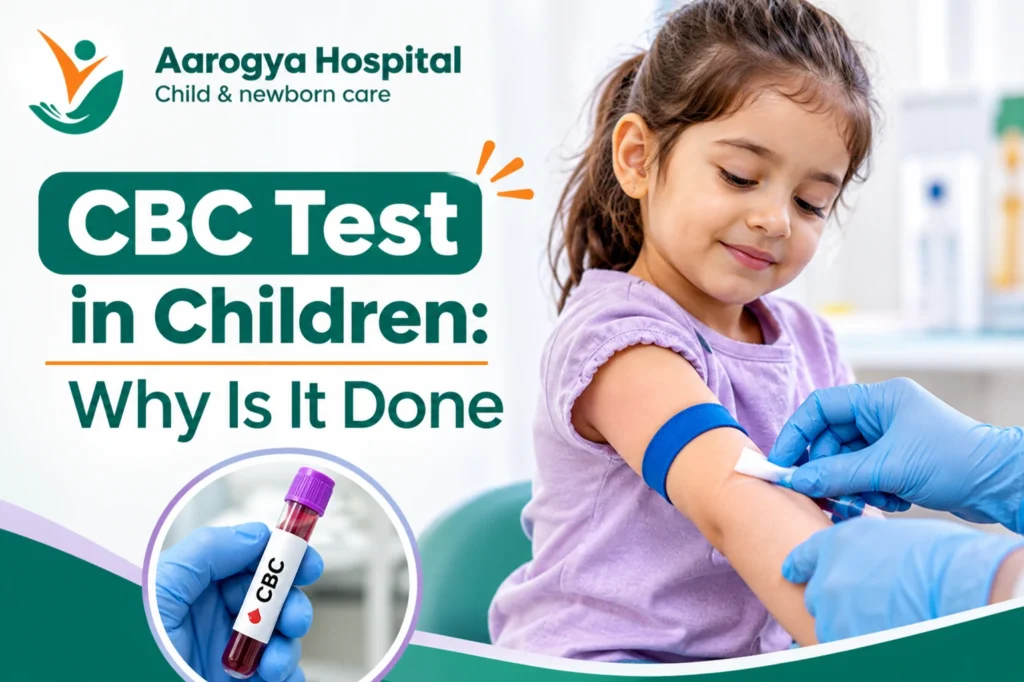
CBC Test in Children: Why Is It Done

Children may sometimes feel tired, weak or unwell without any clear reason. In such cases, doctors may suggest a CBC test to check their health. A CBC (Complete Blood Count) is a common blood test. It checks different types of blood cells and helps doctors find signs of infections, anaemia and other health problems. At Aarogya Hospital, Chandigarh, we understand how important your child’s health is. Our team focuses on providing proper medical care and support for newborns and children. What Is a CBC Test? A CBC (Complete Blood Count) is a blood test that checks the number of different blood cells in the body. It mainly checks three types of blood cells: Red Blood Cells (RBCs): They carry oxygen to different parts of the body. White Blood Cells (WBCs): They help the body fight infections. Platelets: They help stop bleeding by forming blood clots. A CBC test gives doctors useful information about a child’s health. It also helps them decide if more tests or treatment are need. Why Is a CBC Test Done in Children? A doctor may suggest a CBC test for many reasons. 1. To Check for Anaemia Anaemia is a condition in which the body has low haemoglobin or healthy red blood cells. Children with anaemia may feel tired, weak or less active than usual. A CBC test checks haemoglobin and red blood cell levels to help doctors find anaemia. 2. To Check for Infections White blood cells help the body fight germs and infections. If the white blood cell count is too high or too low, it may be a sign of an infection or another health problem. Doctors check the CBC report along with the child’s symptoms to understand the cause. 3. To Find the Cause of Fever If a child has a fever that does not go away or has other symptoms, the doctor may suggest a CBC test. It checks white blood cell levels and gives doctors more information about the child’s health. 4. To Check Overall Health Doctors may suggest a CBC test during a health check-up or when a child has ongoing health problems. It helps check blood cell levels and find possible health concerns. 5. To Monitor Existing Health Problems Some children need regular CBC tests while receiving treatment. These tests help doctors check blood cell levels and see how the child is responding to treatment. What Does a CBC Test Check? A CBC test checks different parts of the blood. Here are the main things it measures: Blood Component What It Checks Haemoglobin (Hb) A protein that carries oxygen in the blood RBC Count Number of red blood cells WBC Count Number of white blood cells Platelet Count Cells that help stop bleeding Haematocrit (HCT) How much of the blood is made up of red blood cells MCV Average size of red blood cells These results help doctors check for anaemia, signs of infection and other blood-related problems. How Is a CBC Test Done in Children? A CBC test is a simple blood test. The process usually includes these steps: A healthcare worker cleans the child’s skin. A small blood sample is take from a vein, usually in the arm. The blood sample is sent to a laboratory. The doctor checks the test results. The process usually takes only a few minutes. A child may feel a little pain when the needle goes in, but it is usually over quickly. Does a Child Need to Fast Before a CBC Test? No. Fasting is usually not need before a CBC test. However, if the doctor has suggested other blood tests along with CBC, fasting may be required. Always follow your doctor’s instructions before the test. When Should Parents Consult a Doctor? Parents should speak to a paediatrician if their child has any of these problems: Frequent tiredness or weakness Pale skin Fever that keeps coming back Frequent infections Unusual bruises or bleeding Poor appetite Weight loss without a clear reason These signs do not always mean there is a serious health problem. However, a doctor’s check-up can help find the cause. Why Choose Aarogya Hospital for Child Care in Chandigarh? Choosing the right hospital is important for your child’s health. At Aarogya Hospital, Chandigarh, we provide medical care and support for newborns and children. Our hospital offers: Paediatric care and health check-ups Level III NICU facilities 24/7 emergency care Newborn and child health support Advanced testing and monitoring facilities We also welcome families from nearby areas, including Panchkula and Mohali. Book a Paediatric Consultation at Aarogya Hospital, Chandigarh Your child’s health needs proper care and attention. Therefore, regular check-ups and timely medical advice are important for their overall well-being. If your child has frequent fever, weakness, tiredness or other unusual symptoms, consult a paediatrician. Aarogya Hospital, Chandigarh provides newborn and child healthcare services for families in Chandigarh and nearby areas, including Panchkula and Mohali. Contact our hospital to know more about paediatric consultations and diagnostic services. Follow up Instagram and Facebook for more information. Frequently Asked Questions (FAQs) Is a CBC test safe for children? Yes. A CBC test is a common and generally safe blood test. It needs only a small amount of blood. How long does a CBC test take? Moreover, taking the blood sample usually takes only a few minutes. However, the time required to receive the report may vary depending on the laboratory. Can a CBC test detect infections? A CBC test can show changes in white blood cell levels that may be link to an infection. However, it cannot identify every infection on its own. Can a CBC test detect anaemia? Yes. A CBC test checks haemoglobin and red blood cell levels. These results help doctors find signs of anaemia. Is fasting need before a CBC test? No. Fasting is usually not need for a CBC test alone. However, follow your doctor’s advice if other tests are also require.A CBC test can show changes in white blood cell levels that may be link […]

UTI in children symptoms and paediatric care at Aarogya Hospital Chandigarh
BLOG

UTI in Children Symptoms Parents Should Not Ignore

A Urinary Tract Infection (UTI) is a common problem in children. It happens when germs enter the urinary system and cause an infection. A UTI can affect the bladder, kidneys or other parts of the urinary system. Young children may not be able to tell their parents when they feel pain. So, parents should watch for changes in their child’s health and behaviour. It is important to know the early signs of UTI in children. Early treatment can help stop the infection from getting worse. At Aarogya Hospital, Chandigarh, parents can get medical advice and care for children with urine infections. The hospital also provides care to families from nearby areas, including Panchkula and Mohali. What Causes UTI in Children? A UTI usually starts when germs enter the body through the opening from where urine comes out. These germs can grow and cause an infection. Some common reasons that may increase the risk of UTI in children include: Not cleaning properly after using the toilet. Holding urine for a long time. Having constipation (difficulty passing stool). Drinking less water. Having problems with the urinary system. Having a UTI in the past. However, even children with good hygiene can get a UTI. Common Symptoms of UTI in Children UTI symptoms can be different for every child. Some children may show clear signs, while others may only feel unwell. Parents should watch for these common symptoms: 1. Pain or Burning While Passing Urine If your child feels pain or burning while passing urine, it may be a sign of UTI. Young children may also cry or become upset when they pass urine. 2. Passing Urine More Often Does your child go to the toilet more often than usual? Passing small amounts of urine many times can be a sign of UTI. 3. Fever Without a Clear Reason Fever without a cold or cough may sometimes be a sign of UTI. In babies and young children, fever can be an important warning sign. 4. Change in Urine Colour or Smell If your child’s urine looks cloudy, smells different or has blood in it, there may be a urine problem. However, these signs alone do not confirm a UTI. 5. Stomach or Back Pain Some children may feel pain in the lower stomach, sides or back. This can happen when the infection affects the bladder or kidneys. 6. Sudden Bedwetting Has your child stopped wetting the bed but started again suddenly? This may be a sign of a urine problem. 7. Poor Feeding and Crying in Babies Babies cannot tell their parents when they feel pain. Instead, they may show signs such as: Crying more than usual. Refusing milk or food. Vomiting. Having a fever or unusually low body temperature. Feeling very sleepy or restless. If your baby shows these signs, contact a doctor promptly. When Should Parents See a Doctor? Parents should not ignore the signs of UTI in children. Early tests and treatment can help stop the infection from getting worse. Take your child to a doctor if they have: Pain or burning while passing urine. Fever without a clear reason. Blood in the urine. Vomiting again and again. Pain in the back or sides. Passing urine too often. Trouble passing urine. Important: If your child is very sleepy, difficult to wake, looks very unwell or cannot keep fluids down, get urgent medical help. Also, if your baby is under 3 months old and has a temperature of 38°C or higher, seek medical help immediately. How Is UTI Diagnose in Children? First, doctors check your child’s health. Then, they may suggest urine tests to find out if there is an infection. Common tests include: Urine Routine Test Additionally, this test checks the urine for signs of infection, such as white blood cells and blood in the urine. Urine Culture Test This test helps find the germs causing the infection. It also helps doctors choose the right medicine. Sometimes, doctors may also suggest an ultrasound of the kidneys and bladder. This is more common when a child gets UTIs again and again or has other urine problems. How Can Parents Prevent UTI in Children? Parents can follow some simple steps to lower the risk of UTI in children. Encourage your child to drink enough water. Teach your child to clean properly after using the toilet. Ask your child to use the toilet regularly. Do not let your child hold urine for too long. Give healthy food to help prevent constipation. Change wet diapers regularly. Teach girls to wipe from front to back after using the toilet. These simple habits can help lower the risk of UTI. However, they cannot prevent every infection. Paediatric Care at Aarogya Hospital, Chandigarh Children need proper medical care when they have an infection or other health problems. Therefore, parents should not ignore unusual signs. Aarogya Hospital, Chandigarh, provides medical care for children and newborn babies. Parents looking for paediatric care in Chandigarh can get medical advice for childhood infections and other health problems. The hospital is located in Khudda Lahora, near PGI Chandigarh. It also serves families from nearby areas, including Panchkula and Mohali. Therefore, if your child shows signs of a UTI, consult a paediatrician for a proper check-up and timely treatment. Your child’s health needs timely care and attention. Follow Aarogya Hospital on Instagram and Facebook for more health tips and updates. Frequently Asked Questions (FAQs) What are the first signs of UTI in children? Common signs include pain while passing urine, going to the toilet often, fever, cloudy urine and stomach pain. Babies may also have fever, poor feeding or unusual crying. Can UTI cause fever in children? Yes. UTI can cause fever in children. Sometimes, fever may be the only sign, especially in babies and young children. Can babies get a UTI? Yes. Babies can also get a UTI. They may have fever, vomiting, poor feeding or cry more than usual. How is UTI treat in children? Therefore, doctors usually treat bacterial UTIs […]

Paediatric treatment under Ayushman Bharat at Aarogya Hospital Chandigarh
BLOG

Is Paediatric Treatment Covered Under Ayushman Bharat?

A Simple Guide to Ayushman Bharat Benefits for Children’s Healthcare Every parent wants the best care for their child. However, hospital treatment can be expensive. This can be a big worry for many families. Government health schemes like Ayushman Bharat – Pradhan Mantri Jan Arogya Yojana (PM-JAY) can help. Many parents ask, Is paediatric treatment cover under Ayushman Bharat? The answer is yes. Eligible families can get free and cashless treatment for many health problems covered under the scheme. However, the treatment must be on the approved PM-JAY list. The hospital must also be register under the scheme. In this guide, we will explain how Ayushman Bharat helps children and how parents can use this scheme. What Is Ayushman Bharat – PM-JAY? Ayushman Bharat – Pradhan Mantri Jan Arogya Yojana (PM-JAY) is a government health scheme. It helps eligible families pay for hospital treatment. Under this scheme, eligible families can get health cover of up to ₹5 lakh per year for approved treatments. Families can get cashless treatment at approved government and private hospitals. This means they do not need to pay the full cost of covered treatment during hospital admission. Is Paediatric Treatment Cover Under Ayushman Bharat? Yes, Ayushman Bharat covers many types of hospital treatment for children. However, the treatment must be include in the approve PM-JAY list. Children from eligible families can get treatment for many health problems at approved hospitals. Depending on the approved package, treatment may include: Hospital treatment for childhood infections. Care for serious breathing problems. Treatment for serious health problems in children. Emergency hospital care. Some surgeries for children. Special medical care for children. However, not every doctor visit, test or treatment is cover. It depends on the treatment, family eligibility and scheme rules. Which Child Treatments May Be Cover Under Ayushman Bharat? Ayushman Bharat has different packages for hospital treatment and surgeries. Some packages also cover newborn babies and children. At Aarogya Hospital, parents can ask about coverage for the following treatments. However, approval depends on PM-JAY rules and available treatment packages. 1. Newborn and NICU Treatment Some newborn babies need extra care after birth. Babies born early or with low birth weight may need treatment in a Neonatal Intensive Care Unit (NICU). Depending on the approved package, treatment may include: NICU admission and regular checks. Breathing support for newborn babies. Treatment for some newborn infections. Care for serious health problems after birth. Special care for babies born early. 2. Treatment for Childhood Infections Children can sometimes get infections that need hospital care. Some serious infections need medicines, tests and regular checks. Eligible hospital treatment may be cover under Ayushman Bharat. 3. Breathing Problems in Children Some children may have serious breathing problems because of an illness or infection. They may need oxygen, medicines or hospital care. Some of these treatments may be cover under PM-JAY. 4. Emergency Treatment for Children Children may sometimes become very ill and need urgent medical help. Depending on the child’s health problem and the approved package, hospital treatment may be covered under Ayushman Bharat. 5. Special Medical Care for Children Some children need extra care for serious health problems. Certain treatments and medical procedures may be cover under the scheme if they follow PM-JAY rules. Parents should check the treatment details before hospital admission whenever possible. What Are the Benefits of Ayushman Bharat for Children? Ayushman Bharat can help families manage the cost of their child’s hospital treatment. Some important benefits include: Up to ₹5 Lakh Cover: Eligible families can get health cover of up to ₹5 lakh per year. Cashless Treatment: Families do not need to pay for approved treatment upfront. No Age Limit: Eligible children can also get benefits under the scheme. Existing Health Problems: Cover health conditions that started before joining the scheme are also included from day one. Hospital Treatment: Approved packages may include medicines, tests, hospital stays and ICU care. After-Hospital Care: Some approved packages may also cover follow-up costs for up to 15 days. Please remember that ₹5 lakh is the total yearly cover for one eligible family. It is not ₹5 lakh for each child. Is NICU Treatment Cover Under Ayushman Bharat? Yes, some newborn and NICU treatments may be covered under Ayushman Bharat. A newborn baby may need NICU care because of: Birth before the due date. Low birth weight. Breathing problems. Newborn infections. Severe jaundice. Seizures. Health problems after birth. However, coverage depends on the baby’s health problem and the approved treatment package. At Aarogya Hospital, near PGI Chandigarh, newborn babies receive special care in an advanced Level III NICU. The hospital provides regular baby checks, breathing support and care for premature and seriously ill babies. Eligible families can contact the hospital to ask whether their baby’s NICU treatment is cover under PM-JAY. Who Can Get Ayushman Bharat Treatment? Not every family can get benefits under PM-JAY. Only families that meet the government’s rules can use this scheme. Parents can check their eligibility by following these steps: Visit the official Ayushman Bharat PM-JAY website. Enter the required details to find your family information. Check your Ayushman Bharat card status. Contact a registered hospital if you need help. You can also call the Ayushman Bharat helpline at 14555 for more information. Is OPD Treatment for Children Cover Under Ayushman Bharat? Generally, regular OPD (Outpatient Department) visits are not cover under PM-JAY. For example, the scheme usually does not cover: Regular child health check-ups. Normal doctor visits. Regular OPD consultations. Separate medical tests without an approved treatment package. However, approve hospital admissions and some day-care treatments may be cover. Therefore, parents should always check whether their child’s treatment is included in the approved package. Why Choose Aarogya Hospital for Children’s Healthcare in Chandigarh? Choosing the right hospital is important when your child needs medical care. Aarogya Hospital is located in Khudda Lahora, near PGI Chandigarh. It provides special care for newborn babies and children. The hospital offers: Advanced Level III NICU. Special care for newborn babies and children. […]

Aarogya Support 1

Aarogya Hospital Chandigarh

Doctor Avatar
Welcome to Aarogya Hospital (Near PGI Chandigarh) 🏥
I'm your assistant here to help with your medical enquiry.
Doctor Avatar
Which of our services or departments are you interested in?