Ayushman Bharat empanelled Chandigarh

Chandigarh Hospital

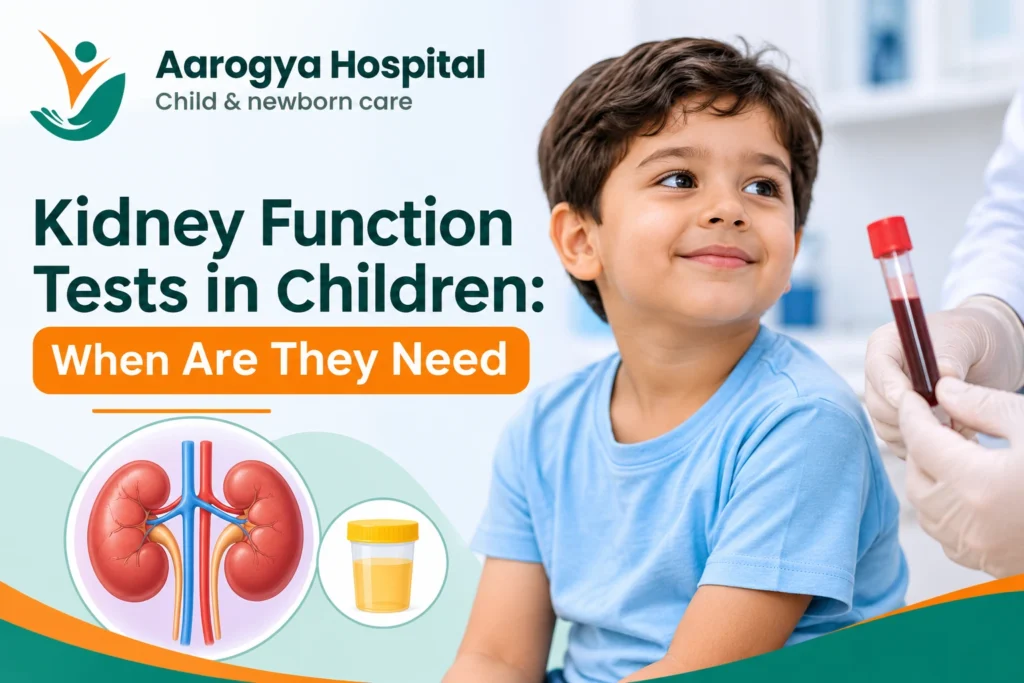
Kidney Function Tests in Children
BLOG

Kidney Function Tests in Children: When Are They Need?

A Simple Guide for Parents to Understand Children’s Kidney Health Every parent wants their child to stay healthy. However, some health problems may not show clear signs at first. Kidney problems are one of them. The kidneys are important organs in the body. They play an essential role in keeping us healthy. Clean the blood, remove waste products and, at the same time, control the amount of water in the body. They also help keep important minerals at the right levels. Therefore, kidney function tests help doctors check whether a child’s kidneys are working properly. These tests can also help find kidney problems at an early stage. Moreover, if your child has swelling, changes in urine, high blood pressure or repeated urine infections (UTIs), the doctor may recommend kidney function tests. Additionally, at Aarogya Hospital, Chandigarh, parents can get medical advice for their child’s health concerns, including problems related to kidney health. What Are Kidney Function Tests in Children? Kidney function tests are medical tests that check how well the kidneys are working. These tests check the blood and urine for waste and other substances. Moreover, these tests help doctors detect kidney problems, monitor existing conditions and choose the right treatment for the child. The doctor will choose the tests based on your child’s age, symptoms and health. When Do Children Need Kidney Function Tests? Not every child needs kidney tests. However, a doctor may suggest these tests if a child has certain symptoms or health problems. 1. Swelling Around the Eyes, Hands or Feet Swelling around the eyes, especially in the morning, can sometimes be a sign of kidney problems. Some children may also have swelling in their feet, ankles or other parts of the body. In such cases, the doctor may suggest blood and urine tests. These tests help check if there is protein in the urine or another kidney problem. 2. Frequent Urine Infections (UTIs) Furthermore, repeated urine infections may sometimes indicate problems with the kidneys or urinary system. Look for these signs: Fever with urine problems. Pain or burning while passing urine. Needing to pass urine again and again. Pain in the lower stomach. Therefore, if your child gets frequent urine infections, the doctor may recommend further tests to check the kidneys and urinary system. 3. Changes in Urine Similarly, changes in your child’s urine may sometimes indicate an underlying health problem. Watch for these signs: Passing less urine than usual. Blood in the urine. Very dark or foamy urine. Pain while passing urine. Passing urine more often than normal. If you notice any of these changes, speak to a doctor. 4. High Blood Pressure in Children High blood pressure can also happen in children. Additionally, kidney problems can sometimes lead to high blood pressure. On the other hand, high blood pressure can also damage the kidneys over time. If your child’s blood pressure is high more than once, the doctor may suggest kidney function tests. 5. Family History of Kidney Problems Some kidney problems can run in families. Similarly, if a close family member has an inherited kidney disease, the doctor may recommend kidney tests for your child. These tests can help find possible problems early and guide further care. 6. Diabetes or Other Health Problems Some long-term health problems can affect the kidneys. Furthermore, children with certain medical conditions may need regular kidney check-ups to monitor their kidney health. Additionally, the doctor may recommend blood and urine tests to detect early signs of kidney problems. 7. Severe Dehydration or Serious Illness Dehydration means the body does not have enough water. Moreover, severe dehydration, serious infections and other illnesses may also affect how well the kidneys work. In these cases, the doctor may suggest blood and urine tests to check kidney health. Common Kidney Function Tests for Children To assess a child’s kidney health, doctors may recommend different types of tests. The tests depend on the child’s symptoms and medical needs. 1. Serum Creatinine Test This is a blood test that checks the creatinine level in the blood. For example, creatinine is a waste product made by the muscles. Normally, healthy kidneys remove it from the blood. A high creatinine level may mean that the kidneys are not working properly. However, doctors also check the child’s age, muscle size and other health details before understanding the result. 2. Blood Urea Test This blood test checks the amount of urea in the blood. Urea is a waste product made when the body breaks down protein from food. A high urea level may sometimes be link to kidney problems. However, dehydration and other health conditions can also affect this level. 3. Estimated Glomerular Filtration Rate (eGFR) Similarly, the eGFR test helps doctors estimate how well the kidneys filter waste from the blood. To calculate this value, doctors consider the child’s creatinine level, age and height. As a result, it helps doctors understand how well the kidneys are removing waste from the body. 4. Urine Routine Test A urine test checks for different substances in your child’s urine. It can help find: Protein in the urine. Blood in the urine. Sugar in the urine. Signs of infection. Other unusual changes. Additionally, this test helps doctors identify possible problems related to the kidneys and urinary system. 5. Urine Protein Test Normally, healthy kidneys keep protein in the blood. Therefore, only a very small amount of protein passes into the urine. Therefore, if protein is found in your child’s urine, the doctor may recommend further tests to check kidney health. Additionally, a urine protein-to-creatinine test helps doctors measure the amount of protein in your child’s urine. 6. Kidney Ultrasound Similarly, a kidney ultrasound is a simple, painless test that uses sound waves to create pictures of the kidneys. It helps doctors check the size and shape of the kidneys. It can also help find blockages and some problems in the kidneys or urinary system. How to Prepare Your Child for Kidney Function Tests? Most kidney tests need very little […]
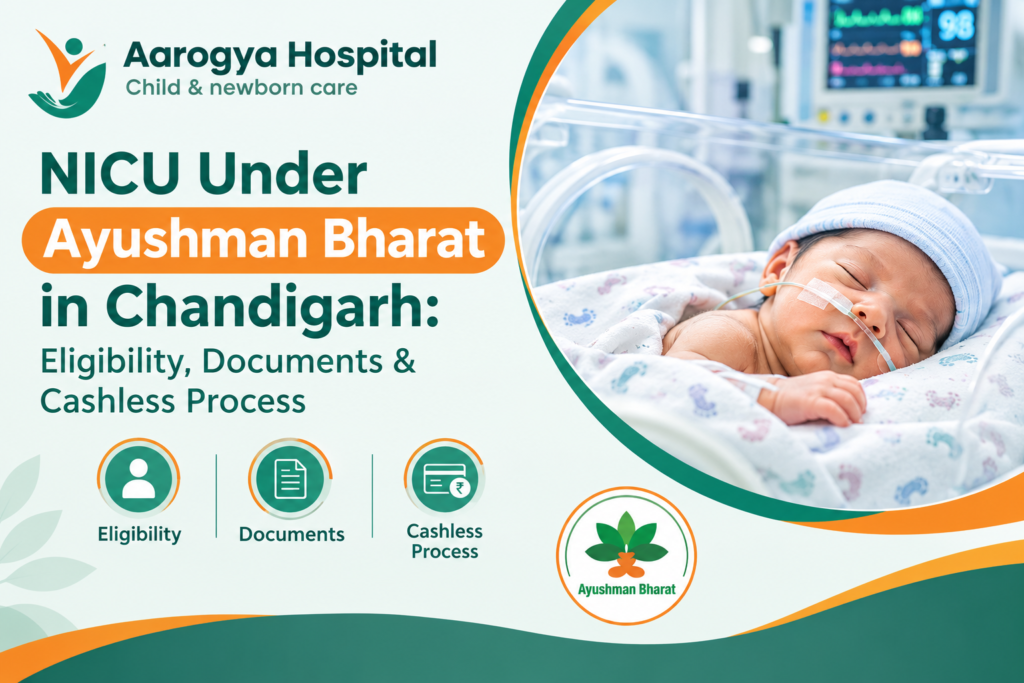
NICU care for newborn under Ayushman Bharat at Aarogya Hospital Chandigarh
BLOG

NICU Under Ayushman Bharat in Chandigarh Eligibility, Documents & Cashless Process

When a newborn needs special care, parents may worry about the baby’s health and treatment costs. Ayushman Bharat (AB-PMJAY) can help eligible families get cashless treatment at empanelled hospitals. If you are looking for NICU care under Ayushman Bharat in Chandigarh, it is important to know who is eligible, which documents are need, what treatment is cover, and how the cashless process works. Aarogya Hospital in Chandigarh is an Ayushman Bharat empanelled hospital. It provides newborn care, including NICU care for premature babies, babies with low birth weight, and seriously ill newborns. What Is NICU Care? A Neonatal Intensive Care Unit (NICU) is a special hospital unit where newborn babies get extra care and close monitoring. A baby may need NICU care because of: Being born too early Low birth weight Trouble breathing Newborn infections Trouble feeding Jaundice that needs close care Other serious health problems At Aarogya Hospital, the NICU provides close monitoring and medical care for newborn babies. If needed, babies can also receive support to help them breathe. Can Ayushman Bharat Cover NICU Treatment? Yes, eligible families may get NICU treatment under Ayushman Bharat (PM-JAY). However, the treatment must be cover under an approve PM-JAY package. PM-JAY allows eligible families to get cashless treatment at approved government and private hospitals. Eligible families may get up to ₹5 lakh in health coverage per family each year, based on the scheme rules. However, not every NICU treatment is cover under the scheme. Even if a hospital is empanelled, all treatments may not be covered or free. The treatment must be cover under an approve PM-JAY package. The baby’s eligibility must also be check. So, parents should ask the hospital’s Ayushman help desk about: The baby’s eligibility The treatment that is need Whether the treatment is cover The documents needed Whether approval is need Who Can Get Ayushman Bharat NICU Treatment? PM-JAY eligibility depends on the government’s beneficiary list and the rules of the scheme. It is not based only on the family’s income when they reach the hospital. Families can check their PM-JAY eligibility through the official PM-JAY system, a Common Service Centre (CSC), or an empanelled hospital. If your family is already cover under PM-JAY, the hospital team can check your details and guide you through the next steps. What About Newborn Babies? For a newborn baby, the hospital needs to check the baby’s details as per the PM-JAY rules. If the baby needs NICU care, parents should contact the hospital’s Ayushman help desk as soon as possible. However, do not wait for documents during an emergency. If your baby has trouble breathing, is not feeding well, is very sleepy, has blue skin, or has any other serious problem, seek medical help immediately. Documents Needed for Ayushman NICU Treatment The documents needed may be different for each family. The hospital team can tell you which documents are require. Parents should keep these documents ready if available: Ayushman Bharat or PM-JAY card Aadhaar card or another accepted ID Family or beneficiary details Baby’s birth documents, if available Parent or guardian’s ID Previous medical reports Referral letter, if needed Doctor’s prescription or test reports If you do not have all the documents during an emergency, do not delay your baby’s treatment. Take your baby to the hospital first. The Ayushman help desk can guide you about the required documents later. How Does the Cashless NICU Process Work? The process may include these simple steps: 1. Check Eligibility First, the hospital checks whether the family is eligible for PM-JAY. The hospital also checks the required identity and beneficiary details. 2. Baby’s Health Check Next, a pediatrician or neonatologist checks the baby. The doctor will decide whether the baby needs NICU care or another type of treatment. 3. Check Treatment Coverage The hospital checks whether the baby’s treatment is cover under an approve PM-JAY package. 4. Get Approval, If Needed For some treatments, the hospital may need to get approval through the PM-JAY system. 5. Get Cashless Treatment After the required checks and approvals, cover treatment can be provide without paying the cover amount directly, as per the approve package and PM-JAY rules. 6. Discharge and Follow-Up When the baby is well enough to go home, the doctor will give discharge and follow-up advice. The services covered under Ayushman Bharat depend on the approved package and the scheme rules. Is the Whole NICU Bill Cover Under Ayushman Bharat? No, not always. Ayushman Bharat covers treatment under specific health packages. The amount and services covered can depend on: The baby’s eligibility The baby’s health condition The treatment needed The approved PM-JAY package Scheme rules Required approvals Before treatment, parents should ask the hospital: Is my baby eligible for PM-JAY? Is the NICU treatment cover? Which PM-JAY package applies? Is approval need? Are any services not cover? Which documents do I need? This can help parents understand the treatment and payment process better. Why Choose Aarogya Hospital for NICU Care in Chandigarh? Aarogya Hospital provides newborn and pediatric care in Chandigarh. Its NICU provides care for: Premature babies Low-birth-weight babies Sick newborn babies Babies who need close monitoring Babies who need breathing support The hospital also provides 24×7 emergency support for children and newborn babies. Aarogya Hospital is located near PGI in Khuda Lahora, Chandigarh, and is an Ayushman Bharat empanelled hospital. What Should Parents Do Before NICU Admission? If the NICU admission is plan, keep the following ready: Ayushman card or beneficiary details Parent or guardian ID Baby’s documents Medical reports Prescriptions Referral papers, if available Most importantly, do not delay emergency care because of paperwork. If your newborn needs urgent care, get medical help first. Then, ask the hospital team about the Ayushman Bharat process. Frequently Asked Questions Can I get NICU treatment under Ayushman Bharat in Chandigarh? Yes, eligible PM-JAY families may get cover treatment at approve hospitals. However, the treatment must be include in an approve PM-JAY package. Aarogya Hospital identifies itself as an Ayushman Bharat empanelled hospital. Does […]

Aarogya Support 1

Aarogya Hospital Chandigarh

Doctor Avatar
Welcome to Aarogya Hospital (Near PGI Chandigarh) 🏥
I'm your assistant here to help with your medical enquiry.
Doctor Avatar
Which of our services or departments are you interested in?