
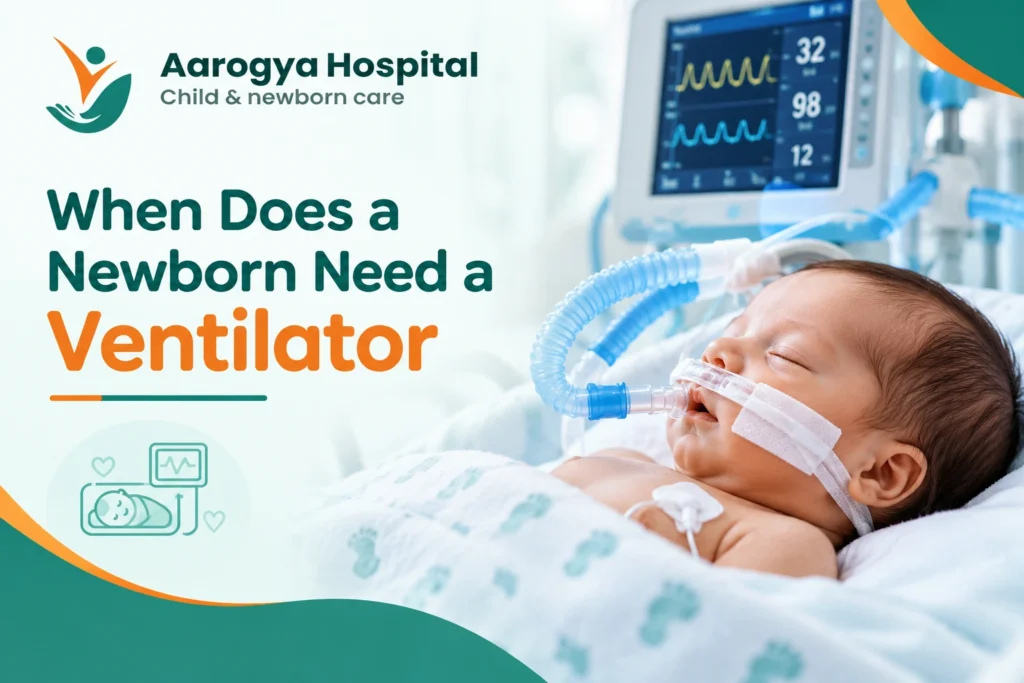
When Does a Newborn Need a Ventilator
Introduction Some newborn babies need help with breathing after birth. Some have mild breathing problems, while others need special medical care. In these cases, doctors may use a ventilator in a Neonatal Intensive Care Unit (NICU). A ventilator helps a baby breathe when the lungs cannot take in enough oxygen or remove enough carbon dioxide. However, not every baby with breathing problems needs a ventilator. Doctors first check the baby’s condition and then choose the right treatment. At Aarogya Hospital, Chandigarh, parents can learn about newborn breathing problems, ventilator support, and the need for early medical care. What Is a Ventilator for Newborn Babies? A ventilator is a machine that helps a baby breathe. It sends air and oxygen into the lungs through a tube placed in the windpipe. Doctors use a ventilator when a baby cannot breathe well enough without help. The type of breathing support depends on the baby’s age, weight, lung growth, and health. Newborns may need different types of breathing support, such as: CPAP or high-flow nasal support: These methods help babies breathe without a tube in the windpipe. Mechanical ventilation: A machine helps the baby breathe through a tube placed in the windpipe. Advanced ventilation: Some babies with serious breathing problems need special breathing support. Doctors choose the best method based on the baby’s needs. When Does a Newborn Need a Ventilator? A newborn may need a ventilator when breathing becomes very difficult. It may also be needed when the baby cannot get enough oxygen or remove enough carbon dioxide. Here are some common reasons why a newborn may need a ventilator. 1. Severe Breathing Problems Some newborns breathe very fast or make grunting sounds. Their chest may also pull inward with each breath. These signs may mean that the baby is struggling to breathe. If the baby does not improve with basic treatment, doctors may give more breathing support. In serious cases, a ventilator may be need. 2. Premature Birth Premature babies are born before their bodies are fully ready. Their lungs may not be fully develop. As a result, they may have trouble breathing on their own. Some premature babies develop a condition called respiratory distress syndrome. This happens when their lungs do not have enough surfactant. Surfactant helps keep the tiny air sacs in the lungs open. Depending on the baby’s condition, treatment may include CPAP, surfactant medicine, or a ventilator. 3. Low Oxygen Levels Newborns need enough oxygen for their brain, heart, and other organs to work well. However, some lung or heart problems can lower oxygen levels. Doctors check the baby’s breathing and oxygen levels. If oxygen support is not enough, the baby may need CPAP or a ventilator. 4. Serious Infections Serious infections, such as neonatal sepsis and pneumonia, can affect a newborn’s breathing. In some cases, the baby may have trouble breathing or become very weak. Doctors may give antibiotics, oxygen, and other treatments. If the baby has severe breathing problems, a ventilator may be needed. 5. Meconium Aspiration Syndrome Before or during birth, some babies may breathe in fluid containing their first stool, called meconium. This can block or harm the airways and make breathing difficult. Mild cases may improve with medical care. However, babies with serious breathing problems may need a ventilator. 6. Lack of Oxygen Around Birth Sometimes, a baby does not get enough oxygen around the time of birth. This can affect the brain and other organs. Some babies may have weak breathing and need urgent medical help. Doctors check the baby’s breathing, blood flow, and overall health before choosing the right treatment. Some babies may also develop a brain condition called hypoxic-ischaemic encephalopathy (HIE). These babies may need special care to reduce the risk of brain injury. 7. Other Serious Health Problems Some babies are born with problems that affect their lungs, heart, or airways. These problems can make breathing difficult. Doctors examine the baby to find the cause. They then decide whether the baby needs a ventilator or another type of breathing support. What Are the Warning Signs of Breathing Problems in Newborns? Parents should watch their baby’s breathing carefully, especially during the first few days after birth. Common warning signs include: Very fast or difficult breathing. Grunting sounds while breathing. Chest pulling inward with each breath. Nostrils widening while breathing. Blue or grey lips, tongue, or skin. Pauses in breathing. Unusual sleepiness or difficulty waking up. Poor feeding along with other signs of illness. Seek emergency medical care if your newborn struggles to breathe, has blue or grey lips, or stops breathing. Do not wait for these signs to improve at home. These signs do not always mean that a ventilator is needed. However, they need urgent medical attention. How Do Doctors Decide If a Newborn Needs a Ventilator? Doctors check the baby’s health before deciding whether a ventilator is need. They also check if the baby improves with basic treatment. The check-up may include: Breathing check: Doctors check how fast the baby breathes and how the chest moves. Oxygen check: A small device called a pulse oximeter checks the oxygen level in the blood. Blood tests: These tests help doctors check oxygen, carbon dioxide, and acid levels in the blood. Chest X-ray: This helps doctors look for some lung problems. Infection tests: Blood tests may help find signs of infection. Treatment check: Doctors see whether the baby improves with oxygen or CPAP. After these checks, doctors choose the right type of breathing support for the baby. How Long Does a Newborn Need Ventilator Support? Every baby is different. Some newborns need a ventilator for a short time. Others may need it for several days or longer. The time depends on the baby’s lung growth, infection, birth age, and the seriousness of the illness. Doctors regularly check the baby’s breathing and oxygen levels. They also watch for signs of recovery. When the baby can breathe better, doctors slowly reduce the ventilator support. This process is weaning. Some babies may then […]