
Ayushman Bharat empanelled Chandigarh

Pediatric Emergency Care

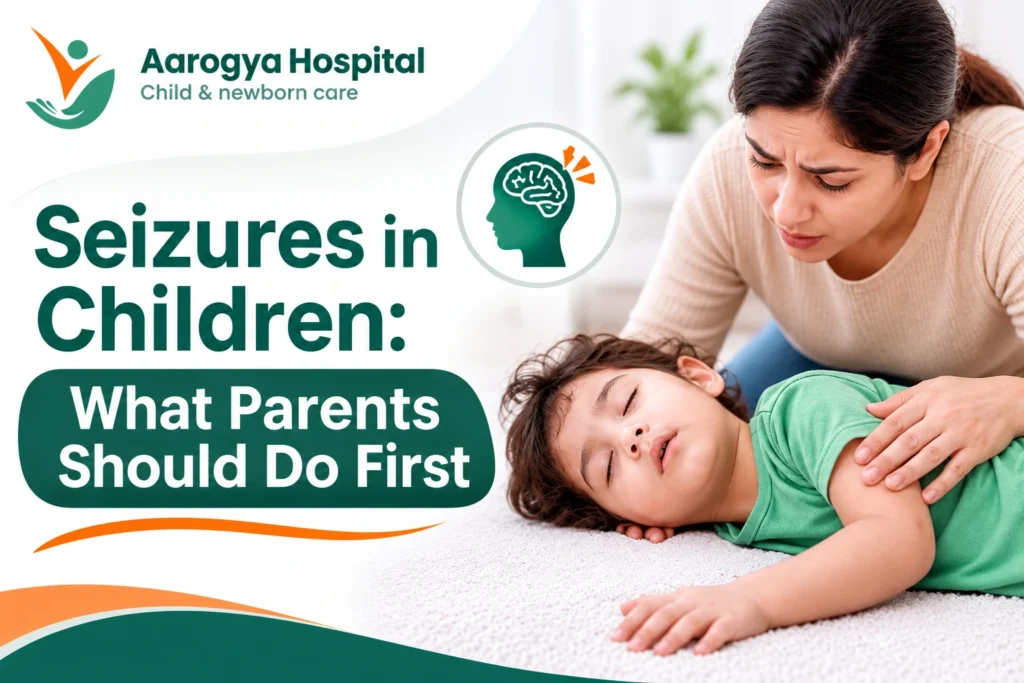
Parent comforting a child lying on their side during a seizure, a key first aid step for seizures in children
BLOG

Seizures in Children What Parents Should Do First

Seeing your child have a seizure is scary. Your child may shake, stare, or fall without warning. However, most seizures stop on their own within a few minutes. So, the first thing to do is stay calm. Then, follow the simple steps in this guide. At Aarogya Hospital in Chandigarh, we want every parent to know what to do in those first few moments. What Is a Seizure in a Child? A seizure is a short burst of unusual activity in the brain. As a result, a child may shake, stiffen, stare blankly, or lose awareness. Some seizures last only a few seconds. Others may go on for a few minutes. Not every seizure looks the same. For example, some children jerk their arms and legs. Others simply stop, stare, and seem lost in thought. Also, many children feel sleepy or confused after the seizure ends. Common Signs of a Seizure Seizure signs can differ from child to child. Here are the signs parents see most often: Sudden shaking or jerking of the arms and legs A stiff body or a sudden fall Staring with no reply when you call Eyes rolling up or turning to one side Loss of bladder control Pale or blue lips Deep sleep or confusion right after What Parents Should Do First When a seizure starts, every second feels long. Therefore, a clear plan helps you act with confidence. Follow these steps in order: Stay calm and stay close. Your child needs you near. First, take a deep breath. Then, speak in a soft and steady voice. Note the time. Look at the clock as soon as the seizure begins. In addition, the exact time helps the doctor decide the next step. Clear the area. Move sharp, hard, or hot things away. Next, place something soft, such as a folded cloth, under the head. Turn your child on their side. This keeps the airway open. Moreover, it lets saliva or vomit drain out of the mouth. Loosen tight clothes. Open the collar and remove glasses. As a result, your child can breathe with ease. Watch and remember. Notice which body parts move and for how long. Later, share these details with the doctor. Stay until your child is fully awake. After the seizure, your child may feel tired or scared. So, hold them gently and talk softly until they wake up fully. What Not to Do Some common habits can cause harm. Therefore, please avoid the following: Do not put anything in your child’s mouth. A child cannot swallow the tongue, and fingers or spoons may cause injury. Do not hold your child down or try to stop the shaking. Not give water, food, or medicine by mouth until your child is fully awake. Do not splash water on the face or shake the child. Do not leave your child alone, even for a short time. When to Call for Emergency Help Most seizures end quickly. Still, some need urgent care. Call an ambulance (108 in India) or go to the nearest hospital right away if: The seizure lasts more than 5 minutes Another seizure starts before your child wakes up Your child has trouble breathing or the lips stay blue This is your child’s first seizure Your child hurt the head or body during the fall Child has a high fever with a stiff neck, rash, or repeated vomiting Your child does not wake up normally after the seizure If you feel unsure, it is always safer to seek help. After all, a quick check can give you peace of mind. Seizures With Fever (Febrile Seizures) Some children have a seizure when they have a high fever. Doctors call this a febrile seizure. It is most common between 6 months and 5 years of age. Although it looks frightening, it is usually harmless and does not damage the brain. However, your child should still see a doctor. That way, the cause of the fever can be found and treated. Common Causes of Seizures in Children Seizures can happen for many reasons. For instance, doctors often find one of these causes: High fever Epilepsy Infections of the brain or its lining, such as meningitis Head injury Low blood sugar, low calcium, or low sodium Problems present from birth Because the causes differ, each child needs a proper check-up. How Doctors Find the Cause After a seizure, the doctor will first ask about your child’s health and the event itself. Next, the doctor will examine your child. Depending on the case, tests may follow. These can include blood tests, an EEG (a test of brain waves), or a brain scan. Finally, the doctor will explain the results and suggest a treatment plan. Tips for Parents at Home Once your child is home, a few habits can keep them safe. In particular, these tips help: Keep a seizure diary with the date, time, length, and possible triggers. Give medicines on time and never stop them without your doctor’s advice. Make sure your child gets enough sleep. Supervise baths, swimming, and climbing. Tell teachers and caregivers what to do if a seizure happens. Why Choose Aarogya Hospital, Chandigarh If your child has had a seizure, please do not wait. Early care can bring clear answers and better peace of mind. At Aarogya Hospital in Chandigarh, our doctors listen to your concerns, examine your child with care, and explain each step in plain words. In addition, we support families from Chandigarh, Mohali, Panchkula, and nearby areas. Worried about your child? Contact Aarogya Hospital, Chandigarh, today to book a consultation. Conclusion A seizure is a frightening moment for any parent. Yet, with the right steps, you can keep your child safe. To sum up, stay calm, note the time, turn your child on their side, and never put anything in the mouth. Finally, seek medical help and let a doctor find the cause. Follow up Instagram and Facebook for more information. Frequently Asked Questions Is one seizure the same […]
24×7 pediatric emergency hospital in Chandigarh – Aarogya Hospital
BLOG

24×7 Pediatric Emergency Hospital in Chandigarh: Quick Care for Children

Children can become sick or get hurt at any time. Sometimes, a high fever, breathing problem, injury or severe stomach pain needs quick medical care. During such times, parents need a hospital where their child can get help on time. Aarogya Hospital provides emergency care for newborn babies, infants and children in Chandigarh. The hospital offers 24×7 emergency support and advanced medical facilities for children who need urgent care. The hospital is located in Khudda Lahora, near PGI Chandigarh. It is also easy to reach for families from Panchkula, Mohali and nearby areas. Why Is 24×7 Pediatric Emergency Care Important? Children can face health problems at any time. Sometimes, their condition can get worse very quickly. Therefore, getting medical help on time is very important. Young children may not be able to explain what is hurting them. As a result, parents should watch for sudden changes in their child’s health. A 24×7 pediatric emergency hospital helps parents get medical care at any time, including nights, weekends and holidays. Early medical care helps doctors: Find the cause of the problem. Check the child’s health. Start treatment on time. Monitor children who need extra care. Guide parents about the next steps. When Should You Take Your Child to a Pediatric Emergency Hospital? Some health problems need immediate medical care. Therefore, parents should never ignore serious symptoms. Take your child to an emergency hospital if you notice any of these signs. 1. High Fever or Fever with Other Symptoms Fever is common in children. However, some signs need urgent medical care. Watch for: Fever with breathing problems. Unusual sleepiness. Fits or seizures. Not responding properly. Signs of dehydration, such as a dry mouth and less urine. If your child has these symptoms, seek medical help quickly. 2. Breathing Problems Breathing problems can become serious very quickly. Look for these warning signs: Fast or difficult breathing. Chest pulling inward while breathing. Blue lips or face. Severe wheezing. Unusual sounds while breathing. If your child has any of these signs, get emergency medical help immediately. 3. Repeated Vomiting or Loose Motions Repeated vomiting and loose motions can cause a child to lose too much water. This is called dehydration. Watch for these signs: Dry mouth. Less urine than usual. Feeling very weak. No tears or fewer tears while crying. Unusual sleepiness. If you notice these signs, get your child checked by a doctor. 4. Seizures or Fits Seeing a child have a seizure can be frightening for parents. However, staying calm and taking the right steps is important. During a seizure: Place your child on their side on a safe surface. Move hard and sharp objects away. Do not hold your child down. Never put anything inside their mouth. Note how long the seizure lasts. Call emergency services if it is your child’s first seizure, it lasts more than five minutes or your child has trouble breathing. 5. Accidents and Injuries Children may get hurt while playing, running or falling. Some injuries need quick medical attention. Take your child to an emergency hospital if they have: A serious head injury. Deep cuts or heavy bleeding. A possible broken bone. Serious burns. Loss of consciousness. 6. Severe Stomach Pain Sudden or severe stomach pain should not be ignored. It may be caused by an infection or another health problem. If your child has strong or ongoing stomach pain, get medical advice without delay. Pediatric Emergency Services at Aarogya Hospital, Chandigarh Aarogya Hospital provides emergency care for newborn babies and children. The hospital focuses on early check-ups, proper treatment and regular health monitoring. Here are some important medical facilities available at the hospital. 24×7 Emergency Medical Support Medical emergencies can happen at any time. Therefore, quick medical help is very important. Aarogya Hospital provides 24×7 emergency support for children who need urgent medical care. Advanced Level III NICU Some newborn babies need extra care after birth. This may happen because of early birth, low birth weight, breathing problems or other health issues. Aarogya Hospital has an advanced Level III Neonatal Intensive Care Unit (NICU). The NICU provides special care for newborn babies. It also allows doctors to monitor babies who need extra medical support. Advanced Breathing Support Some newborn babies and children may have trouble breathing. In such cases, doctors check their condition and decide which type of breathing support is needed. The treatment depends on the child’s health and medical condition. Infection Testing and Treatment Children can develop different types of infections. Early testing helps doctors find the cause of the infection. After checking the reports, doctors can suggest the right treatment. Therefore, early medical care is important to prevent health problems from becoming more serious. Special Care for Newborn Babies Newborn babies need special attention during their first days of life. Some babies may need regular check-ups, close monitoring and extra medical care. Aarogya Hospital provides specialised newborn care for babies who need extra support. Why Choose Aarogya Hospital for Pediatric Emergency Care in Chandigarh? Choosing the right hospital during an emergency is important for every parent. Aarogya Hospital offers: 24×7 emergency medical support. Advanced Level III NICU. Special care for newborn babies and children. Advanced breathing support facilities. Close monitoring of seriously ill newborns. A location in Khudda Lahora, near PGI Chandigarh. The hospital aims to provide timely medical care and support to children and their parents. Pediatric Emergency Hospital Near PGI Chandigarh, Panchkula and Mohali Finding a children’s emergency hospital near your home can make a big difference during an emergency. Aarogya Hospital is located in Khudda Lahora, near PGI Chandigarh. It is accessible to families looking for newborn and child healthcare in: Chandigarh. Panchkula. Mohali. Khudda Lahora. Nearby areas of Chandigarh. If your child shows serious warning signs, do not wait for the symptoms to improve. Get medical help as soon as possible. What Should Parents Do During a Child’s Medical Emergency? A medical emergency can be stressful for parents. However, staying calm and taking the right steps can help. Follow […]

Pediatric emergency care in Chandigarh at Aarogya Hospital
BLOG

Pediatric Emergency Care in Chandigarh: When to Seek Help

A Simple Guide for Parents to Know Emergency Signs in Children Children can become sick or get hurt at any time. Sometimes, small health problems get better with simple care at home. However, some health problems need quick medical help. As a parent, you should know when your child needs emergency care. Getting medical help on time can prevent serious problems and keep your child safe. If you are looking for pediatric emergency care in Chandigarh, knowing the warning signs can help you take the right steps. Aarogya Hospital in Chandigarh provides medical care for children who need attention. Families from Chandigarh, Panchkula and Mohali can contact the hospital to learn about its available medical services. What Is Pediatric Emergency Care? Pediatric emergency care means quick medical help for children who suddenly become sick or get badly hurt. It covers babies, toddlers and older children. Children may not always be able to tell you what is wrong. Therefore, parents should watch for changes in their child’s behaviour, breathing, eating and daily activities. Some common emergencies in children include: High fever with serious symptoms Trouble breathing Severe water loss from the body (dehydration) Seizures or fits Serious falls or injuries Severe allergic reactions Repeated vomiting Sudden loss of consciousness Severe stomach pain These problems may need quick medical help. 10 Warning Signs That Your Child Needs Emergency Medical Care Knowing these signs can help parents act quickly. Here are 10 warning signs you should never ignore. 1. Trouble Breathing Breathing problems can become serious very quickly in children. Look for these signs: Fast or difficult breathing Chest moving inward while breathing Noisy breathing or wheezing Blue or grey lips and skin Trouble crying, talking or drinking milk because of breathing problems If your child has trouble breathing, get emergency medical help immediately. 2. High Fever with Other Serious Signs Fever is common in children. It usually happens when the body fights an infection. However, fever with other serious signs may need quick medical help. Look for these signs: Too much sleep or trouble waking up Seizures or fits Trouble breathing A rash that does not fade when pressed Severe headache or a stiff neck Signs of water loss from the body Important: A baby younger than 3 months with a temperature of 38°C or higher needs urgent medical attention. 3. Seizures or Fits A seizure can cause sudden shaking or stiffness in the body. Your child may also stop responding for a short time. If your child has a seizure: Place your child on their side when possible. Move hard or sharp objects away. Do not try to stop the shaking. Never put anything inside your child’s mouth. Check how long the seizure lasts. Call emergency services if this is your child’s first seizure or if it lasts more than 5 minutes. Also, get emergency help if your child has trouble breathing or does not become alert again. 4. Severe Dehydration (Water Loss) Children can lose too much water because of vomiting, loose motions or fever. Common signs include: Very dry mouth and tongue Fewer wet nappies or less urine Sunken eyes No tears while crying Unusual weakness or sleepiness Trouble drinking fluids Severe water loss can be dangerous. Therefore, get urgent medical help if you notice these signs. 5. Repeated Vomiting or Severe Loose Motions Children may vomit because of an infection or stomach problem. However, repeated vomiting and loose motions can cause the body to lose too much water. Contact a doctor if your child: Cannot keep fluids down Has blood in vomit or stool Has severe stomach pain Shows signs of water loss Becomes very weak or sleepy Do not ignore these signs, especially in babies and young children. 6. Serious Falls or Head Injuries Children may fall while playing or running. Most small falls are not serious. However, some head injuries need quick medical help. Look for these signs: Loss of consciousness Repeated vomiting after a head injury Severe or increasing headache Strange behaviour or confusion Seizures or fits Trouble walking or keeping balance Bleeding that does not stop If your child has a serious head injury, get emergency medical help immediately. 7. Severe Allergic Reactions Some children may have an allergic reaction after eating certain foods, taking medicines or getting insect bites. Warning signs include: Swelling of the lips, tongue or throat Trouble breathing Sudden dizziness or collapse Skin rashes with other symptoms Repeated vomiting with signs of an allergy A severe allergic reaction is called anaphylaxis. It is a medical emergency. If your child has a prescribed adrenaline auto-injector, use it immediately. Then call emergency services. 8. Sudden Unconsciousness or Extreme Sleepiness If your child suddenly becomes unconscious, is hard to wake up or does not respond normally, get emergency help immediately. This may happen because of an infection, injury, low blood sugar or another serious health problem. Do not wait for your child to get better on their own. 9. Severe Stomach Pain Mild stomach pain can happen because of gas, constipation or digestion problems. However, severe or long-lasting stomach pain needs medical attention. Look for these signs: Severe pain that does not get better A swollen or hard stomach Repeated vomiting Blood in the stool Stomach pain with fever Trouble walking because of pain A doctor can check your child and find the reason for the pain. 10. Serious Cuts, Burns or Bleeding Children may get cuts, burns or other injuries while playing or doing daily activities. Get emergency medical help if your child has: Heavy bleeding that does not stop Deep cuts Serious burns A possible broken bone Severe pain or swelling An injury to the head, neck or chest If there is heavy bleeding, press a clean cloth firmly against the wound while arranging emergency help. When Should Parents Take Their Child to the Emergency Department? Not every illness needs an emergency hospital visit. However, parents should not wait when serious signs appear. Here is a simple guide to help […]

Aarogya Support 1

Aarogya Hospital Chandigarh

Doctor Avatar
Welcome to Aarogya Hospital (Near PGI Chandigarh) 🏥
I'm your assistant here to help with your medical enquiry.
Doctor Avatar
Which of our services or departments are you interested in?