
Ayushman Bharat empanelled Chandigarh

premature babies

Kangaroo Mother Care and breast milk in the NICU
BLOG

Kangaroo Mother Care and Breast Milk in the NICU

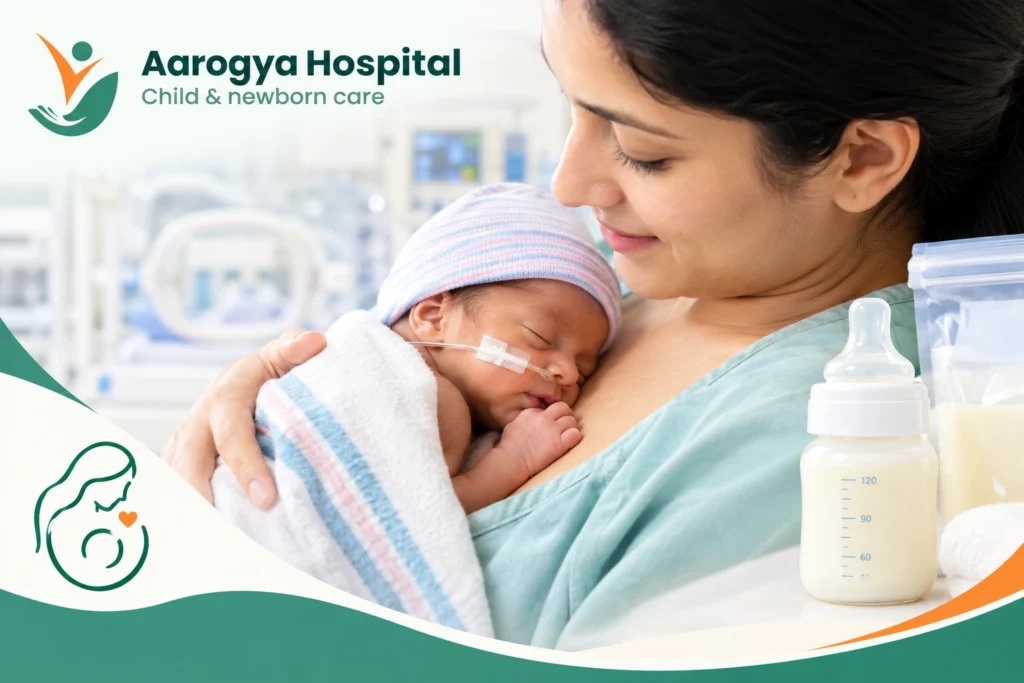
When a baby is born early or has a low birth weight, they may need extra care. These babies often need treatment in a Neonatal Intensive Care Unit (NICU). Two important parts of newborn care are Kangaroo Mother Care (KMC) and breast milk feeding. Both can help support a baby’s growth and health. At Aarogya Hospital in Khudda Lahora, near PGI Chandigarh, parents can ask about newborn care, skin-to-skin contact, and feeding support. The right care depends on each baby’s health and medical needs. What Is Kangaroo Mother Care (KMC)? Kangaroo Mother Care is a way to care for a baby through skin-to-skin contact. During KMC, a baby is placed against the parent’s bare chest and held safely. KMC is especially helpful for premature babies and babies with low birth weight. It helps parents bond with their babies and take part in their care. However, the baby must be ready for KMC. If a baby needs intensive treatment, the NICU team will decide when and how to start it safely. Benefits of Kangaroo Mother Care for Premature Babies Kangaroo Mother Care can offer several benefits when provided safely. 1. Helps Keep the Baby Warm Premature and low-birth-weight babies can lose body heat quickly. Skin-to-skin contact helps keep their body temperature stable. 2. Supports Breastfeeding KMC can help mothers start and continue breastfeeding. It also gives babies a chance to develop their feeding skills when they are ready. 3. Builds a Strong Bond Holding a baby close helps parents feel connected to their newborn. It also gives them a chance to take an active role in their baby’s care. 4. Supports Healthy Growth KMC, along with proper feeding and medical care, can help support healthy growth in premature and low-birth-weight babies. 5. Helps Support Body Stability KMC may help keep a baby’s heart rate and breathing more stable. However, the NICU team must check the baby and decide when skin-to-skin contact is safe. Why Is Breast Milk Important for NICU Babies? Breast milk gives babies important nutrients for growth. It also contains natural protective substances that help support their immune system. Mother’s own milk is usually the first choice for premature and low-birth-weight babies. These babies may have a higher risk of infection and feeding problems. If the mother cannot provide enough milk, the medical team may suggest screened donor human milk, if available, or suitable preterm formula. The feeding plan depends on the baby’s age, weight, health, and ability to digest milk. Some premature babies may also need extra nutrients as advised by their doctor. Key Benefits of Breast Milk for Newborns Provides Important Nutrients Breast milk contains nutrients that help babies grow. Its composition also changes as the baby develops. Helps Protect Against Infections Breast milk contains antibodies and other protective substances. These help support the baby’s developing immune system. Supports Digestion Human milk is generally easy for babies to digest. It can be especially useful for premature babies with sensitive digestive systems. Supports Brain Development and Growth Good nutrition helps support brain development, weight gain, and overall growth. Some premature babies may need extra nutrients to meet their needs. How Can Mothers Provide Breast Milk in the NICU? Some babies cannot breastfeed directly because they are born early or need medical treatment. In these cases, mothers may express their milk for their babies. The NICU team can guide mothers through these steps. Step 1: Start Expressing Breast Milk When possible, mothers can start expressing colostrum. Colostrum is the first milk produced after birth. Even small amounts can be valuable for a newborn. Step 2: Collect and Store Milk Safely Mothers should wash their hands before expressing milk. They should also follow the hospital’s instructions for collecting, labelling, and storing milk. These steps help keep the milk clean and safe for the baby. Step 3: Feed the Baby as Advised Depending on the baby’s condition, expressed breast milk may be given through a feeding tube or another method recommended by the medical team. Direct breastfeeding can begin when the baby is ready. Step 4: Express Milk Regularly Regular milk expression can help mothers build and maintain their milk supply. The healthcare team or lactation specialist can guide mothers on how often to express milk. Step 5: Combine KMC With Feeding Support When it is safe, KMC and breast milk feeding can work together to support newborn care. The NICU team can show parents how to hold their baby safely and support feeding. Can Babies in the NICU Receive Kangaroo Mother Care? Yes, many babies in the NICU can receive Kangaroo Mother Care. This includes some premature babies and babies with low birth weight. However, every baby has different medical needs. Some babies need breathing support, medicines through a vein, or close monitoring. In these cases, trained staff may need to help move and position the baby safely. Parents should never move a critically ill baby or disconnect medical equipment without help from the NICU team. When Can a Premature Baby Start Breastfeeding? Every baby develops at a different pace. Some premature babies can breastfeed early, while others need more time. A baby must be able to suck, swallow, and breathe safely during feeding. Until the baby is ready, the medical team may recommend giving expressed breast milk through a feeding tube. As the baby grows stronger, the team will check when direct breastfeeding can begin. They can also guide the mother through the process. NICU Care at Aarogya Hospital, Chandigarh Aarogya Hospital is located in Khudda Lahora, near PGI Chandigarh. The hospital provides newborn and paediatric care. Parents of premature babies or newborns who need medical support can contact the hospital to ask about available NICU services. Newborn care may include: Help with keeping the baby warm Feeding and breast milk support Close monitoring of the baby’s health Breathing support when needed Guidance for parents on newborn care The treatment plan depends on the baby’s condition and the doctor’s advice. Families from Chandigarh, Mohali, Panchkula, and nearby areas […]

Level III NICU in Chandigarh providing advanced care for premature and critically ill newborns
BLOG

What Is a Level III NICU? A Parent’s Guide

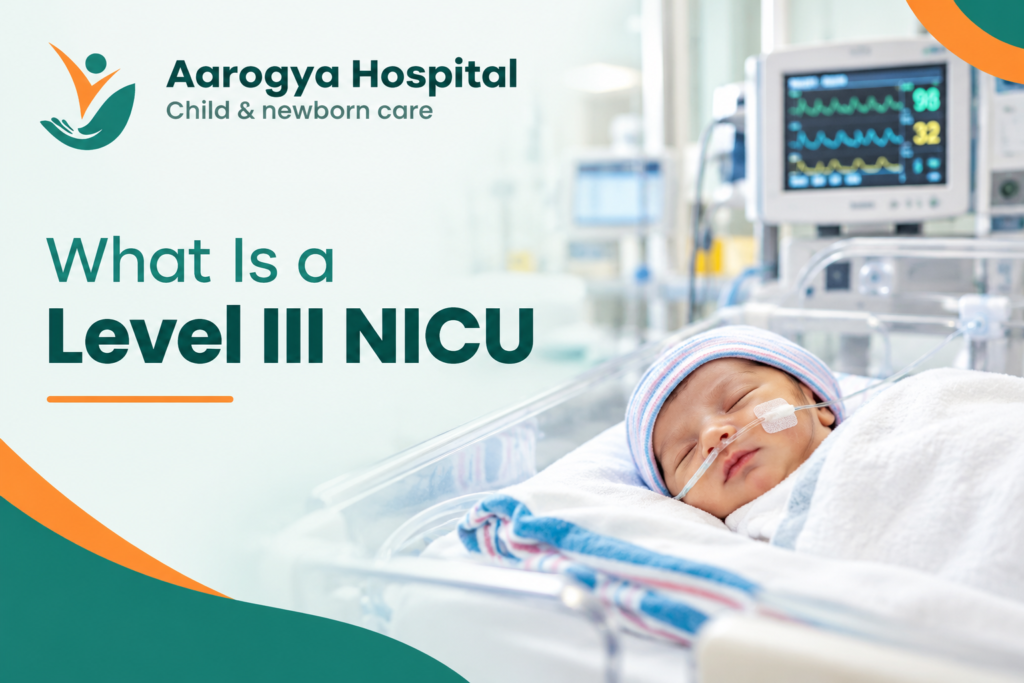
When a newborn needs special medical care, parents may hear terms like “Level III NICU” and wonder what they mean. A Level III NICU provides advanced care for premature, very sick, or medically complex newborns. If you are looking for a Level III NICU in Chandigarh, knowing what care and services are available can help you make the right decision for your baby during a difficult time. What Is a Level III NICU? A Level III NICU is a special hospital unit that cares for newborns who need close monitoring and intensive treatment. Some babies may be born very early, while others may have breathing problems, infections, low birth weight, or other health problems that need special newborn care. A Level III NICU usually offers: Specialised neonatal doctors and trained nursing staff Continuous monitoring of newborns Advanced breathing support Equipment designed for premature and critically ill babies Care for newborns with serious infections or complications Access to specialist investigations and treatments Support for babies who need longer intensive care However, services vary between hospitals. Therefore, parents should ask the hospital team exactly what level of neonatal care is available. Which Babies May Need a Level III NICU? Not every newborn needs intensive care. Doctors recommend NICU care when a baby needs close monitoring or special treatment. A baby may need Level III NICU care because of: Very premature birth Very low birth weight Breathing problems Severe infections Difficulty maintaining oxygen levels Low blood sugar or other metabolic problems Complications around birth Need for advanced respiratory support Certain congenital conditions Problems that require specialist neonatal monitoring Because every baby is different, doctors assess each one individually and decide which level of care is appropriate. What Care Does a Level III NICU Provide? A Level III NICU offers several forms of advanced newborn care. 1. Breathing Support Some premature or sick newborns may have trouble breathing on their own. Therefore, the NICU may provide breathing support based on the baby’s needs. This may include oxygen, non-invasive breathing support, or a ventilator when needed. 2. Continuous Monitoring The NICU team closely tracks a baby’s: Heart rate Breathing Oxygen levels Temperature Blood pressure Feeding and fluid balance This constant monitoring helps doctors and nurses spot changes quickly and act without delay. 3. Care for Premature Babies Premature babies may have problems with breathing, feeding, keeping warm, and fighting infections. Therefore, a Level III NICU provides special care while the baby’s organs continue to grow and develop. 4. Care for Low-Birth-Weight Babies Babies with low birth weight may need extra help with feeding, keeping warm, breathing, and preventing infections. During their stay, the NICU team closely checks their growth, health, and overall condition. 5. Treatment for Newborn Infections Newborns can become very sick because of infections. In these cases, the NICU team closely monitors the baby, performs the needed tests, provides supportive care, and gives antibiotics when needed. 6. Feeding Support Some premature or sick babies may not be able to feed normally at first. In such cases, the neonatal team provides the right feeding support and closely monitors the baby’s nutrition and growth. What Makes Level III NICU Care Different? The main difference is the higher level of specialised care. A Level III NICU usually has advanced equipment, trained neonatal staff, and the ability to care for very sick newborns. However, the facilities and specialist services can vary between hospitals. Therefore, parents should ask about the NICU facilities and services before choosing a hospital. How Long Does a Baby Stay in a Level III NICU? There is no fixed time for a baby to stay in the NICU. Some babies may need care for a few days, while premature or seriously ill babies may need care for several weeks or longer. The length of stay depends on: Gestational age Birth weight Medical condition Breathing needs Feeding ability Growth and weight gain Response to treatment During this time, doctors regularly check the baby’s progress and talk with the parents about the next steps in care. What Should Parents Ask About a Level III NICU? If your baby may need intensive neonatal care, consider asking the hospital team: What level of NICU care does the hospital provide? Which breathing support options are available? Is a neonatologist available? How are premature and low-birth-weight babies managed? What monitoring is available? How are parents involve in their baby’s care? What happens if the baby needs a higher level of specialist treatment? Is newborn referral or transfer support available? Asking these questions early can help you understand the care and services available before and during your baby’s NICU stay. When Should Parents Seek Urgent Newborn Care? Newborns can become unwell very quickly. Seek urgent medical help if your baby: Has difficulty breathing Looks blue or unusually pale Is not feeding properly Is unusually sleepy or hard to wake Vomits repeatedly Has a fever or unusually low temperature Has seizures Has severe pauses in breathing Shows signs of serious infection If your newborn looks very unwell, do not wait at home. Seek medical help immediately. Level III NICU in Chandigarh When choosing a Level III NICU in Chandigarh, check the hospital’s NICU facilities, medical team, monitoring equipment, emergency care, and referral support. Aarogya Hospital Chandigarh provides specialised newborn and NICU care for babies who need close monitoring and medical support. Parents can speak with the neonatal team to understand the care their baby needs. The right level of care depends on each baby’s condition, so always follow the advice of your baby’s doctor or neonatologist. Conclusion A Level III NICU provides advanced care for premature, seriously ill, or medically complex newborns. It offers close monitoring, breathing support, feeding help, infection treatment, and other specialised care based on each baby’s needs. If your newborn needs NICU care, talk to the medical team about your baby’s condition, available treatments, and the level of care needed. For advanced newborn care in Chandigarh, Aarogya Hospital can help families understand their baby’s care and treatment […]

Aarogya Support 1

Aarogya Hospital Chandigarh

Doctor Avatar
Welcome to Aarogya Hospital (Near PGI Chandigarh) 🏥
I'm your assistant here to help with your medical enquiry.
Doctor Avatar
Which of our services or departments are you interested in?