
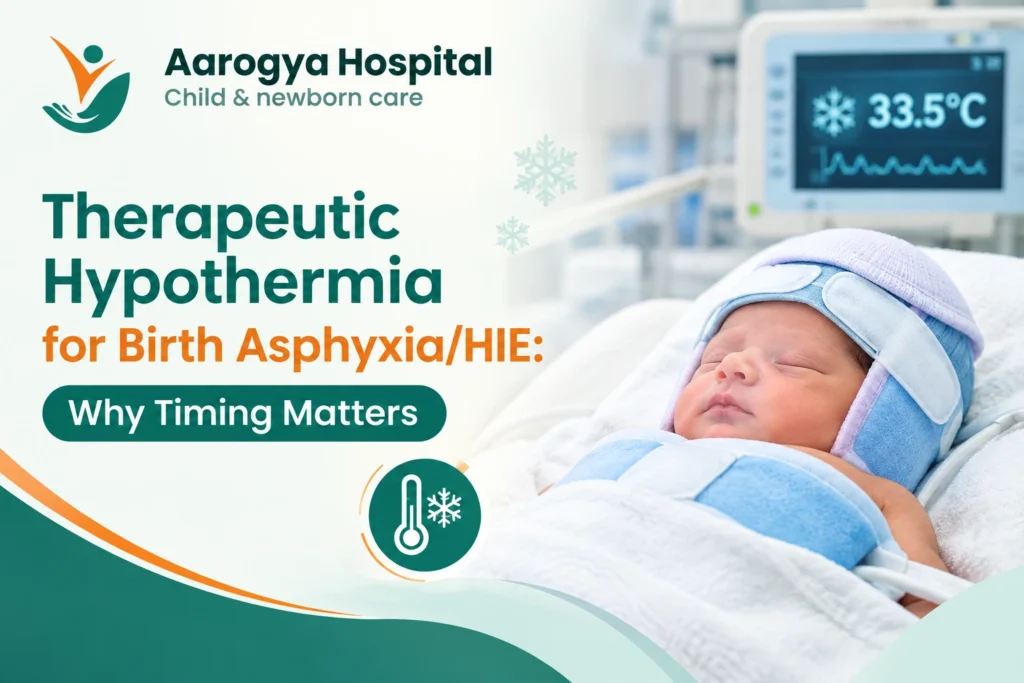
Therapeutic Hypothermia for Birth Asphyxia/HIE: Why Timing Matters
Birth is a special time for every family. However, some babies may not get enough oxygen before, during, or after birth. This can affect their brain and may require urgent medical care.
Therapeutic hypothermia is a treatment that helps protect the brain of some newborn babies. These babies may have a brain injury caused by a lack of oxygen. This condition is called Hypoxic-Ischaemic Encephalopathy (HIE).
During this treatment, doctors carefully lower the baby’s body temperature. This helps reduce further damage to the brain.
Timing is very important. For babies who need this treatment, doctors should ideally start it within the first six hours after birth.
In this guide, Aarogya Hospital, Chandigarh, explains newborn cooling therapy, how it works, and why starting treatment early is important.
What Is Birth Asphyxia?
Birth asphyxia happens when a baby does not get enough oxygen before, during, or shortly after birth.
As a result, the baby’s brain and other organs may not get enough oxygen-rich blood.
This can happen due to problems during pregnancy, labour, or birth. However, not every baby who does not get enough oxygen during birth develops brain damage.
Sometimes, a lack of oxygen can harm a baby’s brain. This can lead to a condition called Hypoxic-Ischaemic Encephalopathy (HIE).
What Is Hypoxic-Ischaemic Encephalopathy (HIE)?
HIE is a type of brain injury in newborn babies. It happens when the brain does not get enough oxygen and blood flow.
HIE can be mild, moderate, or severe. Therefore, doctors need to check the baby as soon as possible.
Some possible warning signs include:
- Difficulty breathing after birth.
- Weak muscles or a floppy body.
- Being very sleepy or difficult to wake.
- Difficulty sucking or feeding.
- Seizures or unusual body movements.
- Needing breathing support for a long time after birth.
These signs do not always mean the baby has HIE. However, doctors must check the baby quickly, especially if there were problems during birth that caused low oxygen levels.
What Is Therapeutic Hypothermia for Newborns?
Therapeutic hypothermia is also called newborn cooling therapy or brain cooling treatment for HIE.
It helps protect the brain after a baby has suffered from a lack of oxygen.
During treatment, doctors use special equipment to gently lower the baby’s body temperature to around 33.5°C. If the baby is suitable for this treatment, cooling usually continues for 72 hours (3 days).
After 72 hours, doctors slowly bring the baby’s temperature back to normal.
This treatment slows down some of the harmful changes that can damage brain cells after oxygen loss.
However, not every newborn needs cooling therapy. A neonatal specialist must first check the baby and decide whether this treatment is suitable.
Why Does Timing Matter in Therapeutic Hypothermia?
When a baby’s brain does not get enough oxygen, brain cells can become damaged. Some damage may continue even after the baby’s oxygen levels improve.
Therapeutic hypothermia slows down some of these harmful changes. However, doctors need to start treatment early for the best chance of benefit.
For eligible newborns, treatment should ideally begin within the first six hours after birth.
Research shows that cooling therapy can improve survival and lower the risk of major long-term disabilities in selected babies with moderate-to-severe HIE.
Here is why early treatment is important.
1. It Helps Protect Brain Cells
A lack of oxygen can damage a baby’s brain cells. This damage may continue even after oxygen levels return to normal.
Therapeutic hypothermia slows some of these harmful changes. As a result, it may help reduce further brain damage.
2. Early Treatment May Improve the Outcome
Research supports starting cooling therapy within the first six hours for eligible newborns.
Waiting too long may reduce the benefits. Therefore, doctors need to recognise HIE quickly and decide whether the baby needs treatment.
3. It May Reduce Long-Term Problems
HIE can affect a child’s movement, learning, hearing, vision, and development.
For eligible babies, therapeutic hypothermia can improve the chances of survival without major disability. However, it cannot prevent every problem or guarantee full recovery.
4. It Helps Doctors Plan Further Treatment
Early diagnosis helps doctors check the baby’s breathing, brain activity, and other organs.
Doctors can then plan the right care. This may include breathing support, seizure treatment, and brain monitoring.
How Does Therapeutic Hypothermia Work?
Therapeutic hypothermia involves several steps. Doctors and nurses watch the baby closely throughout the treatment.
Step 1: Checking the Baby
First, doctors check the baby’s birth history, possible oxygen loss, blood test results, and brain function.
These checks help them decide whether the baby needs cooling therapy.
Step 2: Cooling the Baby
If the baby meets the treatment criteria, doctors use special equipment to lower the baby’s body temperature.
For many eligible newborns, the target temperature is around 33.5°C.
Step 3: Monitoring the Baby
During treatment, doctors and nurses regularly check the baby’s:
- Body temperature.
- Heart rate and breathing.
- Blood pressure.
- Blood test results.
- Brain activity and overall health.
They also watch for seizures and other problems.
Doctors may use EEG or aEEG tests to check brain activity when needed and available.
Step 4: Continuing the Treatment
Cooling usually continues for 72 hours in eligible newborns.
During this time, the medical team provides supportive care and checks the baby’s condition.
Step 5: Slowly Warming the Baby
After 72 hours, doctors slowly bring the baby’s temperature back to normal.
The medical team continues to monitor the baby during this process.
Which Newborns May Need Therapeutic Hypothermia?
Cooling therapy is generally used for eligible babies born at 36 weeks of pregnancy or later who have moderate-to-severe HIE.
Before starting treatment, doctors check:
- Whether the baby had low oxygen levels around birth.
- Blood test results and other medical findings.
- Signs of moderate or severe brain injury.
- Seizures or unusual brain activity.
- The baby’s age at birth and overall health.
In some cases, doctors may also consider treatment for babies born at 35 weeks. They must carefully assess the risks and possible benefits.
Cooling therapy is generally not recommended for babies born before 35 weeks or for babies with mild HIE.
The final decision must always be made by an experienced neonatal team.
What If Treatment Starts After Six Hours?
The first six hours after birth are the best-established time to start therapeutic hypothermia.
However, parents should not assume that treatment is impossible after six hours.
In selected cases, doctors may consider cooling therapy between six and 24 hours after birth.
However, the benefits of starting late are less certain. Doctors must carefully check the baby and discuss the possible risks and benefits with the family.
Therefore, seek specialist care immediately if HIE is suspected. Do not delay medical help just because six hours have passed.
Important: Never try to cool a newborn at home. Do not use ice packs, cold water, or other cooling methods. These can seriously harm the baby.
Therapeutic hypothermia needs special equipment, trained medical staff, and continuous monitoring.
Why Is a Specialised NICU Important for HIE?
Babies with HIE may need more than cooling therapy. They may also need help with breathing, seizure control, and other health problems.
A Neonatal Intensive Care Unit (NICU) provides special care for newborns who need close monitoring.
Depending on the baby’s condition, treatment may include:
- Regular checks of vital signs.
- Breathing support when needed.
- Treatment for seizures.
- Brain monitoring with EEG or aEEG.
- Blood tests and other medical checks.
- Brain scans, such as an MRI, when needed.
- Regular checks of growth and development after discharge.
Experienced neonatal specialists and suitable medical equipment are important for this care.
If the birth hospital cannot provide cooling therapy, the medical team should quickly contact a suitable specialist centre. A transfer may then be arranged if needed.
Can Therapeutic Hypothermia Prevent All Brain Damage?
No. Therapeutic hypothermia can lower the risk of death or major disability in eligible newborns. However, it cannot prevent or reverse every type of brain injury.
A baby’s recovery depends on several factors. These include the amount of oxygen loss, the severity of brain injury, and other health problems.
Some children may later have problems with learning, movement, hearing, vision, or development.
Therefore, regular follow-up with paediatric and developmental specialists is important. This is necessary even if the baby appears healthy after leaving the hospital.
When Should Parents Seek Immediate Medical Help?
Get urgent medical help if your newborn has any of these signs:
- Difficulty breathing or repeated pauses in breathing.
- Blue or grey lips or skin.
- Seizures or repeated unusual movements.
- Extreme sleepiness or difficulty waking up.
- Poor feeding along with unusual weakness or sleepiness.
- Birth complications involving a possible lack of oxygen.
If your baby struggles to breathe, has a seizure, or does not respond, seek emergency care immediately.
Do not wait for more symptoms to appear.
Therapeutic Hypothermia at Aarogya Hospital, Chandigarh
Aarogya Hospital, Chandigarh, provides newborn and paediatric care.
Babies with possible birth asphyxia or HIE need a quick medical check. This helps doctors decide which treatment the baby needs.
Early diagnosis, quick referral, and access to the right newborn care are important.
If your newborn has experienced a possible lack of oxygen or shows signs of a brain problem, contact a qualified neonatal specialist immediately.
Before starting therapeutic hypothermia, doctors must confirm that the baby meets the treatment criteria. They must also ensure that the right cooling equipment, monitoring, and specialist support are available.
Please contact Aarogya Hospital directly to confirm whether therapeutic hypothermia is available at the hospital or whether a referral to another specialist centre is needed.
Conclusion
Therapeutic hypothermia is an important treatment for eligible newborns with moderate-to-severe HIE.
During treatment, doctors carefully lower the baby’s body temperature to help protect the brain from further damage.
However, timing matters. For babies who qualify, doctors should ideally start treatment within the first six hours after birth.
Early diagnosis and quick medical care may improve the baby’s chances of a better outcome.
If your newborn has experienced birth asphyxia or shows signs of a brain problem, seek urgent medical care. Early action and the right treatment are essential.
Aarogya Hospital, Chandigarh, supports newborns and families through medical assessment and appropriate care.
Follow up Instagram and Facebook for more information.
Frequently Asked Questions (FAQs)
What is the best time to start therapeutic hypothermia for HIE?
Doctors should ideally start treatment within the first six hours after birth for eligible newborns. Early treatment has the strongest evidence of benefit for babies with moderate-to-severe HIE.
How long does therapeutic hypothermia last?
Cooling usually continues for 72 hours. After that, doctors slowly bring the baby’s temperature back to normal while monitoring the baby closely.
Is therapeutic hypothermia safe for newborns?
Therapeutic hypothermia can help eligible newborns when doctors follow the correct guidelines. However, side effects can occur. Therefore, trained medical staff must monitor the baby closely.
Can a baby recover fully from HIE?
Some babies recover well, while others may develop long-term health or learning problems. Recovery depends on the severity of the brain injury and other medical factors. Regular follow-up helps doctors monitor the child’s development.
Can therapeutic hypothermia start after six hours?
In selected cases, doctors may consider starting treatment between six and 24 hours after birth. However, the benefits are less certain. A specialist must carefully assess the baby before making a decision.
Does every baby with birth asphyxia need cooling therapy?
No. Cooling therapy is generally used for newborns who meet specific medical criteria, usually those with moderate-to-severe HIE. Other babies may need different treatments.
Can parents cool a newborn at home?
No. Parents should never try to cool a newborn using ice packs, cold water, or other methods. Therapeutic hypothermia must be carried out in a suitable medical setting with special equipment and continuous monitoring.