
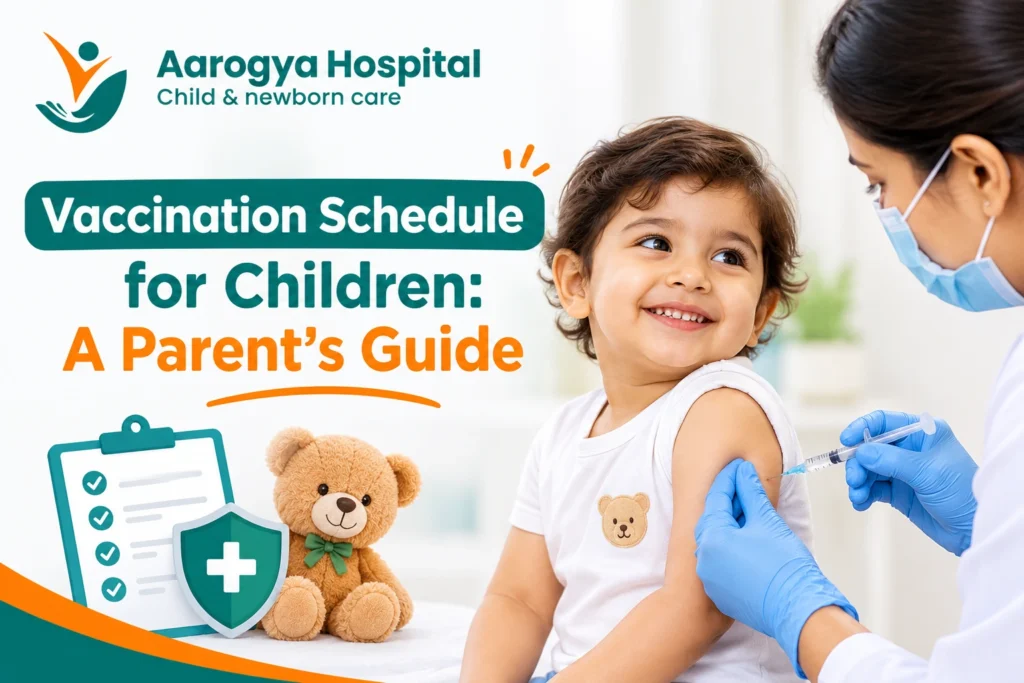
Vaccination helps protect children from serious diseases. Vaccines make the body’s immune system stronger and help it fight infections.
Children need different vaccines at different ages. Some vaccines are given at birth, while others are given during infancy, childhood and teenage years.
However, many parents are unsure about which vaccines their child needs and when to get them. Following the right vaccination schedule helps protect children at the right time.
At Aarogya Hospital, Chandigarh, we understand how important childhood vaccination is. Our paediatric care services help parents understand their child’s vaccine needs and follow the recommended vaccination schedule.
Why Is Vaccination Important for Children?
Vaccines help a child’s body fight harmful germs. They protect children from many serious diseases and infections.
Here are some important benefits of vaccination:
- Prevents serious diseases: Vaccines protect children from diseases like polio, measles, hepatitis B and diphtheria.
- Builds immunity: They help the body fight infections.
- Protects others: Vaccination also helps stop diseases from spreading.
- Reduces health risks: Vaccines lower the risk of serious illness and hospital visits.
- Supports healthy growth: They help children stay healthy as they grow.
Recommended Vaccination Schedule for Children in India
India’s National Immunisation Schedule (NIS) tells parents when children should receive different vaccines. It is part of the Universal Immunisation Programme (UIP).
Here is a general list of vaccines given to children in India.
Child’s Age | Recommended Vaccines |
At Birth | BCG, OPV-0, Hepatitis B birth dose |
6 Weeks | OPV-1, Pentavalent-1, Rotavirus-1, fIPV-1, PCV-1 |
10 Weeks | OPV-2, Pentavalent-2, Rotavirus-2 |
14 Weeks | OPV-3, Pentavalent-3, Rotavirus-3, fIPV-2, PCV-2 |
9–12 Months | MR-1, PCV Booster, JE-1 (in selected areas), Vitamin A first dose |
16–24 Months | DPT Booster-1, OPV Booster, MR-2, JE-2 (in selected areas), Vitamin A |
5–6 Years | DPT Booster-2 |
10 Years | Td |
16 Years | Td |
India’s National Immunisation Schedule (NIS) tells parents when children should receive different vaccines. It is part of the Universal Immunisation Programme (UIP).
Note: This is a general guide to India’s National Immunisation Schedule. Your child’s vaccine needs may depend on their age, health and previous doses. Private vaccination plans may also include extra vaccines. Always ask a paediatrician about the right schedule for your child.
Important Vaccines Every Parent Should Know About
Parents should know about the main vaccines given during childhood. Here is a simple explanation of some common vaccines.
1. BCG Vaccine
The BCG vaccine is usually given at birth. It helps protect children from serious forms of tuberculosis (TB).Parents should know about the main vaccines given during childhood. Here is a simple explanation of some common vaccines.
2. Hepatitis B Vaccine
This vaccine protects the liver from hepatitis B infection. The first dose is given at birth. It is best to give this dose within the first 24 hours.
3. Polio Vaccine
The polio vaccine protects children from polio. This disease can cause serious problems, including paralysis.
Children receive oral drops and injections to help protect them from polio.
4. Pentavalent Vaccine
The pentavalent vaccine protects children against five diseases:
- Diphtheria
- Whooping cough (pertussis)
- Tetanus
- Hepatitis B
- Hib infection
Children receive this vaccine in multiple doses during their first few months.
5. Rotavirus Vaccine
Rotavirus can cause severe diarrhoea in babies and young children. It can also lead to dehydration.
The rotavirus vaccine helps protect children from serious infections caused by this virus.
6. Pneumococcal Conjugate Vaccine (PCV)
The PCV vaccine protects children from pneumococcal infections. These infections can cause pneumonia, meningitis and other serious illnesses.
7. Measles-Rubella (MR) Vaccine
The MR vaccine protects children from measles and rubella. Both diseases can cause serious health problems.
Therefore, children should receive this vaccine at the recommended age.
8. DPT and Td Vaccines
These vaccines protect children from diphtheria, whooping cough and tetanus.
Booster doses help keep children protected as they grow older.
Are There Additional Vaccines for Children?
Yes. Apart from government vaccines, doctors may suggest some extra vaccines for children.
These vaccines may include:
- Influenza vaccine: Protects children against seasonal flu.
- Chickenpox vaccine: Helps prevent chickenpox.
- Hepatitis A vaccine: Protects the liver from hepatitis A infection.
- Typhoid vaccine (TCV): Helps protect children from typhoid fever.
- MMR vaccine: Protects against measles, mumps and rubella.
- HPV vaccine: Helps protect against HPV infections and some related cancers.
The right time and number of doses may be different for each vaccine. Ask your paediatrician which extra vaccines your child may need.
What Should Parents Do Before and After Vaccination?
A little preparation can make vaccination easier for parents and children.
Before vaccination:
- Check your child’s vaccination card.
- Tell the doctor about any past vaccine reactions.
- Inform the doctor if your child is unwell.
- Follow the doctor’s instructions.
- Ask about possible side effects.
After vaccination:
- Stay at the hospital or clinic for the advised observation time.
- Check for mild fever, redness or swelling.
- Give your child enough fluids.
- Follow the doctor’s advice if your child feels uncomfortable.
- Get medical help immediately if your child has trouble breathing or swelling of the face.
Some children may have mild side effects after vaccination. These usually go away on their own. However, serious reactions need immediate medical attention.
What If Your Child Misses a Vaccine Dose?
Sometimes, parents may miss a vaccine appointment because of illness, travel or other reasons.
However, missing a vaccine dose does not usually mean that all previous doses must be repeated.
Your paediatrician can suggest a catch-up schedule based on your child’s age and previous vaccines.
Therefore, keep your child’s vaccination card safe. If your child misses a dose, speak to a doctor about the next steps.
Why Is a Vaccination Record Important?
A vaccination card helps parents remember which vaccines their child has received. It also shows when the next vaccine is due.
Parents should:
- Keep the vaccination card safe.
- Write down the date of each vaccine.
- Remember upcoming vaccine dates.
- Carry the card during every doctor’s visit.
Keeping a proper record helps prevent missed vaccines. It also helps doctors plan future doses.
Child Vaccination and Paediatric Care at Aarogya Hospital, Chandigarh
Every child needs proper care and protection while growing up. Timely vaccination is an important part of keeping children healthy.
At Aarogya Hospital, Chandigarh, we provide paediatric care and guidance for children at different stages of life.
We also serve families from Chandigarh, Panchkula and Mohali.
Whether you want to know about routine vaccines, missed doses or extra vaccines, a paediatrician can guide you.
Book a paediatric consultation at Aarogya Hospital, Chandigarh, to discuss your child’s vaccination needs and get guidance on the right schedule.
Conclusion
Vaccination is one of the best ways to protect children from serious diseases. It helps build immunity and keeps children healthier as they grow.
Always follow the recommended vaccination schedule. Keep your child’s vaccination card updated and do not miss important doses.
If you have any questions about childhood vaccines, consult a paediatrician.
Follow us on Instagram and Facebook for more child health tips and updates.
Frequently Asked Questions (FAQs)
When should a baby receive the first vaccine?
Babies usually receive BCG, OPV-0 and the hepatitis B birth dose at birth. The hepatitis B vaccine should ideally be given within the first 24 hours. Ask your paediatrician about the correct timing.
How many vaccines does a child need?
The number of vaccines depends on the child’s age, health and previous doses. Children need different vaccines from birth to their teenage years.
Can my child get vaccinated during a mild cold?
Yes, children can often receive vaccines if they have a mild cold. However, tell your paediatrician before vaccination.
Is fever normal after vaccination?
Yes. Some children may have a mild fever, pain or swelling after vaccination. These problems usually go away on their own.
What happens if my child misses a vaccination?
Do not worry. Speak to your paediatrician about a catch-up schedule. Most missed doses can be given later without starting the entire process again.
Are government vaccines enough for children?
Government vaccines protect children from many serious diseases. However, doctors may suggest extra vaccines based on the child’s age and health.
Where can I get vaccination guidance in Chandigarh?
You can visit Aarogya Hospital, Chandigarh, for paediatric care and vaccination guidance. The hospital also serves families from Panchkula and Mohali.
अक्सर पूछे जाने वाले सवाल (FAQs)
बच्चे को पहली वैक्सीन कब लगवानी चाहिए?
जन्म के समय BCG, OPV-0 और Hepatitis B की पहली डोज दी जाती है। Hepatitis B का टीका जन्म के पहले 24 घंटों के अंदर लगवाना बेहतर होता है। सही समय के लिए अपने बच्चों के डॉक्टर से सलाह लें।
बच्चे को कितने टीके लगवाने जरूरी हैं?
बच्चे की उम्र, सेहत और पहले लगे टीकों के आधार पर वैक्सीन की संख्या अलग-अलग हो सकती है। बच्चों को जन्म से लेकर किशोरावस्था तक अलग-अलग टीकों की जरूरत होती है।
क्या हल्का जुकाम होने पर बच्चे को टीका लगवा सकते हैं?
हाँ, हल्का जुकाम होने पर भी अक्सर बच्चे को टीका लगाया जा सकता है। हालांकि, टीका लगवाने से पहले अपने बच्चों के डॉक्टर को जरूर बताएं।
क्या टीका लगने के बाद बुखार आना सामान्य है?
हाँ, कुछ बच्चों को टीका लगने के बाद हल्का बुखार, दर्द या सूजन हो सकती है। आमतौर पर ये परेशानी कुछ समय में अपने आप ठीक हो जाती है।
अगर बच्चे का कोई टीका छूट जाए तो क्या करें?
घबराने की जरूरत नहीं है। अपने बच्चों के डॉक्टर से मिलें और छूटे हुए टीके लगवाने के लिए सही समय-सारणी बनवाएं। ज्यादातर मामलों में पूरे टीकाकरण की प्रक्रिया दोबारा शुरू करने की जरूरत नहीं होती।
क्या बच्चों के लिए सरकारी टीके ही काफी हैं?
सरकारी टीके बच्चों को कई गंभीर बीमारियों से बचाते हैं। हालांकि, बच्चे की उम्र और सेहत को देखते हुए डॉक्टर कुछ अतिरिक्त टीके लगाने की सलाह भी दे सकते हैं।
चंडीगढ़ में बच्चों के टीकाकरण की सलाह कहाँ मिलेगी?
आप बच्चों की देखभाल और टीकाकरण से जुड़ी सलाह के लिए आरोग्य हॉस्पिटल, चंडीगढ़ में संपर्क कर सकते हैं। हमारा हॉस्पिटल पंचकूला और मोहाली के परिवारों को भी बच्चों की स्वास्थ्य सेवाएं प्रदान करता है।