
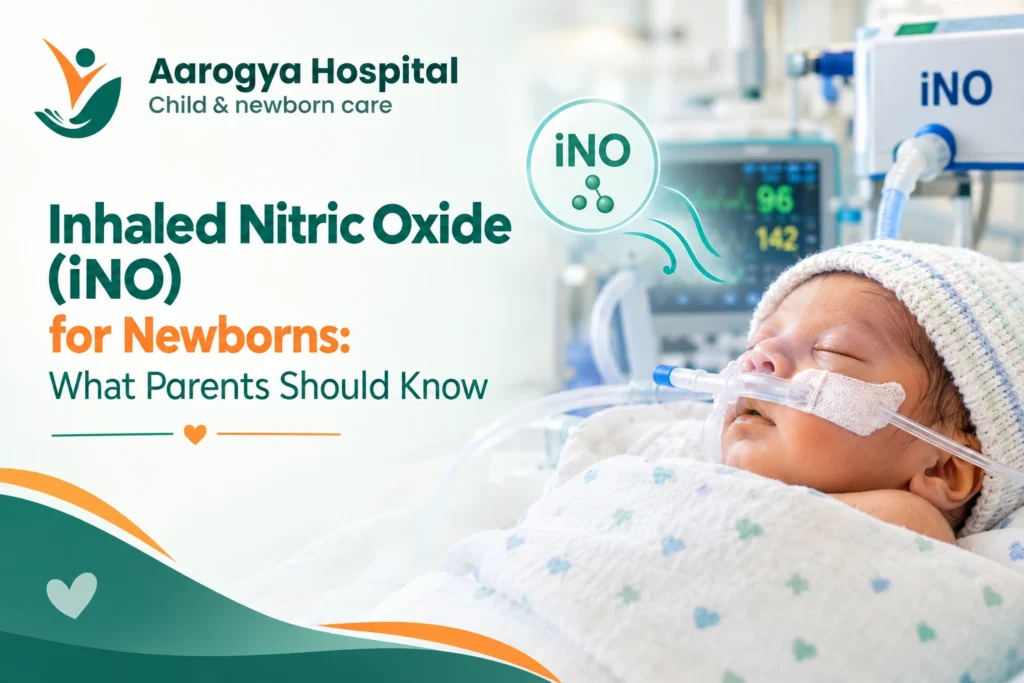
Inhaled Nitric Oxide (iNO) for Newborns: What Parents Should Know
When a newborn has trouble breathing, parents may feel worried and confused. Some babies need extra help to get enough oxygen. In certain cases, doctors may use a treatment called inhaled nitric oxide (iNO).
This treatment helps improve blood flow through the lungs. It can help some newborns who have serious breathing problems.
However, iNO is not need by every baby. Doctors decide whether it is suitable after checking the baby’s condition.
In this guide, we explain what inhale nitric oxide is, how it works, and when doctors may use it.
What Is Inhale Nitric Oxide (iNO) for Newborns?
Inhaled nitric oxide (iNO) is a special gas use to treat certain newborns with serious breathing problems.
It helps relax the blood vessels inside the lungs. As a result, blood can flow through the lungs more easily and collect oxygen.
Doctors usually consider iNO when a newborn has a condition called persistent pulmonary hypertension of the newborn (PPHN).
In PPHN, the blood vessels in the lungs remain too tight after birth. This makes it harder for blood to collect enough oxygen.
As a result, the baby may have low oxygen levels even when receiving breathing support.
Inhaled nitric oxide may help improve oxygen levels in selected babies.
When Do Newborns Need Inhaled Nitric Oxide?
Doctors may recommend iNO when a newborn has serious breathing problems and low oxygen levels.
Some common situations include:
- Persistent pulmonary hypertension of the newborn (PPHN): Blood vessels in the lungs remain tight, making it difficult for blood to collect oxygen.
- Meconium aspiration syndrome: A baby breathes in meconium, or the first stool, before or during birth. This can affect breathing.
- Pneumonia or lung infection: A serious infection can affect the baby’s breathing and oxygen levels.
- Other serious breathing conditions: Some babies develop low oxygen levels because of problems affecting their lungs and blood flow.
However, not every baby with these conditions needs iNO. Doctors assess the baby’s oxygen levels, test results, and response to other treatments before making a decision.
How Does Inhaled Nitric Oxide Work?
Inhaled nitric oxide works mainly by relaxing the blood vessels in the lungs.
Here is how it may help a newborn:
- The baby receives the gas: iNO is deliver through special breathing equipment.
- Blood vessels in the lungs relax: This allows blood to move through the lungs more easily.
- Blood collects oxygen: Better blood flow may help the baby receive more oxygen.
- Doctors check the response: The medical team monitors the baby’s oxygen levels and overall condition.
The main aim is to improve oxygen levels and reduce strain on the baby’s body.
iNO does not directly treat every cause of breathing difficulty. The baby may also need other treatments, depending on the underlying problem.
How Is iNO Give to Newborns?
Inhaled nitric oxide is give through special medical equipment. It is usually deliver with breathing support, such as a ventilator.
The gas enters the baby’s lungs during breathing. Doctors control the amount of gas given to the baby.
During treatment, the medical team carefully checks:
- Oxygen levels and breathing.
- Heart rate and blood pressure.
- Blood test results, when needed.
- The baby’s response to treatment.
- Possible side effects.
Doctors may adjust the treatment based on these checks.
The amount of iNO is reduce gradually when the baby improves. Stopping it too quickly can cause oxygen levels to fall. Therefore, the medical team follows a planned process.
Is Inhale Nitric Oxide Safe for Newborns?
iNO can be helpful when used for the right medical reason. However, like other treatments, it may cause side effects.
Possible risks include:
- Changes in blood pressure.
- Increased levels of methemoglobin, which can reduce the blood’s ability to carry oxygen.
- Increased nitrogen dioxide levels, which may harm the lungs.
- A drop in oxygen levels if treatment is stop too quickly.
For these reasons, iNO must be give under specialist medical supervision.
Doctors use monitoring equipment and blood tests when needed to check for side effects.
Parents should not worry about managing the gas or its dose themselves. The medical team takes responsibility for giving the treatment safely.
How Long Does a Newborn Need iNO Treatment?
The treatment time varies from baby to baby.
Some newborns improve within a short period. Others may need treatment for longer, depending on their condition.
Doctors consider several factors, including:
- The cause of the breathing problem.
- The baby’s oxygen levels.
- The response to iNO.
- The need for a ventilator or other breathing support.
- Results of medical tests.
When the baby improves, doctors gradually reduce the gas and check whether oxygen levels remain stable.
There is no fixed treatment time for every newborn. The care plan depends on the baby’s progress.
What Is the Difference Between iNO and a Ventilator?
Both treatments may help newborns with serious breathing problems. However, they work in different ways.
A ventilator helps move air into and out of the lungs. It supports breathing when a baby cannot breathe well enough without assistance.
Inhaled nitric oxide is a gas that helps relax blood vessels in the lungs. It may improve blood flow and oxygen levels in babies with certain conditions, especially PPHN.
Some newborns need both treatments at the same time.
Doctors decide which support is suitable based on the baby’s condition and response to treatment.
What Should Parents Ask the Doctor About iNO?
It is natural for parents to have questions when their newborn needs special breathing support.
You can ask the doctor:
- Why does my baby need iNO?
- What is causing my baby’s low oxygen levels?
- How will you check if the treatment is working?
- What side effects should we know about?
- Will my baby need a ventilator or other treatment?
- How will you decide when to reduce or stop iNO?
- What other care may be need during recovery?
These questions can help you understand your baby’s treatment plan.
The medical team can explain the baby’s condition, the expected benefits, and any possible risks.
When Should Parents Seek Emergency Medical Care?
Breathing problems in newborns need urgent medical attention.
Seek emergency care if your baby has:
- Fast or difficult breathing.
- Grunting sounds while breathing.
- The chest pulling inward with each breath.
- Blue or grey lips, tongue, or skin.
- Pauses in breathing.
- Unusual sleepiness or difficulty waking.
Do not wait for these signs to improve on their own. Call emergency services or go to the nearest emergency department.
A newborn with serious breathing problems needs prompt assessment and treatment.
Newborn Respiratory Care at Aarogya Hospital, Chandigarh
Newborns with serious breathing problems may need close monitoring and specialised medical care. Early assessment helps doctors identify the cause and choose suitable treatment.
Aarogya Hospital, Chandigarh, near PGI, provides a point of contact for families seeking information about newborn care and available hospital services.
For babies with conditions such as PPHN, doctors may assess whether treatments like inhaled nitric oxide are appropriate. The treatment depends on the baby’s condition, clinical findings, and available specialist support.
Parents can contact the hospital to ask about newborn respiratory care, NICU services, and the availability of iNO treatment.
Every baby is different. The medical team can explain the care options based on the newborn’s needs.
Conclusion
Inhaled nitric oxide (iNO) is an important treatment option for selected newborns with serious breathing problems, especially persistent pulmonary hypertension of the newborn.
It helps relax blood vessels in the lungs and may improve oxygen levels. However, it requires careful monitoring by trained medical professionals.
If your newborn has breathing difficulties, seek medical help immediately. A doctor can identify the cause and recommend the right treatment.
For information about newborn respiratory care and available NICU services, contact Aarogya Hospital, Chandigarh.