
aEEG / CFM Monitoring in the NICU: A Simple Guide to Newborn Brain Monitoring
When a newborn baby needs special medical care, doctors check more than breathing, heart rate, and oxygen levels. They may also need to check the baby’s brain activity.
This is especially important for premature babies and babies who had problems during birth.
aEEG / CFM monitoring in the NICU helps doctors check a baby’s brain activity over time. It can help them find signs of possible seizures and changes in brain activity.
At Aarogya Hospital, Chandigarh, parents can contact the medical team to learn about newborn care and available monitoring facilities. Please confirm whether aEEG/CFM monitoring is available at the hospital.
In this guide, we explain what aEEG/CFM monitoring is, why doctors use it, and what parents should know.
What Is aEEG / CFM Monitoring in the NICU?
aEEG stands for amplitude-integrated electroencephalography. CFM stands for cerebral function monitoring.
Both terms refer to a method of checking a baby’s brain activity.
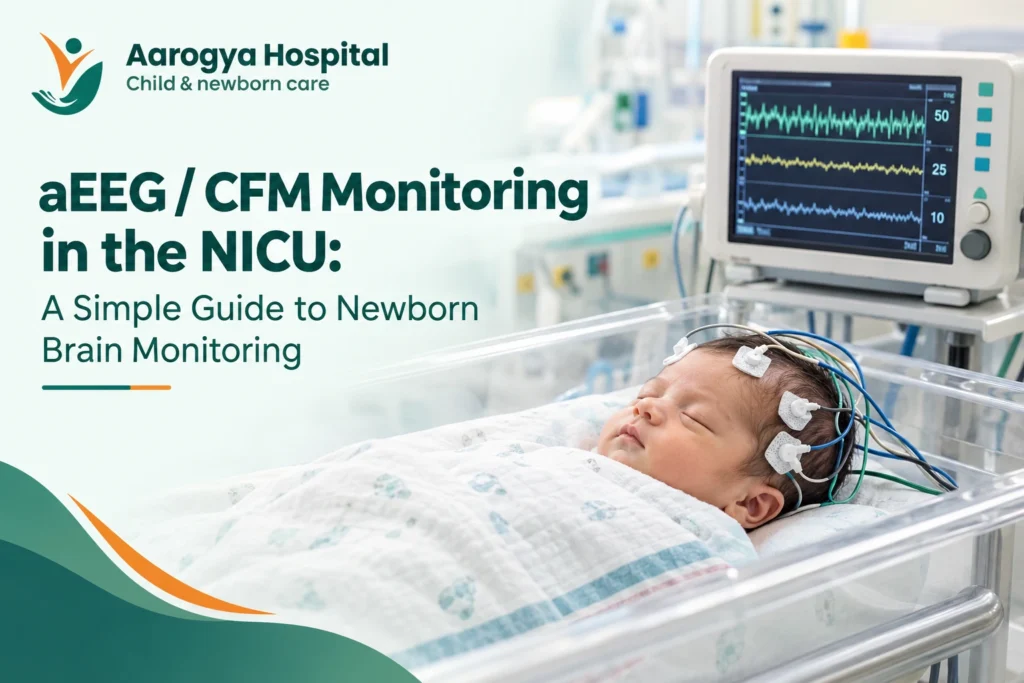
During this test, trained healthcare staff place small sensors on the baby’s head. These sensors pick up electrical signals from the brain. A monitor then shows the signals as a simple graph.
A regular monitor checks the baby’s heart rate and oxygen levels. In comparison, aEEG/CFM helps doctors check brain activity.
Doctors study the graph to look for unusual patterns. However, this test cannot show everything about the baby’s brain.
Why Is Brain Monitoring Important for Newborn Babies?
A newborn baby’s brain is still growing and developing. Therefore, some health problems can affect how the brain works.
Some babies may also have seizures without clear body movements. Brain monitoring can help doctors look for signs of these seizures.
Doctors may suggest brain monitoring for babies who have:
- Low oxygen during birth: Low oxygen or blood flow may affect the baby’s brain.
- Hypoxic-ischaemic encephalopathy (HIE): This condition happens when the brain does not get enough oxygen or blood flow.
- Possible seizures: Unusual movements or unexplained episodes may need further checks.
- Premature birth: Some premature babies need extra monitoring because their brains are still developing.
- Serious infections: Some infections can affect brain activity.
- Other brain-related problems: Doctors may suggest monitoring if they have concerns about the baby’s brain function.
The need for monitoring depends on the baby’s condition and the doctor’s advice.
How Does aEEG / CFM Monitoring Work?
aEEG/CFM monitoring does not require surgery. It uses small sensors placed on the baby’s head to record brain activity.
The test usually involves these steps.
1. Placing the Sensors
A trained healthcare professional places small sensors on certain areas of the baby’s head. These sensors pick up electrical signals from the brain.
2. Connecting the Monitor
The sensors connect to a monitoring machine. The machine processes the signals and displays a simple graph.
3. Recording Brain Activity
The monitor records brain activity over time. This helps doctors notice changes that may not be seen during a short examination.
4. Checking the Results
Doctors study the graph along with the baby’s symptoms, medical history, and other test results.
If needed, they may suggest a conventional EEG or other tests to check the brain in more detail.
Important: aEEG/CFM only helps doctors monitor brain activity. It does not treat the baby’s condition.
What Can aEEG / CFM Monitoring Detect?
aEEG/CFM helps doctors look at patterns of brain activity. These patterns can provide useful information about the baby’s health.
1. Possible Seizures
Some newborn babies have seizures without shaking or jerking movements.
aEEG/CFM may help doctors find unusual patterns that could be signs of seizures.
However, this test can miss some seizures. It can also show patterns that look like seizures but are not. Therefore, doctors may need a conventional EEG to check the results more closely.
2. Patterns of Brain Activity
The graph shows electrical activity in the baby’s brain.
Doctors study these patterns while considering the baby’s age, health, medicines, and other test results.
3. Changes in Brain Activity
Changes in the graph may alert doctors to a possible problem.
For babies with HIE, the results can help doctors follow brain activity over time.
However, this test cannot show the full extent of brain injury. It also cannot predict a child’s future development with complete certainty.
aEEG / CFM vs Conventional EEG: What Is the Difference?
Both tests record electrical activity in the brain. However, they show different levels of detail.
Feature | aEEG / CFM | Conventional EEG |
Display | Shows a simple graph | Shows more detailed brain signals |
Monitoring | Useful for checking brain activity over time | Provides a closer look at brain activity |
Seizure checks | Helps find possible signs of seizures | Usually provides a more detailed seizure check |
Main use | Helps doctors follow brain activity | Helps doctors study unusual brain activity in detail |
Doctors may use one or both tests, depending on the baby’s condition.
Is aEEG / CFM Monitoring Safe for Newborns?
aEEG/CFM monitoring is generally safe and does not require surgery.
The sensors pick up electrical signals from the brain. They do not send electrical signals into the baby’s brain.
Healthcare staff place the sensors on the baby’s head and check the baby during monitoring.
However, premature babies may have very delicate skin. Therefore, staff need to take extra care when placing the sensors.
The medical team will choose the right monitoring method for the baby.
Does aEEG / CFM Monitoring Mean My Baby Has Brain Damage?
No. Being advised to have aEEG/CFM monitoring does not automatically mean your baby has brain damage.
Doctors may suggest this test to check for possible seizures or follow brain activity after a difficult birth.
If the results look unusual, doctors may suggest more tests to understand the cause.
Parents should discuss the results with their baby’s doctor. A monitor reading alone cannot confirm brain damage.
What Happens If the aEEG / CFM Results Are Abnormal?
An unusual result does not always mean the baby has permanent brain damage.
The results may be affected by the baby’s health, age, medicines, or problems with the sensors.
Depending on the results, doctors may suggest:
- Conventional EEG: This test checks brain activity in more detail.
- Brain examination: The doctor checks the baby’s movements, responses, and other signs.
- Brain scans: An ultrasound of the head or an MRI may be needed.
- Treatment: Doctors may treat seizures or other health problems if they find them.
- Continued monitoring: Further checks help doctors follow changes in brain activity.
For babies with suspected HIE, doctors may also check whether a treatment called therapeutic hypothermia is suitable.
This treatment carefully lowers the baby’s body temperature for a set period. It may help reduce further brain injury in some babies.
However, the treatment must start within a limited time after birth. Specialists use it only for babies who meet the medical requirements.
Early assessment helps doctors decide what care the baby needs.
aEEG / CFM Monitoring in a Level III NICU
A Level III Neonatal Intensive Care Unit (NICU) provides special care for premature babies, critically ill newborns, and babies with serious health problems.
Depending on the hospital’s facilities, NICU care may include:
- Breathing support for babies who need help breathing.
- Regular checks of heart rate, breathing, and oxygen levels.
- Brain monitoring when needed.
- Treatment for serious newborn health problems.
- Other tests to check the baby’s condition.
Doctors may use aEEG/CFM when they need to check a baby’s brain activity.
If you are looking for advanced NICU care in Chandigarh near PGI, ask the hospital about its monitoring facilities. You can also ask whether trained specialists can read the results and arrange a conventional EEG or other tests if needed.
At Aarogya Hospital, Chandigarh, parents can contact the medical team to learn about newborn intensive care and available monitoring options.
When Should Parents Seek Medical Attention?
Some signs in newborn babies need urgent medical attention. Contact a healthcare professional if your baby has:
- Repeated unusual jerking movements.
- Sudden stiffening of the body.
- Pauses in breathing or changes in skin colour.
- Unusual difficulty waking up or responding.
- Sudden feeding changes along with other worrying symptoms.
These signs do not always mean the baby is having seizures. However, they should not be ignored.
Seek emergency medical help immediately if your baby does not respond, has severe breathing problems, or turns blue or grey.
Do not wait for a brain monitoring test if your baby has these warning signs.
Newborn Brain Monitoring at Aarogya Hospital, Chandigarh
When a newborn needs intensive care, early checks and the right monitoring are important.
aEEG/CFM helps doctors check brain activity and look for possible signs of seizures. It can also help them decide whether further tests are needed.
However, every baby has different medical needs. The doctor will decide which tests are suitable for your baby.
Aarogya Hospital, Chandigarh, is a point of contact for parents looking for information about newborn and NICU care near PGI Chandigarh. Please contact the hospital to confirm whether aEEG/CFM monitoring is available and discuss the care your baby may need.
Worried about your newborn’s brain health? Speak with a qualified neonatal specialist to understand your baby’s condition and the tests that may be needed.
Early medical advice can help you understand your baby’s needs and make informed decisions about their care.
Follow up Instagram and Facebook for more information.