
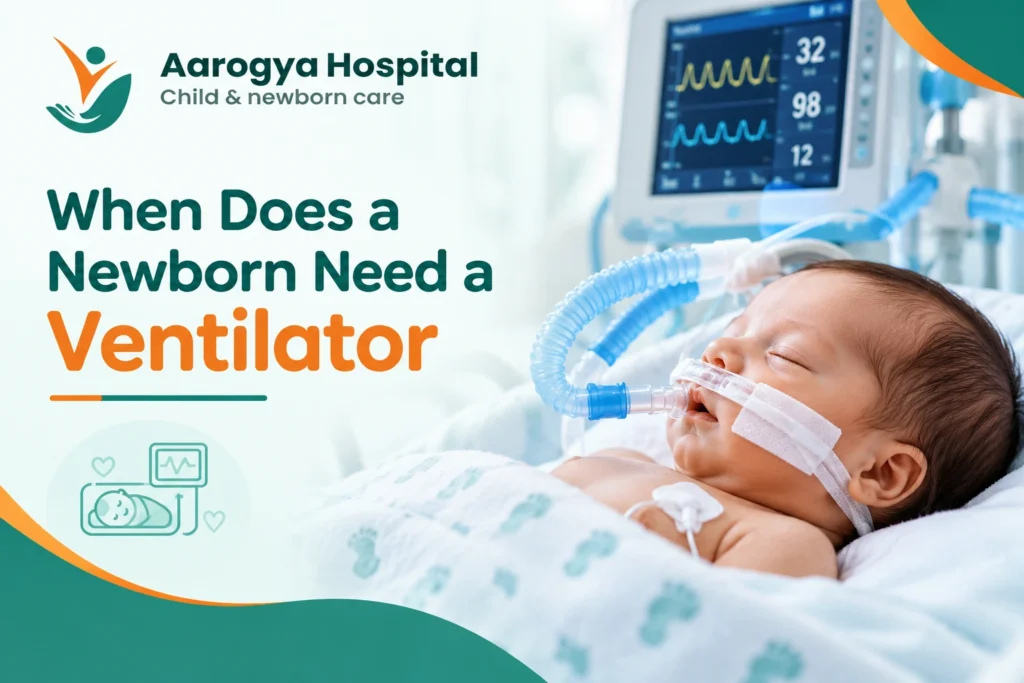
When Does a Newborn Need a Ventilator?
Introduction
Some newborn babies need help with breathing after birth. Some have mild breathing problems, while others need special medical care.
In these cases, doctors may use a ventilator in a Neonatal Intensive Care Unit (NICU). A ventilator helps a baby breathe when the lungs cannot take in enough oxygen or remove enough carbon dioxide.
However, not every baby with breathing problems needs a ventilator. Doctors first check the baby’s condition and then choose the right treatment.
At Aarogya Hospital, Chandigarh, parents can learn about newborn breathing problems, ventilator support, and the need for early medical care.
What Is a Ventilator for Newborn Babies?
A ventilator is a machine that helps a baby breathe. It sends air and oxygen into the lungs through a tube placed in the windpipe.
Doctors use a ventilator when a baby cannot breathe well enough without help. The type of breathing support depends on the baby’s age, weight, lung growth, and health.
Newborns may need different types of breathing support, such as:
- CPAP or high-flow nasal support: These methods help babies breathe without a tube in the windpipe.
- Mechanical ventilation: A machine helps the baby breathe through a tube placed in the windpipe.
- Advanced ventilation: Some babies with serious breathing problems need special breathing support.
Doctors choose the best method based on the baby’s needs.
When Does a Newborn Need a Ventilator?
A newborn may need a ventilator when breathing becomes very difficult. It may also be needed when the baby cannot get enough oxygen or remove enough carbon dioxide.
Here are some common reasons why a newborn may need a ventilator.
1. Severe Breathing Problems
Some newborns breathe very fast or make grunting sounds. Their chest may also pull inward with each breath.
These signs may mean that the baby is struggling to breathe.
If the baby does not improve with basic treatment, doctors may give more breathing support. In serious cases, a ventilator may be need.
2. Premature Birth
Premature babies are born before their bodies are fully ready. Their lungs may not be fully develop.
As a result, they may have trouble breathing on their own.
Some premature babies develop a condition called respiratory distress syndrome. This happens when their lungs do not have enough surfactant. Surfactant helps keep the tiny air sacs in the lungs open.
Depending on the baby’s condition, treatment may include CPAP, surfactant medicine, or a ventilator.
3. Low Oxygen Levels
Newborns need enough oxygen for their brain, heart, and other organs to work well.
However, some lung or heart problems can lower oxygen levels.
Doctors check the baby’s breathing and oxygen levels. If oxygen support is not enough, the baby may need CPAP or a ventilator.
4. Serious Infections
Serious infections, such as neonatal sepsis and pneumonia, can affect a newborn’s breathing.
In some cases, the baby may have trouble breathing or become very weak.
Doctors may give antibiotics, oxygen, and other treatments. If the baby has severe breathing problems, a ventilator may be needed.
5. Meconium Aspiration Syndrome
Before or during birth, some babies may breathe in fluid containing their first stool, called meconium.
This can block or harm the airways and make breathing difficult.
Mild cases may improve with medical care. However, babies with serious breathing problems may need a ventilator.
6. Lack of Oxygen Around Birth
Sometimes, a baby does not get enough oxygen around the time of birth. This can affect the brain and other organs.
Some babies may have weak breathing and need urgent medical help.
Doctors check the baby’s breathing, blood flow, and overall health before choosing the right treatment.
Some babies may also develop a brain condition called hypoxic-ischaemic encephalopathy (HIE). These babies may need special care to reduce the risk of brain injury.
7. Other Serious Health Problems
Some babies are born with problems that affect their lungs, heart, or airways.
These problems can make breathing difficult.
Doctors examine the baby to find the cause. They then decide whether the baby needs a ventilator or another type of breathing support.
What Are the Warning Signs of Breathing Problems in Newborns?
Parents should watch their baby’s breathing carefully, especially during the first few days after birth.
Common warning signs include:
- Very fast or difficult breathing.
- Grunting sounds while breathing.
- Chest pulling inward with each breath.
- Nostrils widening while breathing.
- Blue or grey lips, tongue, or skin.
- Pauses in breathing.
- Unusual sleepiness or difficulty waking up.
- Poor feeding along with other signs of illness.
Seek emergency medical care if your newborn struggles to breathe, has blue or grey lips, or stops breathing. Do not wait for these signs to improve at home.
These signs do not always mean that a ventilator is needed. However, they need urgent medical attention.
How Do Doctors Decide If a Newborn Needs a Ventilator?
Doctors check the baby’s health before deciding whether a ventilator is need. They also check if the baby improves with basic treatment.
The check-up may include:
- Breathing check: Doctors check how fast the baby breathes and how the chest moves.
- Oxygen check: A small device called a pulse oximeter checks the oxygen level in the blood.
- Blood tests: These tests help doctors check oxygen, carbon dioxide, and acid levels in the blood.
- Chest X-ray: This helps doctors look for some lung problems.
- Infection tests: Blood tests may help find signs of infection.
- Treatment check: Doctors see whether the baby improves with oxygen or CPAP.
After these checks, doctors choose the right type of breathing support for the baby.
How Long Does a Newborn Need Ventilator Support?
Every baby is different. Some newborns need a ventilator for a short time. Others may need it for several days or longer.
The time depends on the baby’s lung growth, infection, birth age, and the seriousness of the illness.
Doctors regularly check the baby’s breathing and oxygen levels. They also watch for signs of recovery.
When the baby can breathe better, doctors slowly reduce the ventilator support. This process is weaning.
Some babies may then need CPAP, high-flow nasal support, or no breathing support at all.
Is a Ventilator Safe for Newborn Babies?
A ventilator can save a baby’s life when the baby cannot breathe properly. However, it can also have some risks.
Possible risks include lung injury, air leaks around the lungs, and injury to the windpipe.
The risks depend on the baby’s condition and how long the ventilator is need.
Doctors carefully adjust the machine and check the baby’s breathing and oxygen levels. This helps them provide the right amount of support.
The main aim is to help the baby breathe while reducing the risk of harm.
What Care Does a Newborn Receive in the NICU?
A newborn who needs a ventilator usually needs close care in a NICU.
Depending on the baby’s condition, care may include:
- Checking oxygen levels, heart rate, and breathing.
- Keeping the baby warm.
- Providing fluids and nutrition.
- Giving medicines to treat infections or other health problems.
- Checking lung function and recovery.
- Keeping parents informed about the baby’s health.
Parents may also be able to touch and bond with their baby when the baby is stable and the medical team says it is safe.
Can a Newborn Recover After Ventilator Support?
Yes, many newborns recover and learn to breathe without a ventilator.
However, recovery depends on the cause of the breathing problem, the baby’s age at birth, and the severity of the illness.
For example, some babies with mild breathing problems get better quickly. However, very premature babies or babies with serious infections may need longer treatment.
Doctors check the baby’s progress and reduce breathing support when it is safe.
Newborn Ventilator Support at Aarogya Hospital, Chandigarh
When a newborn has serious breathing problems, early medical care is very important.
Aarogya Hospital, Chandigarh, is located in Khudda Lahora, near PGI. The hospital provides care for newborns and children. The right treatment depends on the baby’s condition and the services available at the time.
If your newborn has trouble breathing, seek medical help immediately. A doctor can check the baby and decide whether oxygen, CPAP, a ventilator, or another treatment is need.
Never ignore breathing problems in a newborn. Early care helps doctors find the cause and start the right treatment.
Conclusion
A newborn may need a ventilator because of serious breathing problems, premature birth, infections, or other health conditions.
However, not every baby needs a ventilator. Doctors check the baby’s condition and choose the right type of breathing support.
Parents should learn the warning signs and seek medical help without delay. Early treatment can help doctors manage breathing problems and support the baby’s recovery.
Follow us on Instagram and Facebook for more newborn care tips and health information.
Frequently Asked Questions
Does every premature baby need a ventilator?
No. Some premature babies can breathe on their own. Others may need oxygen, CPAP, or a ventilator. The treatment depends on their lung growth and breathing problems.
Does a newborn with low oxygen levels always need a ventilator?
No. Some babies improve with oxygen or CPAP. Doctors check the cause of the low oxygen level before choosing treatment.
How can I tell if my newborn is struggling to breathe?
Look for fast breathing, grunting, chest pulling inward, widening nostrils, blue or grey lips, or pauses in breathing. Seek emergency medical care if you notice these signs.
How long can a newborn stay on a ventilator?
There is no fixed time. Some babies need a ventilator for a short time, while others need it for longer. Doctors decide when to reduce support based on the baby’s recovery.
Can a newborn breathe normally after ventilator support?
Yes, many newborns recover and breathe without help. However, recovery depends on the baby’s health and the cause of the breathing problem.
What is the difference between CPAP and a ventilator?
CPAP gives steady air pressure to help keep the lungs open while the baby breathes. A mechanical ventilator can give extra or controlled breaths when the baby needs more help.
When should parents take a newborn to the hospital?
Seek urgent medical care if your newborn has trouble breathing, blue or grey lips, pauses in breathing, or is difficult to wake. A fever in a newborn also needs urgent medical assessment.