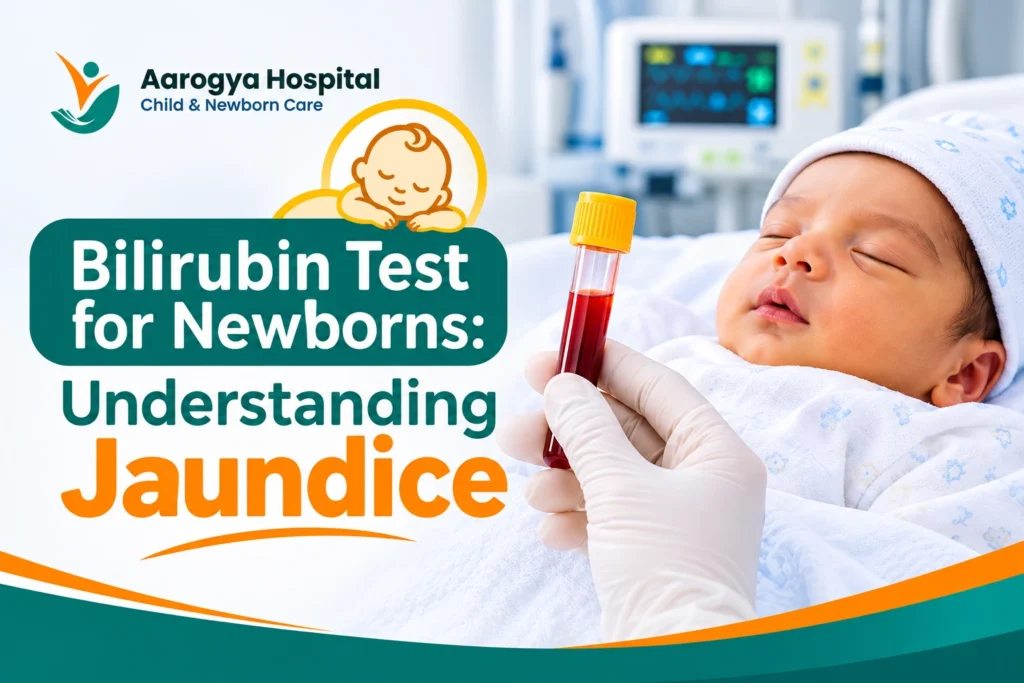
Bilirubin Test for Newborns: Understanding Jaundice
Newborn babies may have yellow skin or yellow eyes during the first few days after birth. This is newborn jaundice. It happens when a yellow substance called bilirubin builds up in the baby’s blood.
Mild jaundice is common in newborn babies. However, too much bilirubin can be harmful. Therefore, some babies may need medical care.
A bilirubin test for newborns helps doctors check the bilirubin level in the baby’s blood. It also helps them decide if the baby needs treatment.
At Aarogya Hospital, Chandigarh, we provide newborn care and help parents understand jaundice, bilirubin tests and newborn health.
What Is Bilirubin in Newborn Babies?
Bilirubin is a yellow substance that forms when the body breaks down old red blood cells. Normally, the liver removes bilirubin from the body through stools.
However, a newborn baby’s liver is not fully develop. So, it may take time to remove bilirubin. As a result, bilirubin can build up in the blood and cause jaundice.
Why Is a Bilirubin Test Important for Newborns?
A bilirubin test checks the amount of bilirubin in a baby’s blood. It helps doctors find out if the level is too high.
This test helps doctors to:
- Check the baby’s jaundice.
- Find out if bilirubin levels are high.
- Decide if the baby needs treatment.
- Check if bilirubin levels are going up or down.
- Find out if phototherapy is need.
Early testing helps doctors provide the right treatment at the right time.
When Does a Newborn Need a Bilirubin Test?
Doctors may suggest a bilirubin test if a baby shows signs of jaundice. They may also check the baby’s bilirubin level before the baby leaves the hospital.
Common signs of jaundice include:
- Yellow skin.
- Poor feeding or difficulty drinking milk.
- Yellow colour spreading from the face to the chest, stomach and legs.
- Yellow colour in the eyes.
- Sleeping too much or difficulty waking up.
If your baby develops jaundice within the first 24 hours after birth, seek medical care immediately.
Also, contact a doctor if your baby is not feeding well, is difficult to wake up or shows unusual body movements.
Types of Bilirubin Tests for Newborns
Doctors mainly use two types of tests to check bilirubin levels in newborn babies.
1. Transcutaneous Bilirubin Test (TcB)
This test uses a small device that is place gently on the baby’s skin. It checks bilirubin levels without taking blood.
The test is quick and painless. However, doctors may suggest a blood test if they need to check the result more carefully.
2. Serum Bilirubin Test (TSB)
This test checks bilirubin levels using a small blood sample. It is also Total Serum Bilirubin test.
It helps doctors measure bilirubin levels accurately. Doctors may recommend this test if the skin test shows high levels or if the baby needs treatment.
What Are Normal Bilirubin Levels in Newborns?
Bilirubin levels change during the first few days after birth. Therefore, the normal level is different for every baby.
Doctors check a few important things, such as:
- The baby’s age in hours.
- Whether the baby was born early or on time.
- The bilirubin test result.
- The baby’s overall health.
- Other health problems.
After checking these details, doctors decide if the baby needs another test, regular checks or treatment.
How Is Newborn Jaundice Treat?
Mild newborn jaundice often gets better as the baby’s liver grows. However, some babies need treatment to lower bilirubin levels.
Common treatments include:
1. Phototherapy
Phototherapy is a common treatment for newborn jaundice. During this treatment, the baby is place under special blue lights.
These lights help break down bilirubin. As a result, the baby’s body can remove it more easily.
2. Regular Feeding
Regular feeding helps babies pass stools. This helps remove bilirubin from the body.
Therefore, doctors may guide parents about breastfeeding and how often to feed their baby.
3. Repeat Bilirubin Tests
Doctors may repeat the bilirubin test to check the baby’s levels.
This helps them see if the bilirubin level is going down or if the baby needs more treatment.
4. Treatment for Severe Jaundice
In rare cases, very high bilirubin levels may need special care. This may include a treatment called exchange transfusion.
Doctors decide the right treatment after checking the baby’s health and bilirubin levels.
When Should Parents Seek Medical Help?
Parents should contact a doctor if their newborn has yellow skin or eyes. However, some signs need urgent medical care.
Seek medical help immediately if your baby:
- Develops jaundice within the first 24 hours after birth.
- Has trouble feeding.
- Sleeps too much or is difficult to wake up.
- Has a high-pitched cry.
- Shows unusual body movements or stiffness.
- Has yellow skin or eyes that are becoming more yellow.
Early medical care can help prevent serious problems and keep your baby safe.
Newborn Jaundice and Bilirubin Testing at Aarogya Hospital, Chandigarh
Choosing the right hospital is important when your newborn needs jaundice care.
Aarogya Hospital, Chandigarh, is located in Khudda Lahora, near PGI. Our hospital provides newborn care, neonatal support and Level III NICU facilities.
Parents can contact us for help with newborn jaundice, bilirubin tests and other health problems in newborn babies.
We also support families from Panchkula, Mohali and nearby areas who are looking for newborn care and NICU support in Chandigarh.
Conclusion
Newborn jaundice is common. However, high bilirubin levels can be harmful and may need treatment.
Moreover, a timely bilirubin test helps doctors monitor the baby’s health and determine the most suitable treatment.
Therefore, parents should watch for signs of jaundice and contact a doctor when needed.
For newborn jaundice tests and baby care, parents can contact Aarogya Hospital in Chandigarh, near PGI. The hospital also serves families from Panchkula and Mohali.
Follow us on Instagram and Facebook for more health information.
Frequently Asked Questions (FAQs)
Why do newborn babies need a bilirubin test?
A bilirubin test measures the amount of bilirubin in a baby’s blood. It helps doctors detect jaundice and decide if the baby needs treatment.
Is a bilirubin test painful for newborns?
The skin test (TcB) is painless. However, the blood test needs a small blood sample.
When should bilirubin levels be check in newborns?
Doctors check babies for jaundice before they leave the hospital. They may also suggest more tests depending on the baby’s age, health and bilirubin level.
Can newborn jaundice go away on its own?
Yes, mild jaundice often gets better as the baby’s liver grows. However, some babies need phototherapy or other treatment. Therefore, parents should follow the doctor’s advice.
Where can parents get newborn jaundice care in Chandigarh?
Parents can contact Aarogya Hospital in Khudda Lahora, Chandigarh, for newborn care, bilirubin testing and neonatal support. The hospital also serves families from Panchkula and Mohali.
अक्सर पूछे जाने वाले सवाल (FAQs)
नवजात शिशुओं का बिलीरुबिन टेस्ट क्यों किया जाता है?
बिलीरुबिन टेस्ट बच्चे के खून में बिलीरुबिन की मात्रा जांचने के लिए किया जाता है। इससे डॉक्टर पीलिया का पता लगा सकते हैं और यह तय कर सकते हैं कि बच्चे को इलाज की जरूरत है या नहीं।
क्या नवजात शिशु का बिलीरुबिन टेस्ट दर्दनाक होता है?
नहीं, त्वचा पर किया जाने वाला टेस्ट (TcB) दर्द रहित होता है। हालांकि, ब्लड टेस्ट के लिए बच्चे के खून का थोड़ा सा सैंपल लिया जाता है।
नवजात शिशु का बिलीरुबिन लेवल कब चेक करना चाहिए?
डॉक्टर आमतौर पर बच्चे को अस्पताल से छुट्टी देने से पहले पीलिया की जांच करते हैं। इसके अलावा, बच्चे की उम्र, सेहत और बिलीरुबिन लेवल के अनुसार दोबारा टेस्ट की सलाह भी दे सकते हैं।
क्या नवजात शिशु का पीलिया अपने आप ठीक हो सकता है?
हां, हल्का पीलिया अक्सर बच्चे का लिवर धीरे-धीरे विकसित होने के साथ ठीक हो जाता है। हालांकि, कुछ बच्चों को फोटोथेरेपी या दूसरे इलाज की जरूरत पड़ सकती है। इसलिए, हमेशा डॉक्टर की सलाह मानें।
चंडीगढ़ में नवजात शिशु के पीलिया का इलाज कहां करवाएं?
माता-पिता नवजात शिशु की देखभाल, बिलीरुबिन टेस्ट और इलाज से जुड़ी जानकारी के लिए खुड्डा लाहौरा, चंडीगढ़ स्थित Aarogya Hospital से संपर्क कर सकते हैं। यह अस्पताल पंचकूला और मोहाली के परिवारों को भी सेवाएं प्रदान करता है।