Newborn Jaundice: When Is Phototherapy Needed?
Newborn jaundice is common in babies. It makes a baby’s skin and eyes look yellow. This happens when bilirubin builds up in the blood. Bilirubin is a yellow substance that forms when red blood cells break down.
A newborn’s liver is still developing. So, it may not remove bilirubin from the blood fast enough. Because of this, the baby’s skin and eyes may turn yellow.
Mild jaundice often goes away on its own. However, some babies need medical care. One common treatment is phototherapy. It uses a special light to lower bilirubin levels in the baby’s blood.
At Aarogya Hospital, Chandigarh, parents can learn about newborn jaundice, its warning signs, and when their baby needs medical care.
What Causes Newborn Jaundice?
Newborn jaundice happens when bilirubin builds up in a baby’s blood. This is often because the baby’s liver is still developing and cannot remove bilirubin quickly enough.
Here are some common causes:
- Premature birth: Babies born early may have a liver that is not fully developed.
- Feeding problems: When a baby does not get enough milk, bilirubin may leave the body more slowly.
- Blood group differences: A difference between the mother’s and baby’s blood groups may cause red blood cells to break down faster.
- Bruising during birth: Bruising can increase bilirubin as the body breaks down extra blood cells.
- Health problems: Certain infections and blood disorders can raise bilirubin levels.
Therefore, regular check-ups are important, especially during the first few days after birth.
What Is Phototherapy for Newborn Jaundice?
Phototherapy is a treatment that uses a special blue light to lower bilirubin levels in a baby’s body.
The light changes bilirubin into a form that the body can remove more easily. The baby can then pass it through urine and stools.
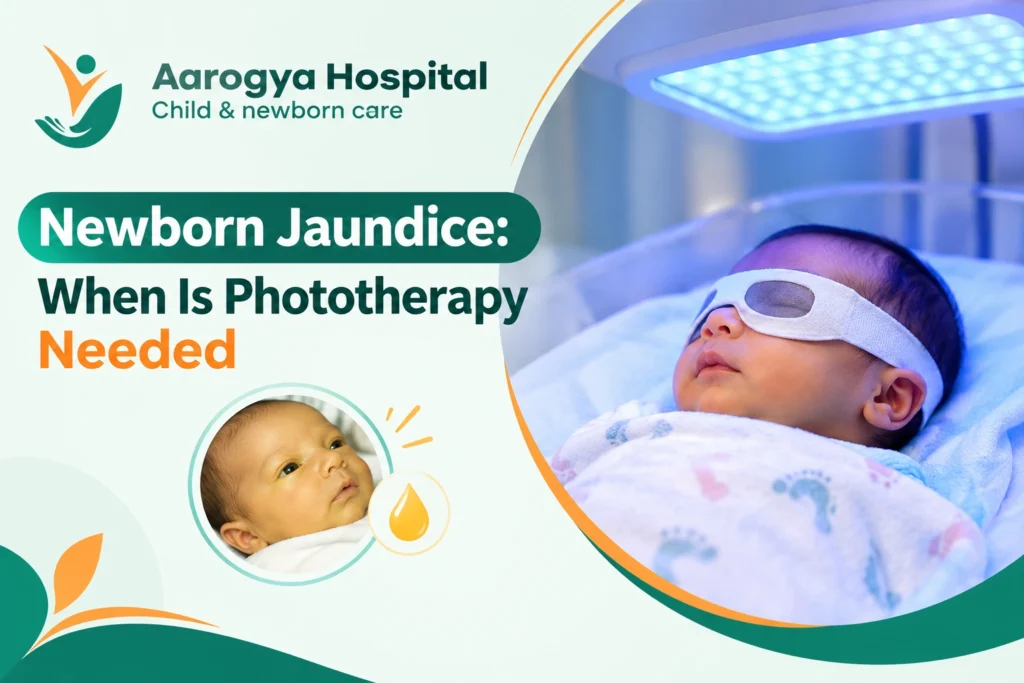
During treatment, the baby usually lies in a cot under a special light. Sometimes, doctors use a special light pad or blanket. The baby’s eyes are covered for protection when needed.
The medical team checks the baby’s temperature, feeding, and fluid levels. Doctors also do blood tests again to check if bilirubin levels are going down.
Phototherapy is generally safe when given under medical care.
When Is Phototherapy Needed for Newborn Jaundice?
Not every baby with jaundice needs phototherapy. Doctors check the baby’s age, bilirubin level, and overall health before deciding if treatment is needed.
Phototherapy may be needed in the following situations.
1. When Bilirubin Levels Are Too High
Doctors may check bilirubin through a skin test or a blood test.
If the level reaches the treatment limit for the baby’s age and health, the doctor may recommend phototherapy.
2. When Jaundice Starts Within the First 24 Hours
If your baby’s skin or eyes turn yellow during the first 24 hours after birth, seek urgent medical care.
If the baby’s skin turns yellow too early, it may be a sign of another health problem. Doctors may do tests to find the cause and choose the right treatment.
3. When a Baby Is Born Too Early
Premature babies have a higher risk of serious jaundice because their livers are not fully developed yet.
Because of this, doctors may start treatment even when bilirubin levels are lower in some premature babies. The decision depends on the baby’s age, health, and other risks.
4. When Bilirubin Levels Rise Quickly
Sometimes, bilirubin levels rise very quickly. This may happen when red blood cells break down too fast or when the baby has another health problem.
Doctors may do blood tests again to check bilirubin levels. If needed, they may use phototherapy to lower these levels.
5. When a Baby Has Other Health Problems
Some infections and blood disorders can increase the risk of complications from jaundice.
In these cases, doctors may start treatment even when bilirubin levels are lower. This depends on the baby’s health and other risk factors.
Important: The treatment limit is different for every baby. Doctors consider the baby’s age in hours, weeks of pregnancy at birth, bilirubin level, and other health risks before starting phototherapy.
What Happens During Phototherapy?
Parents may feel worried when their baby needs treatment. However, phototherapy is a common way to treat newborn jaundice.
Here is what happens during treatment:
- Bilirubin test: The doctor checks the baby’s bilirubin level.
- Special light: The baby receives treatment under a special medical light.
- Regular checks: The team checks the baby’s temperature and fluid levels.
- Feeding support: The baby continues breastfeeding or receives other suitable feeds as advised.
- Follow-up tests: Doctors repeat bilirubin tests to check if the treatment is working.
The treatment time varies from baby to baby. Some babies need only a few hours, while others may need a day or longer.
Warning Signs of Newborn Jaundice Parents Should Know
Parents should watch their baby closely during the first few days after birth.
Contact a healthcare professional promptly if you notice:
- Yellow skin or eyes.
- Yellowing that spreads or becomes darker.
- Poor feeding or refusal to drink milk.
- Unusual sleepiness or difficulty waking the baby.
- Dark urine or pale, white stools.
- Fewer wet nappies than expected.
Some signs need emergency care. Seek emergency medical help if your baby is difficult to wake, has trouble breathing, develops unusual jerking movements, becomes very floppy or stiff, or has an unusually high or low temperature.
Jaundice that starts within the first 24 hours also needs urgent medical attention.
Do not wait for the yellow colour to become severe before seeking help.
Can Newborn Jaundice Be Managed at Home?
Mild jaundice may go away without treatment. However, a doctor should check your baby and decide whether treatment or repeat tests are needed.
You can support your baby’s care by following these steps:
- Feed your baby regularly as advised by a healthcare professional.
- Ask for help if your baby has trouble feeding.
- Attend all recommended check-ups and bilirubin tests.
- Keep track of feeding, wet nappies, and stools.
- Follow the doctor’s advice about treatment and follow-up visits.
However, do not use direct sunlight to treat newborn jaundice. Sunlight is not a safe or reliable replacement for medical phototherapy.
Also, never give water, honey, ghutti, or other home remedies to a newborn unless a qualified healthcare professional advises you to do so.
If your baby needs phototherapy, follow the doctor’s treatment plan carefully.
Why Is Early Treatment Important?
High bilirubin levels can harm a baby’s brain. In serious cases, this can lead to lasting health problems.
The good news is that early testing and the right treatment can lower this risk.
Regular check-ups help doctors find high bilirubin levels before they become dangerous. They also help doctors check whether phototherapy is working.
Therefore, do not ignore newborn jaundice or delay recommended tests.
Newborn Jaundice Care at Aarogya Hospital, Chandigarh
Aarogya Hospital, Chandigarh, is located in Khudda Lahora, near PGI Chandigarh.
If you are worried about newborn jaundice, consult a qualified healthcare professional. The doctor can check your baby’s symptoms, review bilirubin test results, and advise you on the next steps.
Seek medical advice promptly if your baby’s skin or eyes look yellow, your baby has trouble feeding, or you notice other warning signs.
Concerned about newborn jaundice? Contact Aarogya Hospital, Chandigarh, to ask about newborn assessment and suitable care.
Conclusion
Newborn jaundice is common, but very high bilirubin levels can be dangerous if left untreated.
Phototherapy uses a special light to lower bilirubin levels when treatment is needed. Doctors decide whether to start it based on the baby’s age, test results, and overall health.
Regular check-ups, proper feeding, and follow-up tests help protect your baby’s health.
If you notice signs of jaundice, consult a healthcare professional promptly. Avoid home remedies and do not delay medical care.
Follow Aarogya Hospital on Instagram and Facebook for more tips on newborn care and child health.
Frequently Asked Questions (FAQs)
Is phototherapy safe for newborn babies?
Yes. Phototherapy is a common and generally safe treatment for newborn jaundice. Doctors monitor the baby and check bilirubin levels during treatment.
How long does phototherapy take?
The treatment time depends on the baby’s bilirubin level, age, and response to treatment. Some babies need a few hours, while others may need a day or longer.
Does every newborn with jaundice need phototherapy?
No. Many babies have mild jaundice that gets better on its own. Doctors recommend phototherapy when bilirubin reaches the treatment limit for the baby’s age and health.
Can sunlight treat newborn jaundice?
No. Direct sunlight is not a safe or reliable treatment for newborn jaundice. If your baby’s skin or eyes look yellow, seek medical advice.
When should parents take a jaundiced baby to the hospital?
Seek urgent medical care if jaundice starts within the first 24 hours or gets worse quickly. Poor feeding, unusual sleepiness, dark urine, and pale stools also need prompt medical attention.
Seek emergency care if your baby is difficult to wake, has trouble breathing, or develops unusual movements. Do not delay care if your baby seems seriously unwell.