
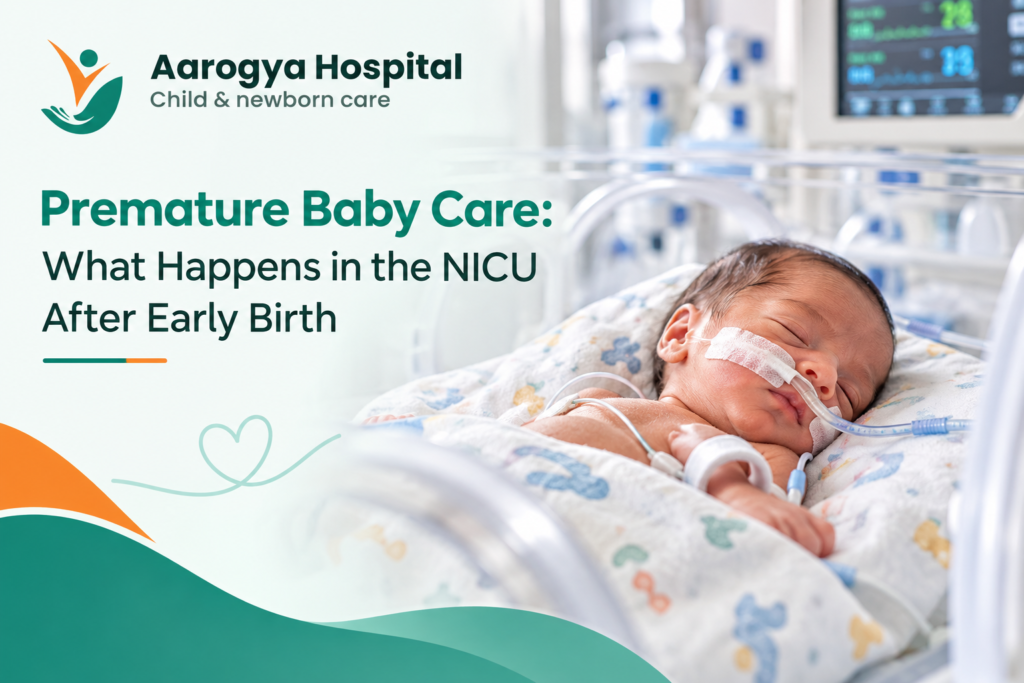
Premature Baby Care: What Happens in the NICU After Early Birth?
A baby born before 37 weeks of pregnancy is call premature baby. These babies may need extra care because their organs are not fully develop. Therefore, doctors may recommend keeping them in a Neonatal Intensive Care Unit (NICU) for special medical care.
An early birth can be stressful and emotional for parents. However, learning about premature baby care can help you feel more prepared. In this guide, we explain what happens in the NICU, how doctors care for premature babies, and what parents can expect during their baby’s hospital stay.
What Is a NICU and Why Do Premature Babies Need It?
A Neonatal Intensive Care Unit (NICU) is a special hospital unit for newborn babies who need close monitoring and extra medical care.
Premature babies may need NICU care for several reasons:
- Breathing difficulties: Their lungs may not be fully develop, making breathing harder.
- Low birth weight: They may need extra help with feeding and gaining weight.
- Temperature control: They may find it difficult to keep their body warm.
- Feeding problems: They may not yet be strong enough to suck and swallow properly.
- Risk of infection: Their immune systems are still developing, so they may be more likely to get infections.
The care a baby needs depends on how many weeks early they were born, their birth weight, their health, and how well they are growing.
What Happens in the NICU After a Premature Baby Is Born?
Every premature baby needs different care. Therefore, the NICU team makes a care plan based on the baby’s health and needs.
1. Initial Assessment and Monitoring
After birth, doctors check the baby’s breathing, heartbeat, body temperature, and overall health. They may also check the baby’s blood sugar and oxygen levels.
Special machines help doctors and nurses keep a close eye on the baby’s health. They can quickly provide extra care if the baby’s condition changes.
2. Support for Breathing
Some premature babies need help breathing because their lungs are not fully develop.
Depending on the baby’s health, doctors may provide extra oxygen to help them breathe. They may use CPAP, which helps keep the airways open, or a ventilator to support breathing. In some cases, doctors may recommend other advanced breathing treatments.
The medical team regularly reviews the baby’s breathing and adjusts support as needed.
3. Keeping the Baby Warm
Premature babies have less body fat, so they can lose body heat quickly. Therefore, keeping them warm and maintaining a steady body temperature is an important part of NICU care.
Doctors may place the baby in an incubator or under a special warmer to keep them warm. This helps maintain the right body temperature while the baby grows stronger.
4. Feeding and Nutrition Support
Some premature babies may not be able to feed from the breast or bottle at first. They may need extra help to get enough nutrition to grow and develop properly.
Depending on the baby’s health, doctors may give expressed breast milk through a feeding tube. If the baby cannot get enough milk, they may provide nutrients through a vein for some time.
Breast milk is usually encourage when possible because it provides important nutrients and helps protect the baby from infections. The NICU team can guide parents on how to express and store breast milk safely.
5. Preventing and Treating Infections
Premature babies have a higher risk of infections. Therefore, the NICU team follows strict hygiene practices and checks babies regularly for signs of illness.
If doctors suspect an infection, they may recommend blood tests or other checks. They may also give antibiotics if needed to treat the infection.
Parents and visitors should wash or clean their hands properly and follow the NICU’s rules to help protect babies from infections.
6. Monitoring Growth and Development
The NICU team regularly checks the baby’s weight, feeding, body temperature, breathing, and other important signs to make sure the baby is doing well.
Some babies may need extra health checks depending on how early they were born and their medical condition. These may include eye tests, hearing tests, or brain scans if needed.
The aim is to help the baby grow well and find and treat any health problems early.
Advanced NICU Care for Premature Babies
Some premature babies need special medical care, especially if they are born very early or have serious health problems.
Depending on the baby’s needs and available facilities, advanced NICU care may include:
- Breathing support: Helps babies who have difficulty breathing.
- Continuous monitoring: Tracks the baby’s vital signs and helps doctors notice changes.
- aEEG/CFM monitoring: Helps doctors check brain activity in selected babies.
- Therapeutic hypothermia: Control cooling may be use for eligible newborns with certain types of brain injury cause by a lack of oxygen.
- Specialist assessment: Neonatologists and other specialists check babies who need extra medical care.
Not every premature baby needs these treatments. Doctors decide which tests and treatments are need base on the baby’s health.
How Long Does a Premature Baby Stay in the NICU?
Every premature baby needs a different length of stay in the NICU. It depends on how early the baby was born, their birth weight, breathing, feeding, and overall health.
Some babies need to stay in the NICU for only a short time, while others may need care for several weeks or longer.
Before discharge, the medical team generally checks whether the baby can:
- Maintain a stable body temperature.
- Breathe safely without the level of support they no longer need.
- Feed adequately and show appropriate growth.
- Remain medically stable with a suitable follow-up plan.
Every baby grows and improves at their own pace. The NICU team will explain when your baby can go home and how to care for them safely.
How Can Parents Support Their Premature Baby in the NICU?
Parents play an important role in their baby’s care. The NICU may feel new and unfamiliar, but small steps can help parents stay involved in their baby’s care.
- Ask questions: Speak with the doctors and nurses about your baby’s condition, treatment, and progress.
- Provide breast milk: If possible, ask the team how to express and store breast milk safely.
- Try kangaroo mother care: Skin-to-skin contact may support temperature control, bonding, and breastfeeding when the baby is stable and the care team considers it appropriate.
- Follow hygiene instructions: Wash your hands properly and follow the NICU’s visitor and infection prevention rules.
- Take care of yourself: Rest, eat well, and seek emotional support from family or healthcare professionals when needed.
Taking part in daily care can help parents feel more confident and prepared to care for their baby at home.
What Care Does a Premature Baby Need After NICU Discharge?
Premature babies may need regular check-ups after leaving the hospital. Their follow-up care depends on how they were born, their health needs, and how they grow and develop.
After discharge, parents may need to:
- Attend scheduled paediatric or neonatal appointments.
- Monitor feeding, weight gain, and growth.
- Follow the recommended vaccination schedule.
- Attend hearing, eye, or developmental assessments when advised.
- Follow safe sleep guidance and seek medical advice if the baby becomes unwell.
Contact a doctor quickly if your baby has trouble breathing, feeds poorly, seems unusually sleepy, has a fever, or shows other worrying signs. Seek emergency care if your baby has severe breathing problems, blue or grey lips, does not respond, or shows other signs of a medical emergency.
Premature Baby Care at Aarogya Hospital Chandigarh
Premature babies may need special monitoring, breathing support, help with feeding, and regular health checks. Early medical assessment helps doctors provide the right care based on each baby’s needs.
Aarogya Hospital Chandigarh provides newborn and neonatal care. Parents can contact the hospital to learn about NICU facilities, specialist availability, admission requirements, and suitable care options for their baby.
If your baby is born early or needs special care, speak with a qualified neonatologist or paediatrician to understand the next steps and get the right medical support.
Conclusion
Premature baby care involves more than just keeping a baby in the hospital. It includes help with breathing, keeping the baby warm, feeding support, infection prevention, and regular health checks.
An early birth can be worrying for parents. However, NICU care helps babies get the medical support they need. With guidance from doctors and nurses, parents can take part in their baby’s care and prepare to bring their baby home.
If your baby is born early, consult a qualified neonatologist to understand the medical care, regular checks, and follow-up your baby may need.
Frequently Asked Questions (FAQs)
Why do premature babies need NICU care?
Premature babies may have breathing problems, difficulty feeding, trouble staying warm, or a higher risk of infections. The NICU team provides medical care and closely monitors each baby based on their needs.
Can parents visit their baby in the NICU?
Yes, parents can usually visit their baby according to the hospital’s NICU rules. The team will explain visiting hours, hygiene practices, and how parents can take part in their baby’s care.
Can a premature baby receive breast milk in the NICU?
Yes. Breast milk is usually encourage when possible. Depending on the baby’s health, it can be give directly, through a feeding tube, or by another method recommended by the doctor.
How do doctors know when a premature baby is ready to go home?
Doctors check the baby’s breathing, body temperature, feeding, growth, and overall health before discharge. They also guide parents on feeding, prescribed medicines, warning signs, and follow-up visits.
Is every premature baby keep in an incubator?
No. Some premature babies need an incubator to stay warm. Others can sleep in a cot if they can maintain a stable body temperature and meet the doctor’s medical requirements.
What are the warning signs parents should watch for after discharge?
Seek medical advice quickly if your baby feeds poorly, has fewer wet nappies than usual, develops a fever, seems unusually sleepy, or has changes in breathing. Get emergency care if your baby has severe breathing problems, blue or grey lips, or does not respond.