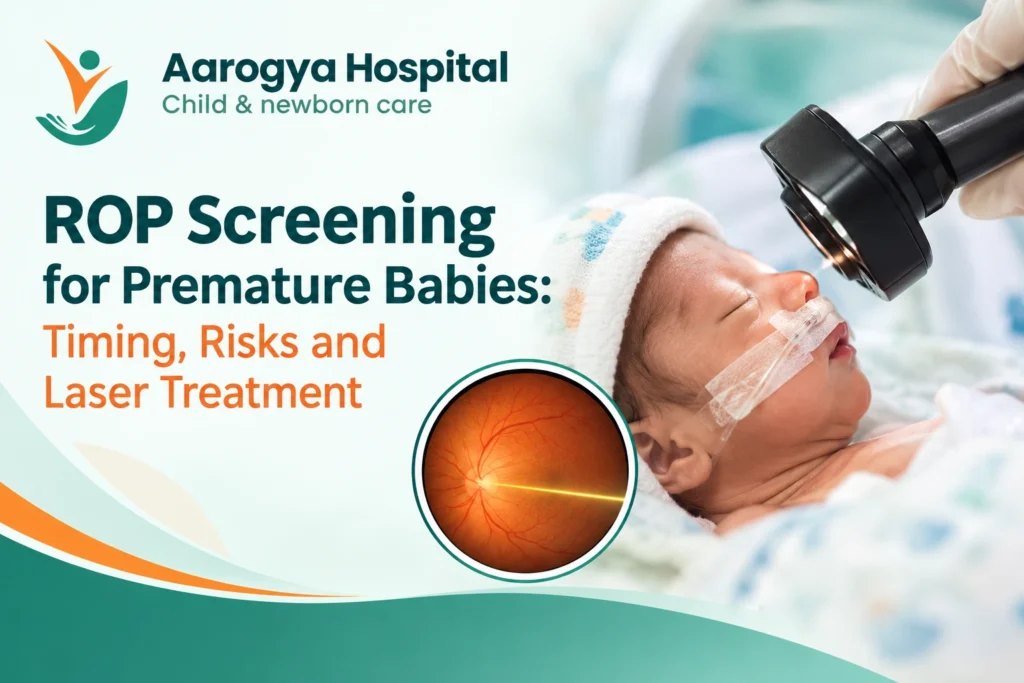
ROP Screening for Premature Babies: Timing, Risks and Laser Treatment
Babies born too early need special care to stay healthy and grow well. ROP screening for premature babies is an important eye test. It helps doctors find eye problems early and protect the baby’s eyesight.
Retinopathy of Prematurity (ROP) is an eye problem that can affect babies born too early, especially those with low birth weight. In some babies, it gets better on its own. However, severe ROP can damage the retina (the light-sensitive part of the eye) and cause permanent vision loss if it is not treated on time.
Therefore, early screening and proper treatment are important for your baby’s eye health.
At Aarogya Hospital, Chandigarh, parents can learn about premature baby care and the importance of timely eye screening.
What Is Retinopathy of Prematurity (ROP)?
Retinopathy of Prematurity, also called ROP, is an eye condition that affects the growth of blood vessels in a premature baby’s eye.
The retina is the part at the back of the eye that helps us see. It sends visual signals to the brain.
In babies born too early, the blood vessels in the retina may not grow properly. This can cause abnormal blood vessels to grow and damage the retina.
ROP often has no clear signs in the early stages. This means parents may not notice any eye problems.
So, babies at risk of ROP need an eye check-up by a trained eye doctor, even if their eyes look normal.
Why Do Premature Babies Need ROP Screening?
ROP screening helps doctors check whether the blood vessels in the baby’s retina are growing normally.
This test is important because severe ROP can develop without visible signs.
Early screening helps doctors:
- Find ROP before it causes serious eye damage.
- Check how the blood vessels in the retina are growing.
- Find babies who may need laser treatment or other care.
- Lower the risk of permanent vision loss.
- Decide when the baby needs another eye check-up.
Most importantly, regular screening helps doctors find problems and treat them at the right time.
When Should ROP Screening Be Done?
The right time for ROP screening depends on when the baby was born, the baby’s birth weight, and their health.
Under Indian screening guidelines, the following babies generally need ROP screening:
- Babies born at or before 34 weeks of pregnancy.
- Babies with a birth weight of 2,000 grams or less.
- Other premature babies who have additional risk factors.
The first eye check-up is usually recommended within 25–30 days after birth. However, some very premature babies or babies with very low birth weight may need an eye check-up earlier, around 2–3 weeks after birth.
The baby’s doctor and eye specialist will decide the best time for the first examination.
Important: Do not delay ROP screening after your baby leaves the NICU. Before discharge or transfer to another hospital, confirm the screening date and follow-up plan with the medical team.
Which Babies Have a Higher Risk of ROP?
ROP mainly affects babies born too early. However, some babies have a higher risk of developing severe ROP.
1. Low Birth Weight
Babies born with very low birth weight have a higher risk of ROP. This is because the blood vessels in their eyes may not be fully developed.
2. Very Early Birth
The earlier a baby is born, the less time their retinal blood vessels have to grow. Therefore, very premature babies have a higher risk of ROP.
3. Oxygen Support
Some premature babies need extra oxygen to help them breathe.
Doctors closely monitor the baby’s oxygen levels because too little or too much oxygen can be harmful. Keeping oxygen levels within the recommended range helps lower the risk of complications.
Parents should never change their baby’s oxygen settings without medical advice.
4. Infection and Other Health Problems
Some health problems can increase the risk of severe ROP. These include infections, breathing difficulties, and other problems during newborn care.
Therefore, premature babies need close medical care and regular check-ups.
5. Poor Weight Gain
Babies who do not gain enough weight after birth may have a higher risk of ROP.
Proper feeding, good nutrition, and regular weight checks help support healthy growth.
How Is ROP Screening Done?
A trained eye specialist examines the baby’s retina during ROP screening.
The examination usually includes these steps:
- Preparing the baby: The medical team checks the baby’s condition before the test.
- Using eye drops: Special drops make the pupils larger. This helps the doctor see the retina clearly.
- Checking the eyes: The doctor uses special equipment to check the blood vessels in the retina.
- Planning the next step: The doctor decides whether the baby needs another eye check-up or treatment.
The examination may cause some temporary discomfort. However, the medical team takes steps to keep the baby comfortable and monitor their condition.
ROP screening is not always a one-time test. Some babies need several eye check-ups until the blood vessels in their eyes develop properly or the condition gets better.
What Is Laser Treatment for ROP?
Laser treatment is use when ROP becomes severe and may harm the baby’s eyesight.
During the treatment, the eye specialist uses a laser on specific areas of the retina. This helps reduce abnormal blood vessel growth and lowers the risk of further damage.
Laser treatment is generally recommend for severe ROP that threatens vision.
However, not every baby with ROP needs laser treatment. Some babies have mild ROP that improves without treatment.
The eye specialist will decide the best treatment after checking the stage and severity of ROP.
What Happens After Laser Treatment?
After laser treatment, the baby needs regular eye check-ups.
These visits help the doctor check whether the treatment is working and whether more treatment is need.
Some babies may need another treatment. In certain cases, the doctor may recommend injections into the eye. Advanced ROP may need surgery.
Long-term eye check-ups are also important. They help doctors monitor the baby’s eyesight and find problems such as squint or difficulty seeing clearly.
The treatment and follow-up plan will depend on the baby’s condition.
Can ROP Be Prevent?
ROP cannot always be prevent. However, good newborn care and timely screening can lower the risk of serious eye damage.
Parents can help by following these steps:
- Take your baby for every scheduled ROP screening.
- Follow the doctor’s advice about oxygen support and feeding.
- Make sure your baby receives proper nutrition.
- Attend regular weight and growth checks.
- Seek medical advice if your baby develops an infection or another health problem.
- Keep all follow-up appointments after hospital discharge or treatment.
Most importantly, remember that ROP can be present even when your baby’s eyes look normal. Therefore, do not miss screening appointments.
ROP Screening and Premature Baby Care at Aarogya Hospital, Chandigarh
Premature babies may need extra help with breathing, feeding, and healthy growth. They may also need regular eye check-ups to protect their eyesight.
At Aarogya Hospital, Chandigarh, parents can ask for guidance about premature baby care and the need for medical assessment.
Babies who need ROP screening or treatment should be examined by a suitably trained eye specialist.
If your baby was born early or had a low birth weight, ask your paediatrician or neonatologist when the first ROP screening should take place.
If the doctor recommends screening or laser treatment, arrange the appointment on time.
Contact Aarogya Hospital, Chandigarh, to ask about premature baby care and referral for ROP screening.
Frequently Asked Questions About ROP Screening
When should a premature baby have the first ROP screening?
The first ROP screening in India is usually recommend within 25–30 days after birth. Some very premature babies need their first eye check-up earlier, around 2–3 weeks after birth.
The baby’s doctor will confirm the correct date.
Can ROP cause blindness in premature babies?
Yes. Severe ROP can damage the retina and may cause permanent vision loss.
However, early screening and timely treatment can greatly reduce this risk.
Does every premature baby need laser treatment for ROP?
No. Many mild cases improve without treatment.
Laser treatment is need when ROP becomes severe enough to threaten the baby’s eyesight. The eye specialist will decide whether treatment is necessary.
Is laser treatment safe for premature babies?
Laser treatment is a well-established treatment for severe ROP. However, like other medical procedures, it has some possible risks.
The eye specialist will explain the benefits, risks, and follow-up care needed for your baby.
Does my baby need ROP screening if their eyes look normal?
Yes. Early ROP usually has no visible signs.
Therefore, your baby may still need screening even if their eyes look normal and they feed well.
Does my baby need eye check-ups after ROP treatment?
Yes. Regular eye check-ups help the doctor see whether the treatment has worked and monitor your baby’s eyesight.
The doctor will decide how often these visits are need.
Where can parents get guidance about ROP screening in Chandigarh?
Parents can contact Aarogya Hospital, Chandigarh, to ask about premature baby care and referral for ROP screening and treatment.
A trained eye specialist will decide the screening schedule and the right treatment.
Protect your premature baby’s eyesight with timely ROP screening and regular follow-up. Early detection and proper treatment can help reduce the risk of serious vision problems.