
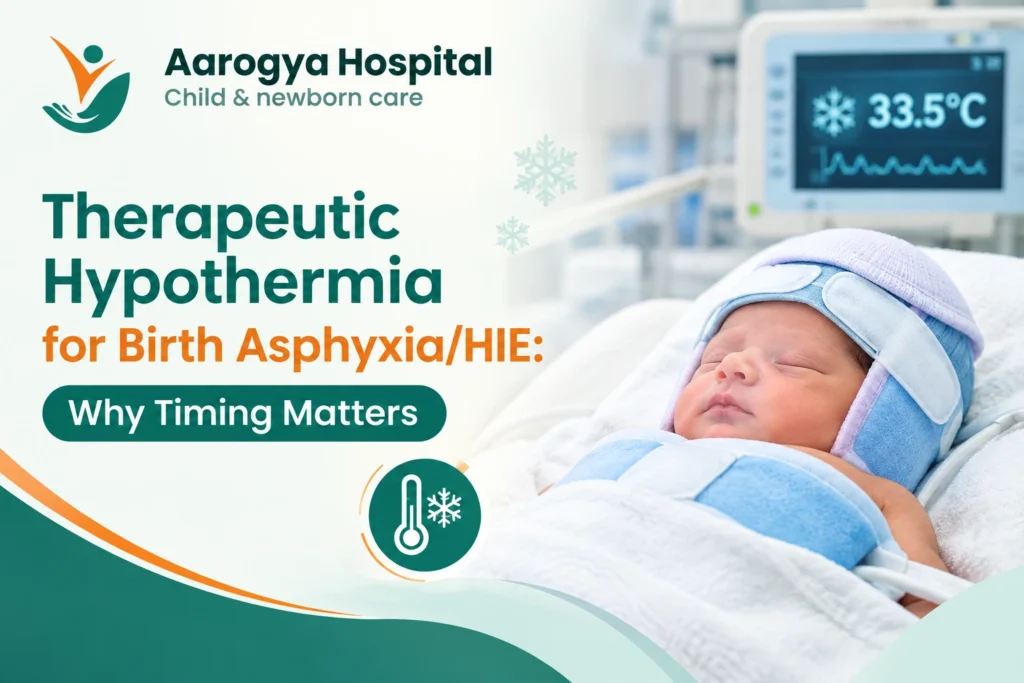
Therapeutic Hypothermia for Birth Asphyxia/HIE: Why Timing Matters
Birth is a special time for every family. However, some babies may not get enough oxygen before, during, or after birth. This can affect their brain and may require urgent medical care. Therapeutic hypothermia is a treatment that helps protect the brain of some newborn babies. These babies may have a brain injury caused by a lack of oxygen. This condition is called Hypoxic-Ischaemic Encephalopathy (HIE). During this treatment, doctors carefully lower the baby’s body temperature. This helps reduce further damage to the brain. Timing is very important. For babies who need this treatment, doctors should ideally start it within the first six hours after birth. In this guide, Aarogya Hospital, Chandigarh, explains newborn cooling therapy, how it works, and why starting treatment early is important. What Is Birth Asphyxia? Birth asphyxia happens when a baby does not get enough oxygen before, during, or shortly after birth. As a result, the baby’s brain and other organs may not get enough oxygen-rich blood. This can happen due to problems during pregnancy, labour, or birth. However, not every baby who does not get enough oxygen during birth develops brain damage. Sometimes, a lack of oxygen can harm a baby’s brain. This can lead to a condition called Hypoxic-Ischaemic Encephalopathy (HIE). What Is Hypoxic-Ischaemic Encephalopathy (HIE)? HIE is a type of brain injury in newborn babies. It happens when the brain does not get enough oxygen and blood flow. HIE can be mild, moderate, or severe. Therefore, doctors need to check the baby as soon as possible. Some possible warning signs include: Difficulty breathing after birth. Weak muscles or a floppy body. Being very sleepy or difficult to wake. Difficulty sucking or feeding. Seizures or unusual body movements. Needing breathing support for a long time after birth. These signs do not always mean the baby has HIE. However, doctors must check the baby quickly, especially if there were problems during birth that caused low oxygen levels. What Is Therapeutic Hypothermia for Newborns? Therapeutic hypothermia is also called newborn cooling therapy or brain cooling treatment for HIE. It helps protect the brain after a baby has suffered from a lack of oxygen. During treatment, doctors use special equipment to gently lower the baby’s body temperature to around 33.5°C. If the baby is suitable for this treatment, cooling usually continues for 72 hours (3 days). After 72 hours, doctors slowly bring the baby’s temperature back to normal. This treatment slows down some of the harmful changes that can damage brain cells after oxygen loss. However, not every newborn needs cooling therapy. A neonatal specialist must first check the baby and decide whether this treatment is suitable. Why Does Timing Matter in Therapeutic Hypothermia? When a baby’s brain does not get enough oxygen, brain cells can become damaged. Some damage may continue even after the baby’s oxygen levels improve. Therapeutic hypothermia slows down some of these harmful changes. However, doctors need to start treatment early for the best chance of benefit. For eligible newborns, treatment should ideally begin within the first six hours after birth. Research shows that cooling therapy can improve survival and lower the risk of major long-term disabilities in selected babies with moderate-to-severe HIE. Here is why early treatment is important. 1. It Helps Protect Brain Cells A lack of oxygen can damage a baby’s brain cells. This damage may continue even after oxygen levels return to normal. Therapeutic hypothermia slows some of these harmful changes. As a result, it may help reduce further brain damage. 2. Early Treatment May Improve the Outcome Research supports starting cooling therapy within the first six hours for eligible newborns. Waiting too long may reduce the benefits. Therefore, doctors need to recognise HIE quickly and decide whether the baby needs treatment. 3. It May Reduce Long-Term Problems HIE can affect a child’s movement, learning, hearing, vision, and development. For eligible babies, therapeutic hypothermia can improve the chances of survival without major disability. However, it cannot prevent every problem or guarantee full recovery. 4. It Helps Doctors Plan Further Treatment Early diagnosis helps doctors check the baby’s breathing, brain activity, and other organs. Doctors can then plan the right care. This may include breathing support, seizure treatment, and brain monitoring. How Does Therapeutic Hypothermia Work? Therapeutic hypothermia involves several steps. Doctors and nurses watch the baby closely throughout the treatment. Step 1: Checking the Baby First, doctors check the baby’s birth history, possible oxygen loss, blood test results, and brain function. These checks help them decide whether the baby needs cooling therapy. Step 2: Cooling the Baby If the baby meets the treatment criteria, doctors use special equipment to lower the baby’s body temperature. For many eligible newborns, the target temperature is around 33.5°C. Step 3: Monitoring the Baby During treatment, doctors and nurses regularly check the baby’s: Body temperature. Heart rate and breathing. Blood pressure. Blood test results. Brain activity and overall health. They also watch for seizures and other problems. Doctors may use EEG or aEEG tests to check brain activity when needed and available. Step 4: Continuing the Treatment Cooling usually continues for 72 hours in eligible newborns. During this time, the medical team provides supportive care and checks the baby’s condition. Step 5: Slowly Warming the Baby After 72 hours, doctors slowly bring the baby’s temperature back to normal. The medical team continues to monitor the baby during this process. Which Newborns May Need Therapeutic Hypothermia? Cooling therapy is generally used for eligible babies born at 36 weeks of pregnancy or later who have moderate-to-severe HIE. Before starting treatment, doctors check: Whether the baby had low oxygen levels around birth. Blood test results and other medical findings. Signs of moderate or severe brain injury. Seizures or unusual brain activity. The baby’s age at birth and overall health. In some cases, doctors may also consider treatment for babies born at 35 weeks. They must carefully assess the risks and possible benefits. Cooling therapy is generally not recommended for babies born before 35 weeks or […]