Ayushman Bharat empanelled Chandigarh

Neonatal Care Chandigarh

Newborn screening tests for babies at Aarogya Hospital Chandigarh
BLOG

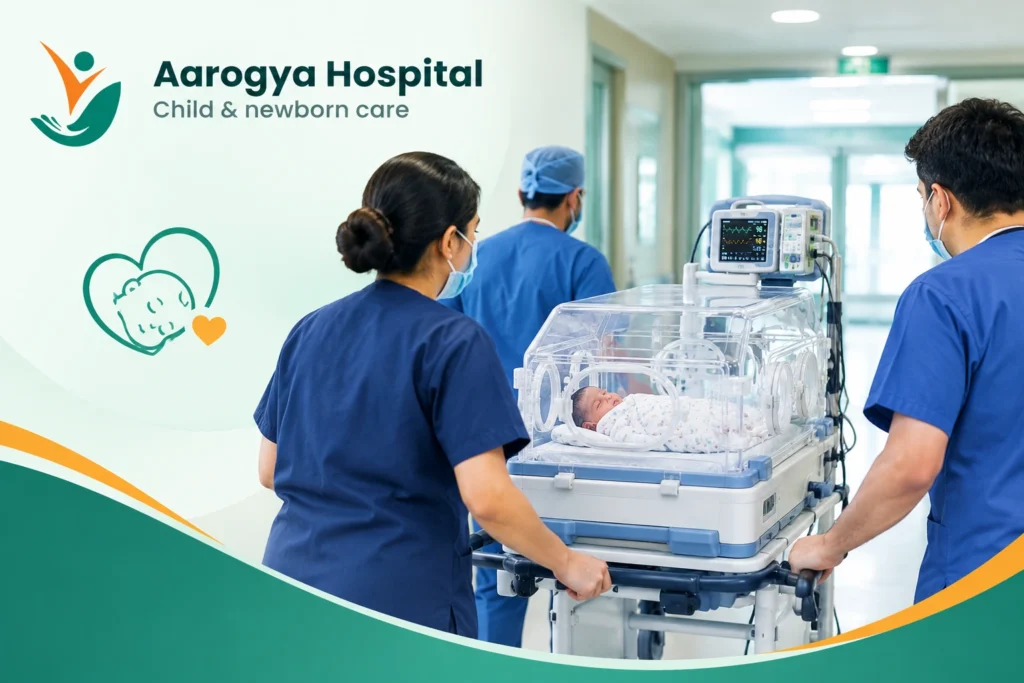
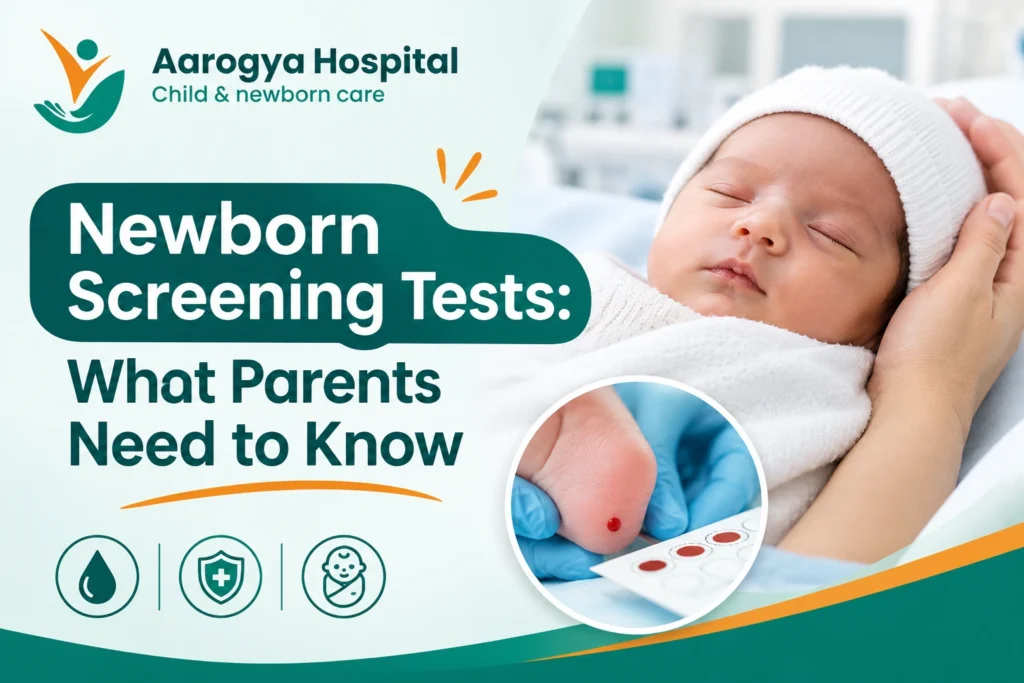
Newborn Screening Tests: What Parents Need to Know

A Simple Guide to Important Health Tests for Newborn Babies The birth of a baby brings joy to every family. Every parent wants their baby to be healthy. However, some health problems are not easy to see at birth. This is why newborn screening tests are important. These tests help doctors find certain health problems early, even if the baby looks healthy. Early testing helps doctors take the right steps at the right time. It can also help prevent serious health problems. If you are looking for newborn care in Chandigarh, knowing about these tests can help you make better choices for your baby. What Are Newborn Screening Tests? Newborn screening tests are simple tests done soon after a baby is born. They help doctors check for certain health problems that may be present from birth. These problems may affect the baby’s genes, hormones, or body functions. Most babies with these conditions look healthy in the beginning. They may not show any signs of illness. Therefore, screening tests help doctors find possible problems early. However, these tests do not confirm a disease. If a result is not normal, the doctor may ask for more tests. Why Are Newborn Screening Tests Important? Newborn screening tests help protect a baby’s health. Some health problems can affect a baby’s growth and brain development if they are not treated on time. Here are some benefits of these tests: Early Detection: Tests help doctors find health problems early. Quick Treatment: Doctors can plan the next steps without delay. Healthy Growth: Early care can support the baby’s growth and development. Prevent Serious Problems: Timely treatment can lower the risk of health problems. Better Care: Parents get important information about their baby’s health. Types of Newborn Screening Tests Doctors may suggest different newborn screening tests based on the baby’s health and needs. 1. Blood Spot Screening Test This test is done by taking a few drops of blood from the baby’s heel. The blood sample is sent to a lab for testing. It helps doctors check for health problems related to hormones, genes, and body functions. Depending on the screening programme, this test may check for: Congenital hypothyroidism Phenylketonuria (PKU) Congenital adrenal hyperplasia (CAH) Some inherited metabolic disorders Other health problems included in the screening programme Finding these problems early helps doctors plan the right care for the baby. 2. Hearing Screening Test A newborn hearing test checks if a baby can hear sounds. Hearing is important for learning to speak and understand words. However, parents may not notice hearing problems in the first few days. Doctors may use two common tests: Otoacoustic Emissions (OAE): This test checks how the baby’s inner ear responds to sounds. Automated Auditory Brainstem Response (AABR): This test checks how the hearing nerve and brain respond to sounds. Early testing helps parents get the right care and support if their baby has a hearing problem. 3. Pulse Oximetry Screening Pulse oximetry is a simple and painless test. It checks the oxygen level in the baby’s blood. It can help doctors find some serious heart problems that may not be easy to notice during a normal check-up. During this test, a small sensor is placed on the baby’s hand or foot. It measures the amount of oxygen in the blood. If the result is not normal, the doctor may suggest more tests. 4. Screening for Congenital Hypothyroidism Congenital hypothyroidism is a condition in which the baby’s thyroid gland does not make enough thyroid hormone. This hormone helps the brain and body grow properly. A simple blood test can help doctors find this condition. If the test confirms the problem, the doctor can start the right treatment. Early treatment helps support the baby’s brain growth and overall development. 5. Screening for Other Metabolic Disorders Some babies are born with conditions that make it difficult for their bodies to use food for energy. These conditions may affect how the body uses proteins, fats, or sugars. In many cases, babies do not show clear signs at birth. Doctors may suggest extra tests based on the screening programme and the baby’s health. Finding these problems early helps doctors plan treatment, food changes, and regular check-ups. When Should Newborn Screening Tests Be Done? The right time for newborn screening depends on the type of test and the baby’s health. In general: Blood Spot Test: It is usually done after the first 24 hours of birth. Hearing Test: It is usually done before the baby leaves the hospital or within the first few weeks. Pulse Oximetry Test: It is usually done after 24 hours of birth or close to hospital discharge. Some babies may need these tests again. Therefore, parents should follow their doctor’s advice about the right time for each test. Are Newborn Screening Tests Painful? Most newborn screening tests are simple and safe. The blood test involves a small prick on the baby’s heel. The baby may cry for a short time. However, hearing and pulse oximetry tests are usually painless. They do not need any surgery or injections. Doctors and trained staff perform these tests carefully to keep the baby comfortable and safe. What Happens If a Newborn Screening Test Is Not Normal? An abnormal result does not always mean that your baby has a disease. Sometimes, the result may be affected by early testing, premature birth, or other health conditions. If a test result is not normal, the doctor may suggest: Repeating the test, if needed. Doing more tests to check the result. Meeting a paediatrician or specialist. Starting treatment if a health problem is confirmed. Having regular check-ups to check the baby’s health. Parents should not panic. However, they should not ignore an abnormal result. Always follow your doctor’s advice and complete any further tests on time. Do All Newborn Babies Need Screening? Yes, newborn screening is recommended for all babies, even if they look healthy. Some health problems do not show clear signs in the first few days after birth. A baby […]
Newborn NICU near PGI Chandigarh
BLOG

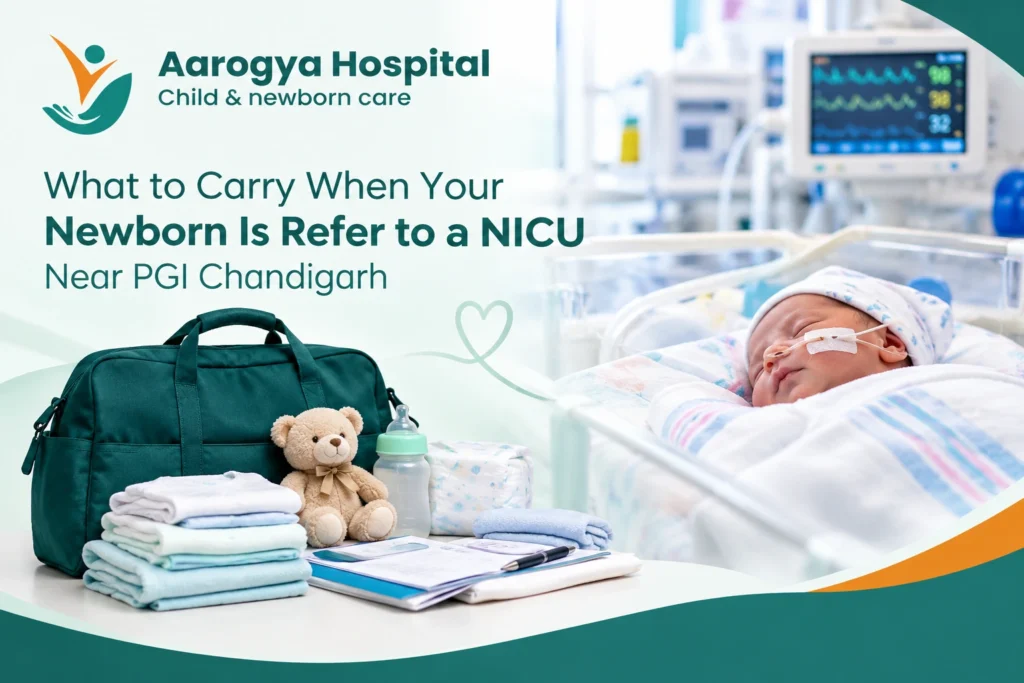
What to Carry When Your Newborn Is Refer to a NICU Near PGI Chandigarh

When a newborn baby needs extra care, a doctor may suggest NICU admission. NICU stands for Neonatal Intensive Care Unit. It is a special unit for babies who need close care and monitoring. This can be a stressful time for parents. However, knowing what to carry can help you prepare. If your baby is refer to a NICU near PGI Chandigarh, keep important papers and basic items ready. Most importantly, do not delay your baby’s transfer to pack your bags. Your baby’s health comes first. 1. Carry Your Baby’s Medical Reports Medical reports help doctors understand your baby’s health. They also help doctors plan the right treatment. Try to carry these papers: Baby’s birth records and hospital discharge papers Doctor’s referral letter Blood test reports Ultrasound and scan reports, if available Details of medicines given to your baby Details of oxygen or breathing support, if used Mother’s pregnancy and delivery records If the transfer is urgent, take the papers you can find quickly. Do not delay your baby’s care to find missing reports. 2. Keep Important Documents Ready The hospital may ask for some documents during admission. Keep these papers ready, if available: Parents’ identity cards Hospital admission papers Baby’s birth records Health insurance papers, if applicable Ayushman Bharat PM-JAY documents, if eligible You can also call the hospital to ask which documents are need for admission or cashless treatment. 3. Pack Basic Items for Your Baby Your baby may need special care and medical equipment in the NICU. So, ask the hospital team which items you can bring. You may pack: A clean baby blanket, if allowed A few clean baby clothes Clean nappies, if needed Feeding items, only if the doctor allows them Some babies cannot wear normal clothes or use personal blankets in the NICU. Always follow the hospital’s rules to help protect your baby from infection. 4. Carry the Mother’s Medical Details The mother’s health details can help doctors understand the baby’s condition. Try to remember or write down: Any problems during pregnancy Mother’s blood group, if known Medicines taken during pregnancy Date and time of delivery Type of delivery, such as normal delivery or C-section Any infections or other health problems Medicines given to the mother during labour Share these details with the doctor. Carry the medical reports if you have them. 5. Pack a Small Bag for Yourself You may need to stay at the hospital for several hours. A small bag can help you manage your stay. You can pack: Mobile phone and charger Wallet and important papers Personal medicines Basic toiletries One extra set of clothes Notebook and pen to write down the doctor’s advice You can also ask the hospital about visiting hours and nearby places to stay. If you plan to express breast milk, ask the medical team how to collect and store it safely. 6. What to Do Before Taking Your Baby to the NICU Preparing for the transfer is helpful. However, your baby’s health and safe travel are more important. Follow these steps: Follow the doctor’s advice. Confirm which hospital will receive your baby and when to leave. Arrange safe transport. If your baby needs oxygen or close monitoring, ask about a suitable neonatal ambulance. Share medical details. Tell the receiving hospital about your baby’s health, test results, and treatment. Ask about feeding. Check with the doctor before feeding your baby during the journey. Do not adjust medical equipment yourself. Let trained staff manage oxygen, tubes, and monitors. Important: If your baby has trouble breathing, blue or grey lips, seizures, or is difficult to wake, seek emergency medical help immediately. 7. Looking for a NICU Near PGI Chandigarh? Parents looking for a NICU near PGI Chandigarh may also explore newborn care options in Panchkula and Mohali. Before choosing a hospital, ask these questions: What newborn care services are available? Are doctors train in newborn care available? Does the hospital have breathing support and monitoring equipment? Is emergency care available? Can the hospital help arrange safe transport for newborns? Aarogya Hospital is located in Khudda Lahora, near PGI Chandigarh. The hospital provides care for newborn babies and children. Parents can contact Aarogya Hospital to ask about its NICU facilities, specialist services, and admission process. The hospital team can explain the available services and guide parents based on their baby’s needs. Families from Chandigarh, Panchkula, and Mohali can also contact the hospital to ask about newborn care and referral support. Please confirm that the required NICU facilities and specialist services are available before travelling, unless the medical team advises an immediate transfer. Conclusion A newborn’s NICU referral can be stressful for parents. However, a little preparation can make things easier. Carry your baby’s medical reports, important papers, and basic personal items. Also, follow the doctor’s advice about safe transport. Do not delay an urgent transfer to pack your bags or find missing papers. If you are looking for newborn care near PGI Chandigarh, contact Aarogya Hospital to ask about available facilities, NICU admission, and newborn referral support. Aarogya Hospital, Chandigarh Location: Khudda Lahora, near PGI Chandigarh Please contact the hospital to confirm NICU availability, admission requirements, and transfer arrangements. In an emergency, follow the medical team’s advice without delay. Follow Aarogya Hospital on Instagram and Facebook for more information about newborn and child care. Frequently Asked Questions (FAQs) What papers should I carry when my baby is refer to a NICU? Carry the doctor’s referral letter, test reports, birth records, and parents’ identity cards, if available. Do not delay an urgent transfer to find missing papers. Should I carry clothes and blankets for my NICU baby? You can carry a few clean clothes and a blanket. However, your baby may not be able to use them in the NICU. Ask the hospital team before using these items. Can I breastfeed my baby after NICU admission? It depends on your baby’s health. Ask the doctor if you can breastfeed your baby or give expressed breast milk. Follow the team’s advice […]

TPN and PICC lines for premature babies
BLOG

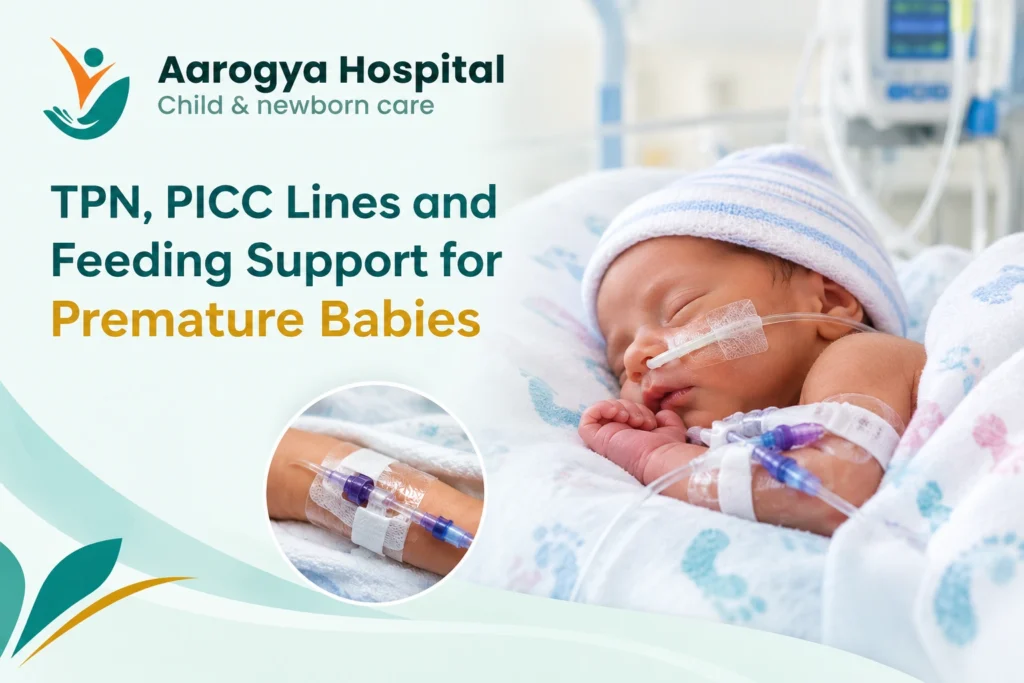
TPN, PICC Lines and Feeding Support for Premature Babies

Introduction Premature babies are born before 37 weeks of pregnancy. Their bodies are still growing. Therefore, they may need extra help with feeding and nutrition. Some premature babies cannot drink enough milk. Others have trouble digesting milk or need special medical care. In such cases, doctors may suggest TPN, a PICC line, or tube feeding. These treatments help babies get the nutrients they need to grow and stay healthy. However, every baby is different. Doctors choose the best feeding method based on the baby’s health, weight, and growth. At Aarogya Hospital, Chandigarh, parents can ask about premature baby care, newborn feeding, and NICU services. Why Do Premature Babies Need Special Feeding Support? Premature babies may have trouble feeding because their bodies are not fully develop. They may also find it hard to suck, swallow, and breathe at the same time. As a result, some babies need extra help to get enough nutrition. Common reasons include: Poor sucking and swallowing: The baby may not be ready to drink milk safely. Low birth weight: The baby needs enough nutrients to grow. Immature digestion: The baby’s stomach and intestines may need more time to develop. Breathing problems: Babies who need help with breathing may also need feeding support. Serious illness: Some babies need extra nutrition while they recover. Higher nutritional needs: Premature babies need enough energy, protein, vitamins, and minerals to grow. Meanwhile, the neonatologist, a doctor who specialises in newborn care, assesses the baby’s health and plans the most suitable feeding method. What Is TPN (Total Parenteral Nutrition)? TPN stands for Total Parenteral Nutrition. In other words, it is a method of delivering nutrients directly into a baby’s bloodstream through an IV line. Doctors may use TPN when a premature baby cannot get enough nutrition through milk. TPN contains important nutrients, such as: Glucose: Gives the baby energy. Amino acids: Help the body grow and repair itself. Fats: Provide energy and support healthy growth. Vitamins and minerals: Help the body work properly. Electrolytes: Help maintain the right balance of fluids and minerals. Doctors adjust the TPN mixture according to the baby’s weight, age, blood tests, and nutritional needs. When Does a Premature Baby Need TPN? Doctors may suggest TPN when: The baby is born very early. Baby has a very low birth weight. The baby cannot take enough milk. The baby has certain stomach or intestinal problems. Recovering from a serious illness. Safely receive enough milk for medical reasons. Some babies can receive small amounts of milk while also getting TPN. As the baby starts taking more milk, doctors may slowly reduce TPN when it is safe to do so. How Do Doctors Monitor TPN? TPN needs careful monitoring because a premature baby’s needs can change quickly. Doctors and nurses may check: Blood sugar levels. Blood tests for salts and minerals. Fluid intake and urine output. Weight gain and growth. Liver health when needed. Signs of infection or problems with the IV line. As a result, these checks help the medical team provide the right amount of nutrition and identify any problems early. What Is a PICC Line in a Premature Baby? A PICC line is a thin, soft tube place into a vein, usually in the baby’s arm or leg. A PICC stands for Peripherally Inserted Central Catheter. In this procedure, a thin tube is insert through a vein and guide into a larger vein near the heart. Doctors check its position before using it. Additionally, a PICC line can be use to deliver TPN, certain medicines, and other essential treatments directly into the bloodstream. Why Might a Premature Baby Need a PICC Line? Doctors may suggest a PICC line when a baby needs IV nutrition or medicines for several days or longer. A PICC line can: Provide steady access to a vein. Allow doctors to give certain strong nutrition solutions. Reduce the need for repeated short-term IV lines. Help the medical team continue treatment in the NICU. However, not every premature baby needs a PICC line. Some babies can receive treatment through a regular IV line. How Is a PICC Line Care For? A PICC line needs careful handling to reduce the risk of infection and other problems. Doctors and nurses may: Keep the area clean and covered. Check the skin around the line. Use clean, sterile methods when handling the line. Look for redness, swelling, or fluid leakage. Check the line’s position when needed. Parents should never touch, flush, adjust, or remove the line themselves. Tell the nurse or doctor immediately if you notice any unusual changes around the line. What Is Feeding Support for Premature Babies? Feeding support helps premature babies get enough nutrition while they grow. Therefore, doctors choose the most suitable feeding method based on the baby’s age, breathing, digestion, and ability to swallow safely. The main feeding methods include breast milk, tube feeding, and feeding by mouth. 1. Breast Milk Feeding Mother’s breast milk is usually the first choice for premature babies when it is available and suitable. It provides important nutrients that help the baby grow. It also contains substances that help protect the baby from some infections. Additionally, some premature babies need fortified breast milk. This means extra nutrients are add to provide more protein, minerals, and calories to support healthy growth. Additionally, if the mother’s milk is not available, donor breast milk may be considered where it is available and suitable for the baby. Doctors may also suggest special formula made for premature babies. 2. Tube Feeding Some premature babies are too young or weak to drink milk safely. In such cases, doctors may suggest tube feeding. A thin tube is pass through the baby’s nose or mouth into the stomach. Milk is then give through the tube in small, measure amounts. Tube feeding helps babies get enough nutrition while they develop their feeding skills. Doctors and nurses check how well the baby handles the milk. They also watch for vomiting, tummy swelling, and poor weight gain. 3. Moving to Breastfeeding […]

Safe transfer of a sick newborn to a NICU at Aarogya Hospital Chandigarh
BLOG

How to Transfer a Sick Newborn Safely Between Hospitals

Sometimes, a newborn baby needs special medical care. However, the current hospital may not have the right treatment or equipment. In such cases, doctors may suggest moving the baby to another hospital with a Neonatal Intensive Care Unit (NICU). However, moving a sick newborn requires careful planning. The baby needs trained medical staff, proper equipment, and safe transport to ensure their safety. For example, premature babies and babies with low birth weight need extra care. Similarly, babies with breathing problems may need special support during travel. Therefore, doctors must check the baby’s health before the journey. Aarogya Hospital, Chandigarh, near PGI Chandigarh, provides families with a place to ask about newborn care and NICU services. Families and referring doctors can contact the hospital to discuss the baby’s needs and available care. When Does a Newborn Need to Move to Another Hospital? Doctors may suggest moving a baby when the current hospital cannot provide the care the baby needs. Here are some common reasons: Premature birth: Babies born too early may need help with breathing, feeding, and staying warm. Low birth weight: Small babies may need help with feeding, body temperature, and blood sugar. Breathing problems: Some babies need oxygen or help from a breathing machine. Serious infections: Babies with severe infections may need antibiotics and close medical care. Problems during birth: Some babies need special care after a difficult birth. Severe newborn jaundice: High bilirubin levels may need quick treatment. Brain problems: Babies who do not get enough oxygen around birth may need special treatment and close monitoring. The doctor will decide whether the baby needs to move to another hospital. This decision depends on the baby’s health and the care available at the current hospital. How to Transfer a Sick Newborn Safely Between Hospitals A sick newborn needs special care during travel. Doctors must prepare the baby, arrange safe transport, and check the baby’s health throughout the journey. 1. Check the Baby Before Travel First, doctors check the baby’s breathing, heartbeat, body temperature, and general health. They may also check blood sugar and blood flow. If the baby has breathing problems, doctors may provide breathing support before travel. They may also treat low blood sugar or other serious problems. Doctors should make the baby as stable as possible before the journey. However, they should not delay urgent treatment when waiting could put the baby at risk. 2. Arrange Trained Medical Staff A sick newborn may need trained medical staff during the journey. Depending on the baby’s condition, the team may include a doctor or a nurse with newborn care training. The team must know how to care for the baby and respond to emergencies. The current hospital should also speak with the new hospital before the journey. This helps the receiving team prepare for the baby’s arrival. 3. Use the Right Medical Equipment Some babies need special equipment during travel. The medical team will choose the equipment based on the baby’s needs. This equipment may include: Transport incubator: Keeps the baby warm during travel. Oxygen supply: Gives extra oxygen when needed. Breathing support: Helps the baby breathe when needed. Monitoring devices: Check the baby’s heartbeat and oxygen levels. Infusion pumps: Give fluids or medicines at the right rate. Emergency equipment: Helps medical staff respond to sudden problems. Before leaving, the team checks all the equipment. They also make sure there is enough oxygen, battery power, and medical supplies for the journey. 4. Keep the Baby Warm Newborn babies can lose body heat quickly. Premature babies and babies with low birth weight are at greater risk. Therefore, the medical team must keep the baby warm during travel. A transport incubator or another suitable warming system can help. The team should also check the baby’s temperature during the journey. 5. Check the Baby During Travel The medical team must watch the baby’s health throughout the journey. They may check: Heartbeat and breathing Oxygen levels Body temperature Blood sugar, when needed Blood pressure, when needed If the baby’s condition changes, the team must provide the right care quickly. 6. Share the Baby’s Medical Reports Before the transfer, the current hospital should share the baby’s medical records with the new hospital. These records may include: Birth details and weeks of pregnancy at birth Birth weight and current weight The baby’s current health problems Medicines and treatment already given Blood test results and other reports Oxygen needs and breathing support Problems during birth These details help the new medical team understand the baby’s condition. They also help doctors continue treatment without unnecessary delays. 7. Choose the Right Hospital The new hospital should have the right medical team and equipment for the baby’s needs. For example, a baby with serious breathing problems may need advanced NICU care. A premature baby may need help with feeding, staying warm, and gaining weight. Parents should speak with the treating doctor before the transfer. They should also ask about bed availability, treatment options, and transport arrangements. What Should Parents Do Before the Transfer? Parents may feel worried when doctors suggest moving their baby to another hospital. However, a few simple steps can help them prepare. Parents should: Ask why the baby needs to move. Find out what treatment the baby needs. Confirm the name of the new hospital. Ask who will care for the baby during travel. Keep medical reports and referral papers ready. Follow the doctor’s instructions. Most importantly, do not delay an urgent transfer. Never take a seriously ill newborn in a private car without medical advice and a safe travel plan. Why Is NICU Care Important During a Newborn Transfer? A Neonatal Intensive Care Unit (NICU) provides special care for newborn babies who need extra medical support. Depending on the baby’s condition and the hospital’s facilities, NICU care may include: Help with breathing Support to keep the baby warm Checks of heartbeat and oxygen levels Treatment for infections Help with feeding and fluids Care for premature babies Care for babies with low birth weight Treatment […]

Aarogya Support 1

Aarogya Hospital Chandigarh

Doctor Avatar
Welcome to Aarogya Hospital (Near PGI Chandigarh) 🏥
I'm your assistant here to help with your medical enquiry.
Doctor Avatar
Which of our services or departments are you interested in?