Ayushman Bharat empanelled Chandigarh

Newborn Care Near Panchkula

Newborn screening tests for babies at Aarogya Hospital Chandigarh
BLOG

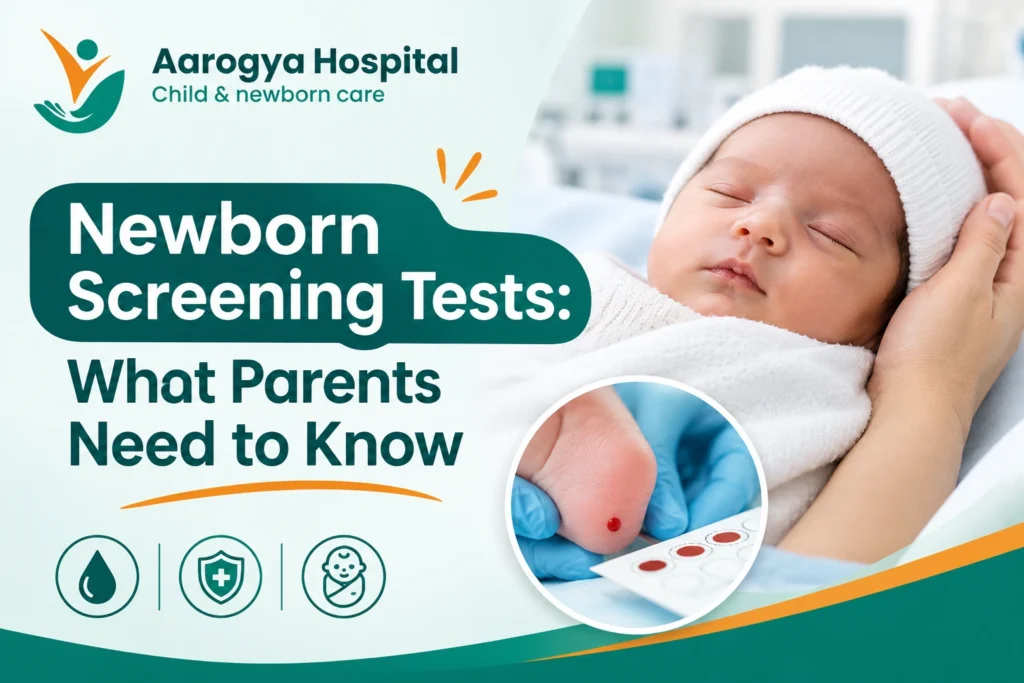
Newborn Screening Tests: What Parents Need to Know

A Simple Guide to Important Health Tests for Newborn Babies The birth of a baby brings joy to every family. Every parent wants their baby to be healthy. However, some health problems are not easy to see at birth. This is why newborn screening tests are important. These tests help doctors find certain health problems early, even if the baby looks healthy. Early testing helps doctors take the right steps at the right time. It can also help prevent serious health problems. If you are looking for newborn care in Chandigarh, knowing about these tests can help you make better choices for your baby. What Are Newborn Screening Tests? Newborn screening tests are simple tests done soon after a baby is born. They help doctors check for certain health problems that may be present from birth. These problems may affect the baby’s genes, hormones, or body functions. Most babies with these conditions look healthy in the beginning. They may not show any signs of illness. Therefore, screening tests help doctors find possible problems early. However, these tests do not confirm a disease. If a result is not normal, the doctor may ask for more tests. Why Are Newborn Screening Tests Important? Newborn screening tests help protect a baby’s health. Some health problems can affect a baby’s growth and brain development if they are not treated on time. Here are some benefits of these tests: Early Detection: Tests help doctors find health problems early. Quick Treatment: Doctors can plan the next steps without delay. Healthy Growth: Early care can support the baby’s growth and development. Prevent Serious Problems: Timely treatment can lower the risk of health problems. Better Care: Parents get important information about their baby’s health. Types of Newborn Screening Tests Doctors may suggest different newborn screening tests based on the baby’s health and needs. 1. Blood Spot Screening Test This test is done by taking a few drops of blood from the baby’s heel. The blood sample is sent to a lab for testing. It helps doctors check for health problems related to hormones, genes, and body functions. Depending on the screening programme, this test may check for: Congenital hypothyroidism Phenylketonuria (PKU) Congenital adrenal hyperplasia (CAH) Some inherited metabolic disorders Other health problems included in the screening programme Finding these problems early helps doctors plan the right care for the baby. 2. Hearing Screening Test A newborn hearing test checks if a baby can hear sounds. Hearing is important for learning to speak and understand words. However, parents may not notice hearing problems in the first few days. Doctors may use two common tests: Otoacoustic Emissions (OAE): This test checks how the baby’s inner ear responds to sounds. Automated Auditory Brainstem Response (AABR): This test checks how the hearing nerve and brain respond to sounds. Early testing helps parents get the right care and support if their baby has a hearing problem. 3. Pulse Oximetry Screening Pulse oximetry is a simple and painless test. It checks the oxygen level in the baby’s blood. It can help doctors find some serious heart problems that may not be easy to notice during a normal check-up. During this test, a small sensor is placed on the baby’s hand or foot. It measures the amount of oxygen in the blood. If the result is not normal, the doctor may suggest more tests. 4. Screening for Congenital Hypothyroidism Congenital hypothyroidism is a condition in which the baby’s thyroid gland does not make enough thyroid hormone. This hormone helps the brain and body grow properly. A simple blood test can help doctors find this condition. If the test confirms the problem, the doctor can start the right treatment. Early treatment helps support the baby’s brain growth and overall development. 5. Screening for Other Metabolic Disorders Some babies are born with conditions that make it difficult for their bodies to use food for energy. These conditions may affect how the body uses proteins, fats, or sugars. In many cases, babies do not show clear signs at birth. Doctors may suggest extra tests based on the screening programme and the baby’s health. Finding these problems early helps doctors plan treatment, food changes, and regular check-ups. When Should Newborn Screening Tests Be Done? The right time for newborn screening depends on the type of test and the baby’s health. In general: Blood Spot Test: It is usually done after the first 24 hours of birth. Hearing Test: It is usually done before the baby leaves the hospital or within the first few weeks. Pulse Oximetry Test: It is usually done after 24 hours of birth or close to hospital discharge. Some babies may need these tests again. Therefore, parents should follow their doctor’s advice about the right time for each test. Are Newborn Screening Tests Painful? Most newborn screening tests are simple and safe. The blood test involves a small prick on the baby’s heel. The baby may cry for a short time. However, hearing and pulse oximetry tests are usually painless. They do not need any surgery or injections. Doctors and trained staff perform these tests carefully to keep the baby comfortable and safe. What Happens If a Newborn Screening Test Is Not Normal? An abnormal result does not always mean that your baby has a disease. Sometimes, the result may be affected by early testing, premature birth, or other health conditions. If a test result is not normal, the doctor may suggest: Repeating the test, if needed. Doing more tests to check the result. Meeting a paediatrician or specialist. Starting treatment if a health problem is confirmed. Having regular check-ups to check the baby’s health. Parents should not panic. However, they should not ignore an abnormal result. Always follow your doctor’s advice and complete any further tests on time. Do All Newborn Babies Need Screening? Yes, newborn screening is recommended for all babies, even if they look healthy. Some health problems do not show clear signs in the first few days after birth. A baby […]
Newborn emergency warning signs
BLOG

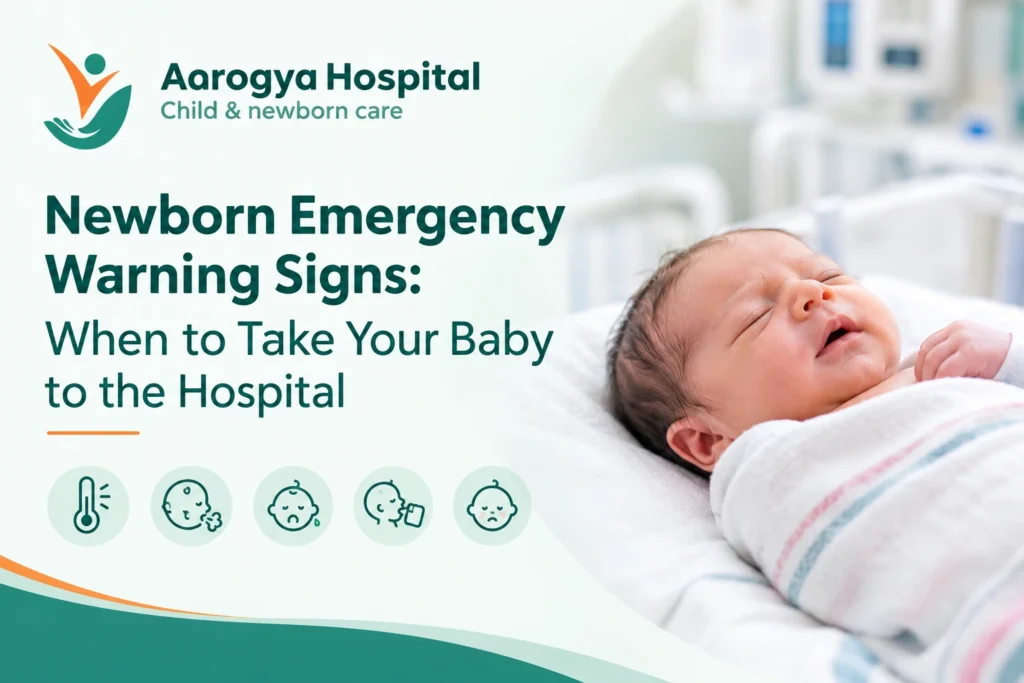
Newborn Emergency Warning Signs: When to Take Your Baby to the Hospital

Aarogya Hospital, Chandigarh — Newborn and NICU Care Near Panchkula and Mohali Newborn babies need extra care during their first few weeks. They cannot tell us when they feel unwell. Parents must watch for changes in their baby’s breathing, feeding, body temperature, skin colour and movements. Some health problems can become serious very quickly. Knowing the warning signs can help parents get medical help on time. If your baby has trouble breathing, blue lips, a seizure or is difficult to wake, seek emergency medical help immediately. Aarogya Hospital is located in Khudda Lahora, Chandigarh, near PGI Chandigarh. Families from Chandigarh, Panchkula and Mohali can contact the hospital to ask about newborn care and available medical services. 1. Trouble Breathing Breathing problems can be dangerous for newborn babies. They can start soon after birth or develop later. Watch for these signs: Very fast or difficult breathing. Skin pulling in around the ribs while breathing. Grunting sounds with each breath. Repeated pauses in breathing. Blue or grey lips, tongue or skin. When should you take your baby to the hospital? Get emergency medical help if your baby struggles to breathe, has repeated pauses in breathing or develops blue or grey lips or tongue. Do not wait to see if the problem goes away. 2. Fever or Low Body Temperature Newborn babies cannot control their body temperature well. A temperature that is too high or too low can be a sign of illness or infection. Watch for these signs: A temperature of 38°C (100.4°F) or higher. An unusually low body temperature. Cold skin along with poor feeding. Unusual sleepiness or breathing changes. When should you take your baby to the hospital? A temperature of 38°C (100.4°F) or higher in a baby under three months needs urgent medical attention. A newborn can also have a serious infection without a fever. Do not give fever medicine unless a doctor advises you to do so. 3. Poor Feeding or Refusing Milk Feeding problems can be an early sign that your baby is unwell. Newborn babies need regular breast milk or formula feeds. Watch for these signs: Refusing milk. Drinking much less milk than usual. Weak sucking. Being too sleepy to feed. Repeated vomiting. Fewer wet nappies than usual. When should you take your baby to the hospital? Contact a doctor promptly if your baby is not feeding well. If your baby is very weak, difficult to wake or shows signs of dehydration, seek emergency medical care. Never force your baby to feed if they are struggling to breathe or are not fully awake. 4. Unusual Sleepiness or Less Movement Newborn babies sleep for many hours each day. However, they should usually wake for feeds and respond to gentle touch. Watch for these signs: Your baby is very difficult to wake. Moves much less than usual. Baby has a weak cry. Feels unusually floppy or weak. Your baby does not respond normally to touch or sound. When should you take your baby to the hospital? Get emergency medical help if your baby is difficult to wake, does not respond or suddenly stops moving normally. Do not assume that unusual sleepiness is normal. 5. Yellow Skin or Eyes (Newborn Jaundice) Jaundice makes a baby’s skin and the whites of their eyes look yellow. It is common in newborn babies, but some cases need treatment. Watch for these signs: Yellow skin or eyes during the first 24 hours after birth. Yellow colour that spreads or becomes darker. Poor feeding along with yellow skin. Unusual sleepiness. Dark urine or pale, chalky stools. When should you take your baby to the hospital? Yellow skin during the first 24 hours needs urgent medical assessment. Get medical advice promptly if the yellow colour gets worse or your baby is feeding poorly or sleeping more than usual. Severe jaundice can harm a baby’s brain if it is not treat. A doctor may check the baby’s bilirubin level. If needed, treatment such as phototherapy may be given. 6. Seizures or Unusual Body Movements A seizure in a newborn does not always look like strong shaking. It may look like repeated jerking or unusual eye and mouth movements. Watch for these signs: Repeated jerking movements. Sudden body stiffness. Repeated unusual eye movements. Sudden periods of not responding. Changes in breathing with unusual movements. When should you take your baby to the hospital? A possible seizure in a newborn is a medical emergency. Get emergency medical help immediately. Keep your baby safe. Do not hold their movements down or put anything in their mouth. 7. Repeated Vomiting or a Swollen Belly Some babies bring up a little milk after feeding. However, certain types of vomiting can be a sign of a serious problem. Watch for these signs: Green vomit. Blood in the vomit. Repeated forceful vomiting. A swollen or hard belly. Vomiting along with poor feeding or unusual sleepiness. When should you take your baby to the hospital? Green vomit, blood in the vomit or a swollen belly with other signs of illness needs urgent medical attention. Do not wait for the vomiting to happen again before seeking help. 8. Signs of Infection in a Newborn Newborn babies can develop serious infections very quickly. Sometimes, the first signs are not easy to notice. Watch for these signs: Poor feeding. Fever or low body temperature. Fast or difficult breathing. Unusual sleepiness. Less movement than usual. A weak cry or constant crying. Pale, patchy, blue or grey skin. When should you take your baby to the hospital? Get urgent medical advice if you think your baby may have an infection. If your baby has trouble breathing, does not respond or looks seriously ill, seek emergency medical help immediately. Do not wait for all the signs to appear. 9. Fewer Wet Nappies or Signs of Dehydration Wet nappies help parents check whether their baby is getting enough milk. The number of wet nappies usually increases during the first few days after birth. Watch for these signs: Fewer wet nappies […]

Aarogya Support 1

Aarogya Hospital Chandigarh

Doctor Avatar
Welcome to Aarogya Hospital (Near PGI Chandigarh) 🏥
I'm your assistant here to help with your medical enquiry.
Doctor Avatar
Which of our services or departments are you interested in?