
Ayushman Bharat empanelled Chandigarh

Newborn Emergency Care

Newborn emergency warning signs
BLOG

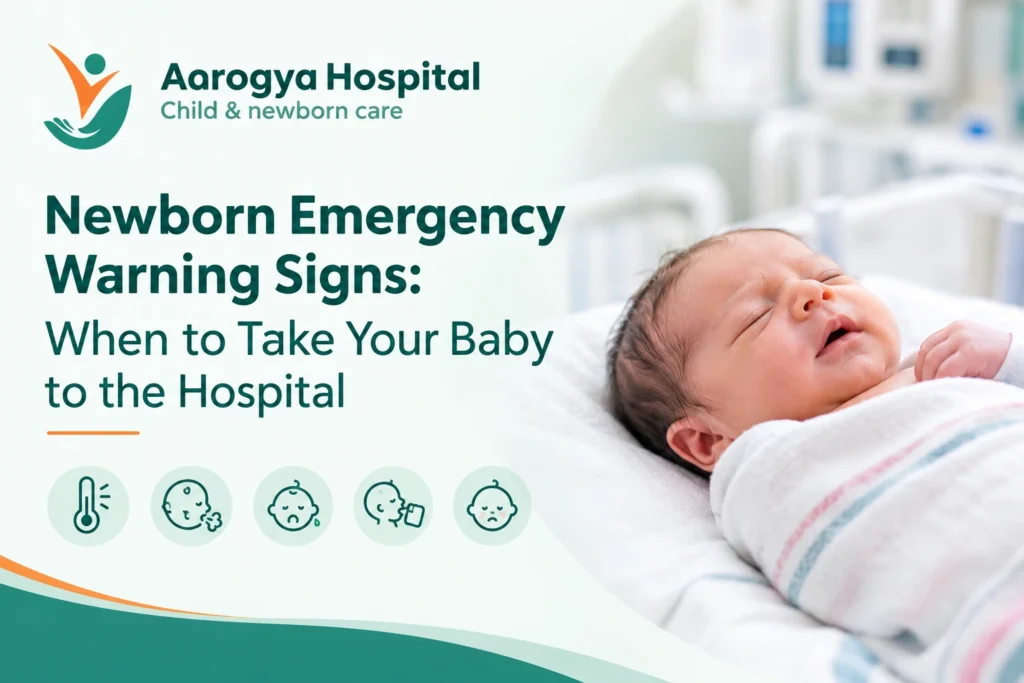
Newborn Emergency Warning Signs: When to Take Your Baby to the Hospital

Aarogya Hospital, Chandigarh — Newborn and NICU Care Near Panchkula and Mohali Newborn babies need extra care during their first few weeks. They cannot tell us when they feel unwell. Parents must watch for changes in their baby’s breathing, feeding, body temperature, skin colour and movements. Some health problems can become serious very quickly. Knowing the warning signs can help parents get medical help on time. If your baby has trouble breathing, blue lips, a seizure or is difficult to wake, seek emergency medical help immediately. Aarogya Hospital is located in Khudda Lahora, Chandigarh, near PGI Chandigarh. Families from Chandigarh, Panchkula and Mohali can contact the hospital to ask about newborn care and available medical services. 1. Trouble Breathing Breathing problems can be dangerous for newborn babies. They can start soon after birth or develop later. Watch for these signs: Very fast or difficult breathing. Skin pulling in around the ribs while breathing. Grunting sounds with each breath. Repeated pauses in breathing. Blue or grey lips, tongue or skin. When should you take your baby to the hospital? Get emergency medical help if your baby struggles to breathe, has repeated pauses in breathing or develops blue or grey lips or tongue. Do not wait to see if the problem goes away. 2. Fever or Low Body Temperature Newborn babies cannot control their body temperature well. A temperature that is too high or too low can be a sign of illness or infection. Watch for these signs: A temperature of 38°C (100.4°F) or higher. An unusually low body temperature. Cold skin along with poor feeding. Unusual sleepiness or breathing changes. When should you take your baby to the hospital? A temperature of 38°C (100.4°F) or higher in a baby under three months needs urgent medical attention. A newborn can also have a serious infection without a fever. Do not give fever medicine unless a doctor advises you to do so. 3. Poor Feeding or Refusing Milk Feeding problems can be an early sign that your baby is unwell. Newborn babies need regular breast milk or formula feeds. Watch for these signs: Refusing milk. Drinking much less milk than usual. Weak sucking. Being too sleepy to feed. Repeated vomiting. Fewer wet nappies than usual. When should you take your baby to the hospital? Contact a doctor promptly if your baby is not feeding well. If your baby is very weak, difficult to wake or shows signs of dehydration, seek emergency medical care. Never force your baby to feed if they are struggling to breathe or are not fully awake. 4. Unusual Sleepiness or Less Movement Newborn babies sleep for many hours each day. However, they should usually wake for feeds and respond to gentle touch. Watch for these signs: Your baby is very difficult to wake. Moves much less than usual. Baby has a weak cry. Feels unusually floppy or weak. Your baby does not respond normally to touch or sound. When should you take your baby to the hospital? Get emergency medical help if your baby is difficult to wake, does not respond or suddenly stops moving normally. Do not assume that unusual sleepiness is normal. 5. Yellow Skin or Eyes (Newborn Jaundice) Jaundice makes a baby’s skin and the whites of their eyes look yellow. It is common in newborn babies, but some cases need treatment. Watch for these signs: Yellow skin or eyes during the first 24 hours after birth. Yellow colour that spreads or becomes darker. Poor feeding along with yellow skin. Unusual sleepiness. Dark urine or pale, chalky stools. When should you take your baby to the hospital? Yellow skin during the first 24 hours needs urgent medical assessment. Get medical advice promptly if the yellow colour gets worse or your baby is feeding poorly or sleeping more than usual. Severe jaundice can harm a baby’s brain if it is not treat. A doctor may check the baby’s bilirubin level. If needed, treatment such as phototherapy may be given. 6. Seizures or Unusual Body Movements A seizure in a newborn does not always look like strong shaking. It may look like repeated jerking or unusual eye and mouth movements. Watch for these signs: Repeated jerking movements. Sudden body stiffness. Repeated unusual eye movements. Sudden periods of not responding. Changes in breathing with unusual movements. When should you take your baby to the hospital? A possible seizure in a newborn is a medical emergency. Get emergency medical help immediately. Keep your baby safe. Do not hold their movements down or put anything in their mouth. 7. Repeated Vomiting or a Swollen Belly Some babies bring up a little milk after feeding. However, certain types of vomiting can be a sign of a serious problem. Watch for these signs: Green vomit. Blood in the vomit. Repeated forceful vomiting. A swollen or hard belly. Vomiting along with poor feeding or unusual sleepiness. When should you take your baby to the hospital? Green vomit, blood in the vomit or a swollen belly with other signs of illness needs urgent medical attention. Do not wait for the vomiting to happen again before seeking help. 8. Signs of Infection in a Newborn Newborn babies can develop serious infections very quickly. Sometimes, the first signs are not easy to notice. Watch for these signs: Poor feeding. Fever or low body temperature. Fast or difficult breathing. Unusual sleepiness. Less movement than usual. A weak cry or constant crying. Pale, patchy, blue or grey skin. When should you take your baby to the hospital? Get urgent medical advice if you think your baby may have an infection. If your baby has trouble breathing, does not respond or looks seriously ill, seek emergency medical help immediately. Do not wait for all the signs to appear. 9. Fewer Wet Nappies or Signs of Dehydration Wet nappies help parents check whether their baby is getting enough milk. The number of wet nappies usually increases during the first few days after birth. Watch for these signs: Fewer wet nappies […]
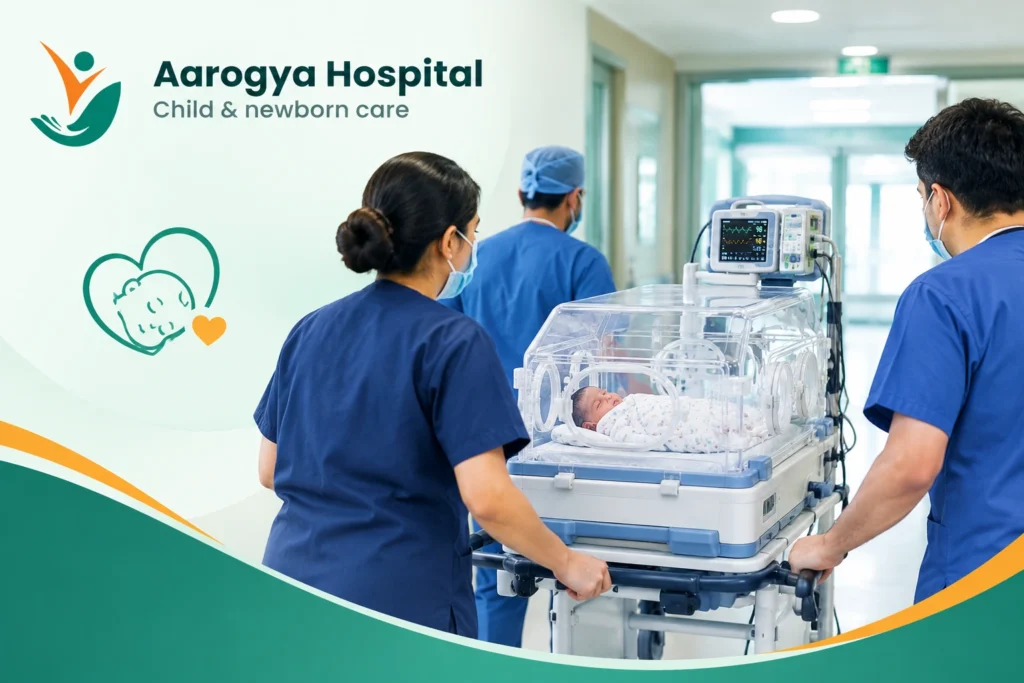

Safe transfer of a sick newborn to a NICU at Aarogya Hospital Chandigarh
BLOG

How to Transfer a Sick Newborn Safely Between Hospitals

Sometimes, a newborn baby needs special medical care. However, the current hospital may not have the right treatment or equipment. In such cases, doctors may suggest moving the baby to another hospital with a Neonatal Intensive Care Unit (NICU). However, moving a sick newborn requires careful planning. The baby needs trained medical staff, proper equipment, and safe transport to ensure their safety. For example, premature babies and babies with low birth weight need extra care. Similarly, babies with breathing problems may need special support during travel. Therefore, doctors must check the baby’s health before the journey. Aarogya Hospital, Chandigarh, near PGI Chandigarh, provides families with a place to ask about newborn care and NICU services. Families and referring doctors can contact the hospital to discuss the baby’s needs and available care. When Does a Newborn Need to Move to Another Hospital? Doctors may suggest moving a baby when the current hospital cannot provide the care the baby needs. Here are some common reasons: Premature birth: Babies born too early may need help with breathing, feeding, and staying warm. Low birth weight: Small babies may need help with feeding, body temperature, and blood sugar. Breathing problems: Some babies need oxygen or help from a breathing machine. Serious infections: Babies with severe infections may need antibiotics and close medical care. Problems during birth: Some babies need special care after a difficult birth. Severe newborn jaundice: High bilirubin levels may need quick treatment. Brain problems: Babies who do not get enough oxygen around birth may need special treatment and close monitoring. The doctor will decide whether the baby needs to move to another hospital. This decision depends on the baby’s health and the care available at the current hospital. How to Transfer a Sick Newborn Safely Between Hospitals A sick newborn needs special care during travel. Doctors must prepare the baby, arrange safe transport, and check the baby’s health throughout the journey. 1. Check the Baby Before Travel First, doctors check the baby’s breathing, heartbeat, body temperature, and general health. They may also check blood sugar and blood flow. If the baby has breathing problems, doctors may provide breathing support before travel. They may also treat low blood sugar or other serious problems. Doctors should make the baby as stable as possible before the journey. However, they should not delay urgent treatment when waiting could put the baby at risk. 2. Arrange Trained Medical Staff A sick newborn may need trained medical staff during the journey. Depending on the baby’s condition, the team may include a doctor or a nurse with newborn care training. The team must know how to care for the baby and respond to emergencies. The current hospital should also speak with the new hospital before the journey. This helps the receiving team prepare for the baby’s arrival. 3. Use the Right Medical Equipment Some babies need special equipment during travel. The medical team will choose the equipment based on the baby’s needs. This equipment may include: Transport incubator: Keeps the baby warm during travel. Oxygen supply: Gives extra oxygen when needed. Breathing support: Helps the baby breathe when needed. Monitoring devices: Check the baby’s heartbeat and oxygen levels. Infusion pumps: Give fluids or medicines at the right rate. Emergency equipment: Helps medical staff respond to sudden problems. Before leaving, the team checks all the equipment. They also make sure there is enough oxygen, battery power, and medical supplies for the journey. 4. Keep the Baby Warm Newborn babies can lose body heat quickly. Premature babies and babies with low birth weight are at greater risk. Therefore, the medical team must keep the baby warm during travel. A transport incubator or another suitable warming system can help. The team should also check the baby’s temperature during the journey. 5. Check the Baby During Travel The medical team must watch the baby’s health throughout the journey. They may check: Heartbeat and breathing Oxygen levels Body temperature Blood sugar, when needed Blood pressure, when needed If the baby’s condition changes, the team must provide the right care quickly. 6. Share the Baby’s Medical Reports Before the transfer, the current hospital should share the baby’s medical records with the new hospital. These records may include: Birth details and weeks of pregnancy at birth Birth weight and current weight The baby’s current health problems Medicines and treatment already given Blood test results and other reports Oxygen needs and breathing support Problems during birth These details help the new medical team understand the baby’s condition. They also help doctors continue treatment without unnecessary delays. 7. Choose the Right Hospital The new hospital should have the right medical team and equipment for the baby’s needs. For example, a baby with serious breathing problems may need advanced NICU care. A premature baby may need help with feeding, staying warm, and gaining weight. Parents should speak with the treating doctor before the transfer. They should also ask about bed availability, treatment options, and transport arrangements. What Should Parents Do Before the Transfer? Parents may feel worried when doctors suggest moving their baby to another hospital. However, a few simple steps can help them prepare. Parents should: Ask why the baby needs to move. Find out what treatment the baby needs. Confirm the name of the new hospital. Ask who will care for the baby during travel. Keep medical reports and referral papers ready. Follow the doctor’s instructions. Most importantly, do not delay an urgent transfer. Never take a seriously ill newborn in a private car without medical advice and a safe travel plan. Why Is NICU Care Important During a Newborn Transfer? A Neonatal Intensive Care Unit (NICU) provides special care for newborn babies who need extra medical support. Depending on the baby’s condition and the hospital’s facilities, NICU care may include: Help with breathing Support to keep the baby warm Checks of heartbeat and oxygen levels Treatment for infections Help with feeding and fluids Care for premature babies Care for babies with low birth weight Treatment […]

Aarogya Support 1

Aarogya Hospital Chandigarh

Doctor Avatar
Welcome to Aarogya Hospital (Near PGI Chandigarh) 🏥
I'm your assistant here to help with your medical enquiry.
Doctor Avatar
Which of our services or departments are you interested in?