Ayushman Bharat empanelled Chandigarh

BLOG

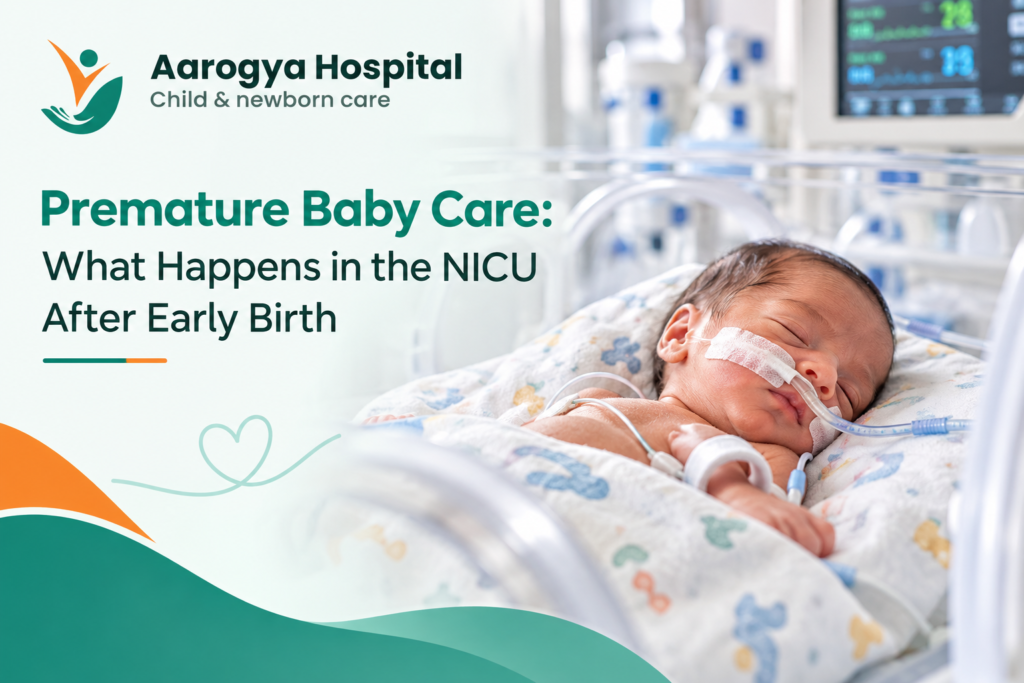
Premature baby receiving specialised care inside a neonatal intensive care unit (NICU)
BLOG

Premature Baby Care: What Happens in the NICU After Early Birth – Copy

Premature Baby Care: What Happens in the NICU After Early Birth? A baby born before 37 weeks of pregnancy is call premature baby. These babies may need extra care because their organs are not fully develop. Therefore, doctors may recommend keeping them in a Neonatal Intensive Care Unit (NICU) for special medical care. An early birth can be stressful and emotional for parents. However, learning about premature baby care can help you feel more prepared. In this guide, we explain what happens in the NICU, how doctors care for premature babies, and what parents can expect during their baby’s hospital stay. What Is a NICU and Why Do Premature Babies Need It? A Neonatal Intensive Care Unit (NICU) is a special hospital unit for newborn babies who need close monitoring and extra medical care. Premature babies may need NICU care for several reasons: Breathing difficulties: Their lungs may not be fully develop, making breathing harder. Low birth weight: They may need extra help with feeding and gaining weight. Temperature control: They may find it difficult to keep their body warm. Feeding problems: They may not yet be strong enough to suck and swallow properly. Risk of infection: Their immune systems are still developing, so they may be more likely to get infections. The care a baby needs depends on how many weeks early they were born, their birth weight, their health, and how well they are growing. What Happens in the NICU After a Premature Baby Is Born? Every premature baby needs different care. Therefore, the NICU team makes a care plan based on the baby’s health and needs. 1. Initial Assessment and Monitoring After birth, doctors check the baby’s breathing, heartbeat, body temperature, and overall health. They may also check the baby’s blood sugar and oxygen levels. Special machines help doctors and nurses keep a close eye on the baby’s health. They can quickly provide extra care if the baby’s condition changes. 2. Support for Breathing Some premature babies need help breathing because their lungs are not fully develop. Depending on the baby’s health, doctors may provide extra oxygen to help them breathe. They may use CPAP, which helps keep the airways open, or a ventilator to support breathing. In some cases, doctors may recommend other advanced breathing treatments. The medical team regularly reviews the baby’s breathing and adjusts support as needed. 3. Keeping the Baby Warm Premature babies have less body fat, so they can lose body heat quickly. Therefore, keeping them warm and maintaining a steady body temperature is an important part of NICU care. Doctors may place the baby in an incubator or under a special warmer to keep them warm. This helps maintain the right body temperature while the baby grows stronger. 4. Feeding and Nutrition Support Some premature babies may not be able to feed from the breast or bottle at first. They may need extra help to get enough nutrition to grow and develop properly. Depending on the baby’s health, doctors may give expressed breast milk through a feeding tube. If the baby cannot get enough milk, they may provide nutrients through a vein for some time. Breast milk is usually encourage when possible because it provides important nutrients and helps protect the baby from infections. The NICU team can guide parents on how to express and store breast milk safely. 5. Preventing and Treating Infections Premature babies have a higher risk of infections. Therefore, the NICU team follows strict hygiene practices and checks babies regularly for signs of illness. If doctors suspect an infection, they may recommend blood tests or other checks. They may also give antibiotics if needed to treat the infection. Parents and visitors should wash or clean their hands properly and follow the NICU’s rules to help protect babies from infections. 6. Monitoring Growth and Development The NICU team regularly checks the baby’s weight, feeding, body temperature, breathing, and other important signs to make sure the baby is doing well. Some babies may need extra health checks depending on how early they were born and their medical condition. These may include eye tests, hearing tests, or brain scans if needed. The aim is to help the baby grow well and find and treat any health problems early. Advanced NICU Care for Premature Babies Some premature babies need special medical care, especially if they are born very early or have serious health problems. Depending on the baby’s needs and available facilities, advanced NICU care may include: Breathing support: Helps babies who have difficulty breathing. Continuous monitoring: Tracks the baby’s vital signs and helps doctors notice changes. aEEG/CFM monitoring: Helps doctors check brain activity in selected babies. Therapeutic hypothermia: Control cooling may be use for eligible newborns with certain types of brain injury cause by a lack of oxygen. Specialist assessment: Neonatologists and other specialists check babies who need extra medical care. Not every premature baby needs these treatments. Doctors decide which tests and treatments are need base on the baby’s health. How Long Does a Premature Baby Stay in the NICU? Every premature baby needs a different length of stay in the NICU. It depends on how early the baby was born, their birth weight, breathing, feeding, and overall health. Some babies need to stay in the NICU for only a short time, while others may need care for several weeks or longer. Before discharge, the medical team generally checks whether the baby can: Maintain a stable body temperature. Breathe safely without the level of support they no longer need. Feed adequately and show appropriate growth. Remain medically stable with a suitable follow-up plan. Every baby grows and improves at their own pace. The NICU team will explain when your baby can go home and how to care for them safely. How Can Parents Support Their Premature Baby in the NICU? Parents play an important role in their baby’s care. The NICU may feel new and unfamiliar, but small steps can help parents stay involved in their baby’s care. […]
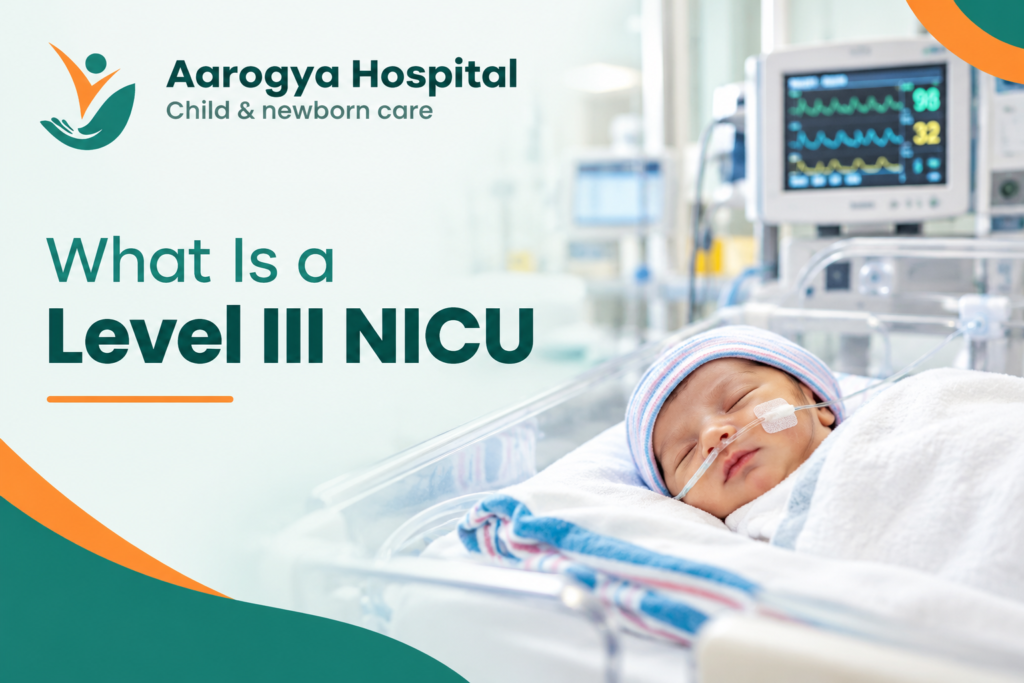
Level III NICU in Chandigarh providing advanced care for premature and critically ill newborns
BLOG

What Is a Level III NICU

What Is a Level III NICU? A Parent’s Guide When a newborn needs special medical care, parents may hear terms like “Level III NICU” and wonder what they mean. A Level III NICU provides advanced care for premature, very sick, or medically complex newborns. If you are looking for a Level III NICU in Chandigarh, knowing what care and services are available can help you make the right decision for your baby during a difficult time. What Is a Level III NICU? A Level III NICU is a special hospital unit that cares for newborns who need close monitoring and intensive treatment. Some babies may be born very early, while others may have breathing problems, infections, low birth weight, or other health problems that need special newborn care. A Level III NICU usually offers: Specialised neonatal doctors and trained nursing staff Continuous monitoring of newborns Advanced breathing support Equipment designed for premature and critically ill babies Care for newborns with serious infections or complications Access to specialist investigations and treatments Support for babies who need longer intensive care However, services vary between hospitals. Therefore, parents should ask the hospital team exactly what level of neonatal care is available. Which Babies May Need a Level III NICU? Not every newborn needs intensive care. Doctors recommend NICU care when a baby needs close monitoring or special treatment. A baby may need Level III NICU care because of: Very premature birth Very low birth weight Breathing problems Severe infections Difficulty maintaining oxygen levels Low blood sugar or other metabolic problems Complications around birth Need for advanced respiratory support Certain congenital conditions Problems that require specialist neonatal monitoring Because every baby is different, doctors assess each one individually and decide which level of care is appropriate. What Care Does a Level III NICU Provide? A Level III NICU offers several forms of advanced newborn care. 1. Breathing Support Some premature or sick newborns may have trouble breathing on their own. Therefore, the NICU may provide breathing support based on the baby’s needs. This may include oxygen, non-invasive breathing support, or a ventilator when needed. 2. Continuous Monitoring The NICU team closely tracks a baby’s: Heart rate Breathing Oxygen levels Temperature Blood pressure Feeding and fluid balance This constant monitoring helps doctors and nurses spot changes quickly and act without delay. 3. Care for Premature Babies Premature babies may have problems with breathing, feeding, keeping warm, and fighting infections. Therefore, a Level III NICU provides special care while the baby’s organs continue to grow and develop. 4. Care for Low-Birth-Weight Babies Babies with low birth weight may need extra help with feeding, keeping warm, breathing, and preventing infections. During their stay, the NICU team closely checks their growth, health, and overall condition. 5. Treatment for Newborn Infections Newborns can become very sick because of infections. In these cases, the NICU team closely monitors the baby, performs the needed tests, provides supportive care, and gives antibiotics when needed. 6. Feeding Support Some premature or sick babies may not be able to feed normally at first. In such cases, the neonatal team provides the right feeding support and closely monitors the baby’s nutrition and growth. What Makes Level III NICU Care Different? The main difference is the higher level of specialised care. A Level III NICU usually has advanced equipment, trained neonatal staff, and the ability to care for very sick newborns. However, the facilities and specialist services can vary between hospitals. Therefore, parents should ask about the NICU facilities and services before choosing a hospital. How Long Does a Baby Stay in a Level III NICU? There is no fixed time for a baby to stay in the NICU. Some babies may need care for a few days, while premature or seriously ill babies may need care for several weeks or longer. The length of stay depends on: Gestational age Birth weight Medical condition Breathing needs Feeding ability Growth and weight gain Response to treatment During this time, doctors regularly check the baby’s progress and talk with the parents about the next steps in care. What Should Parents Ask About a Level III NICU? If your baby may need intensive neonatal care, consider asking the hospital team: What level of NICU care does the hospital provide? Which breathing support options are available? Is a neonatologist available? How are premature and low-birth-weight babies managed? What monitoring is available? How are parents involve in their baby’s care? What happens if the baby needs a higher level of specialist treatment? Is newborn referral or transfer support available? Asking these questions early can help you understand the care and services available before and during your baby’s NICU stay. When Should Parents Seek Urgent Newborn Care? Newborns can become unwell very quickly. Seek urgent medical help if your baby: Has difficulty breathing Looks blue or unusually pale Is not feeding properly Is unusually sleepy or hard to wake Vomits repeatedly Has a fever or unusually low temperature Has seizures Has severe pauses in breathing Shows signs of serious infection If your newborn looks very unwell, do not wait at home. Seek medical help immediately. Level III NICU in Chandigarh When choosing a Level III NICU in Chandigarh, check the hospital’s NICU facilities, medical team, monitoring equipment, emergency care, and referral support. Aarogya Hospital Chandigarh provides specialised newborn and NICU care for babies who need close monitoring and medical support. Parents can speak with the neonatal team to understand the care their baby needs. The right level of care depends on each baby’s condition, so always follow the advice of your baby’s doctor or neonatologist. Conclusion A Level III NICU provides advanced care for premature, seriously ill, or medically complex newborns. It offers close monitoring, breathing support, feeding help, infection treatment, and other specialised care based on each baby’s needs. If your newborn needs NICU care, talk to the medical team about your baby’s condition, available treatments, and the level of care needed. For advanced newborn care in Chandigarh, Aarogya Hospital […]

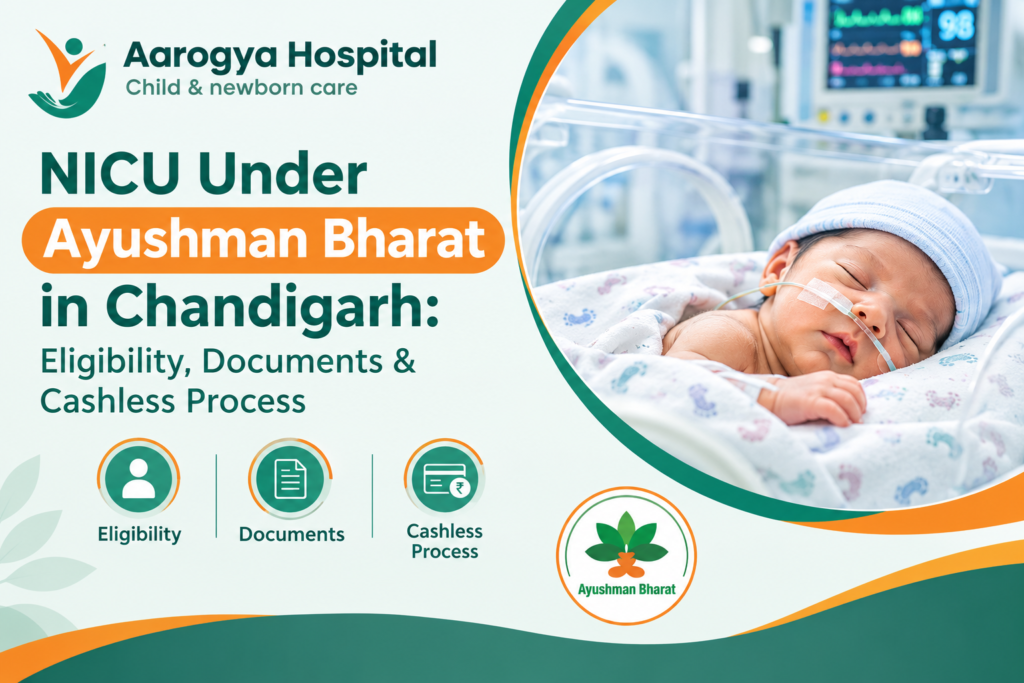
NICU care for newborn under Ayushman Bharat at Aarogya Hospital Chandigarh
BLOG

NICU Under Ayushman Bharat in Chandigarh Eligibility, Documents & Cashless Process

NICU Under Ayushman Bharat in Chandigarh: Eligibility, Documents & Cashless Process When a newborn needs special care, parents may worry about the baby’s health and treatment costs. Ayushman Bharat (AB-PMJAY) can help eligible families get cashless treatment at empanelled hospitals. If you are looking for NICU care under Ayushman Bharat in Chandigarh, it is important to know who is eligible, which documents are need, what treatment is cover, and how the cashless process works. Aarogya Hospital in Chandigarh is an Ayushman Bharat empanelled hospital. It provides newborn care, including NICU care for premature babies, babies with low birth weight, and seriously ill newborns. What Is NICU Care? A Neonatal Intensive Care Unit (NICU) is a special hospital unit where newborn babies get extra care and close monitoring. A baby may need NICU care because of: Being born too early Low birth weight Trouble breathing Newborn infections Trouble feeding Jaundice that needs close care Other serious health problems At Aarogya Hospital, the NICU provides close monitoring and medical care for newborn babies. If needed, babies can also receive support to help them breathe. Can Ayushman Bharat Cover NICU Treatment? Yes, eligible families may get NICU treatment under Ayushman Bharat (PM-JAY). However, the treatment must be cover under an approve PM-JAY package. PM-JAY allows eligible families to get cashless treatment at approved government and private hospitals. Eligible families may get up to ₹5 lakh in health coverage per family each year, based on the scheme rules. However, not every NICU treatment is cover under the scheme. Even if a hospital is empanelled, all treatments may not be covered or free. The treatment must be cover under an approve PM-JAY package. The baby’s eligibility must also be check. So, parents should ask the hospital’s Ayushman help desk about: The baby’s eligibility The treatment that is need Whether the treatment is cover The documents needed Whether approval is need Who Can Get Ayushman Bharat NICU Treatment? PM-JAY eligibility depends on the government’s beneficiary list and the rules of the scheme. It is not based only on the family’s income when they reach the hospital. Families can check their PM-JAY eligibility through the official PM-JAY system, a Common Service Centre (CSC), or an empanelled hospital. If your family is already cover under PM-JAY, the hospital team can check your details and guide you through the next steps. What About Newborn Babies? For a newborn baby, the hospital needs to check the baby’s details as per the PM-JAY rules. If the baby needs NICU care, parents should contact the hospital’s Ayushman help desk as soon as possible. However, do not wait for documents during an emergency. If your baby has trouble breathing, is not feeding well, is very sleepy, has blue skin, or has any other serious problem, seek medical help immediately. Documents Needed for Ayushman NICU Treatment The documents needed may be different for each family. The hospital team can tell you which documents are require. Parents should keep these documents ready if available: Ayushman Bharat or PM-JAY card Aadhaar card or another accepted ID Family or beneficiary details Baby’s birth documents, if available Parent or guardian’s ID Previous medical reports Referral letter, if needed Doctor’s prescription or test reports If you do not have all the documents during an emergency, do not delay your baby’s treatment. Take your baby to the hospital first. The Ayushman help desk can guide you about the required documents later. How Does the Cashless NICU Process Work? The process may include these simple steps: 1. Check Eligibility First, the hospital checks whether the family is eligible for PM-JAY. The hospital also checks the required identity and beneficiary details. 2. Baby’s Health Check Next, a pediatrician or neonatologist checks the baby. The doctor will decide whether the baby needs NICU care or another type of treatment. 3. Check Treatment Coverage The hospital checks whether the baby’s treatment is cover under an approve PM-JAY package. 4. Get Approval, If Needed For some treatments, the hospital may need to get approval through the PM-JAY system. 5. Get Cashless Treatment After the required checks and approvals, cover treatment can be provide without paying the cover amount directly, as per the approve package and PM-JAY rules. 6. Discharge and Follow-Up When the baby is well enough to go home, the doctor will give discharge and follow-up advice. The services covered under Ayushman Bharat depend on the approved package and the scheme rules. Is the Whole NICU Bill Cover Under Ayushman Bharat? No, not always. Ayushman Bharat covers treatment under specific health packages. The amount and services covered can depend on: The baby’s eligibility The baby’s health condition The treatment needed The approved PM-JAY package Scheme rules Required approvals Before treatment, parents should ask the hospital: Is my baby eligible for PM-JAY? Is the NICU treatment cover? Which PM-JAY package applies? Is approval need? Are any services not cover? Which documents do I need? This can help parents understand the treatment and payment process better. Why Choose Aarogya Hospital for NICU Care in Chandigarh? Aarogya Hospital provides newborn and pediatric care in Chandigarh. Its NICU provides care for: Premature babies Low-birth-weight babies Sick newborn babies Babies who need close monitoring Babies who need breathing support The hospital also provides 24×7 emergency support for children and newborn babies. Aarogya Hospital is located near PGI in Khuda Lahora, Chandigarh, and is an Ayushman Bharat empanelled hospital. What Should Parents Do Before NICU Admission? If the NICU admission is plan, keep the following ready: Ayushman card or beneficiary details Parent or guardian ID Baby’s documents Medical reports Prescriptions Referral papers, if available Most importantly, do not delay emergency care because of paperwork. If your newborn needs urgent care, get medical help first. Then, ask the hospital team about the Ayushman Bharat process. Frequently Asked Questions Can I get NICU treatment under Ayushman Bharat in Chandigarh? Yes, eligible PM-JAY families may get cover treatment at approve hospitals. However, the treatment must be include in an approve PM-JAY package. […]

Ayushman Card Private Hospital Treatment
BLOG

Ayushman Card Does Not Mean “Government Hospital Only”

Ayushman Card Does Not Mean “Government Hospital Only” You May Be Eligible for Cashless Treatment at an Empanelled Private Hospital When someone in the family becomes seriously ill, many Ayushman Card holders think: We have an Ayushman Card, so we must go to a government hospital. This is not always true. If you are an eligible beneficiary and your treatment is cover under the applicable government health scheme, you may receive cashless treatment at both government hospitals and empanelled private hospitals. The National Health Authority (NHA) states that eligible beneficiaries can receive cashless secondary and tertiary inpatient care at public hospitals as well as empanelled private hospitals. So, before waiting for a long time or travelling far, check whether a suitable Ayushman-empanel private hospital is available near you. Can You Use an Ayushman Card at a Private Hospital? Yes. Eligible beneficiaries can use their Ayushman benefits at private hospitals that are empanelled under the applicable scheme and authorise to provide the require treatment. However, the hospital must meet the scheme requirements, and the treatment must have an applicable package. This means that simply having an Ayushman Card does not make every treatment free at every private hospital. Before admission, ask the hospital: Is the hospital empanelled under Ayushman? Is the require treatment cover? Is the hospital empanelled for this specialty? Is a suitable bed available? Is pre-authorisation require? These simple questions can help you understand your treatment options before making a decision. Will a Private Hospital Charge Extra? This is one of the biggest concerns for Ayushman beneficiaries. Many patients believe that private hospitals may charge more because their normal treatment rates are higher. However, for treatment covered under an approved Ayushman package, the hospital must follow the applicable government package and scheme rules. An empanelled hospital cannot simply say: Our normal bill is higher, so you must pay the difference. For services already include in the approve package, the beneficiary should not be ask to pay an additional amount. The applicable package amount is decide under the government scheme and process through the government system. Why Should You Check Private Hospitals Too? Sometimes, a government hospital may have: No bed available A long waiting time Limited availability of a specialist Difficulty managing different departments Limited availability of a required service or facility In such situations, do not assume that you must arrange money for private treatment. Instead, check whether a nearby Ayushman-empanelled private hospital can provide the required treatment. Depending on the hospital, you may find: Faster admission Better availability of beds Required medical equipment Easier coordination Shorter waiting times The required specialist or department The main goal should be to find the right hospital for the patient’s medical needs. Frequently Asked Questions About Ayushman Card Treatment 1. Is Treatment Cashless at an Empanelled Private Hospital? Yes, eligible beneficiaries can receive cashless treatment when the required treatment is covered under an approved package. Cashless treatment means that the hospital receives payment through the government scheme for the covered package instead of collecting that covered amount directly from the patient. 2. Can a Private Hospital Ask Me to Pay Extra? Not for services that are already include in the approve Ayushman package. For example, a hospital should not say: Ayushman will pay this amount, but our actual bill is higher, so you have to pay the balance. If the service is part of the approve package, the applicable scheme rules decide how the payment is handle. If someone asks you for extra money, speak to the hospital’s Ayushman or Arogya Mitra desk and ask for an explanation. 3. Can a Hospital Ask for Extra Money for Better Treatment? Covered treatment should not be made dependent on an extra cash payment. An Ayushman beneficiary should receive the treatment included in the approved package according to the patient’s medical needs. If someone asks you to pay extra for services already included in the package, ask the Ayushman helpdesk for clarification. 4. Are Medicines Cover Under Ayushman? Medicines required as part of a covered treatment package are include according to the applicable package rules. Therefore, if a medicine is include in the approve package, the patient should not normally be ask to purchase it separately from outside. If you are asked to buy medicines yourself, ask whether they are include in your approve package. 5. Are Blood Tests, X-Rays, CT Scans or MRIs Covered? Investigations that are medically require as part of an approved treatment package may be cover according to that package. However, having an Ayushman Card does not mean that every test, CT scan, MRI or laboratory test is automatically free. The investigation must be connect to an eligible treatment or approved package. 6. What Does an Ayushman Package Include? An Ayushman package is more than just the doctor’s fee or operation charge. Depending on the approved package, it may include: Diagnosis Doctor’s services Nursing care Bed charges Required investigations Medicines Consumables Patient food Applicable post-treatment care This is why an empanelled hospital generally cannot receive payment for an approved package and then separately charge the patient for services already included in that package. 7. Is ICU Treatment Cover Under Ayushman? Yes, ICU treatment can be cover when it is include in the applicable approve package and the patient’s condition requires it. Ayushman coverage is not limit to normal ward admissions. However, coverage depends on the patient’s condition, diagnosis, applicable package and the hospital’s empanelment and capabilities. If your patient needs ICU care, ask: Is there an applicable Ayushman package for this patient’s condition and level of care? 8. Can Ventilator Treatment Be Cover? If ventilator or critical-care treatment is part of the applicable approve package and is medically require, it may be cover according to the relevant package rules. Therefore, do not assume that treatment in a private ICU will automatically result in a large cash bill. Ask the hospital’s Ayushman desk to check the applicable package. 9. Can I Get a Private AC Room Under Ayushman? This is […]

Child health check-up with paediatrician in Chandigarh
BLOG

How Often Should Children Have a Health Check-Up

How Often Should Children Have a Health Check-Up? Regular health check-ups help parents understand how their child is growing and developing. They also help doctors find health problems early. Many parents visit a doctor only when their child is sick. However, children also need regular check-ups when they are healthy. These visits help the doctor check their growth, development, nutrition, immunity, and overall health. So, how often should children have a health check-up? The answer can vary based on the child’s age, health, development, and medical history. Why Are Regular Health Check-Ups Important for Children? Children grow and develop quickly. Therefore, regular check-ups help parents and doctors track important changes in their child’s health. During a health check-up, the doctor may assess: Height and weight Growth pattern Physical development Eating and nutrition habits Sleep patterns Vision and hearing Speech and learning development Emotional and behavioural development Vaccination status General physical health Regular visits also give parents a chance to talk to the doctor about any concerns they have about their child’s health. How Often Should Children Have a Health Check-Up? There is no single check-up schedule for every child. Young children usually need more regular visits because they grow and develop quickly. A general approach may include: Babies and Young Children Babies need regular health check-ups in their early years. These visits help doctors check their growth, development, feeding, vaccinations, and other important health needs. Therefore, parents should follow the schedule recommended by their paediatrician. School-Age Children School-age children may also need regular health check-ups. These visits can help doctors monitor their physical growth, vision, hearing, nutrition, and development. A doctor can also talk about your child’s school performance, sleep, physical activity, and other health concerns. Teenagers Teenagers also benefit from regular health check-ups. During this stage, doctors may discuss growth, nutrition, exercise, sleep, emotional well-being, and other health concerns. Regular check-ups can also help teenagers build healthy habits that may continue into adulthood. What Happens During a Child Health Check-Up? A routine child health check-up may include several simple health checks. 1. Growth Assessment Additionally, the doctor may measure your child’s height and weight. These measurements help track their growth over time. 2. Physical Examination The doctor may also check your child’s heart, lungs, stomach, ears, throat, skin, and other areas based on their age and health needs. 3. Developmental Assessment For younger children, the doctor may check milestones such as movement, speech, communication, and social skills. 4. Vaccination Review Moreover, the doctor can check if your child is up to date with the recommended vaccinations. 5. Nutrition and Lifestyle Discussion The doctor may also ask about your child’s diet, physical activity, sleep, screen time, and daily routine. 6. Vision and Hearing Additionally, depending on your child’s age and needs, the doctor may check their vision and hearing or recommend screening. When Should You Take Your Child to a Doctor Between Routine Check-Ups? However, you do not need to wait for the next routine check-up if your child develops a health concern. Contact a paediatrician if your child has symptoms such as: Persistent fever Breathing difficulty Severe or ongoing pain Repeated vomiting or diarrhoea Poor feeding Sudden changes in behaviour Unusual tiredness Delayed development Poor weight gain Frequent infections Problems with vision or hearing If your child has severe symptoms or seems very unwell, seek urgent medical care. How Can Parents Prepare for a Child Health Check-Up? Parents can make the check-up more useful by preparing some important details in advance. You can keep a note of: Your child’s current medicines Previous medical conditions Allergies Vaccination records Recent symptoms Changes in eating or sleeping Developmental concerns Questions you want to ask the doctor This information can help the doctor better understand your child’s health. Benefits of Regular Child Health Check-Ups Regular check-ups help parents stay informed about their child’s health and development. They can help with: Monitoring healthy growth Identifying possible concerns early Keeping vaccinations up to date Supporting healthy nutrition Monitoring developmental milestones Managing ongoing health conditions Answering parents’ health questions Most importantly, regular visits help keep a clear and up-to-date health record for your child. Conclusion Children need regular health check-ups even when they seem healthy. These visits help doctors monitor their growth, development, vaccinations, nutrition, and overall well-being. The timing of check-ups can vary based on your child’s age and health needs. Therefore, parents should follow the schedule recommended by their paediatrician. If you have concerns about your child’s growth, development, nutrition, or general health, speak with a qualified paediatrician instead of waiting for the next routine check-up. FAQs How often should a healthy child visit a doctor? The recommended check-up schedule depends on the child’s age and health needs. Babies and young children usually need more frequent visits, while older children may need check-ups less often. Does my child need a check-up if they are healthy? Yes. Regular check-ups can help monitor your child’s growth, development, vaccinations, nutrition, and overall health, even when they have no obvious symptoms.Lorem ipsum dolor sit amet, consectetur adipiscing elit. Ut elit tellus, luctus nec ullamcorper mattis, pulvinar dapibus leo. What age should regular child health check-ups start? Health checks begin in infancy. Parents should follow the paediatrician’s recommended schedule from the early months of their child’s life. What is check during a child health check-up? A doctor may check your child’s growth, physical health, development, nutrition, vaccinations, vision, hearing, sleep, and other health needs based on their age.Lorem ipsum dolor sit amet, consectetur adipiscing elit. Ut elit tellus, luctus nec ullamcorper mattis, pulvinar dapibus leo. Should teenagers have regular health check-ups? Yes. Teenagers can benefit from regular health check-ups to monitor growth, nutrition, sleep, physical activity, and other health needs during adolescence.Lorem ipsum dolor sit amet, consectetur adipiscing elit. Ut elit tellus, luctus nec ullamcorper mattis, pulvinar dapibus leo. When should I take my child to a doctor? Take your child to a doctor if you notice ongoing or unusual symptoms, concerns about growth or development, or changes […]

Pediatrician examining a child during a routine health check-up
BLOG

When Should You Take Your Child to a Pediatrician

When Should You Take Your Child to a Pediatrician? Children can have fever, cough, cold, stomach pain, and other common illnesses. Most mild symptoms get better with proper care. However, some symptoms may need to be checked by a pediatrician. Knowing when to take your child to a pediatrician can help your child get the right care on time and prevent small health problems from getting worse. What Does a Pediatrician Do? A pediatrician is a doctor who cares for babies, children, and teenagers. They treat common childhood illnesses and also check a child’s growth and development. Regular pediatric visits can help with: Growth and development checks Vaccinations Nutrition and feeding advice Common childhood infections Fever and recurring illnesses Respiratory problems Digestive problems Allergies and skin conditions Developmental concerns Preventive healthcare When Should You Take Your Child to a Pediatrician? You should see a pediatrician if your child has symptoms that last for a long time, are severe, keep coming back, or affect daily activities. 1. Your Child Has a Persistent Fever Fever is common in children and can happen during infections. However, see a pediatrician if the fever lasts, comes back often, or your child looks very unwell. For babies, especially very young infants, fever should be take seriously and checked by a healthcare professional as soon as possible. 2. Your Child Has Difficulty Breathing Breathing problems can sometimes need urgent medical care. Watch for signs such as: Fast or difficult breathing Wheezing Noisy breathing Chest pulling in while breathing Blue or grey lips or skin Difficulty speaking, crying, or feeding because of breathing problems If your child is having trouble breathing or looks very unwell, get emergency medical help right away. 3. Your Child Is Not Eating or Drinking Properly Children may eat less when they are sick. However, poor eating or drinking can be a concern if it continues. Contact a pediatrician if your child: Refuses most fluids Has difficulty feeding Vomits repeatedly Has very few wet diapers or is urinating much less than usual Appears unusually weak or sleepy These signs may be a sign of dehydration or another health problem. 4. Your Child Has Repeated Vomiting or Diarrhoea Vomiting and diarrhoea are common in children, especially during infections. However, repeated vomiting, frequent loose stools, blood in the stool, severe stomach pain, or signs of dehydration should be checked by a doctor. A pediatrician can find the possible cause and suggest the right treatment. 5. Your Child Has a Persistent Cough or Cold Coughs and colds are common in children. However, see a pediatrician if your child’s cough: Lasts longer than expected Keeps getting worse Interferes with sleep or feeding Is associate with breathing difficulty Comes with persistent fever Keeps coming back frequently A pediatrician can check if the symptoms are cause by an infection, allergy, asthma, or another health problem. 6. Your Child Has Ear Pain Ear pain can happen because of an ear infection, a blocked nose, or other problems. If your child has ongoing ear pain, fever, fluid or discharge from the ear, or hearing problems, see a pediatrician. Young children may show ear pain by crying, becoming fussy, or touching their ear again and again. 7. Your Child Has a Rash That Concerns You Many rashes in children are harmless, but some may need to be checked by a doctor. Seek medical advice if a rash: Appears suddenly and spreads quickly Comes with fever Causes significant swelling or discomfort Has blisters or skin peeling Is associate with breathing difficulty or swelling of the lips or face A pediatrician can check the rash and see if your child needs further treatment. 8. Your Child Is Losing Weight or Not Growing as Expected Children grow at different rates. However, regular growth checks can help find possible nutrition, hormone, development, or other health problems early. Speak with a pediatrician if you notice: Poor weight gain Unexplained weight loss Poor appetite over a long period Delayed growth Concerns about your child’s height or development 9. You Notice Developmental Concerns Parents may sometimes notice that their child is not reaching expected developmental milestones. Talk to a pediatrician if your child has difficulties with: Speech and language Walking or movement Learning Social interaction Communication Behaviour Early check-ups can help find out if your child needs more tests or extra support. 10. Your Child Gets Sick Frequently Getting sick sometimes is normal for children. However, if your child often gets infections, misses school frequently, or takes a long time to get better, talk to a pediatrician. The doctor can check your child’s medical history and decide if more tests or checks are need. When Should You Take Your Baby to a Pediatrician? Babies need extra care because they may not be able to clearly tell you what is wrong. Contact a pediatrician promptly if your baby: Has difficulty breathing Is feeding poorly Is unusually sleepy or difficult to wake Repeated vomiting Significantly fewer wet diapers High or concerning temperature Develops unusual skin colour changes Has persistent crying that you cannot settle For a very young baby with a fever or serious symptoms, get medical help quickly. Do not wait for the symptoms to get better on their own. When Is It an Emergency? Some symptoms need immediate medical care instead of waiting for a regular pediatrician appointment. Take your child for emergency medical care if they have: Severe difficulty breathing Blue, grey, or very pale skin or lips Loss of consciousness A seizure Severe dehydration Severe bleeding A serious injury Sudden severe weakness or confusion A severe allergic reaction with breathing difficulty or swelling If you think your child is seriously ill, get emergency medical help right away. Why Regular Pediatric Check-Ups Matter You do not have to wait until your child is sick to see a pediatrician. Regular check-ups help keep track of your child’s overall health. During routine visits, a pediatrician may assess: Height and weight Growth patterns Developmental milestones Nutrition Vaccination status Vision and hearing […]

Ayushman NICU near PGI Chandigarh
BLOG

No NICU Bed at PGI Chandigarh? Find Advanced NICU Care Under Ayushman Bharat

No NICU Bed at PGI Chandigarh? Find Advanced NICU Care Under Ayushman Bharat Near PGI When your newborn needs urgent intensive care, finding an NICU bed quickly can be stressful. It can be even more difficult if you have been referred to PGI Chandigarh but no NICU bed is available at that time. If your family is eligible for Ayushman Bharat, you may be able to get approve and covered neonatal treatment at a nearby empanelled hospital. Aarogya Hospital in Khudda Lahora, Chandigarh, provides specialised newborn care and advanced NICU facilities near PGI Chandigarh. The hospital can also help families check Ayushman eligibility, treatment needs, and transfer arrangements. Advanced NICU Care Near PGI Chandigarh Newborn babies may need different levels of intensive care depending on their health condition. Premature babies, babies with breathing problems, and seriously ill newborns may need continuous monitoring and specialised treatment. Aarogya Hospital’s published NICU facilities include: High-Frequency Oscillatory Ventilation (HFO/HFOV) Conventional neonatal ventilation Therapeutic hypothermia for appropriately selected newborns Inhaled nitric oxide (iNO) therapy for selected babies with severe respiratory problems Neonatal incubators Intensive care for premature and critically ill newborns These treatments depend on the baby’s health condition, available equipment, and the neonatologist’s assessment. Can Newborns Get Ayushman Treatment Without Their Own Card? Yes. An eligible newborn may receive Ayushman Bharat benefits even if the baby does not have a separate Ayushman card yet. Newborn babies from eligible families can receive scheme benefits as per the applicable rules. Parents should bring the eligible family member’s Ayushman details and available documents that show the baby’s relationship with the family. The hospital’s Ayushman team can help parents with the registration and approval process. What If You Do Not Have an Ayushman Card Yet? If your family may be eligible but you do not have an Ayushman card yet, you can contact the hospital’s Ayushman help desk for guidance. The team can guide you through the required verification process and documents. Depending on the rules, biometric verification or another approve e-KYC process may be require. Important: Having an Aadhaar card does not automatically mean that a person is eligible for Ayushman Bharat benefits. Are HFO, iNO Therapy and Therapeutic Hypothermia Covered Under Ayushman? Aarogya Hospital provides advanced newborn treatments such as HFO ventilation, iNO therapy, and therapeutic hypothermia when needed for the baby’s condition. For eligible beneficiaries, these treatments may be provide without extra hospital charges when they are approve under the applicable Ayushman package. However, coverage depends on the applicable package, eligibility, and required approval. Parents should contact the hospital before transfer so the neonatal team can confirm the available facilities and treatment needs. Is Ayushman NICU Treatment Completely Free? For eligible beneficiaries receiving approved, scheme-covered treatment, Aarogya Hospital does not charge extra for services included in the approved package. The Ayushman desk will verify: Family eligibility Applicable treatment package Required authorisation Services covered under the scheme If a service is not cover under the applicable scheme, the hospital should explain this before providing the service, depending on the baby’s medical condition and scheme rules. Is There an Ambulance From PGI Chandigarh? Aarogya Hospital provides free ambulance transfers from PGI Chandigarh, subject to ambulance availability and confirmation that the baby is safe to transport. For transfers from other hospitals, such as GMCH Sector 32 or GMSH Sector 16, ambulance charges may vary depending on the situation. Critically ill newborns should be transfer with proper neonatal monitoring, breathing support, and a train medical escort when need. Can I Use an Ayushman Card From Another State? PM-JAY allows eligible beneficiaries to receive covered treatment at participating empanelled hospitals in other states and union territories. If your Ayushman card was issue in another state, contact Aarogya Hospital to check your eligibility and required treatment approval before transfer. Can Aarogya Hospital Accept a Baby From Another Hospital? Yes, Aarogya Hospital can receive outborn newborns referred from other hospitals, subject to: Clinical assessment NICU bed availability Availability of the required equipment and facilities Acceptance by the neonatal team The referring doctor should contact the Aarogya neonatal team before the transfer. This allows the hospital to assess the baby’s condition and plan a safe transfer if admission is accept. What Documents Should Parents Bring? Parents should keep the following documents available: Parent’s Ayushman details Aadhaar or another accepted identity document Baby’s birth record or birth certificate, if available Referral summary Investigation reports Details of the baby’s current treatment If some documents are missing and your baby is critically ill, contact the neonatal team immediately. Do not delay urgent medical care while completing the paperwork. What If Aarogya Hospital Does Not Have an NICU Bed? NICU beds can be limit, especially when advance neonatal care is require. Contact Aarogya Hospital to check the current NICU bed availability and confirm whether the required level of care is available for your baby. If admission is not possible, your treating doctor can help you find another suitable neonatal care facility. Why Choose Aarogya Hospital for Newborn Care Near PGI Chandigarh? For families looking for advanced neonatal care near PGI Chandigarh, Aarogya Hospital provides specialised newborn intensive care for premature and critically ill babies. The hospital can help families with: NICU bed availability Ayushman eligibility guidance Advanced neonatal treatment Newborn transfers Ambulance coordination 24×7 emergency support Treatment and admission are confirm based on the baby’s medical condition, available facilities, and applicable scheme requirements. Need an Ayushman NICU Bed Near PGI Chandigarh? If your newborn needs urgent intensive care and you cannot find a suitable NICU bed near PGI Chandigarh, contact Aarogya Hospital for guidance. Our team can help you check NICU bed availability, understand your baby’s treatment needs, check Ayushman eligibility, and arrange a safe transfer when possible. Aarogya Hospital, ChandigarhAdvanced Newborn Care | Ayushman Bharat | 24×7 EmergencyNear PGI, Khudda Lahora, ChandigarhCall: +91 7719703883 Important: If your newborn is critically ill, do not delay emergency treatment while waiting for Ayushman documents. Continue treatment at the current hospital while the medical teams arrange a safe transfer. […]

BLOG

Breastfeeding Basics: Tips for New Mothers | Aarogya Hospital

Breastfeeding Basics: Important Tips for New Mothers Becoming a mother is a beautiful experience. However, the first few days with a newborn can bring many questions. One common question is, “How should I breastfeed my baby?” Breastfeeding is an important part of newborn care. Breast milk gives your baby important nutrients. It also supports healthy growth and development. However, breastfeeding can take time to learn. With simple guidance, mothers and babies can slowly find a comfortable routine. In this breastfeeding guide for new mothers, we will cover simple breastfeeding basics. We will also share useful breastfeeding tips for new mothers. In addition, you will learn about feeding positions, feeding frequency, and signs that your baby is getting enough breast milk. What Is Breastfeeding? Breastfeeding means feeding your baby with breast milk. Breast milk contains nutrients that support your baby’s early growth. In addition, breastfeeding can provide comfort to your baby. It can also help create a close bond between mother and baby. Every mother and baby is different. Therefore, do not worry if breastfeeding feels difficult at first. With practice and support, feeding can become easier. Learning the right breastfeeding technique can also make feeding more comfortable. Breastfeeding Benefits for Babies Breast milk can provide many benefits during the early months of life. Some important breastfeeding benefits for babies include: Provides important nutrients for growth Supports the baby’s developing immune system Is easy for most babies to digest Provides fluids and nourishment Supports healthy growth and development Helps create a close bond between mother and baby Also, breast milk changes as your baby grows. This helps provide nutrients for different stages of early development. Benefits of Breastfeeding for Mothers Breastfeeding is helpful for babies. However, it can also provide benefits for mothers. Some benefits of breastfeeding for mothers include: Helps create a strong bond with your baby Makes feeding simple and convenient Reduces the need to prepare bottles for every feed Helps the uterus return toward its normal size after birth Supports recovery after delivery Most importantly, breastfeeding can give mothers and babies time to relax and bond. Breastfeeding Tips for New Mothers The first few days can feel difficult. This is especially true if you are breastfeeding for the first time. However, these simple breastfeeding tips for new mothers can help. 1. Start Breastfeeding Early If possible, start breastfeeding soon after birth. Also, early skin-to-skin contact can help you and your baby feel comfortable. 2. Watch for Hunger Signs Do not wait until your baby cries loudly. Instead, watch for early hunger signs. For example, your baby may: Move their head Open their mouth Put their hands near their mouth Make sucking movements Therefore, try to start feeding when you notice these signs. 3. Make Yourself Comfortable First, choose a comfortable chair or bed. Then, support your back and arms. A feeding pillow may also help. In addition, make sure your baby is close to your body during feeding. 4. Check Your Baby’s Latch A good latch is important for comfortable feeding. Your baby’s mouth should take in a good part of the areola. It should not take only the nipple. If breastfeeding is painful, ask for help. Similarly, talk to a doctor or lactation professional if your baby has trouble staying attached. 5. Keep Your Baby Close Hold your baby close during feeding. Also, keep the baby’s head, neck, and body in a comfortable straight line. This position can help your baby feed more easily. 6. Do Not Compare Your Baby With Others Every baby has a different feeding pattern. Some babies feed quickly. Others take more time. Also, feeding patterns can change as your baby grows. Therefore, focus on your baby’s needs instead of comparing your baby with others. How to Breastfeed a Newborn If you are wondering how to breastfeed a newborn, start by sitting in a comfortable position. First, bring your baby close to your body. Keep the baby’s head and body in a straight line. Then, bring your baby toward your breast. Avoid leaning your body forward. Next, touch your nipple gently to your baby’s upper lip. When your baby opens their mouth wide, bring the baby closer to the breast. During feeding, watch for regular sucking and swallowing. If the latch hurts, gently break the suction. Then, try again. Remember, breastfeeding is a skill. Both the mother and baby need time to learn it. Correct Breastfeeding Position Finding the correct breastfeeding position can make feeding easier. It can also help you and your baby stay comfortable. Some common breastfeeding positions include: Cradle Position In this position, your baby’s head rests in the bend of your arm. The baby stays on the same side as the breast being used. Cross-Cradle Position Here, the baby’s head is supported by the opposite arm. Therefore, this position can give you more control over your baby’s head. It may also be helpful when you are learning how to latch your baby. Football Hold In this position, the baby stays beside the mother. The baby’s body is supported along the mother’s arm. Some mothers may find this position comfortable after delivery. Side-Lying Position In this position, the mother and baby lie on their sides while feeding. However, always follow safe sleep guidance. After feeding, place your baby on their back in their own safe sleep space. The best position is one that keeps you comfortable. It should also help your baby latch well. Proper Breastfeeding Technique A proper breastfeeding technique starts with a comfortable position. It also includes a good latch. Here are some simple tips: First, keep your baby close to your body. Next, keep the baby’s head and body aligned. Make sure your baby’s mouth opens wide before latching. Keep your baby’s chin close to the breast. Watch for regular sucking and swallowing. Breastfeeding should not cause ongoing or severe pain. If you have repeated pain, cracked nipples, bleeding, breast swelling, or fever, speak with a healthcare professional. Also, ask for help if you have concerns […]

BLOG

Why Regular Pediatric Check-Ups Matter Even When Your Child Is Healthy

Why Regular Pediatric Check-Ups Matter Even When Your Child Is Healthy Every parent wants their child to stay happy and healthy. When a child feels well, parents may think that a doctor visit is not needed. However, this is not always the case. Regular pediatric check-ups are important even when your child looks healthy. These visits help doctors track growth, development, nutrition, and overall health. They also give parents a chance to ask questions about their child’s health. In addition, regular visits can help find some health concerns early. As a result, parents can take action at the right time. If you are looking for a pediatric hospital in Chandigarh, regular visits with a pediatrician can help you stay updated about your child’s health. What Are Regular Pediatric Check-Ups? Regular pediatric check-ups are planned visits to a pediatrician. These visits help check whether your child is growing and developing well. During a pediatric check-up for children, the doctor may check your child’s height and weight. The doctor may also ask about sleep, food, activity, and daily habits. In addition, the pediatrician may talk about vaccines and development. You can also discuss any health concern you have noticed. Most importantly, your child does not need to be sick to have a check-up. Why Are Regular Pediatric Check-Ups Important? 1. They Help Track Your Child’s Growth Children grow quickly, especially during the early years. Therefore, it is important to keep track of their growth. During a child health check-up, the pediatrician can check your child’s height and weight. The doctor can also look at the child’s growth pattern over time. This pediatric health monitoring helps parents understand how their child is growing. It can also help spot changes that may need more attention. Moreover, parents can ask questions about weight, height, food, and physical activity. 2. They Help Monitor Child Development Children learn new skills as they grow. For example, they learn to speak, walk, play, and interact with others. Therefore, monitoring child development is an important part of child care. During a check-up, the pediatrician may ask about speech, learning, movement, and behavior. The doctor may also ask how your child interacts with family and other children. If there is a concern, early advice can be helpful. Parents can then learn what steps they can take to support their child’s development. 3. They Can Help Find Health Problems Early Some health problems may not show clear signs at first. A child may look active and healthy while still having a health concern. For this reason, regular check-ups are useful. A child health check-up allows the pediatrician to review your child’s general health. The doctor can also suggest further care if something needs attention. As a result, parents can get advice before a small concern becomes harder to manage. 4. They Help Keep Vaccines on Track Vaccines are an important part of preventive pediatric care. They help protect children from several serious diseases. During routine visits, parents can check whether their child’s vaccines are up to date. If a vaccine was missed, the pediatrician can guide you about what to do next. Also, parents can ask questions about vaccines. This can help them understand their child’s vaccination needs. Therefore, keeping regular pediatric visits can make it easier to stay on track with your child’s vaccines. 5. They Support Healthy Eating Good food is important for child growth and development. However, many children go through changes in their eating habits. Some children are picky eaters. Others may eat too much or too little. Parents may also have questions about healthy snacks and daily meals. During a healthy child check-up, you can discuss these concerns with a pediatrician. You can ask about: Healthy food choices Picky eating Healthy snacks Weight changes Daily meals Vitamins and nutrients Food habits The pediatrician can then provide advice based on your child’s age and health needs. 6. They Help Parents Understand Childhood Changes Every child is different. Therefore, parents may have questions about normal childhood changes. For example, you may have concerns about your child’s sleep, food, behavior, learning, or activity. Routine visits give you time to discuss these concerns. A pediatrician for child health can explain what may be normal for your child’s age. The doctor can also suggest when your child may need more care. As a result, parents can feel more informed about their child’s health. What Happens During a Child Wellness Check-Up? A child wellness check-up usually includes simple health checks. However, the exact checks may depend on your child’s age and health needs. During the visit, the pediatrician may: Check your child’s height Check your child’s weight Review growth Ask about food habits Discuss sleep Review vaccines Ask about physical activity Discuss learning and school Check development Discuss behavior Answer parents’ questions These simple steps can give parents a better idea of their child’s overall health. How Often Should Children Have Pediatric Check-Ups? The need for routine pediatric visits can be different for every child. It may depend on age, growth, health, and medical history. Babies and young children often need regular visits because they grow and develop quickly. Older children may need visits based on their age and health needs. Therefore, parents should ask their pediatrician about a suitable check-up schedule. It is also important not to wait for an illness before seeing a doctor. Regular visits can help you keep track of your child’s health. Regular Check-Ups Are Not Only for Sick Children Many parents take their child to the doctor only when the child is sick. However, regular care is also important when a child feels well. Preventive healthcare for children focuses on staying healthy and finding possible concerns early. For example, a routine visit can help track growth and development. It can also help parents stay updated about vaccines and nutrition. In addition, regular children’s health screening may help the doctor decide if a child needs more tests or care. So, a healthy child can still benefit from […]

BLOG

How to Keep Your Child Healthy During Seasonal Changes

How to Keep Your Child Healthy During Seasonal Changes “During this time, seasonal changes can affect your child’s health.” When the weather changes, children may become more likely to have a cold, cough, fever, sore throat, or allergies. This is common, especially when children go to school or spend time with other children. The good news is that simple daily habits can help keep your child healthy. A healthy diet, good sleep, clean hands, enough water, and timely medical care can make a big difference. Why Do Children Get Sick During Seasonal Changes? Children can get sick more often when the weather changes. During this time, they may come in contact with viruses, allergens, and other germs. For example, a child may have: Runny or blocked nose Cough Sneezing Sore throat Mild fever Body pain Tiredness Stomach problems Skin allergies Colds and other infections are common in childhood. Children who spend time in school or daycare can also come in contact with germs more easily. So, parents should take a few simple steps to protect their child’s health. 1. Give Your Child Healthy Food Good food helps your child grow and stay active. During seasonal changes, try to give your child fresh and healthy meals. Add foods such as: Fresh fruits Green vegetables Dal and pulses Milk and dairy products Eggs, if suitable for your child Nuts and seeds, if age-appropriate Homemade meals Try to limit packaged snacks, sugary drinks, and very oily foods. Also, make sure your child eats meals at regular times. A healthy eating routine can support overall health and growth. 2. Make Sure Your Child Drinks Enough Water Children may forget to drink water when they are busy playing or studying. Therefore, parents should remind them to drink water during the day. The amount of water a child needs can vary based on age, activity, food, and weather. Along with water, children can get fluids from healthy foods and drinks suitable for their age. 3. Encourage Good Hand Washing Hand washing is one of the easiest ways to reduce the spread of germs. Teach your child to wash their hands: Before eating  Using the toilet  Coming home from school Playing outside  Coughing or sneezing After touching dirty surfaces “Also, teach your child to wash their hands properly with soap and water.” This simple habit can help reduce the spread of infections. 4. Make Sleep a Priority Children need good sleep for healthy growth and daily activity. So, create a simple bedtime routine. Try to keep the sleeping and waking time regular. Also, keep screens away from bedtime when possible. A calm room and a fixed routine can help your child sleep better. If your child is often tired, has trouble sleeping, or shows other health concerns, talk to a pediatrician. 5. Dress Your Child According to the Weather During seasonal changes, the temperature can change quickly. Therefore, dress your child according to the weather. “During cold weather, make sure your child wears warm and comfortable clothes. In hot weather, choose light and comfortable clothes. Do not cover your child with too many layers when the weather is warm. At the same time, keep them warm when the temperature drops. “Therefore, the main goal is to keep your child comfortable.” 6. Keep Your Home Clean “Also, a clean home can help reduce contact with germs.” Parents should regularly clean commonly touched surfaces such as: Door handles Tables Toys Study areas Bathroom surfaces Also, wash bed sheets and pillow covers regularly. If someone at home has a cold or cough, encourage good hand washing and avoid sharing personal items when possible. Good hygiene can help reduce the spread of infections. 7. Do Not Ignore Vaccination Vaccination is an important part of child healthcare. Vaccines help protect children from many serious infections. Parents should follow the vaccination schedule recommended by their child’s doctor. If you are not sure whether your child’s vaccinations are up to date, speak with a pediatrician. 8. Encourage Outdoor Play Children need regular physical activity. Outdoor play can help children stay active and support healthy growth. However, parents should check the weather before sending children outside. On days with very high heat, poor air quality, or extreme cold, indoor play may be a better option. Make sure your child takes enough water and gets proper rest after physical activity. 9. Watch for Cold, Cough, and Allergy Symptoms Seasonal changes can bring symptoms such as sneezing, a runny nose, cough, and blocked nose. Sometimes, it can be difficult to know if your child has a common cold or an allergy. Colds are caused by viruses, while seasonal allergies can cause symptoms such as sneezing, a runny nose, and itchy or watery eyes. If symptoms continue, become worse, or worry you, speak with your child’s doctor. 10. Do Not Give Medicines Without Medical Advice Parents should avoid giving medicines to children without proper medical advice. For example, antibiotics do not treat viral infections such as most common colds. Using antibiotics when they are not needed can also cause side effects. Therefore, if your child is unwell, ask a pediatrician about the right care and treatment. When Should You Take Your Child to a Doctor? Most common childhood illnesses get better with proper care. However, parents should not ignore symptoms that are severe, unusual, or getting worse. Talk to a doctor if your child has: Trouble breathing Very high or long-lasting fever Severe weakness Repeated vomiting Signs of dehydration Severe pain Unusual sleepiness Symptoms that are getting worse Any symptoms that cause you serious concern For babies and very young children, parents should be extra careful about changes in feeding, breathing, activity, and behaviour. Special Care for Newborns During Seasonal Changes Newborn babies need special care because they are very young and need close attention. Parents should: Keep the baby comfortable according to the weather. Follow the baby’s feeding routine. Keep hands clean before touching the baby. Keep sick people away from the baby when possible. Follow […]

Scroll to Top