Ayushman Bharat empanelled Chandigarh

Aarogya Hospital Chandigarh

Febrile seizures in children and paediatric care at Aarogya Hospital Chandigarh
BLOG

Febrile Seizures in Children: What Parents Should Know

Febrile Seizures in Children: What Parents Should Know Seeing your child have a seizure can be very scary for parents. Sometimes, young children may have a seizure when they have a fever. These seizures are febrile seizures. They usually happen in children between 6 months and 5 years of age. Although febrile seizures may look frightening, most of them do not cause long-term health problems. However, parents should know how to keep their child safe during a seizure and when to get medical help. At Aarogya Hospital, Chandigarh, we understand how worrying these situations can be for parents. Our team provides medical care for newborns, babies and children. We focus on the child’s health, safety and timely treatment. What Are Febrile Seizures in Children? Febrile seizures are fits that happen in young children when they have a fever. They are often link to a rise in body temperature. Fever can happen because of common infections, such as viral infections, throat infections or ear infections. A febrile seizure does not always happen because of a very high fever. Sometimes, it can happen even when the temperature is not very high. Most febrile seizures last for a few minutes. Simple febrile seizures usually do not cause brain damage or affect a child’s growth and learning. What Causes Febrile Seizures? The exact cause of febrile seizures is not fully known. However, some things may increase the chances of having one. Common causes and risk factors include: High body temperature: Fever can trigger a seizure in some young children. Viral infections: Common viral infections can cause fever and seizures. Family history: Children with a family history of febrile seizures may have a higher risk. Young age: Children between 6 months and 5 years are more likely to have febrile seizures. Quick rise in temperature: Some children may have a seizure when their body temperature rises quickly. Remember, not every child with a fever will have a seizure. Common Signs and Symptoms of Febrile Seizures Febrile seizures can cause sudden changes in a child’s body movements. Parents may notice these signs: Sudden shaking or jerking of the arms and legs. Stiffness in the body. Eyes rolling upwards. Loss of consciousness. Not responding when parents call them. Feeling sleepy or confused after the seizure. Some seizures last only a few seconds, while others may last a few minutes. What Should Parents Do During a Febrile Seizure? Watching your child have a seizure can be frightening. However, staying calm and following the right steps can help keep your child safe. Here is what parents should do: Stay calm: Try not to panic. Most febrile seizures stop on their own within a few minutes. Place your child on their side: Gently turn your child onto their side on a safe, flat surface. Move dangerous objects away: Keep hard or sharp objects away from your child. Check the time: Note when the seizure starts and how long it lasts. Do not hold your child tightly: Let the body movements stop naturally. Do not put anything in the mouth: Never put your fingers, a spoon, water or medicine inside your child’s mouth. Get medical help: A child having a seizure for the first time needs urgent medical attention. Important: Call emergency services if the seizure lasts 5 minutes or longer. Also, get emergency help if your child has trouble breathing, turns blue or does not wake up after the seizure. When Should You Take Your Child to a Hospital? Most febrile seizures are not serious. However, a doctor should check your child to find the cause of the fever and rule out other health problems. Take your child for urgent medical care if: Your child has a seizure for the first time. The seizure lasts longer than 5 minutes. Your child has more than one seizure within 24 hours. Only one side of the body shakes or becomes stiff. Your child has trouble breathing. Child stays very sleepy or does not recover normally. Your child has a stiff neck, severe headache or other worrying signs. Early medical care helps doctors find the cause and decide what treatment is need. How Are Febrile Seizures Diagnose? Doctors usually diagnose febrile seizures by checking the child’s health, symptoms and medical history. During the check-up, the doctor may: Ask about the child’s fever and seizure. Check the child’s body temperature. Look for signs of infection. Check the child’s body movements and response. Suggest other tests if needed. Sometimes, the doctor may suggest blood tests or urine tests to find the cause of the fever. An EEG or brain scan is not need for every child with a simple febrile seizure. The doctor will decide if these tests are need based on the child’s condition. Can Febrile Seizures Be Prevent? Febrile seizures cannot always be prevent. However, parents can take simple steps to care for their child during a fever. Here are some helpful tips: Check your child’s temperature when they feel unwell. Give fever medicine only after medical advice. Make sure your child drinks enough fluids. Give your child enough rest. Watch for signs of infection. Follow your paediatrician’s advice during illness. Remember, fever medicines can help your child feel better. However, they cannot reliably prevent febrile seizures. Are Febrile Seizures Dangerous for Children? Most simple febrile seizures are not dangerous. They usually last less than 15 minutes and do not cause long-term brain damage or learning problems. However, some children may have another seizure during a future fever. This is more likely when the first seizure happens at a younger age or when there is a family history. Therefore, parents should know the warning signs and understand when to get medical help. Paediatric Care at Aarogya Hospital, Chandigarh When a child has a fever or seizure, getting medical help on time is very important. Parents need the right advice and proper medical care for their children. Aarogya Hospital, Chandigarh, provides healthcare services for newborns, babies and children. The hospital offers paediatric emergency […]
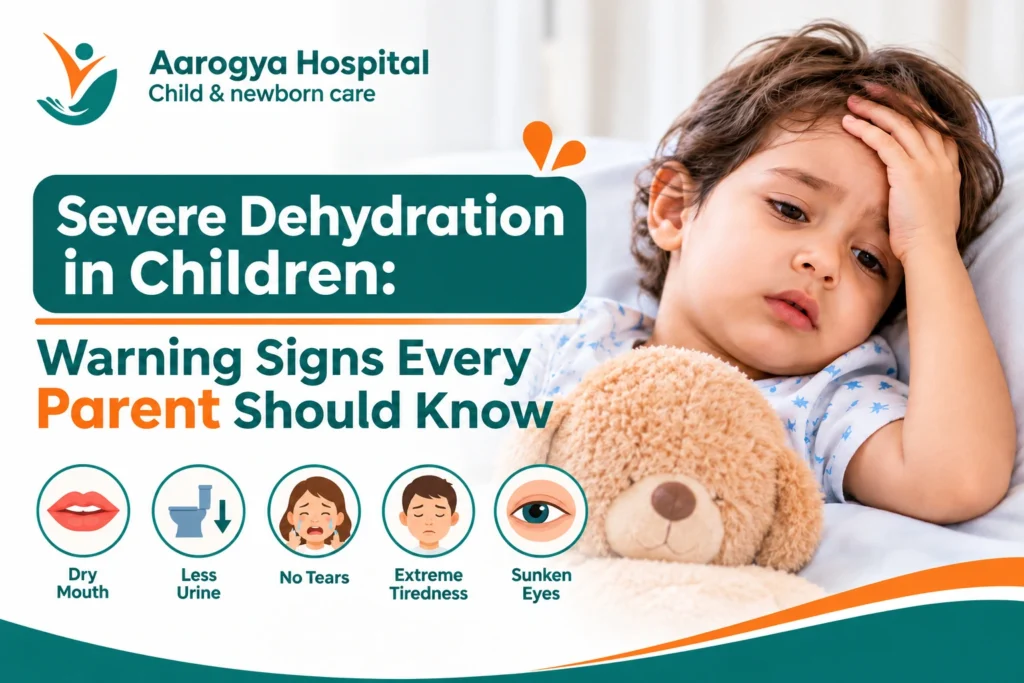
Warning signs of severe dehydration in children at Aarogya Hospital Chandigarh
BLOG

Severe Dehydration in Children: Warning Signs Every Parent Should Know

Children can lose water from their bodies due to diarrhoea, vomiting, fever or heavy sweating. This can lead to dehydration. Mild dehydration may improve with proper fluids. However, severe dehydration in children can be very dangerous and needs urgent medical care. Therefore, parents should know the warning signs of dehydration. They should also know when to take their child to a doctor. Early treatment can help protect a child’s health. At Aarogya Hospital, Chandigarh, we provide healthcare and emergency care for children. Our team helps children who need medical attention. What Is Severe Dehydration in Children? Dehydration happens when a child loses more water than they drink. As a result, the body does not have enough water to work properly. Babies and young children can become dehydrated very quickly. This may happen due to diarrhoea, vomiting, fever or not drinking enough fluids. Severe dehydration is a serious condition. It can affect blood flow and important organs. Therefore, children with severe dehydration need quick medical care. Common Causes of Dehydration in Children Many health problems can cause dehydration in children. Some common causes are: Diarrhoea: Loose motions cause the body to lose water and salts. Vomiting: Repeated vomiting makes it hard for children to keep fluids in their bodies. High Fever: Fever can increase water loss. Heavy Sweating: Hot weather and outdoor activities can cause the body to lose more water. Not Drinking Enough Water: Children may drink less water when they are sick. Feeding Problems: Babies may become dehydrated if they do not get enough breast milk or formula. Therefore, parents should make sure their children get enough fluids, especially when they are sick. Warning Signs of Severe Dehydration in Children Parents should watch for signs of dehydration. However, severe dehydration can develop quickly, especially in babies and young children. Look for these warning signs: 1. Passing Less Urine Your child may pass urine less often than usual. Babies may also have fewer wet nappies. 2. Dry Mouth and Tongue Your child’s mouth and tongue may become dry. Their lips may also look dry or cracked. They may also have less saliva. 3. Sunken Eyes Your child’s eyes may look sunken or deeper than usual. In babies, the soft spot on the head may also look sunken. 4. Feeling Very Tired or Weak Your child may feel very tired or weak. They may not want to play or move around. Some children may also sleep more than usual. 5. Fast Breathing and Heartbeat Severe dehydration can affect the body. As a result, your child may breathe faster or have a faster heartbeat. 6. Cold Hands and Feet Your child’s hands and feet may feel cold. Their skin may also look pale or feel cooler than usual. 7. Dizziness or Strange Behaviour Older children may feel dizzy or very weak. Some children may also become confused, very upset or difficult to wake up. Important: If your child shows signs of severe dehydration, take them to the nearest emergency department immediately. Do not wait for all the signs to appear. When Should Parents Seek Medical Help? Parents should contact a paediatrician if their child has repeated vomiting, frequent loose motions, less urine or trouble drinking fluids. However, some signs need immediate medical care. These include: Feeling very sleepy or being difficult to wake up. Passing very little or no urine. Breathing very fast. Having a fast heartbeat. Having cold hands and feet with severe weakness. Being unable to drink or keep fluids down. Having pale or patchy skin. If your child has these signs, take them to the nearest emergency department without delay. How Is Severe Dehydration Treated? Treatment depends on the child’s age and health. First, the doctor checks the child’s condition. Then, the doctor decides the right treatment. Common treatments include: Oral Rehydration Solution (ORS) ORS helps replace lost water and salts. Doctors may advise giving small amounts of ORS often if the child is awake and can drink safely. Intravenous (IV) Fluids In severe cases, a child may need fluids through a small tube placed into a vein. This is called IV fluid treatment. It helps replace lost fluids. Medical Checks and Care Doctors check the child’s heartbeat, urine and overall health. They may also suggest tests and other treatment based on the child’s condition. How Can Parents Prevent Dehydration in Children? Parents can follow some simple steps to help prevent dehydration. Give your child water and other suitable fluids regularly. Continue breastfeeding your baby during illness. Give ORS as advised by a doctor during diarrhoea or vomiting. Encourage children to drink more fluids in hot weather. Check if your child is passing urine normally. Watch for changes in your child’s activity and behaviour. Contact a doctor if vomiting or diarrhoea continues. Avoid giving sugary drinks instead of ORS. Most importantly, do not delay medical care if your child shows signs of severe dehydration. Paediatric Care at Aarogya Hospital, Chandigarh Children need proper medical care when they have serious health problems. At Aarogya Hospital, Chandigarh, we focus on children’s health, paediatric emergency care and advanced newborn care. Our hospital is located in Khudda Lahora, near PGI Chandigarh. We also care for families looking for children’s healthcare near Panchkula and Mohali. Parents should seek medical help if their child has severe dehydration, repeated vomiting, frequent loose motions or unusual weakness. Early medical care helps doctors find the problem and start the right treatment. If your child shows signs of severe dehydration, seek emergency medical care immediately. Follow up Instagram and Facebook for more information. Frequently Asked Questions (FAQs) What are the first signs of dehydration in children? The first signs include a dry mouth, feeling thirsty, passing less urine, fewer wet nappies and feeling tired. What are the warning signs of severe dehydration in children? Warning signs include sunken eyes, very little urine, extreme sleepiness, fast breathing and cold hands and feet. Can severe dehydration be dangerous for children? Yes. Severe dehydration can affect blood flow and important organs. […]

Newborn emergency warning signs
BLOG

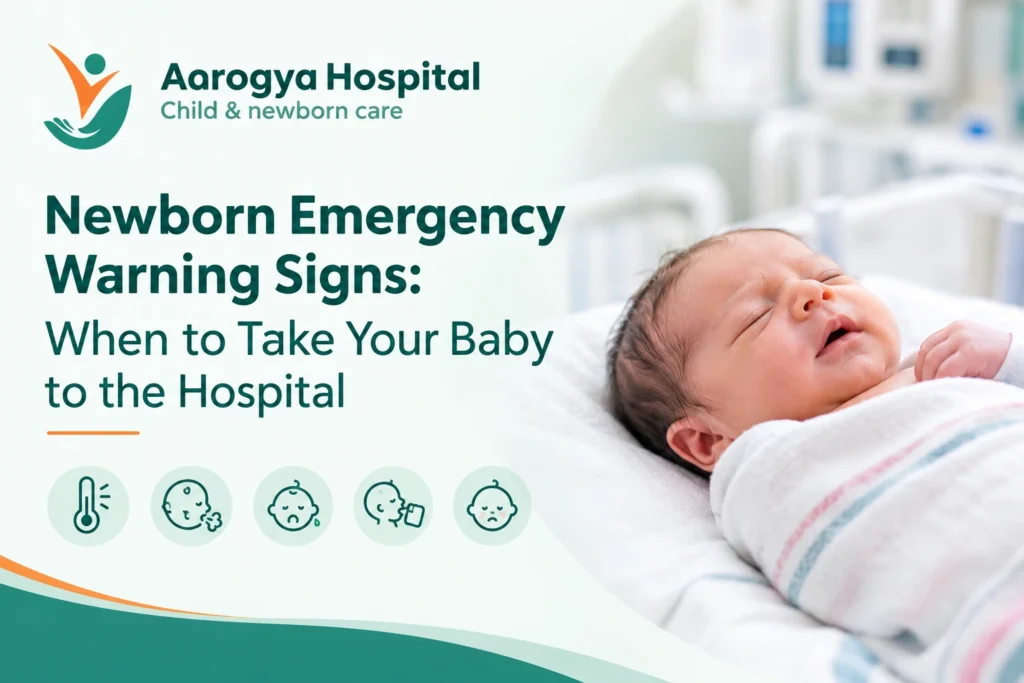
Newborn Emergency Warning Signs: When to Take Your Baby to the Hospital

Aarogya Hospital, Chandigarh — Newborn and NICU Care Near Panchkula and Mohali Newborn babies need extra care during their first few weeks. They cannot tell us when they feel unwell. Parents must watch for changes in their baby’s breathing, feeding, body temperature, skin colour and movements. Some health problems can become serious very quickly. Knowing the warning signs can help parents get medical help on time. If your baby has trouble breathing, blue lips, a seizure or is difficult to wake, seek emergency medical help immediately. Aarogya Hospital is located in Khudda Lahora, Chandigarh, near PGI Chandigarh. Families from Chandigarh, Panchkula and Mohali can contact the hospital to ask about newborn care and available medical services. 1. Trouble Breathing Breathing problems can be dangerous for newborn babies. They can start soon after birth or develop later. Watch for these signs: Very fast or difficult breathing. Skin pulling in around the ribs while breathing. Grunting sounds with each breath. Repeated pauses in breathing. Blue or grey lips, tongue or skin. When should you take your baby to the hospital? Get emergency medical help if your baby struggles to breathe, has repeated pauses in breathing or develops blue or grey lips or tongue. Do not wait to see if the problem goes away. 2. Fever or Low Body Temperature Newborn babies cannot control their body temperature well. A temperature that is too high or too low can be a sign of illness or infection. Watch for these signs: A temperature of 38°C (100.4°F) or higher. An unusually low body temperature. Cold skin along with poor feeding. Unusual sleepiness or breathing changes. When should you take your baby to the hospital? A temperature of 38°C (100.4°F) or higher in a baby under three months needs urgent medical attention. A newborn can also have a serious infection without a fever. Do not give fever medicine unless a doctor advises you to do so. 3. Poor Feeding or Refusing Milk Feeding problems can be an early sign that your baby is unwell. Newborn babies need regular breast milk or formula feeds. Watch for these signs: Refusing milk. Drinking much less milk than usual. Weak sucking. Being too sleepy to feed. Repeated vomiting. Fewer wet nappies than usual. When should you take your baby to the hospital? Contact a doctor promptly if your baby is not feeding well. If your baby is very weak, difficult to wake or shows signs of dehydration, seek emergency medical care. Never force your baby to feed if they are struggling to breathe or are not fully awake. 4. Unusual Sleepiness or Less Movement Newborn babies sleep for many hours each day. However, they should usually wake for feeds and respond to gentle touch. Watch for these signs: Your baby is very difficult to wake. Moves much less than usual. Baby has a weak cry. Feels unusually floppy or weak. Your baby does not respond normally to touch or sound. When should you take your baby to the hospital? Get emergency medical help if your baby is difficult to wake, does not respond or suddenly stops moving normally. Do not assume that unusual sleepiness is normal. 5. Yellow Skin or Eyes (Newborn Jaundice) Jaundice makes a baby’s skin and the whites of their eyes look yellow. It is common in newborn babies, but some cases need treatment. Watch for these signs: Yellow skin or eyes during the first 24 hours after birth. Yellow colour that spreads or becomes darker. Poor feeding along with yellow skin. Unusual sleepiness. Dark urine or pale, chalky stools. When should you take your baby to the hospital? Yellow skin during the first 24 hours needs urgent medical assessment. Get medical advice promptly if the yellow colour gets worse or your baby is feeding poorly or sleeping more than usual. Severe jaundice can harm a baby’s brain if it is not treat. A doctor may check the baby’s bilirubin level. If needed, treatment such as phototherapy may be given. 6. Seizures or Unusual Body Movements A seizure in a newborn does not always look like strong shaking. It may look like repeated jerking or unusual eye and mouth movements. Watch for these signs: Repeated jerking movements. Sudden body stiffness. Repeated unusual eye movements. Sudden periods of not responding. Changes in breathing with unusual movements. When should you take your baby to the hospital? A possible seizure in a newborn is a medical emergency. Get emergency medical help immediately. Keep your baby safe. Do not hold their movements down or put anything in their mouth. 7. Repeated Vomiting or a Swollen Belly Some babies bring up a little milk after feeding. However, certain types of vomiting can be a sign of a serious problem. Watch for these signs: Green vomit. Blood in the vomit. Repeated forceful vomiting. A swollen or hard belly. Vomiting along with poor feeding or unusual sleepiness. When should you take your baby to the hospital? Green vomit, blood in the vomit or a swollen belly with other signs of illness needs urgent medical attention. Do not wait for the vomiting to happen again before seeking help. 8. Signs of Infection in a Newborn Newborn babies can develop serious infections very quickly. Sometimes, the first signs are not easy to notice. Watch for these signs: Poor feeding. Fever or low body temperature. Fast or difficult breathing. Unusual sleepiness. Less movement than usual. A weak cry or constant crying. Pale, patchy, blue or grey skin. When should you take your baby to the hospital? Get urgent medical advice if you think your baby may have an infection. If your baby has trouble breathing, does not respond or looks seriously ill, seek emergency medical help immediately. Do not wait for all the signs to appear. 9. Fewer Wet Nappies or Signs of Dehydration Wet nappies help parents check whether their baby is getting enough milk. The number of wet nappies usually increases during the first few days after birth. Watch for these signs: Fewer wet nappies […]

Safe transfer of a sick newborn to a NICU at Aarogya Hospital Chandigarh
BLOG

How to Transfer a Sick Newborn Safely Between Hospitals

Sometimes, a newborn baby needs special medical care. However, the current hospital may not have the right treatment or equipment. In such cases, doctors may suggest moving the baby to another hospital with a Neonatal Intensive Care Unit (NICU). However, moving a sick newborn requires careful planning. The baby needs trained medical staff, proper equipment, and safe transport to ensure their safety. For example, premature babies and babies with low birth weight need extra care. Similarly, babies with breathing problems may need special support during travel. Therefore, doctors must check the baby’s health before the journey. Aarogya Hospital, Chandigarh, near PGI Chandigarh, provides families with a place to ask about newborn care and NICU services. Families and referring doctors can contact the hospital to discuss the baby’s needs and available care. When Does a Newborn Need to Move to Another Hospital? Doctors may suggest moving a baby when the current hospital cannot provide the care the baby needs. Here are some common reasons: Premature birth: Babies born too early may need help with breathing, feeding, and staying warm. Low birth weight: Small babies may need help with feeding, body temperature, and blood sugar. Breathing problems: Some babies need oxygen or help from a breathing machine. Serious infections: Babies with severe infections may need antibiotics and close medical care. Problems during birth: Some babies need special care after a difficult birth. Severe newborn jaundice: High bilirubin levels may need quick treatment. Brain problems: Babies who do not get enough oxygen around birth may need special treatment and close monitoring. The doctor will decide whether the baby needs to move to another hospital. This decision depends on the baby’s health and the care available at the current hospital. How to Transfer a Sick Newborn Safely Between Hospitals A sick newborn needs special care during travel. Doctors must prepare the baby, arrange safe transport, and check the baby’s health throughout the journey. 1. Check the Baby Before Travel First, doctors check the baby’s breathing, heartbeat, body temperature, and general health. They may also check blood sugar and blood flow. If the baby has breathing problems, doctors may provide breathing support before travel. They may also treat low blood sugar or other serious problems. Doctors should make the baby as stable as possible before the journey. However, they should not delay urgent treatment when waiting could put the baby at risk. 2. Arrange Trained Medical Staff A sick newborn may need trained medical staff during the journey. Depending on the baby’s condition, the team may include a doctor or a nurse with newborn care training. The team must know how to care for the baby and respond to emergencies. The current hospital should also speak with the new hospital before the journey. This helps the receiving team prepare for the baby’s arrival. 3. Use the Right Medical Equipment Some babies need special equipment during travel. The medical team will choose the equipment based on the baby’s needs. This equipment may include: Transport incubator: Keeps the baby warm during travel. Oxygen supply: Gives extra oxygen when needed. Breathing support: Helps the baby breathe when needed. Monitoring devices: Check the baby’s heartbeat and oxygen levels. Infusion pumps: Give fluids or medicines at the right rate. Emergency equipment: Helps medical staff respond to sudden problems. Before leaving, the team checks all the equipment. They also make sure there is enough oxygen, battery power, and medical supplies for the journey. 4. Keep the Baby Warm Newborn babies can lose body heat quickly. Premature babies and babies with low birth weight are at greater risk. Therefore, the medical team must keep the baby warm during travel. A transport incubator or another suitable warming system can help. The team should also check the baby’s temperature during the journey. 5. Check the Baby During Travel The medical team must watch the baby’s health throughout the journey. They may check: Heartbeat and breathing Oxygen levels Body temperature Blood sugar, when needed Blood pressure, when needed If the baby’s condition changes, the team must provide the right care quickly. 6. Share the Baby’s Medical Reports Before the transfer, the current hospital should share the baby’s medical records with the new hospital. These records may include: Birth details and weeks of pregnancy at birth Birth weight and current weight The baby’s current health problems Medicines and treatment already given Blood test results and other reports Oxygen needs and breathing support Problems during birth These details help the new medical team understand the baby’s condition. They also help doctors continue treatment without unnecessary delays. 7. Choose the Right Hospital The new hospital should have the right medical team and equipment for the baby’s needs. For example, a baby with serious breathing problems may need advanced NICU care. A premature baby may need help with feeding, staying warm, and gaining weight. Parents should speak with the treating doctor before the transfer. They should also ask about bed availability, treatment options, and transport arrangements. What Should Parents Do Before the Transfer? Parents may feel worried when doctors suggest moving their baby to another hospital. However, a few simple steps can help them prepare. Parents should: Ask why the baby needs to move. Find out what treatment the baby needs. Confirm the name of the new hospital. Ask who will care for the baby during travel. Keep medical reports and referral papers ready. Follow the doctor’s instructions. Most importantly, do not delay an urgent transfer. Never take a seriously ill newborn in a private car without medical advice and a safe travel plan. Why Is NICU Care Important During a Newborn Transfer? A Neonatal Intensive Care Unit (NICU) provides special care for newborn babies who need extra medical support. Depending on the baby’s condition and the hospital’s facilities, NICU care may include: Help with breathing Support to keep the baby warm Checks of heartbeat and oxygen levels Treatment for infections Help with feeding and fluids Care for premature babies Care for babies with low birth weight Treatment […]

Inhaled nitric oxide for newborns
BLOG

Inhaled Nitric Oxide (iNO) for Newborns: What Parents Should Know

When a newborn has trouble breathing, parents may feel worried and confused. Some babies need extra help to get enough oxygen. In certain cases, doctors may use a treatment called inhaled nitric oxide (iNO). This treatment helps improve blood flow through the lungs. It can help some newborns who have serious breathing problems. However, iNO is not need by every baby. Doctors decide whether it is suitable after checking the baby’s condition. In this guide, we explain what inhale nitric oxide is, how it works, and when doctors may use it. What Is Inhale Nitric Oxide (iNO) for Newborns? Inhaled nitric oxide (iNO) is a special gas use to treat certain newborns with serious breathing problems. It helps relax the blood vessels inside the lungs. As a result, blood can flow through the lungs more easily and collect oxygen. Doctors usually consider iNO when a newborn has a condition called persistent pulmonary hypertension of the newborn (PPHN). In PPHN, the blood vessels in the lungs remain too tight after birth. This makes it harder for blood to collect enough oxygen. As a result, the baby may have low oxygen levels even when receiving breathing support. Inhaled nitric oxide may help improve oxygen levels in selected babies. When Do Newborns Need Inhaled Nitric Oxide? Doctors may recommend iNO when a newborn has serious breathing problems and low oxygen levels. Some common situations include: Persistent pulmonary hypertension of the newborn (PPHN): Blood vessels in the lungs remain tight, making it difficult for blood to collect oxygen. Meconium aspiration syndrome: A baby breathes in meconium, or the first stool, before or during birth. This can affect breathing. Pneumonia or lung infection: A serious infection can affect the baby’s breathing and oxygen levels. Other serious breathing conditions: Some babies develop low oxygen levels because of problems affecting their lungs and blood flow. However, not every baby with these conditions needs iNO. Doctors assess the baby’s oxygen levels, test results, and response to other treatments before making a decision. How Does Inhaled Nitric Oxide Work? Inhaled nitric oxide works mainly by relaxing the blood vessels in the lungs. Here is how it may help a newborn: The baby receives the gas: iNO is deliver through special breathing equipment. Blood vessels in the lungs relax: This allows blood to move through the lungs more easily. Blood collects oxygen: Better blood flow may help the baby receive more oxygen. Doctors check the response: The medical team monitors the baby’s oxygen levels and overall condition. The main aim is to improve oxygen levels and reduce strain on the baby’s body. iNO does not directly treat every cause of breathing difficulty. The baby may also need other treatments, depending on the underlying problem. How Is iNO Give to Newborns? Inhaled nitric oxide is give through special medical equipment. It is usually deliver with breathing support, such as a ventilator. The gas enters the baby’s lungs during breathing. Doctors control the amount of gas given to the baby. During treatment, the medical team carefully checks: Oxygen levels and breathing. Heart rate and blood pressure. Blood test results, when needed. The baby’s response to treatment. Possible side effects. Doctors may adjust the treatment based on these checks. The amount of iNO is reduce gradually when the baby improves. Stopping it too quickly can cause oxygen levels to fall. Therefore, the medical team follows a planned process. Is Inhale Nitric Oxide Safe for Newborns? iNO can be helpful when used for the right medical reason. However, like other treatments, it may cause side effects. Possible risks include: Changes in blood pressure. Increased levels of methemoglobin, which can reduce the blood’s ability to carry oxygen. Increased nitrogen dioxide levels, which may harm the lungs. A drop in oxygen levels if treatment is stop too quickly. For these reasons, iNO must be give under specialist medical supervision. Doctors use monitoring equipment and blood tests when needed to check for side effects. Parents should not worry about managing the gas or its dose themselves. The medical team takes responsibility for giving the treatment safely. How Long Does a Newborn Need iNO Treatment? The treatment time varies from baby to baby. Some newborns improve within a short period. Others may need treatment for longer, depending on their condition. Doctors consider several factors, including: The cause of the breathing problem. The baby’s oxygen levels. The response to iNO. The need for a ventilator or other breathing support. Results of medical tests. When the baby improves, doctors gradually reduce the gas and check whether oxygen levels remain stable. There is no fixed treatment time for every newborn. The care plan depends on the baby’s progress. What Is the Difference Between iNO and a Ventilator? Both treatments may help newborns with serious breathing problems. However, they work in different ways. A ventilator helps move air into and out of the lungs. It supports breathing when a baby cannot breathe well enough without assistance. Inhaled nitric oxide is a gas that helps relax blood vessels in the lungs. It may improve blood flow and oxygen levels in babies with certain conditions, especially PPHN. Some newborns need both treatments at the same time. Doctors decide which support is suitable based on the baby’s condition and response to treatment. What Should Parents Ask the Doctor About iNO? It is natural for parents to have questions when their newborn needs special breathing support. You can ask the doctor: Why does my baby need iNO? What is causing my baby’s low oxygen levels? How will you check if the treatment is working? What side effects should we know about? Will my baby need a ventilator or other treatment? How will you decide when to reduce or stop iNO? What other care may be need during recovery? These questions can help you understand your baby’s treatment plan. The medical team can explain the baby’s condition, the expected benefits, and any possible risks. When Should Parents Seek Emergency Medical Care? Breathing problems in newborns need […]

Aarogya Support 1

Aarogya Hospital Chandigarh

Doctor Avatar
Welcome to Aarogya Hospital (Near PGI Chandigarh) 🏥
I'm your assistant here to help with your medical enquiry.
Doctor Avatar
Which of our services or departments are you interested in?