
Ayushman Bharat empanelled Chandigarh

Low Birth Weight Baby

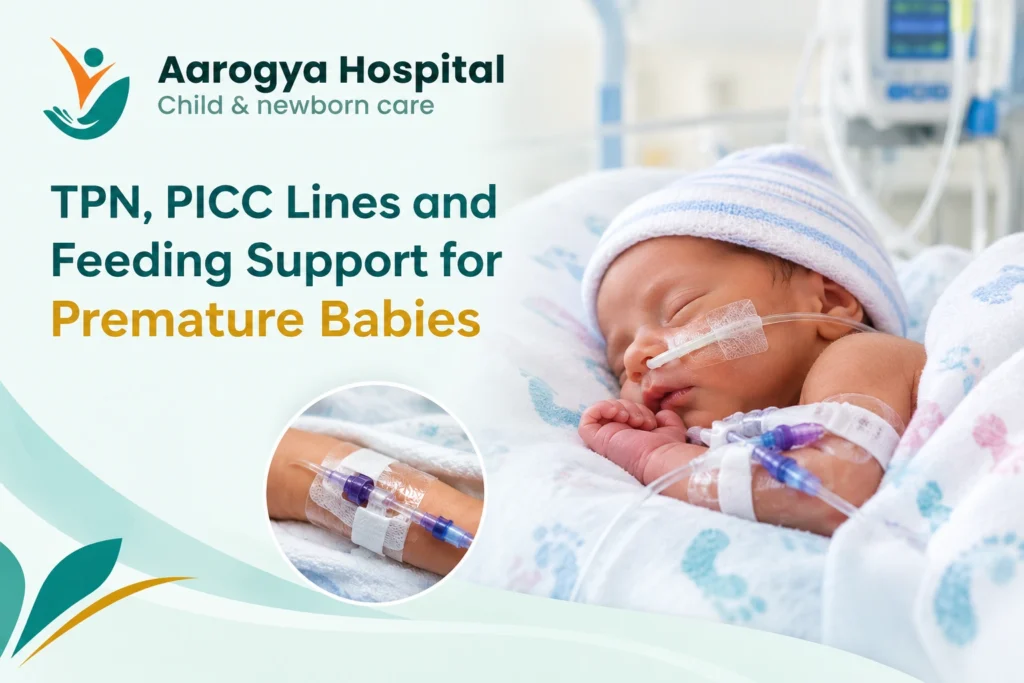
TPN and PICC lines for premature babies
BLOG

TPN, PICC Lines and Feeding Support for Premature Babies

Introduction Premature babies are born before 37 weeks of pregnancy. Their bodies are still growing. Therefore, they may need extra help with feeding and nutrition. Some premature babies cannot drink enough milk. Others have trouble digesting milk or need special medical care. In such cases, doctors may suggest TPN, a PICC line, or tube feeding. These treatments help babies get the nutrients they need to grow and stay healthy. However, every baby is different. Doctors choose the best feeding method based on the baby’s health, weight, and growth. At Aarogya Hospital, Chandigarh, parents can ask about premature baby care, newborn feeding, and NICU services. Why Do Premature Babies Need Special Feeding Support? Premature babies may have trouble feeding because their bodies are not fully develop. They may also find it hard to suck, swallow, and breathe at the same time. As a result, some babies need extra help to get enough nutrition. Common reasons include: Poor sucking and swallowing: The baby may not be ready to drink milk safely. Low birth weight: The baby needs enough nutrients to grow. Immature digestion: The baby’s stomach and intestines may need more time to develop. Breathing problems: Babies who need help with breathing may also need feeding support. Serious illness: Some babies need extra nutrition while they recover. Higher nutritional needs: Premature babies need enough energy, protein, vitamins, and minerals to grow. Meanwhile, the neonatologist, a doctor who specialises in newborn care, assesses the baby’s health and plans the most suitable feeding method. What Is TPN (Total Parenteral Nutrition)? TPN stands for Total Parenteral Nutrition. In other words, it is a method of delivering nutrients directly into a baby’s bloodstream through an IV line. Doctors may use TPN when a premature baby cannot get enough nutrition through milk. TPN contains important nutrients, such as: Glucose: Gives the baby energy. Amino acids: Help the body grow and repair itself. Fats: Provide energy and support healthy growth. Vitamins and minerals: Help the body work properly. Electrolytes: Help maintain the right balance of fluids and minerals. Doctors adjust the TPN mixture according to the baby’s weight, age, blood tests, and nutritional needs. When Does a Premature Baby Need TPN? Doctors may suggest TPN when: The baby is born very early. Baby has a very low birth weight. The baby cannot take enough milk. The baby has certain stomach or intestinal problems. Recovering from a serious illness. Safely receive enough milk for medical reasons. Some babies can receive small amounts of milk while also getting TPN. As the baby starts taking more milk, doctors may slowly reduce TPN when it is safe to do so. How Do Doctors Monitor TPN? TPN needs careful monitoring because a premature baby’s needs can change quickly. Doctors and nurses may check: Blood sugar levels. Blood tests for salts and minerals. Fluid intake and urine output. Weight gain and growth. Liver health when needed. Signs of infection or problems with the IV line. As a result, these checks help the medical team provide the right amount of nutrition and identify any problems early. What Is a PICC Line in a Premature Baby? A PICC line is a thin, soft tube place into a vein, usually in the baby’s arm or leg. A PICC stands for Peripherally Inserted Central Catheter. In this procedure, a thin tube is insert through a vein and guide into a larger vein near the heart. Doctors check its position before using it. Additionally, a PICC line can be use to deliver TPN, certain medicines, and other essential treatments directly into the bloodstream. Why Might a Premature Baby Need a PICC Line? Doctors may suggest a PICC line when a baby needs IV nutrition or medicines for several days or longer. A PICC line can: Provide steady access to a vein. Allow doctors to give certain strong nutrition solutions. Reduce the need for repeated short-term IV lines. Help the medical team continue treatment in the NICU. However, not every premature baby needs a PICC line. Some babies can receive treatment through a regular IV line. How Is a PICC Line Care For? A PICC line needs careful handling to reduce the risk of infection and other problems. Doctors and nurses may: Keep the area clean and covered. Check the skin around the line. Use clean, sterile methods when handling the line. Look for redness, swelling, or fluid leakage. Check the line’s position when needed. Parents should never touch, flush, adjust, or remove the line themselves. Tell the nurse or doctor immediately if you notice any unusual changes around the line. What Is Feeding Support for Premature Babies? Feeding support helps premature babies get enough nutrition while they grow. Therefore, doctors choose the most suitable feeding method based on the baby’s age, breathing, digestion, and ability to swallow safely. The main feeding methods include breast milk, tube feeding, and feeding by mouth. 1. Breast Milk Feeding Mother’s breast milk is usually the first choice for premature babies when it is available and suitable. It provides important nutrients that help the baby grow. It also contains substances that help protect the baby from some infections. Additionally, some premature babies need fortified breast milk. This means extra nutrients are add to provide more protein, minerals, and calories to support healthy growth. Additionally, if the mother’s milk is not available, donor breast milk may be considered where it is available and suitable for the baby. Doctors may also suggest special formula made for premature babies. 2. Tube Feeding Some premature babies are too young or weak to drink milk safely. In such cases, doctors may suggest tube feeding. A thin tube is pass through the baby’s nose or mouth into the stomach. Milk is then give through the tube in small, measure amounts. Tube feeding helps babies get enough nutrition while they develop their feeding skills. Doctors and nurses check how well the baby handles the milk. They also watch for vomiting, tummy swelling, and poor weight gain. 3. Moving to Breastfeeding […]

Low birth weight baby care
BLOG

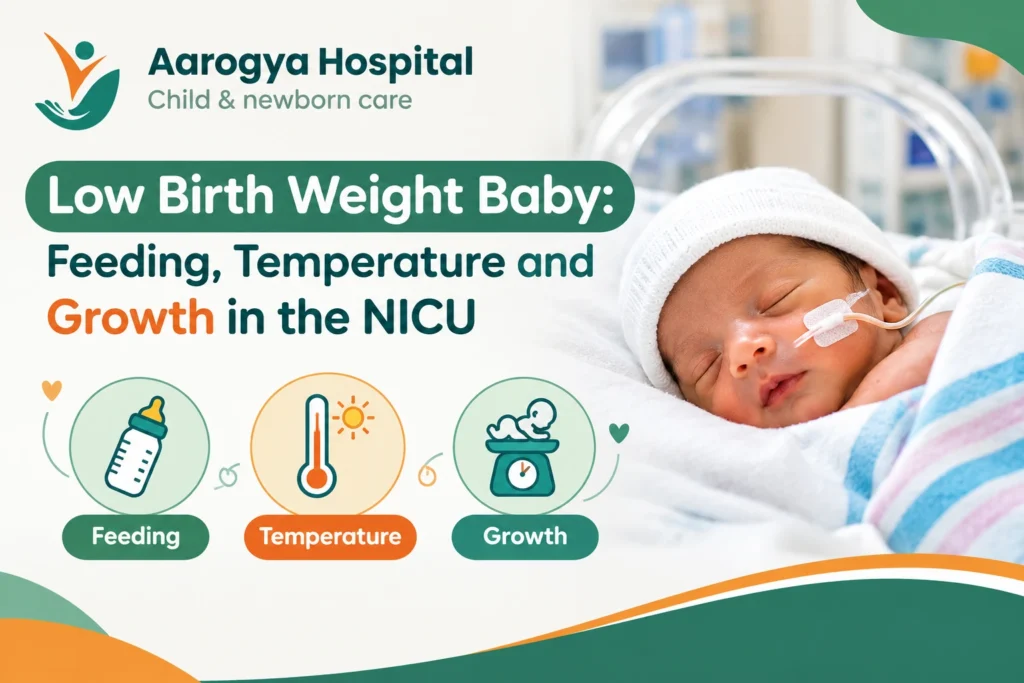
Low Birth Weight Baby: Feeding, Temperature and Growth in the NICU

A low birth weight baby needs extra care to grow and stay healthy. These babies may need help with feeding, keeping warm, and gaining weight. Therefore, some babies need care in a Neonatal Intensive Care Unit (NICU). At Aarogya Hospital in Chandigarh, doctors check each baby’s health, feeding, body temperature, and growth. The care plan depends on the baby’s weight at birth, weeks of pregnancy, and medical needs. What Is a Low Birth Weight Baby? A low birth weight baby is a newborn who weighs less than 2,500 grams (2.5 kg) at birth. This applies even if the baby is born at full term. There are several reasons why a baby may have a low birth weight. For example, the baby may be born early or may not grow well inside the womb. Common causes include: Birth before 37 weeks of pregnancy Slow growth inside the womb Problems with the placenta Certain health problems in the mother Pregnancy with twins or triplets However, not every low birth weight baby needs NICU care. Doctors check the baby’s breathing, feeding, temperature, blood sugar, and overall health before deciding on the right care. Why Does a Low Birth Weight Baby Need NICU Care? Low birth weight babies may need more time to adjust to life outside the womb. They may find it difficult to stay warm, feed properly, or maintain normal blood sugar levels. Therefore, doctors may recommend NICU care if the baby needs extra monitoring or treatment. NICU care may include: Checking breathing and heart rate Keeping the baby warm Helping with breast milk feeding Checking blood sugar levels Monitoring weight gain and growth Finding and treating health problems Some babies need only a short period of monitoring. Others may need more specialised care, depending on their health. 1. Feeding a Low Birth Weight Baby in the NICU Feeding is an important part of caring for a low birth weight baby. Proper nutrition helps the baby grow, develop, and recover. However, some babies may be too small or weak to breastfeed properly. This is more common in babies born early. Breast Milk for Low Birth Weight Babies Mother’s breast milk is usually the preferred food for newborns, including premature and low birth weight babies. It provides important nutrients that help the baby grow. It also contains protective factors that help the baby fight infections. If the baby cannot breastfeed directly, the mother can express her breast milk. The NICU team will decide how to feed the baby safely. Feeding Methods in the NICU The feeding method depends on the baby’s age, health, and ability to feed. Common feeding methods include: Direct breastfeeding: The baby feeds directly from the mother’s breast when they can suck, swallow, and breathe safely. Expressed breast milk: The baby receives the mother’s milk without feeding directly from the breast. Tube feeding: A small tube carries milk into the baby’s stomach when they cannot feed safely by mouth. Nutrition through a vein: In some cases, nutrients are give through a vein when milk feeding is not enough or is not yet possible. Some premature babies also need extra nutrients to support healthy growth. Doctors may add special nutrients to breast milk when needed. How Often Should a Low Birth Weight Baby Be Fed? Feeding times depend on the baby’s weight, age, health, and feeding method. Some babies need small feeds more often. Others may need feeding through a tube until they can feed by mouth. Therefore, parents should follow the feeding plan given by the NICU team. Every baby has different feeding needs. 2. Keeping a Low Birth Weight Baby Warm in the NICU Low birth weight babies can lose body heat quickly. This is because they have less body fat and may find it difficult to control their body temperature. Therefore, keeping the baby warm is an important part of NICU care. Why Is Keeping the Baby Warm Important? A baby’s body uses energy to stay warm. If the baby becomes too cold, the body uses more energy and oxygen to produce heat. As a result, being too cold can affect blood sugar, breathing, and overall health. Keeping the baby warm helps save energy for growth and recovery. How Do Doctors Keep Babies Warm in the NICU? Doctors and nurses use different methods to keep babies warm, including: Incubators: These provide a warm, controlled space for the baby. Radiant warmers: These keep the baby warm while doctors provide treatment. Temperature checks: Nurses check the baby’s temperature regularly and adjust care when needed. Kangaroo mother care: This involves placing the baby against a parent’s bare chest for skin-to-skin contact. It can help keep the baby warm and support breastfeeding when the baby is stable enough. The NICU team checks the baby’s temperature regularly to make sure it stays within the recommended range. Parents should never use heating pads or hot water bottles to warm a newborn without medical advice. 3. Monitoring Growth and Weight Gain in the NICU Weight gain helps doctors understand how well a low birth weight baby is growing. However, weight is not the only thing they check. Doctors also measure the baby’s length and head size. They check feeding, hydration, and overall health, too. How Do Doctors Check Weight Gain? The NICU team weighs the baby regularly. How often they do this depends on the baby’s condition and the hospital’s care plan. Some weight loss during the first few days after birth can be normal. However, low birth weight and premature babies need careful monitoring. As feeding improves, doctors check whether the baby is gaining enough weight for their age and health needs. What Helps a Low Birth Weight Baby Gain Weight? Several things help a baby grow well: Enough breast milk or prescribed nutrition Feeding at the recommended times Keeping the baby at a stable temperature Treating infections and other health problems Regular weight and growth checks Support for breastfeeding and expressing milk Some babies need extra nutrition because they require more support […]

Aarogya Support 1

Aarogya Hospital Chandigarh

Doctor Avatar
Welcome to Aarogya Hospital (Near PGI Chandigarh) 🏥
I'm your assistant here to help with your medical enquiry.
Doctor Avatar
Which of our services or departments are you interested in?