Ayushman Bharat empanelled Chandigarh

NICU in Chandigarh

Newborn screening tests for babies at Aarogya Hospital Chandigarh
BLOG

Newborn Screening Tests: What Parents Need to Know

A Simple Guide to Important Health Tests for Newborn Babies The birth of a baby brings joy to every family. Every parent wants their baby to be healthy. However, some health problems are not easy to see at birth. This is why newborn screening tests are important. These tests help doctors find certain health problems early, even if the baby looks healthy. Early testing helps doctors take the right steps at the right time. It can also help prevent serious health problems. If you are looking for newborn care in Chandigarh, knowing about these tests can help you make better choices for your baby. What Are Newborn Screening Tests? Newborn screening tests are simple tests done soon after a baby is born. They help doctors check for certain health problems that may be present from birth. These problems may affect the baby’s genes, hormones, or body functions. Most babies with these conditions look healthy in the beginning. They may not show any signs of illness. Therefore, screening tests help doctors find possible problems early. However, these tests do not confirm a disease. If a result is not normal, the doctor may ask for more tests. Why Are Newborn Screening Tests Important? Newborn screening tests help protect a baby’s health. Some health problems can affect a baby’s growth and brain development if they are not treated on time. Here are some benefits of these tests: Early Detection: Tests help doctors find health problems early. Quick Treatment: Doctors can plan the next steps without delay. Healthy Growth: Early care can support the baby’s growth and development. Prevent Serious Problems: Timely treatment can lower the risk of health problems. Better Care: Parents get important information about their baby’s health. Types of Newborn Screening Tests Doctors may suggest different newborn screening tests based on the baby’s health and needs. 1. Blood Spot Screening Test This test is done by taking a few drops of blood from the baby’s heel. The blood sample is sent to a lab for testing. It helps doctors check for health problems related to hormones, genes, and body functions. Depending on the screening programme, this test may check for: Congenital hypothyroidism Phenylketonuria (PKU) Congenital adrenal hyperplasia (CAH) Some inherited metabolic disorders Other health problems included in the screening programme Finding these problems early helps doctors plan the right care for the baby. 2. Hearing Screening Test A newborn hearing test checks if a baby can hear sounds. Hearing is important for learning to speak and understand words. However, parents may not notice hearing problems in the first few days. Doctors may use two common tests: Otoacoustic Emissions (OAE): This test checks how the baby’s inner ear responds to sounds. Automated Auditory Brainstem Response (AABR): This test checks how the hearing nerve and brain respond to sounds. Early testing helps parents get the right care and support if their baby has a hearing problem. 3. Pulse Oximetry Screening Pulse oximetry is a simple and painless test. It checks the oxygen level in the baby’s blood. It can help doctors find some serious heart problems that may not be easy to notice during a normal check-up. During this test, a small sensor is placed on the baby’s hand or foot. It measures the amount of oxygen in the blood. If the result is not normal, the doctor may suggest more tests. 4. Screening for Congenital Hypothyroidism Congenital hypothyroidism is a condition in which the baby’s thyroid gland does not make enough thyroid hormone. This hormone helps the brain and body grow properly. A simple blood test can help doctors find this condition. If the test confirms the problem, the doctor can start the right treatment. Early treatment helps support the baby’s brain growth and overall development. 5. Screening for Other Metabolic Disorders Some babies are born with conditions that make it difficult for their bodies to use food for energy. These conditions may affect how the body uses proteins, fats, or sugars. In many cases, babies do not show clear signs at birth. Doctors may suggest extra tests based on the screening programme and the baby’s health. Finding these problems early helps doctors plan treatment, food changes, and regular check-ups. When Should Newborn Screening Tests Be Done? The right time for newborn screening depends on the type of test and the baby’s health. In general: Blood Spot Test: It is usually done after the first 24 hours of birth. Hearing Test: It is usually done before the baby leaves the hospital or within the first few weeks. Pulse Oximetry Test: It is usually done after 24 hours of birth or close to hospital discharge. Some babies may need these tests again. Therefore, parents should follow their doctor’s advice about the right time for each test. Are Newborn Screening Tests Painful? Most newborn screening tests are simple and safe. The blood test involves a small prick on the baby’s heel. The baby may cry for a short time. However, hearing and pulse oximetry tests are usually painless. They do not need any surgery or injections. Doctors and trained staff perform these tests carefully to keep the baby comfortable and safe. What Happens If a Newborn Screening Test Is Not Normal? An abnormal result does not always mean that your baby has a disease. Sometimes, the result may be affected by early testing, premature birth, or other health conditions. If a test result is not normal, the doctor may suggest: Repeating the test, if needed. Doing more tests to check the result. Meeting a paediatrician or specialist. Starting treatment if a health problem is confirmed. Having regular check-ups to check the baby’s health. Parents should not panic. However, they should not ignore an abnormal result. Always follow your doctor’s advice and complete any further tests on time. Do All Newborn Babies Need Screening? Yes, newborn screening is recommended for all babies, even if they look healthy. Some health problems do not show clear signs in the first few days after birth. A baby […]
Newborn NICU near PGI Chandigarh
BLOG

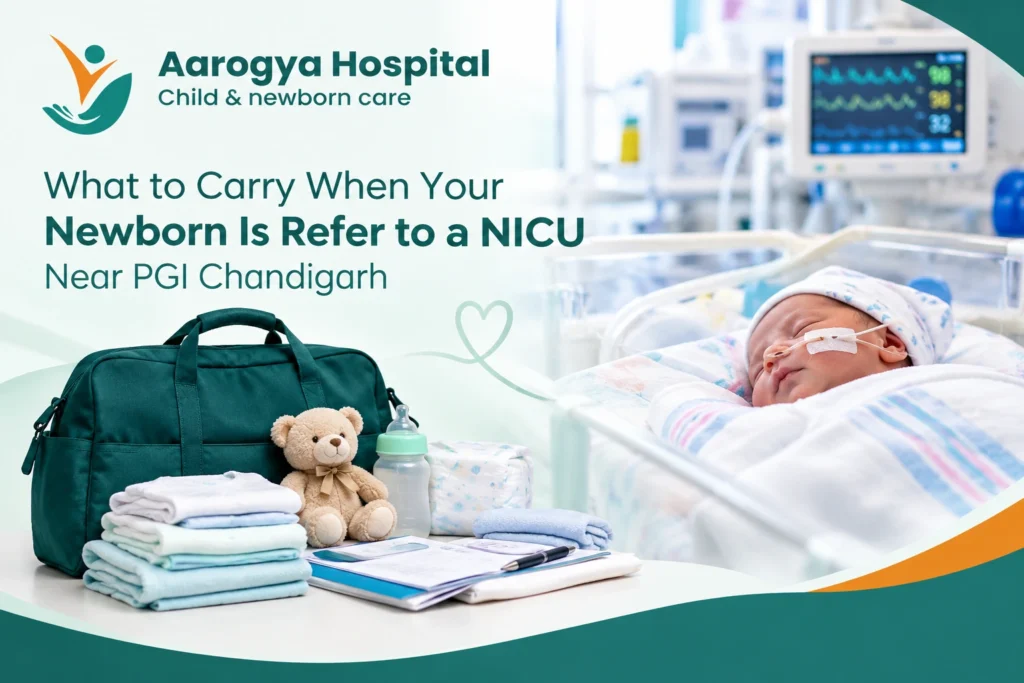
What to Carry When Your Newborn Is Refer to a NICU Near PGI Chandigarh

When a newborn baby needs extra care, a doctor may suggest NICU admission. NICU stands for Neonatal Intensive Care Unit. It is a special unit for babies who need close care and monitoring. This can be a stressful time for parents. However, knowing what to carry can help you prepare. If your baby is refer to a NICU near PGI Chandigarh, keep important papers and basic items ready. Most importantly, do not delay your baby’s transfer to pack your bags. Your baby’s health comes first. 1. Carry Your Baby’s Medical Reports Medical reports help doctors understand your baby’s health. They also help doctors plan the right treatment. Try to carry these papers: Baby’s birth records and hospital discharge papers Doctor’s referral letter Blood test reports Ultrasound and scan reports, if available Details of medicines given to your baby Details of oxygen or breathing support, if used Mother’s pregnancy and delivery records If the transfer is urgent, take the papers you can find quickly. Do not delay your baby’s care to find missing reports. 2. Keep Important Documents Ready The hospital may ask for some documents during admission. Keep these papers ready, if available: Parents’ identity cards Hospital admission papers Baby’s birth records Health insurance papers, if applicable Ayushman Bharat PM-JAY documents, if eligible You can also call the hospital to ask which documents are need for admission or cashless treatment. 3. Pack Basic Items for Your Baby Your baby may need special care and medical equipment in the NICU. So, ask the hospital team which items you can bring. You may pack: A clean baby blanket, if allowed A few clean baby clothes Clean nappies, if needed Feeding items, only if the doctor allows them Some babies cannot wear normal clothes or use personal blankets in the NICU. Always follow the hospital’s rules to help protect your baby from infection. 4. Carry the Mother’s Medical Details The mother’s health details can help doctors understand the baby’s condition. Try to remember or write down: Any problems during pregnancy Mother’s blood group, if known Medicines taken during pregnancy Date and time of delivery Type of delivery, such as normal delivery or C-section Any infections or other health problems Medicines given to the mother during labour Share these details with the doctor. Carry the medical reports if you have them. 5. Pack a Small Bag for Yourself You may need to stay at the hospital for several hours. A small bag can help you manage your stay. You can pack: Mobile phone and charger Wallet and important papers Personal medicines Basic toiletries One extra set of clothes Notebook and pen to write down the doctor’s advice You can also ask the hospital about visiting hours and nearby places to stay. If you plan to express breast milk, ask the medical team how to collect and store it safely. 6. What to Do Before Taking Your Baby to the NICU Preparing for the transfer is helpful. However, your baby’s health and safe travel are more important. Follow these steps: Follow the doctor’s advice. Confirm which hospital will receive your baby and when to leave. Arrange safe transport. If your baby needs oxygen or close monitoring, ask about a suitable neonatal ambulance. Share medical details. Tell the receiving hospital about your baby’s health, test results, and treatment. Ask about feeding. Check with the doctor before feeding your baby during the journey. Do not adjust medical equipment yourself. Let trained staff manage oxygen, tubes, and monitors. Important: If your baby has trouble breathing, blue or grey lips, seizures, or is difficult to wake, seek emergency medical help immediately. 7. Looking for a NICU Near PGI Chandigarh? Parents looking for a NICU near PGI Chandigarh may also explore newborn care options in Panchkula and Mohali. Before choosing a hospital, ask these questions: What newborn care services are available? Are doctors train in newborn care available? Does the hospital have breathing support and monitoring equipment? Is emergency care available? Can the hospital help arrange safe transport for newborns? Aarogya Hospital is located in Khudda Lahora, near PGI Chandigarh. The hospital provides care for newborn babies and children. Parents can contact Aarogya Hospital to ask about its NICU facilities, specialist services, and admission process. The hospital team can explain the available services and guide parents based on their baby’s needs. Families from Chandigarh, Panchkula, and Mohali can also contact the hospital to ask about newborn care and referral support. Please confirm that the required NICU facilities and specialist services are available before travelling, unless the medical team advises an immediate transfer. Conclusion A newborn’s NICU referral can be stressful for parents. However, a little preparation can make things easier. Carry your baby’s medical reports, important papers, and basic personal items. Also, follow the doctor’s advice about safe transport. Do not delay an urgent transfer to pack your bags or find missing papers. If you are looking for newborn care near PGI Chandigarh, contact Aarogya Hospital to ask about available facilities, NICU admission, and newborn referral support. Aarogya Hospital, Chandigarh Location: Khudda Lahora, near PGI Chandigarh Please contact the hospital to confirm NICU availability, admission requirements, and transfer arrangements. In an emergency, follow the medical team’s advice without delay. Follow Aarogya Hospital on Instagram and Facebook for more information about newborn and child care. Frequently Asked Questions (FAQs) What papers should I carry when my baby is refer to a NICU? Carry the doctor’s referral letter, test reports, birth records, and parents’ identity cards, if available. Do not delay an urgent transfer to find missing papers. Should I carry clothes and blankets for my NICU baby? You can carry a few clean clothes and a blanket. However, your baby may not be able to use them in the NICU. Ask the hospital team before using these items. Can I breastfeed my baby after NICU admission? It depends on your baby’s health. Ask the doctor if you can breastfeed your baby or give expressed breast milk. Follow the team’s advice […]

When does a newborn need a ventilator
BLOG

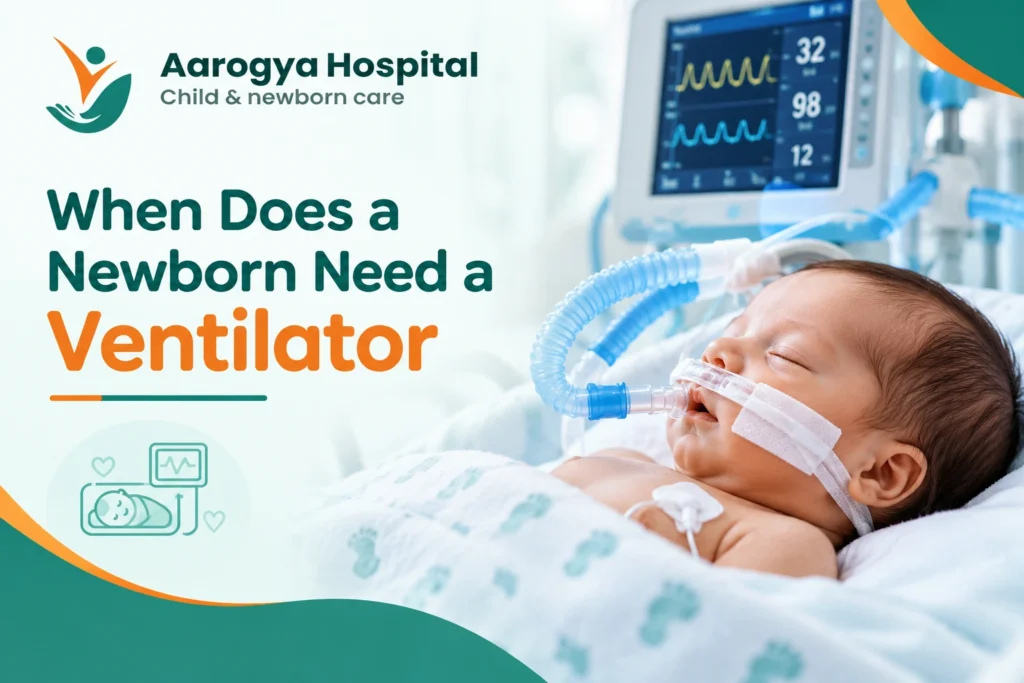
When Does a Newborn Need a Ventilator

Introduction Some newborn babies need help with breathing after birth. Some have mild breathing problems, while others need special medical care. In these cases, doctors may use a ventilator in a Neonatal Intensive Care Unit (NICU). A ventilator helps a baby breathe when the lungs cannot take in enough oxygen or remove enough carbon dioxide. However, not every baby with breathing problems needs a ventilator. Doctors first check the baby’s condition and then choose the right treatment. At Aarogya Hospital, Chandigarh, parents can learn about newborn breathing problems, ventilator support, and the need for early medical care. What Is a Ventilator for Newborn Babies? A ventilator is a machine that helps a baby breathe. It sends air and oxygen into the lungs through a tube placed in the windpipe. Doctors use a ventilator when a baby cannot breathe well enough without help. The type of breathing support depends on the baby’s age, weight, lung growth, and health. Newborns may need different types of breathing support, such as: CPAP or high-flow nasal support: These methods help babies breathe without a tube in the windpipe. Mechanical ventilation: A machine helps the baby breathe through a tube placed in the windpipe. Advanced ventilation: Some babies with serious breathing problems need special breathing support. Doctors choose the best method based on the baby’s needs. When Does a Newborn Need a Ventilator? A newborn may need a ventilator when breathing becomes very difficult. It may also be needed when the baby cannot get enough oxygen or remove enough carbon dioxide. Here are some common reasons why a newborn may need a ventilator. 1. Severe Breathing Problems Some newborns breathe very fast or make grunting sounds. Their chest may also pull inward with each breath. These signs may mean that the baby is struggling to breathe. If the baby does not improve with basic treatment, doctors may give more breathing support. In serious cases, a ventilator may be need. 2. Premature Birth Premature babies are born before their bodies are fully ready. Their lungs may not be fully develop. As a result, they may have trouble breathing on their own. Some premature babies develop a condition called respiratory distress syndrome. This happens when their lungs do not have enough surfactant. Surfactant helps keep the tiny air sacs in the lungs open. Depending on the baby’s condition, treatment may include CPAP, surfactant medicine, or a ventilator. 3. Low Oxygen Levels Newborns need enough oxygen for their brain, heart, and other organs to work well. However, some lung or heart problems can lower oxygen levels. Doctors check the baby’s breathing and oxygen levels. If oxygen support is not enough, the baby may need CPAP or a ventilator. 4. Serious Infections Serious infections, such as neonatal sepsis and pneumonia, can affect a newborn’s breathing. In some cases, the baby may have trouble breathing or become very weak. Doctors may give antibiotics, oxygen, and other treatments. If the baby has severe breathing problems, a ventilator may be needed. 5. Meconium Aspiration Syndrome Before or during birth, some babies may breathe in fluid containing their first stool, called meconium. This can block or harm the airways and make breathing difficult. Mild cases may improve with medical care. However, babies with serious breathing problems may need a ventilator. 6. Lack of Oxygen Around Birth Sometimes, a baby does not get enough oxygen around the time of birth. This can affect the brain and other organs. Some babies may have weak breathing and need urgent medical help. Doctors check the baby’s breathing, blood flow, and overall health before choosing the right treatment. Some babies may also develop a brain condition called hypoxic-ischaemic encephalopathy (HIE). These babies may need special care to reduce the risk of brain injury. 7. Other Serious Health Problems Some babies are born with problems that affect their lungs, heart, or airways. These problems can make breathing difficult. Doctors examine the baby to find the cause. They then decide whether the baby needs a ventilator or another type of breathing support. What Are the Warning Signs of Breathing Problems in Newborns? Parents should watch their baby’s breathing carefully, especially during the first few days after birth. Common warning signs include: Very fast or difficult breathing. Grunting sounds while breathing. Chest pulling inward with each breath. Nostrils widening while breathing. Blue or grey lips, tongue, or skin. Pauses in breathing. Unusual sleepiness or difficulty waking up. Poor feeding along with other signs of illness. Seek emergency medical care if your newborn struggles to breathe, has blue or grey lips, or stops breathing. Do not wait for these signs to improve at home. These signs do not always mean that a ventilator is needed. However, they need urgent medical attention. How Do Doctors Decide If a Newborn Needs a Ventilator? Doctors check the baby’s health before deciding whether a ventilator is need. They also check if the baby improves with basic treatment. The check-up may include: Breathing check: Doctors check how fast the baby breathes and how the chest moves. Oxygen check: A small device called a pulse oximeter checks the oxygen level in the blood. Blood tests: These tests help doctors check oxygen, carbon dioxide, and acid levels in the blood. Chest X-ray: This helps doctors look for some lung problems. Infection tests: Blood tests may help find signs of infection. Treatment check: Doctors see whether the baby improves with oxygen or CPAP. After these checks, doctors choose the right type of breathing support for the baby. How Long Does a Newborn Need Ventilator Support? Every baby is different. Some newborns need a ventilator for a short time. Others may need it for several days or longer. The time depends on the baby’s lung growth, infection, birth age, and the seriousness of the illness. Doctors regularly check the baby’s breathing and oxygen levels. They also watch for signs of recovery. When the baby can breathe better, doctors slowly reduce the ventilator support. This process is weaning. Some babies may then […]

Therapeutic hypothermia for HIE
BLOG

Therapeutic Hypothermia for Birth Asphyxia/HIE: Why Timing Matters

Birth is a special time for every family. However, some babies may not get enough oxygen before, during, or after birth. This can affect their brain and may require urgent medical care. Therapeutic hypothermia is a treatment that helps protect the brain of some newborn babies. These babies may have a brain injury caused by a lack of oxygen. This condition is called Hypoxic-Ischaemic Encephalopathy (HIE). During this treatment, doctors carefully lower the baby’s body temperature. This helps reduce further damage to the brain. Timing is very important. For babies who need this treatment, doctors should ideally start it within the first six hours after birth. In this guide, Aarogya Hospital, Chandigarh, explains newborn cooling therapy, how it works, and why starting treatment early is important. What Is Birth Asphyxia? Birth asphyxia happens when a baby does not get enough oxygen before, during, or shortly after birth. As a result, the baby’s brain and other organs may not get enough oxygen-rich blood. This can happen due to problems during pregnancy, labour, or birth. However, not every baby who does not get enough oxygen during birth develops brain damage. Sometimes, a lack of oxygen can harm a baby’s brain. This can lead to a condition called Hypoxic-Ischaemic Encephalopathy (HIE). What Is Hypoxic-Ischaemic Encephalopathy (HIE)? HIE is a type of brain injury in newborn babies. It happens when the brain does not get enough oxygen and blood flow. HIE can be mild, moderate, or severe. Therefore, doctors need to check the baby as soon as possible. Some possible warning signs include: Difficulty breathing after birth. Weak muscles or a floppy body. Being very sleepy or difficult to wake. Difficulty sucking or feeding. Seizures or unusual body movements. Needing breathing support for a long time after birth. These signs do not always mean the baby has HIE. However, doctors must check the baby quickly, especially if there were problems during birth that caused low oxygen levels. What Is Therapeutic Hypothermia for Newborns? Therapeutic hypothermia is also called newborn cooling therapy or brain cooling treatment for HIE. It helps protect the brain after a baby has suffered from a lack of oxygen. During treatment, doctors use special equipment to gently lower the baby’s body temperature to around 33.5°C. If the baby is suitable for this treatment, cooling usually continues for 72 hours (3 days). After 72 hours, doctors slowly bring the baby’s temperature back to normal. This treatment slows down some of the harmful changes that can damage brain cells after oxygen loss. However, not every newborn needs cooling therapy. A neonatal specialist must first check the baby and decide whether this treatment is suitable. Why Does Timing Matter in Therapeutic Hypothermia? When a baby’s brain does not get enough oxygen, brain cells can become damaged. Some damage may continue even after the baby’s oxygen levels improve. Therapeutic hypothermia slows down some of these harmful changes. However, doctors need to start treatment early for the best chance of benefit. For eligible newborns, treatment should ideally begin within the first six hours after birth. Research shows that cooling therapy can improve survival and lower the risk of major long-term disabilities in selected babies with moderate-to-severe HIE. Here is why early treatment is important. 1. It Helps Protect Brain Cells A lack of oxygen can damage a baby’s brain cells. This damage may continue even after oxygen levels return to normal. Therapeutic hypothermia slows some of these harmful changes. As a result, it may help reduce further brain damage. 2. Early Treatment May Improve the Outcome Research supports starting cooling therapy within the first six hours for eligible newborns. Waiting too long may reduce the benefits. Therefore, doctors need to recognise HIE quickly and decide whether the baby needs treatment. 3. It May Reduce Long-Term Problems HIE can affect a child’s movement, learning, hearing, vision, and development. For eligible babies, therapeutic hypothermia can improve the chances of survival without major disability. However, it cannot prevent every problem or guarantee full recovery. 4. It Helps Doctors Plan Further Treatment Early diagnosis helps doctors check the baby’s breathing, brain activity, and other organs. Doctors can then plan the right care. This may include breathing support, seizure treatment, and brain monitoring. How Does Therapeutic Hypothermia Work? Therapeutic hypothermia involves several steps. Doctors and nurses watch the baby closely throughout the treatment. Step 1: Checking the Baby First, doctors check the baby’s birth history, possible oxygen loss, blood test results, and brain function. These checks help them decide whether the baby needs cooling therapy. Step 2: Cooling the Baby If the baby meets the treatment criteria, doctors use special equipment to lower the baby’s body temperature. For many eligible newborns, the target temperature is around 33.5°C. Step 3: Monitoring the Baby During treatment, doctors and nurses regularly check the baby’s: Body temperature. Heart rate and breathing. Blood pressure. Blood test results. Brain activity and overall health. They also watch for seizures and other problems. Doctors may use EEG or aEEG tests to check brain activity when needed and available. Step 4: Continuing the Treatment Cooling usually continues for 72 hours in eligible newborns. During this time, the medical team provides supportive care and checks the baby’s condition. Step 5: Slowly Warming the Baby After 72 hours, doctors slowly bring the baby’s temperature back to normal. The medical team continues to monitor the baby during this process. Which Newborns May Need Therapeutic Hypothermia? Cooling therapy is generally used for eligible babies born at 36 weeks of pregnancy or later who have moderate-to-severe HIE. Before starting treatment, doctors check: Whether the baby had low oxygen levels around birth. Blood test results and other medical findings. Signs of moderate or severe brain injury. Seizures or unusual brain activity. The baby’s age at birth and overall health. In some cases, doctors may also consider treatment for babies born at 35 weeks. They must carefully assess the risks and possible benefits. Cooling therapy is generally not recommended for babies born before 35 weeks or […]

Premature baby receiving specialised care inside a neonatal intensive care unit (NICU)
BLOG

Premature Baby Care: What Happens in the NICU After Early Birth?

A baby born before 37 weeks of pregnancy is call premature baby. These babies may need extra care because their organs are not fully develop. Therefore, doctors may recommend keeping them in a Neonatal Intensive Care Unit (NICU) for special medical care. An early birth can be stressful and emotional for parents. However, learning about premature baby care can help you feel more prepared. In this guide, we explain what happens in the NICU, how doctors care for premature babies, and what parents can expect during their baby’s hospital stay. What Is a NICU and Why Do Premature Babies Need It? A Neonatal Intensive Care Unit (NICU) is a special hospital unit for newborn babies who need close monitoring and extra medical care. Premature babies may need NICU care for several reasons: Breathing difficulties: Their lungs may not be fully develop, making breathing harder. Low birth weight: They may need extra help with feeding and gaining weight. Temperature control: They may find it difficult to keep their body warm. Feeding problems: They may not yet be strong enough to suck and swallow properly. Risk of infection: Their immune systems are still developing, so they may be more likely to get infections. The care a baby needs depends on how many weeks early they were born, their birth weight, their health, and how well they are growing. What Happens in the NICU After a Premature Baby Is Born? Every premature baby needs different care. Therefore, the NICU team makes a care plan based on the baby’s health and needs. 1. Initial Assessment and Monitoring After birth, doctors check the baby’s breathing, heartbeat, body temperature, and overall health. They may also check the baby’s blood sugar and oxygen levels. Special machines help doctors and nurses keep a close eye on the baby’s health. They can quickly provide extra care if the baby’s condition changes. 2. Support for Breathing Some premature babies need help breathing because their lungs are not fully develop. Depending on the baby’s health, doctors may provide extra oxygen to help them breathe. They may use CPAP, which helps keep the airways open, or a ventilator to support breathing. In some cases, doctors may recommend other advanced breathing treatments. The medical team regularly reviews the baby’s breathing and adjusts support as needed. 3. Keeping the Baby Warm Premature babies have less body fat, so they can lose body heat quickly. Therefore, keeping them warm and maintaining a steady body temperature is an important part of NICU care. Doctors may place the baby in an incubator or under a special warmer to keep them warm. This helps maintain the right body temperature while the baby grows stronger. 4. Feeding and Nutrition Support Some premature babies may not be able to feed from the breast or bottle at first. They may need extra help to get enough nutrition to grow and develop properly. Depending on the baby’s health, doctors may give expressed breast milk through a feeding tube. If the baby cannot get enough milk, they may provide nutrients through a vein for some time. Breast milk is usually encourage when possible because it provides important nutrients and helps protect the baby from infections. The NICU team can guide parents on how to express and store breast milk safely. 5. Preventing and Treating Infections Premature babies have a higher risk of infections. Therefore, the NICU team follows strict hygiene practices and checks babies regularly for signs of illness. If doctors suspect an infection, they may recommend blood tests or other checks. They may also give antibiotics if needed to treat the infection. Parents and visitors should wash or clean their hands properly and follow the NICU’s rules to help protect babies from infections. 6. Monitoring Growth and Development The NICU team regularly checks the baby’s weight, feeding, body temperature, breathing, and other important signs to make sure the baby is doing well. Some babies may need extra health checks depending on how early they were born and their medical condition. These may include eye tests, hearing tests, or brain scans if needed. The aim is to help the baby grow well and find and treat any health problems early. Advanced NICU Care for Premature Babies Some premature babies need special medical care, especially if they are born very early or have serious health problems. Depending on the baby’s needs and available facilities, advanced NICU care may include: Breathing support: Helps babies who have difficulty breathing. Continuous monitoring: Tracks the baby’s vital signs and helps doctors notice changes. aEEG/CFM monitoring: Helps doctors check brain activity in selected babies. Therapeutic hypothermia: Control cooling may be use for eligible newborns with certain types of brain injury cause by a lack of oxygen. Specialist assessment: Neonatologists and other specialists check babies who need extra medical care. Not every premature baby needs these treatments. Doctors decide which tests and treatments are need base on the baby’s health. How Long Does a Premature Baby Stay in the NICU? Every premature baby needs a different length of stay in the NICU. It depends on how early the baby was born, their birth weight, breathing, feeding, and overall health. Some babies need to stay in the NICU for only a short time, while others may need care for several weeks or longer. Before discharge, the medical team generally checks whether the baby can: Maintain a stable body temperature. Breathe safely without the level of support they no longer need. Feed adequately and show appropriate growth. Remain medically stable with a suitable follow-up plan. Every baby grows and improves at their own pace. The NICU team will explain when your baby can go home and how to care for them safely. How Can Parents Support Their Premature Baby in the NICU? Parents play an important role in their baby’s care. The NICU may feel new and unfamiliar, but small steps can help parents stay involved in their baby’s care. Ask questions: Speak with the doctors and nurses about your baby’s […]

Level III NICU in Chandigarh providing advanced care for premature and critically ill newborns
BLOG

What Is a Level III NICU? A Parent’s Guide

When a newborn needs special medical care, parents may hear terms like “Level III NICU” and wonder what they mean. A Level III NICU provides advanced care for premature, very sick, or medically complex newborns. If you are looking for a Level III NICU in Chandigarh, knowing what care and services are available can help you make the right decision for your baby during a difficult time. What Is a Level III NICU? A Level III NICU is a special hospital unit that cares for newborns who need close monitoring and intensive treatment. Some babies may be born very early, while others may have breathing problems, infections, low birth weight, or other health problems that need special newborn care. A Level III NICU usually offers: Specialised neonatal doctors and trained nursing staff Continuous monitoring of newborns Advanced breathing support Equipment designed for premature and critically ill babies Care for newborns with serious infections or complications Access to specialist investigations and treatments Support for babies who need longer intensive care However, services vary between hospitals. Therefore, parents should ask the hospital team exactly what level of neonatal care is available. Which Babies May Need a Level III NICU? Not every newborn needs intensive care. Doctors recommend NICU care when a baby needs close monitoring or special treatment. A baby may need Level III NICU care because of: Very premature birth Very low birth weight Breathing problems Severe infections Difficulty maintaining oxygen levels Low blood sugar or other metabolic problems Complications around birth Need for advanced respiratory support Certain congenital conditions Problems that require specialist neonatal monitoring Because every baby is different, doctors assess each one individually and decide which level of care is appropriate. What Care Does a Level III NICU Provide? A Level III NICU offers several forms of advanced newborn care. 1. Breathing Support Some premature or sick newborns may have trouble breathing on their own. Therefore, the NICU may provide breathing support based on the baby’s needs. This may include oxygen, non-invasive breathing support, or a ventilator when needed. 2. Continuous Monitoring The NICU team closely tracks a baby’s: Heart rate Breathing Oxygen levels Temperature Blood pressure Feeding and fluid balance This constant monitoring helps doctors and nurses spot changes quickly and act without delay. 3. Care for Premature Babies Premature babies may have problems with breathing, feeding, keeping warm, and fighting infections. Therefore, a Level III NICU provides special care while the baby’s organs continue to grow and develop. 4. Care for Low-Birth-Weight Babies Babies with low birth weight may need extra help with feeding, keeping warm, breathing, and preventing infections. During their stay, the NICU team closely checks their growth, health, and overall condition. 5. Treatment for Newborn Infections Newborns can become very sick because of infections. In these cases, the NICU team closely monitors the baby, performs the needed tests, provides supportive care, and gives antibiotics when needed. 6. Feeding Support Some premature or sick babies may not be able to feed normally at first. In such cases, the neonatal team provides the right feeding support and closely monitors the baby’s nutrition and growth. What Makes Level III NICU Care Different? The main difference is the higher level of specialised care. A Level III NICU usually has advanced equipment, trained neonatal staff, and the ability to care for very sick newborns. However, the facilities and specialist services can vary between hospitals. Therefore, parents should ask about the NICU facilities and services before choosing a hospital. How Long Does a Baby Stay in a Level III NICU? There is no fixed time for a baby to stay in the NICU. Some babies may need care for a few days, while premature or seriously ill babies may need care for several weeks or longer. The length of stay depends on: Gestational age Birth weight Medical condition Breathing needs Feeding ability Growth and weight gain Response to treatment During this time, doctors regularly check the baby’s progress and talk with the parents about the next steps in care. What Should Parents Ask About a Level III NICU? If your baby may need intensive neonatal care, consider asking the hospital team: What level of NICU care does the hospital provide? Which breathing support options are available? Is a neonatologist available? How are premature and low-birth-weight babies managed? What monitoring is available? How are parents involve in their baby’s care? What happens if the baby needs a higher level of specialist treatment? Is newborn referral or transfer support available? Asking these questions early can help you understand the care and services available before and during your baby’s NICU stay. When Should Parents Seek Urgent Newborn Care? Newborns can become unwell very quickly. Seek urgent medical help if your baby: Has difficulty breathing Looks blue or unusually pale Is not feeding properly Is unusually sleepy or hard to wake Vomits repeatedly Has a fever or unusually low temperature Has seizures Has severe pauses in breathing Shows signs of serious infection If your newborn looks very unwell, do not wait at home. Seek medical help immediately. Level III NICU in Chandigarh When choosing a Level III NICU in Chandigarh, check the hospital’s NICU facilities, medical team, monitoring equipment, emergency care, and referral support. Aarogya Hospital Chandigarh provides specialised newborn and NICU care for babies who need close monitoring and medical support. Parents can speak with the neonatal team to understand the care their baby needs. The right level of care depends on each baby’s condition, so always follow the advice of your baby’s doctor or neonatologist. Conclusion A Level III NICU provides advanced care for premature, seriously ill, or medically complex newborns. It offers close monitoring, breathing support, feeding help, infection treatment, and other specialised care based on each baby’s needs. If your newborn needs NICU care, talk to the medical team about your baby’s condition, available treatments, and the level of care needed. For advanced newborn care in Chandigarh, Aarogya Hospital can help families understand their baby’s care and treatment […]

Aarogya Support 1

Aarogya Hospital Chandigarh

Doctor Avatar
Welcome to Aarogya Hospital (Near PGI Chandigarh) 🏥
I'm your assistant here to help with your medical enquiry.
Doctor Avatar
Which of our services or departments are you interested in?