Ayushman Bharat empanelled Chandigarh

Premature Baby Care

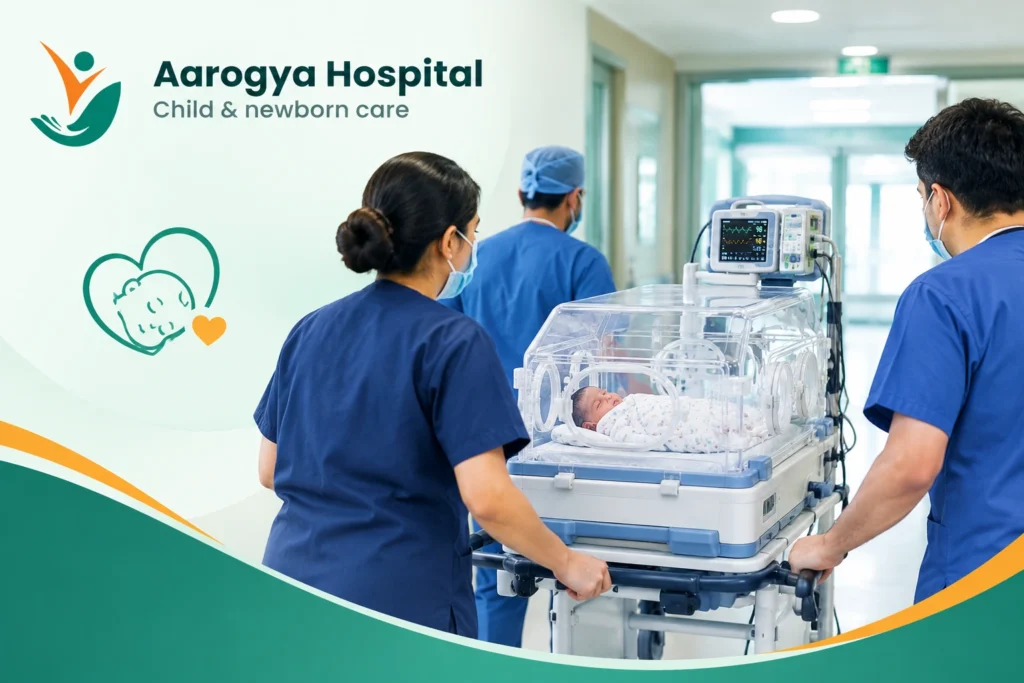
Safe transfer of a sick newborn to a NICU at Aarogya Hospital Chandigarh
BLOG

How to Transfer a Sick Newborn Safely Between Hospitals

How to Transfer a Sick Newborn Safely Between Hospitals Sometimes, a newborn baby needs special medical care. The current hospital may not have the right treatment or equipment. In this case, doctors may suggest moving the baby to another hospital with a Neonatal Intensive Care Unit (NICU). However, moving a sick newborn needs careful planning. The baby needs trained medical staff, proper equipment, and safe transport. Premature babies and babies with low birth weight need extra care. Babies with breathing problems may also need special support during travel. Therefore, doctors must check the baby’s health before the journey. Aarogya Hospital, Chandigarh, near PGI Chandigarh, provides families with a place to ask about newborn care and NICU services. Families and referring doctors can contact the hospital to discuss the baby’s needs and available care. When Does a Newborn Need to Move to Another Hospital? Doctors may suggest moving a baby when the current hospital cannot provide the care the baby needs. Here are some common reasons: Premature birth: Babies born too early may need help with breathing, feeding, and staying warm. Low birth weight: Small babies may need help with feeding, body temperature, and blood sugar. Breathing problems: Some babies need oxygen or help from a breathing machine. Serious infections: Babies with severe infections may need antibiotics and close medical care. Problems during birth: Some babies need special care after a difficult birth. Severe newborn jaundice: High bilirubin levels may need quick treatment. Brain problems: Babies who do not get enough oxygen around birth may need special treatment and close monitoring. The doctor will decide whether the baby needs to move to another hospital. This decision depends on the baby’s health and the care available at the current hospital. How to Transfer a Sick Newborn Safely Between Hospitals A sick newborn needs special care during travel. Doctors must prepare the baby, arrange safe transport, and check the baby’s health throughout the journey. 1. Check the Baby Before Travel First, doctors check the baby’s breathing, heartbeat, body temperature, and general health. They may also check blood sugar and blood flow. If the baby has breathing problems, doctors may provide breathing support before travel. They may also treat low blood sugar or other serious problems. Doctors should make the baby as stable as possible before the journey. However, they should not delay urgent treatment when waiting could put the baby at risk. 2. Arrange Trained Medical Staff A sick newborn may need trained medical staff during the journey. Depending on the baby’s condition, the team may include a doctor or a nurse with newborn care training. The team must know how to care for the baby and respond to emergencies. The current hospital should also speak with the new hospital before the journey. This helps the receiving team prepare for the baby’s arrival. 3. Use the Right Medical Equipment Some babies need special equipment during travel. The medical team will choose the equipment based on the baby’s needs. This equipment may include: Transport incubator: Keeps the baby warm during travel. Oxygen supply: Gives extra oxygen when needed. Breathing support: Helps the baby breathe when needed. Monitoring devices: Check the baby’s heartbeat and oxygen levels. Infusion pumps: Give fluids or medicines at the right rate. Emergency equipment: Helps medical staff respond to sudden problems. Before leaving, the team checks all the equipment. They also make sure there is enough oxygen, battery power, and medical supplies for the journey. 4. Keep the Baby Warm Newborn babies can lose body heat quickly. Premature babies and babies with low birth weight are at greater risk. Therefore, the medical team must keep the baby warm during travel. A transport incubator or another suitable warming system can help. The team should also check the baby’s temperature during the journey. 5. Check the Baby During Travel The medical team must watch the baby’s health throughout the journey. They may check: Heartbeat and breathing Oxygen levels Body temperature Blood sugar, when needed Blood pressure, when needed If the baby’s condition changes, the team must provide the right care quickly. 6. Share the Baby’s Medical Reports Before the transfer, the current hospital should share the baby’s medical records with the new hospital. These records may include: Birth details and weeks of pregnancy at birth Birth weight and current weight The baby’s current health problems Medicines and treatment already given Blood test results and other reports Oxygen needs and breathing support Problems during birth These details help the new medical team understand the baby’s condition. They also help doctors continue treatment without unnecessary delays. 7. Choose the Right Hospital The new hospital should have the right medical team and equipment for the baby’s needs. For example, a baby with serious breathing problems may need advanced NICU care. A premature baby may need help with feeding, staying warm, and gaining weight. Parents should speak with the treating doctor before the transfer. They should also ask about bed availability, treatment options, and transport arrangements. What Should Parents Do Before the Transfer? Parents may feel worried when doctors suggest moving their baby to another hospital. However, a few simple steps can help them prepare. Parents should: Ask why the baby needs to move. Find out what treatment the baby needs. Confirm the name of the new hospital. Ask who will care for the baby during travel. Keep medical reports and referral papers ready. Follow the doctor’s instructions. Most importantly, do not delay an urgent transfer. Never take a seriously ill newborn in a private car without medical advice and a safe travel plan. Why Is NICU Care Important During a Newborn Transfer? A Neonatal Intensive Care Unit (NICU) provides special care for newborn babies who need extra medical support. Depending on the baby’s condition and the hospital’s facilities, NICU care may include: Help with breathing Support to keep the baby warm Checks of heartbeat and oxygen levels Treatment for infections Help with feeding and fluids Care for premature babies Care for babies with low birth […]
ROP screening for premature babies and retinal eye care
BLOG

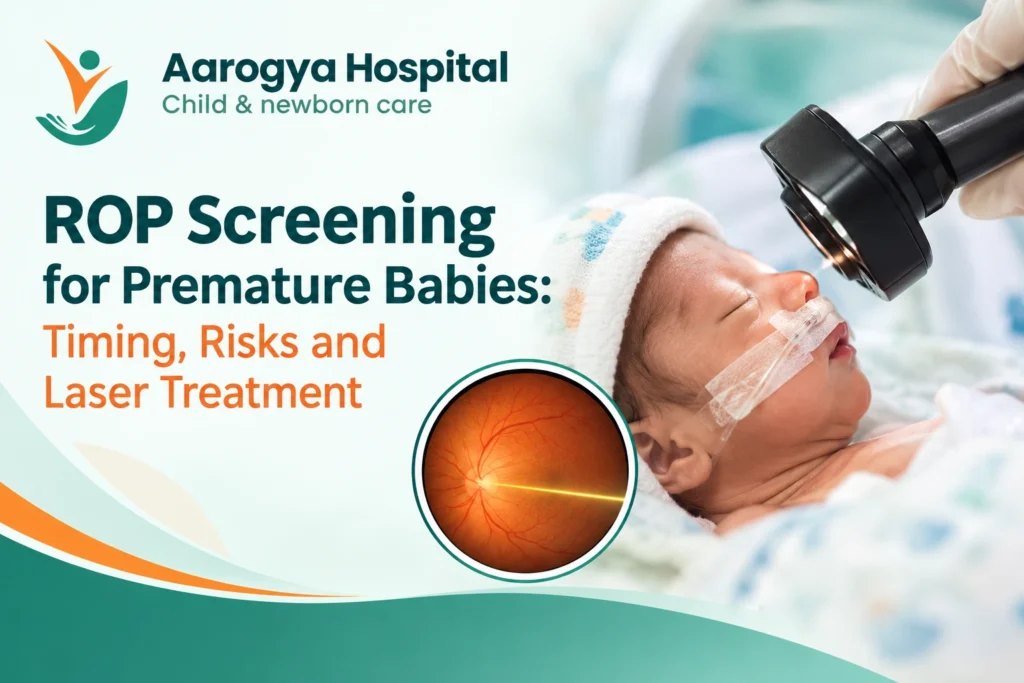
ROP Screening for Premature Babies: Timing, Risks and Laser Treatment

ROP Screening for Premature Babies: Timing, Risks and Laser Treatment Babies born too early need special care to stay healthy and grow well. ROP screening for premature babies is an important eye test. It helps doctors find eye problems early and protect the baby’s eyesight. Retinopathy of Prematurity (ROP) is an eye problem that can affect babies born too early, especially those with low birth weight. In some babies, it gets better on its own. However, severe ROP can damage the retina (the light-sensitive part of the eye) and cause permanent vision loss if it is not treated on time. Therefore, early screening and proper treatment are important for your baby’s eye health. At Aarogya Hospital, Chandigarh, parents can learn about premature baby care and the importance of timely eye screening. What Is Retinopathy of Prematurity (ROP)? Retinopathy of Prematurity, also called ROP, is an eye condition that affects the growth of blood vessels in a premature baby’s eye. The retina is the part at the back of the eye that helps us see. It sends visual signals to the brain. In babies born too early, the blood vessels in the retina may not grow properly. This can cause abnormal blood vessels to grow and damage the retina. ROP often has no clear signs in the early stages. This means parents may not notice any eye problems. So, babies at risk of ROP need an eye check-up by a trained eye doctor, even if their eyes look normal. Why Do Premature Babies Need ROP Screening? ROP screening helps doctors check whether the blood vessels in the baby’s retina are growing normally. This test is important because severe ROP can develop without visible signs. Early screening helps doctors: Find ROP before it causes serious eye damage. Check how the blood vessels in the retina are growing. Find babies who may need laser treatment or other care. Lower the risk of permanent vision loss. Decide when the baby needs another eye check-up. Most importantly, regular screening helps doctors find problems and treat them at the right time. When Should ROP Screening Be Done? The right time for ROP screening depends on when the baby was born, the baby’s birth weight, and their health. Under Indian screening guidelines, the following babies generally need ROP screening: Babies born at or before 34 weeks of pregnancy. Babies with a birth weight of 2,000 grams or less. Other premature babies who have additional risk factors. The first eye check-up is usually recommended within 25–30 days after birth. However, some very premature babies or babies with very low birth weight may need an eye check-up earlier, around 2–3 weeks after birth. The baby’s doctor and eye specialist will decide the best time for the first examination. Important: Do not delay ROP screening after your baby leaves the NICU. Before discharge or transfer to another hospital, confirm the screening date and follow-up plan with the medical team. Which Babies Have a Higher Risk of ROP? ROP mainly affects babies born too early. However, some babies have a higher risk of developing severe ROP. 1. Low Birth Weight Babies born with very low birth weight have a higher risk of ROP. This is because the blood vessels in their eyes may not be fully developed. 2. Very Early Birth The earlier a baby is born, the less time their retinal blood vessels have to grow. Therefore, very premature babies have a higher risk of ROP. 3. Oxygen Support Some premature babies need extra oxygen to help them breathe. Doctors closely monitor the baby’s oxygen levels because too little or too much oxygen can be harmful. Keeping oxygen levels within the recommended range helps lower the risk of complications. Parents should never change their baby’s oxygen settings without medical advice. 4. Infection and Other Health Problems Some health problems can increase the risk of severe ROP. These include infections, breathing difficulties, and other problems during newborn care. Therefore, premature babies need close medical care and regular check-ups. 5. Poor Weight Gain Babies who do not gain enough weight after birth may have a higher risk of ROP. Proper feeding, good nutrition, and regular weight checks help support healthy growth. How Is ROP Screening Done? A trained eye specialist examines the baby’s retina during ROP screening. The examination usually includes these steps: Preparing the baby: The medical team checks the baby’s condition before the test. Using eye drops: Special drops make the pupils larger. This helps the doctor see the retina clearly. Checking the eyes: The doctor uses special equipment to check the blood vessels in the retina. Planning the next step: The doctor decides whether the baby needs another eye check-up or treatment. The examination may cause some temporary discomfort. However, the medical team takes steps to keep the baby comfortable and monitor their condition. ROP screening is not always a one-time test. Some babies need several eye check-ups until the blood vessels in their eyes develop properly or the condition gets better. What Is Laser Treatment for ROP? Laser treatment is use when ROP becomes severe and may harm the baby’s eyesight. During the treatment, the eye specialist uses a laser on specific areas of the retina. This helps reduce abnormal blood vessel growth and lowers the risk of further damage. Laser treatment is generally recommend for severe ROP that threatens vision. However, not every baby with ROP needs laser treatment. Some babies have mild ROP that improves without treatment. The eye specialist will decide the best treatment after checking the stage and severity of ROP. What Happens After Laser Treatment? After laser treatment, the baby needs regular eye check-ups. These visits help the doctor check whether the treatment is working and whether more treatment is need. Some babies may need another treatment. In certain cases, the doctor may recommend injections into the eye. Advanced ROP may need surgery. Long-term eye check-ups are also important. They help doctors monitor the baby’s eyesight and find problems such as squint […]

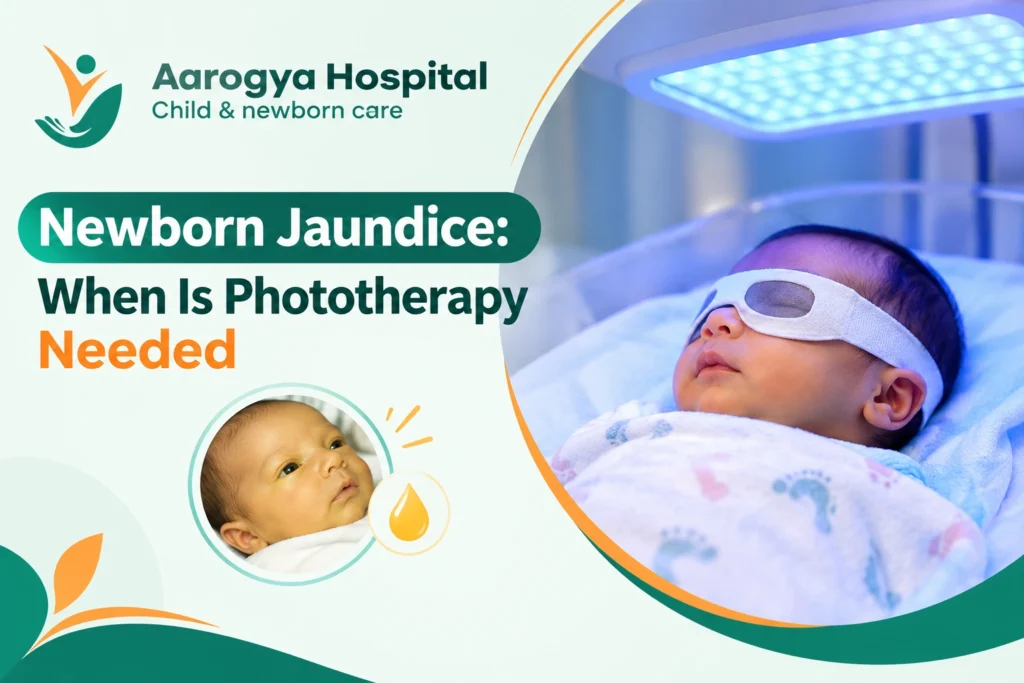
Phototherapy treatment for newborn jaundice at a hospital
BLOG

Newborn Jaundice When Is Phototherapy Needed

Newborn Jaundice: When Is Phototherapy Needed? Newborn jaundice is common in babies. It makes a baby’s skin and eyes look yellow. This happens when bilirubin builds up in the blood. Bilirubin is a yellow substance that forms when red blood cells break down. A newborn’s liver is still developing. So, it may not remove bilirubin from the blood fast enough. Because of this, the baby’s skin and eyes may turn yellow. Mild jaundice often goes away on its own. However, some babies need medical care. One common treatment is phototherapy. It uses a special light to lower bilirubin levels in the baby’s blood. At Aarogya Hospital, Chandigarh, parents can learn about newborn jaundice, its warning signs, and when their baby needs medical care. What Causes Newborn Jaundice? Newborn jaundice happens when bilirubin builds up in a baby’s blood. This is often because the baby’s liver is still developing and cannot remove bilirubin quickly enough. Here are some common causes: Premature birth: Babies born early may have a liver that is not fully developed. Feeding problems: When a baby does not get enough milk, bilirubin may leave the body more slowly. Blood group differences: A difference between the mother’s and baby’s blood groups may cause red blood cells to break down faster. Bruising during birth: Bruising can increase bilirubin as the body breaks down extra blood cells. Health problems: Certain infections and blood disorders can raise bilirubin levels. Therefore, regular check-ups are important, especially during the first few days after birth. What Is Phototherapy for Newborn Jaundice? Phototherapy is a treatment that uses a special blue light to lower bilirubin levels in a baby’s body. The light changes bilirubin into a form that the body can remove more easily. The baby can then pass it through urine and stools. During treatment, the baby usually lies in a cot under a special light. Sometimes, doctors use a special light pad or blanket. The baby’s eyes are covered for protection when needed. The medical team checks the baby’s temperature, feeding, and fluid levels. Doctors also do blood tests again to check if bilirubin levels are going down. Phototherapy is generally safe when given under medical care. When Is Phototherapy Needed for Newborn Jaundice? Not every baby with jaundice needs phototherapy. Doctors check the baby’s age, bilirubin level, and overall health before deciding if treatment is needed. Phototherapy may be needed in the following situations. 1. When Bilirubin Levels Are Too High Doctors may check bilirubin through a skin test or a blood test. If the level reaches the treatment limit for the baby’s age and health, the doctor may recommend phototherapy. 2. When Jaundice Starts Within the First 24 Hours If your baby’s skin or eyes turn yellow during the first 24 hours after birth, seek urgent medical care. If the baby’s skin turns yellow too early, it may be a sign of another health problem. Doctors may do tests to find the cause and choose the right treatment. 3. When a Baby Is Born Too Early Premature babies have a higher risk of serious jaundice because their livers are not fully developed yet. Because of this, doctors may start treatment even when bilirubin levels are lower in some premature babies. The decision depends on the baby’s age, health, and other risks. 4. When Bilirubin Levels Rise Quickly Sometimes, bilirubin levels rise very quickly. This may happen when red blood cells break down too fast or when the baby has another health problem. Doctors may do blood tests again to check bilirubin levels. If needed, they may use phototherapy to lower these levels. 5. When a Baby Has Other Health Problems Some infections and blood disorders can increase the risk of complications from jaundice. In these cases, doctors may start treatment even when bilirubin levels are lower. This depends on the baby’s health and other risk factors. Important: The treatment limit is different for every baby. Doctors consider the baby’s age in hours, weeks of pregnancy at birth, bilirubin level, and other health risks before starting phototherapy. What Happens During Phototherapy? Parents may feel worried when their baby needs treatment. However, phototherapy is a common way to treat newborn jaundice. Here is what happens during treatment: Bilirubin test: The doctor checks the baby’s bilirubin level. Special light: The baby receives treatment under a special medical light. Regular checks: The team checks the baby’s temperature and fluid levels. Feeding support: The baby continues breastfeeding or receives other suitable feeds as advised. Follow-up tests: Doctors repeat bilirubin tests to check if the treatment is working. The treatment time varies from baby to baby. Some babies need only a few hours, while others may need a day or longer. Warning Signs of Newborn Jaundice Parents Should Know Parents should watch their baby closely during the first few days after birth. Contact a healthcare professional promptly if you notice: Yellow skin or eyes. Yellowing that spreads or becomes darker. Poor feeding or refusal to drink milk. Unusual sleepiness or difficulty waking the baby. Dark urine or pale, white stools. Fewer wet nappies than expected. Some signs need emergency care. Seek emergency medical help if your baby is difficult to wake, has trouble breathing, develops unusual jerking movements, becomes very floppy or stiff, or has an unusually high or low temperature. Jaundice that starts within the first 24 hours also needs urgent medical attention. Do not wait for the yellow colour to become severe before seeking help. Can Newborn Jaundice Be Managed at Home? Mild jaundice may go away without treatment. However, a doctor should check your baby and decide whether treatment or repeat tests are needed. You can support your baby’s care by following these steps: Feed your baby regularly as advised by a healthcare professional. Ask for help if your baby has trouble feeding. Attend all recommended check-ups and bilirubin tests. Keep track of feeding, wet nappies, and stools. Follow the doctor’s advice about treatment and follow-up visits. However, do not use direct sunlight to […]

Low birth weight baby care
BLOG

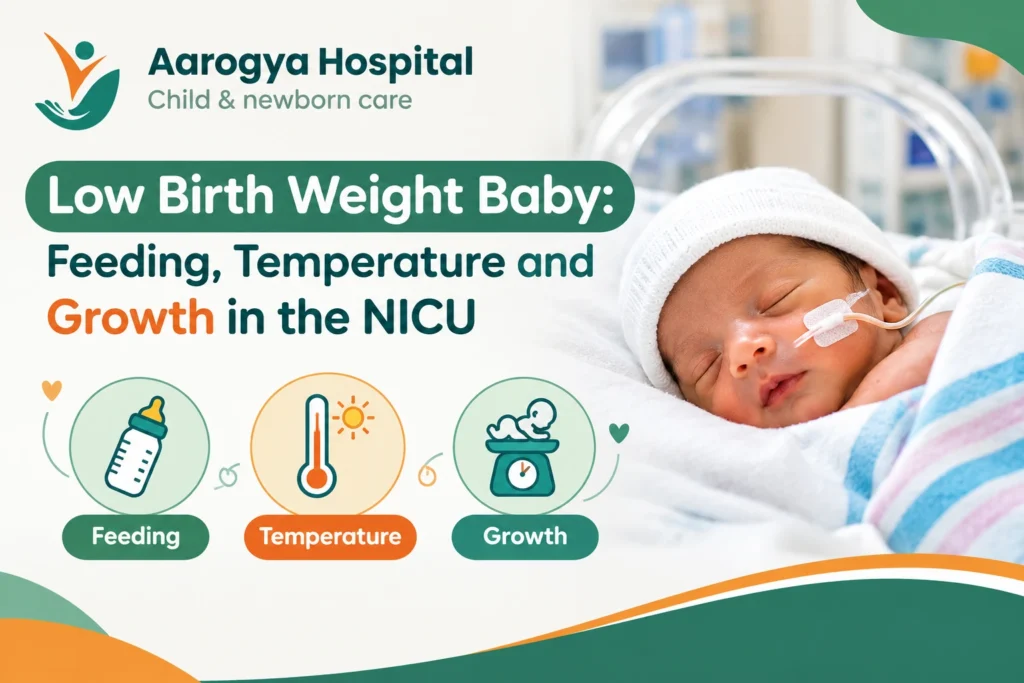
Low Birth Weight Baby: Feeding, Temperature and Growth in the NICU

Low Birth Weight Baby: Feeding, Temperature and Growth in the NICU A low birth weight baby needs extra care to grow and stay healthy. These babies may need help with feeding, keeping warm, and gaining weight. Therefore, some babies need care in a Neonatal Intensive Care Unit (NICU). At Aarogya Hospital in Chandigarh, doctors check each baby’s health, feeding, body temperature, and growth. The care plan depends on the baby’s weight at birth, weeks of pregnancy, and medical needs. What Is a Low Birth Weight Baby? A low birth weight baby is a newborn who weighs less than 2,500 grams (2.5 kg) at birth. This applies even if the baby is born at full term. There are several reasons why a baby may have a low birth weight. For example, the baby may be born early or may not grow well inside the womb. Common causes include: Birth before 37 weeks of pregnancy Slow growth inside the womb Problems with the placenta Certain health problems in the mother Pregnancy with twins or triplets However, not every low birth weight baby needs NICU care. Doctors check the baby’s breathing, feeding, temperature, blood sugar, and overall health before deciding on the right care. Why Does a Low Birth Weight Baby Need NICU Care? Low birth weight babies may need more time to adjust to life outside the womb. They may find it difficult to stay warm, feed properly, or maintain normal blood sugar levels. Therefore, doctors may recommend NICU care if the baby needs extra monitoring or treatment. NICU care may include: Checking breathing and heart rate Keeping the baby warm Helping with breast milk feeding Checking blood sugar levels Monitoring weight gain and growth Finding and treating health problems Some babies need only a short period of monitoring. Others may need more specialised care, depending on their health. 1. Feeding a Low Birth Weight Baby in the NICU Feeding is an important part of caring for a low birth weight baby. Proper nutrition helps the baby grow, develop, and recover. However, some babies may be too small or weak to breastfeed properly. This is more common in babies born early. Breast Milk for Low Birth Weight Babies Mother’s breast milk is usually the preferred food for newborns, including premature and low birth weight babies. It provides important nutrients that help the baby grow. It also contains protective factors that help the baby fight infections. If the baby cannot breastfeed directly, the mother can express her breast milk. The NICU team will decide how to feed the baby safely. Feeding Methods in the NICU The feeding method depends on the baby’s age, health, and ability to feed. Common feeding methods include: Direct breastfeeding: The baby feeds directly from the mother’s breast when they can suck, swallow, and breathe safely. Expressed breast milk: The baby receives the mother’s milk without feeding directly from the breast. Tube feeding: A small tube carries milk into the baby’s stomach when they cannot feed safely by mouth. Nutrition through a vein: In some cases, nutrients are give through a vein when milk feeding is not enough or is not yet possible. Some premature babies also need extra nutrients to support healthy growth. Doctors may add special nutrients to breast milk when needed. How Often Should a Low Birth Weight Baby Be Fed? Feeding times depend on the baby’s weight, age, health, and feeding method. Some babies need small feeds more often. Others may need feeding through a tube until they can feed by mouth. Therefore, parents should follow the feeding plan given by the NICU team. Every baby has different feeding needs. 2. Keeping a Low Birth Weight Baby Warm in the NICU Low birth weight babies can lose body heat quickly. This is because they have less body fat and may find it difficult to control their body temperature. Therefore, keeping the baby warm is an important part of NICU care. Why Is Keeping the Baby Warm Important? A baby’s body uses energy to stay warm. If the baby becomes too cold, the body uses more energy and oxygen to produce heat. As a result, being too cold can affect blood sugar, breathing, and overall health. Keeping the baby warm helps save energy for growth and recovery. How Do Doctors Keep Babies Warm in the NICU? Doctors and nurses use different methods to keep babies warm, including: Incubators: These provide a warm, controlled space for the baby. Radiant warmers: These keep the baby warm while doctors provide treatment. Temperature checks: Nurses check the baby’s temperature regularly and adjust care when needed. Kangaroo mother care: This involves placing the baby against a parent’s bare chest for skin-to-skin contact. It can help keep the baby warm and support breastfeeding when the baby is stable enough. The NICU team checks the baby’s temperature regularly to make sure it stays within the recommended range. Parents should never use heating pads or hot water bottles to warm a newborn without medical advice. 3. Monitoring Growth and Weight Gain in the NICU Weight gain helps doctors understand how well a low birth weight baby is growing. However, weight is not the only thing they check. Doctors also measure the baby’s length and head size. They check feeding, hydration, and overall health, too. How Do Doctors Check Weight Gain? The NICU team weighs the baby regularly. How often they do this depends on the baby’s condition and the hospital’s care plan. Some weight loss during the first few days after birth can be normal. However, low birth weight and premature babies need careful monitoring. As feeding improves, doctors check whether the baby is gaining enough weight for their age and health needs. What Helps a Low Birth Weight Baby Gain Weight? Several things help a baby grow well: Enough breast milk or prescribed nutrition Feeding at the recommended times Keeping the baby at a stable temperature Treating infections and other health problems Regular weight and growth checks Support for breastfeeding and expressing […]

Newborn jaundice warning signs and yellowing of a baby's skin
BLOG

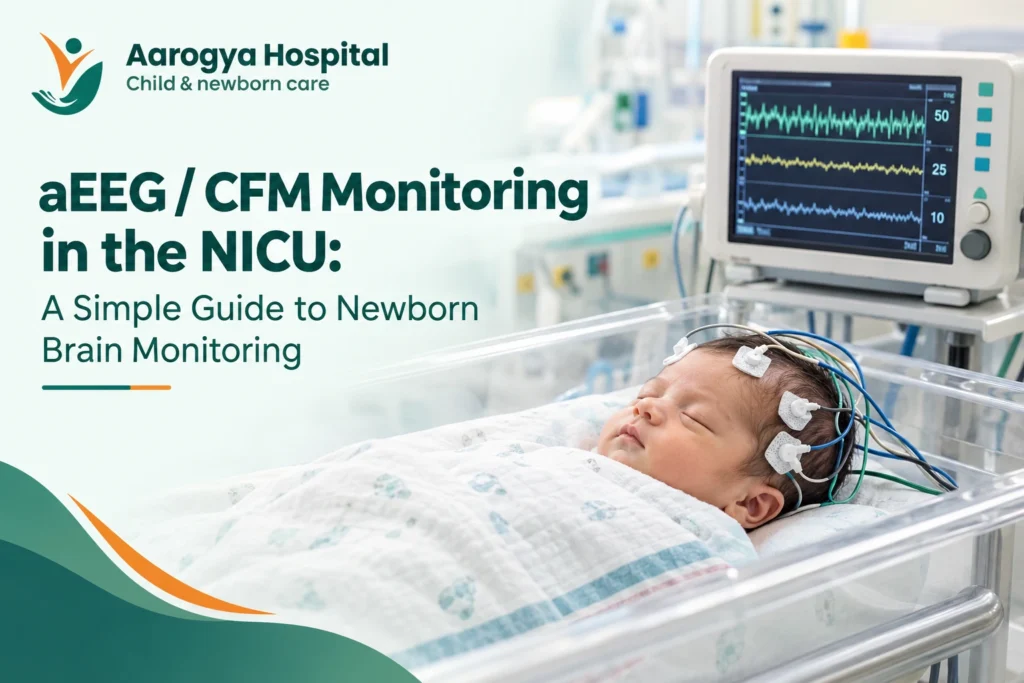
aEEG / CFM Monitoring in the NICU

aEEG / CFM Monitoring in the NICU: A Simple Guide to Newborn Brain Monitoring When a newborn baby needs special medical care, doctors check more than breathing, heart rate, and oxygen levels. They may also need to check the baby’s brain activity. This is especially important for premature babies and babies who had problems during birth. aEEG / CFM monitoring in the NICU helps doctors check a baby’s brain activity over time. It can help them find signs of possible seizures and changes in brain activity. At Aarogya Hospital, Chandigarh, parents can contact the medical team to learn about newborn care and available monitoring facilities. Please confirm whether aEEG/CFM monitoring is available at the hospital. In this guide, we explain what aEEG/CFM monitoring is, why doctors use it, and what parents should know. What Is aEEG / CFM Monitoring in the NICU? aEEG stands for amplitude-integrated electroencephalography. CFM stands for cerebral function monitoring. Both terms refer to a method of checking a baby’s brain activity. During this test, trained healthcare staff place small sensors on the baby’s head. These sensors pick up electrical signals from the brain. A monitor then shows the signals as a simple graph. A regular monitor checks the baby’s heart rate and oxygen levels. In comparison, aEEG/CFM helps doctors check brain activity. Doctors study the graph to look for unusual patterns. However, this test cannot show everything about the baby’s brain. Why Is Brain Monitoring Important for Newborn Babies? A newborn baby’s brain is still growing and developing. Therefore, some health problems can affect how the brain works. Some babies may also have seizures without clear body movements. Brain monitoring can help doctors look for signs of these seizures. Doctors may suggest brain monitoring for babies who have: Low oxygen during birth: Low oxygen or blood flow may affect the baby’s brain. Hypoxic-ischaemic encephalopathy (HIE): This condition happens when the brain does not get enough oxygen or blood flow. Possible seizures: Unusual movements or unexplained episodes may need further checks. Premature birth: Some premature babies need extra monitoring because their brains are still developing. Serious infections: Some infections can affect brain activity. Other brain-related problems: Doctors may suggest monitoring if they have concerns about the baby’s brain function. The need for monitoring depends on the baby’s condition and the doctor’s advice. How Does aEEG / CFM Monitoring Work? aEEG/CFM monitoring does not require surgery. It uses small sensors placed on the baby’s head to record brain activity. The test usually involves these steps. 1. Placing the Sensors A trained healthcare professional places small sensors on certain areas of the baby’s head. These sensors pick up electrical signals from the brain. 2. Connecting the Monitor The sensors connect to a monitoring machine. The machine processes the signals and displays a simple graph. 3. Recording Brain Activity The monitor records brain activity over time. This helps doctors notice changes that may not be seen during a short examination. 4. Checking the Results Doctors study the graph along with the baby’s symptoms, medical history, and other test results. If needed, they may suggest a conventional EEG or other tests to check the brain in more detail. Important: aEEG/CFM only helps doctors monitor brain activity. It does not treat the baby’s condition. What Can aEEG / CFM Monitoring Detect? aEEG/CFM helps doctors look at patterns of brain activity. These patterns can provide useful information about the baby’s health. 1. Possible Seizures Some newborn babies have seizures without shaking or jerking movements. aEEG/CFM may help doctors find unusual patterns that could be signs of seizures. However, this test can miss some seizures. It can also show patterns that look like seizures but are not. Therefore, doctors may need a conventional EEG to check the results more closely. 2. Patterns of Brain Activity The graph shows electrical activity in the baby’s brain. Doctors study these patterns while considering the baby’s age, health, medicines, and other test results. 3. Changes in Brain Activity Changes in the graph may alert doctors to a possible problem. For babies with HIE, the results can help doctors follow brain activity over time. However, this test cannot show the full extent of brain injury. It also cannot predict a child’s future development with complete certainty. aEEG / CFM vs Conventional EEG: What Is the Difference? Both tests record electrical activity in the brain. However, they show different levels of detail. Feature aEEG / CFM Conventional EEG Display Shows a simple graph Shows more detailed brain signals Monitoring Useful for checking brain activity over time Provides a closer look at brain activity Seizure checks Helps find possible signs of seizures Usually provides a more detailed seizure check Main use Helps doctors follow brain activity Helps doctors study unusual brain activity in detail Doctors may use one or both tests, depending on the baby’s condition. Is aEEG / CFM Monitoring Safe for Newborns? aEEG/CFM monitoring is generally safe and does not require surgery. The sensors pick up electrical signals from the brain. They do not send electrical signals into the baby’s brain. Healthcare staff place the sensors on the baby’s head and check the baby during monitoring. However, premature babies may have very delicate skin. Therefore, staff need to take extra care when placing the sensors. The medical team will choose the right monitoring method for the baby. Does aEEG / CFM Monitoring Mean My Baby Has Brain Damage? No. Being advised to have aEEG/CFM monitoring does not automatically mean your baby has brain damage. Doctors may suggest this test to check for possible seizures or follow brain activity after a difficult birth. If the results look unusual, doctors may suggest more tests to understand the cause. Parents should discuss the results with their baby’s doctor. A monitor reading alone cannot confirm brain damage. What Happens If the aEEG / CFM Results Are Abnormal? An unusual result does not always mean the baby has permanent brain damage. The results may be affected by the baby’s health, age, medicines, or […]

Newborn breathing support with CPAP, HFNC and ventilator care in the NICU.
BLOG

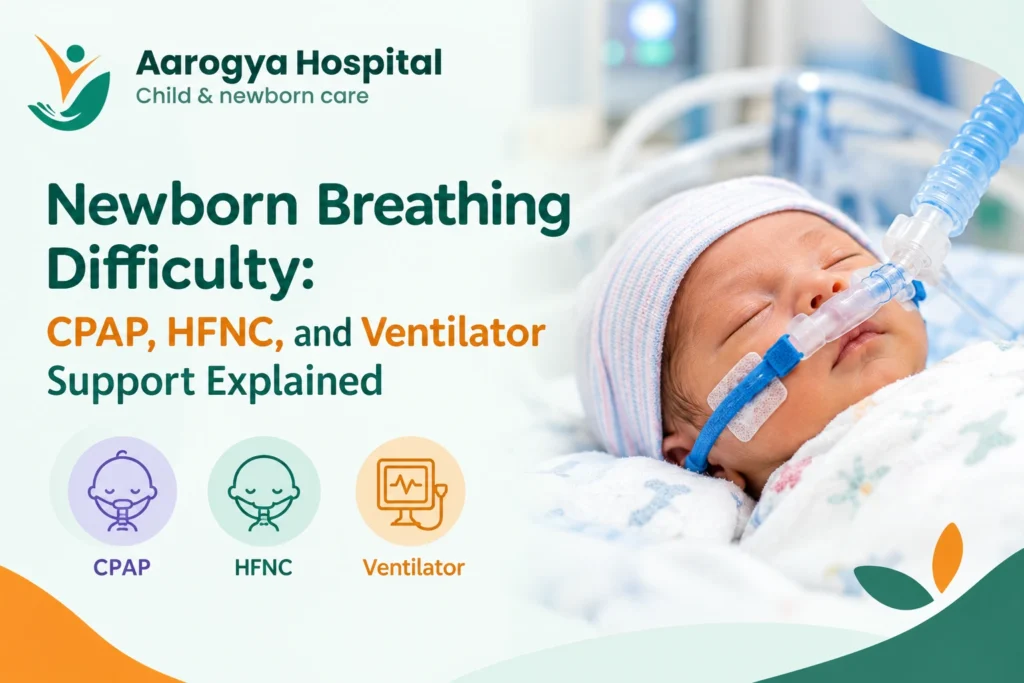
Newborn Breathing Difficulty: CPAP, HFNC, and Ventilator Support Explained

Newborn Breathing Difficulty: CPAP, HFNC and Ventilator Support Explained Newborn babies may sometimes have trouble breathing, especially if they are born early. Their lungs may not be fully developed yet. As a result, they may need extra help to breathe after birth. In such cases, doctors may provide breathing support to help the baby get enough oxygen. At Aarogya Hospital Chandigarh, knowing the causes of newborn breathing problems and the available treatments can help parents understand their baby’s care. Depending on the baby’s condition, doctors may use CPAP, HFNC, or a ventilator to help the baby breathe. What Causes Breathing Difficulty in Newborn Babies? Breathing problems can develop shortly after birth or during the first few days of life. Some common causes include: Premature birth: A premature baby’s lungs may not produce enough surfactant, a substance that helps keep the air sacs open. Respiratory distress syndrome (RDS): This condition occurs when a baby’s lungs are not mature enough to work properly. Transient tachypnoea of the newborn (TTN): Extra fluid in the lungs can cause fast breathing after birth. Infections: Conditions such as pneumonia or newborn sepsis may affect breathing. Meconium aspiration: A baby may breathe in meconium-stained fluid before or during birth. Other medical conditions: Some heart or lung problems can also cause breathing difficulties. Newborn breathing problems can become serious very quickly. Therefore, early medical check-ups are important to help doctors find the cause and provide the right treatment on time. Signs of Breathing Difficulty in Newborns Parents and caregivers should look for these warning signs: Fast or difficult breathing Grunting sounds with each breath Nostrils widening while breathing Skin pulling in around the ribs or below the chest Bluish or grey lips, tongue, or skin Pauses in breathing Difficulty feeding because of breathing problems Unusual sleepiness or reduced responsiveness Get emergency medical help immediately if your newborn has blue or grey lips, struggles to breathe, repeatedly stops breathing, or does not respond. Do not wait for these signs to go away on their own. What Is CPAP for Newborn Babies? CPAP stands for Continuous Positive Airway Pressure. It gently pushes air through small nasal tubes or a mask to help keep the baby’s airways open. Doctors can adjust the oxygen level according to the baby’s needs. CPAP helps keep a baby’s airways and tiny air sacs in the lungs open. This makes breathing easier and reduces the effort needed to breathe. When Is CPAP Use? Doctors may recommend CPAP for babies who: Have respiratory distress but can breathe on their own. Are born prematurely and need help keeping their lungs open. Have certain types of respiratory distress syndrome. Need additional breathing support after birth. CPAP does not breathe completely for the baby. Instead, it supports the baby’s own breathing. What Is HFNC for Newborn Babies? HFNC stands for High-Flow Nasal Cannula. It delivers warm, moist air or a mix of air and oxygen through small tubes placed in the baby’s nose. This helps support the baby’s breathing. HFNC helps babies breathe more comfortably and reduces the effort needed to breathe. It may also help keep the airways open, but its effect is less reliable than CPAP. When Is HFNC Use? Doctors may use HFNC for some newborns who need help breathing. The choice depends on the baby’s age, health problem, and overall condition. It may be use for: Mild to moderate breathing difficulties in suitable babies. Some babies who are being step down from stronger respiratory support. Selected cases where a less intrusive breathing support method is appropriate. However, HFNC is not right for every newborn. Some premature babies may need CPAP first, especially if they have a higher risk of breathing problems. Doctors will closely monitor the baby and change the treatment if needed. What Is a Ventilator for Newborn Babies? A mechanical ventilator is a machine that helps a baby breathe when they cannot breathe well enough on their own. Depending on the baby’s condition, doctors may place a breathing tube into the windpipe. The ventilator then helps the baby breathe by giving controlled breaths or supporting their own breathing. Some special breathing methods can also help without using a breathing tube. When Does a Newborn Need Ventilator Support? Doctors may recommend mechanical ventilation when a baby: Has severe respiratory distress. Cannot maintain adequate oxygen or carbon dioxide levels. Has repeated or prolonged pauses in breathing. Has severe lung disease or certain complications of prematurity. Needs breathing support during critical illness. A neonatal care team closely monitors babies who need a ventilator. Doctors adjust the machine’s settings based on the baby’s breathing, oxygen levels, blood test results, and overall health. CPAP vs HFNC vs Ventilator: What Is the Difference? Although all three methods support breathing, they work differently. Feature CPAP HFNC Mechanical Ventilator Main purpose Keeps airways and air sacs open Delivers warmed, humidified high-flow gas Provides or assists breaths How it is deliver Usually through nasal prongs or a mask Through small nasal tubes Often through a breathing tube in the windpipe Baby’s own breathing Baby breathes independently Baby breathes independently Machine assists or controls breathing as needed Typical use Respiratory distress requiring continuous pressure Selected babies needing non-invasive support Severe breathing problems or inadequate ventilation Monitoring Close neonatal monitoring Close neonatal monitoring Intensive monitoring and adjustment Important: No single breathing support method is right for every newborn. Doctors choose the best option based on how early the baby was born, the breathing problem, oxygen needs, breathing effort, and response to treatment. How Do Doctors Decide Which Breathing Support a Baby Needs? The neonatal team assesses several factors before choosing a treatment. 1. Breathing Rate and Effort Doctors check the baby’s breathing rate and look for signs of breathing difficulty, such as the chest pulling inward or grunting sounds. 2. Oxygen Levels A pulse oximeter checks the baby’s oxygen levels. Doctors may also do blood tests to check oxygen and carbon dioxide levels in the blood. 3. Gestational Age and Birth Weight Premature and […]

Premature baby receiving specialised care inside a neonatal intensive care unit (NICU)
BLOG

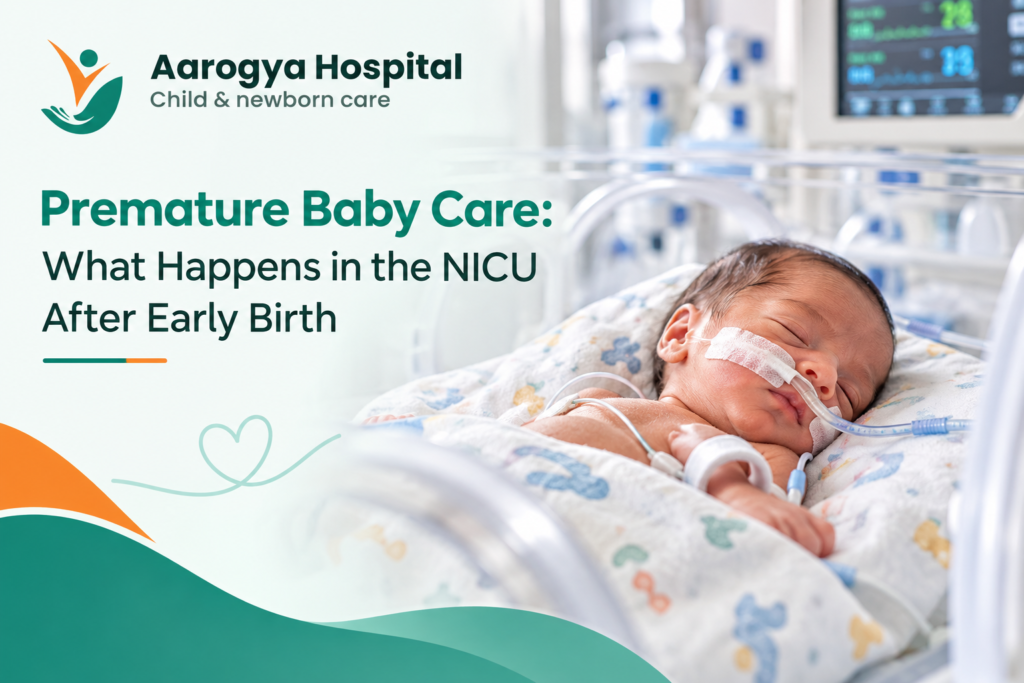
Premature Baby Care: What Happens in the NICU After Early Birth – Copy

Premature Baby Care: What Happens in the NICU After Early Birth? A baby born before 37 weeks of pregnancy is call premature baby. These babies may need extra care because their organs are not fully develop. Therefore, doctors may recommend keeping them in a Neonatal Intensive Care Unit (NICU) for special medical care. An early birth can be stressful and emotional for parents. However, learning about premature baby care can help you feel more prepared. In this guide, we explain what happens in the NICU, how doctors care for premature babies, and what parents can expect during their baby’s hospital stay. What Is a NICU and Why Do Premature Babies Need It? A Neonatal Intensive Care Unit (NICU) is a special hospital unit for newborn babies who need close monitoring and extra medical care. Premature babies may need NICU care for several reasons: Breathing difficulties: Their lungs may not be fully develop, making breathing harder. Low birth weight: They may need extra help with feeding and gaining weight. Temperature control: They may find it difficult to keep their body warm. Feeding problems: They may not yet be strong enough to suck and swallow properly. Risk of infection: Their immune systems are still developing, so they may be more likely to get infections. The care a baby needs depends on how many weeks early they were born, their birth weight, their health, and how well they are growing. What Happens in the NICU After a Premature Baby Is Born? Every premature baby needs different care. Therefore, the NICU team makes a care plan based on the baby’s health and needs. 1. Initial Assessment and Monitoring After birth, doctors check the baby’s breathing, heartbeat, body temperature, and overall health. They may also check the baby’s blood sugar and oxygen levels. Special machines help doctors and nurses keep a close eye on the baby’s health. They can quickly provide extra care if the baby’s condition changes. 2. Support for Breathing Some premature babies need help breathing because their lungs are not fully develop. Depending on the baby’s health, doctors may provide extra oxygen to help them breathe. They may use CPAP, which helps keep the airways open, or a ventilator to support breathing. In some cases, doctors may recommend other advanced breathing treatments. The medical team regularly reviews the baby’s breathing and adjusts support as needed. 3. Keeping the Baby Warm Premature babies have less body fat, so they can lose body heat quickly. Therefore, keeping them warm and maintaining a steady body temperature is an important part of NICU care. Doctors may place the baby in an incubator or under a special warmer to keep them warm. This helps maintain the right body temperature while the baby grows stronger. 4. Feeding and Nutrition Support Some premature babies may not be able to feed from the breast or bottle at first. They may need extra help to get enough nutrition to grow and develop properly. Depending on the baby’s health, doctors may give expressed breast milk through a feeding tube. If the baby cannot get enough milk, they may provide nutrients through a vein for some time. Breast milk is usually encourage when possible because it provides important nutrients and helps protect the baby from infections. The NICU team can guide parents on how to express and store breast milk safely. 5. Preventing and Treating Infections Premature babies have a higher risk of infections. Therefore, the NICU team follows strict hygiene practices and checks babies regularly for signs of illness. If doctors suspect an infection, they may recommend blood tests or other checks. They may also give antibiotics if needed to treat the infection. Parents and visitors should wash or clean their hands properly and follow the NICU’s rules to help protect babies from infections. 6. Monitoring Growth and Development The NICU team regularly checks the baby’s weight, feeding, body temperature, breathing, and other important signs to make sure the baby is doing well. Some babies may need extra health checks depending on how early they were born and their medical condition. These may include eye tests, hearing tests, or brain scans if needed. The aim is to help the baby grow well and find and treat any health problems early. Advanced NICU Care for Premature Babies Some premature babies need special medical care, especially if they are born very early or have serious health problems. Depending on the baby’s needs and available facilities, advanced NICU care may include: Breathing support: Helps babies who have difficulty breathing. Continuous monitoring: Tracks the baby’s vital signs and helps doctors notice changes. aEEG/CFM monitoring: Helps doctors check brain activity in selected babies. Therapeutic hypothermia: Control cooling may be use for eligible newborns with certain types of brain injury cause by a lack of oxygen. Specialist assessment: Neonatologists and other specialists check babies who need extra medical care. Not every premature baby needs these treatments. Doctors decide which tests and treatments are need base on the baby’s health. How Long Does a Premature Baby Stay in the NICU? Every premature baby needs a different length of stay in the NICU. It depends on how early the baby was born, their birth weight, breathing, feeding, and overall health. Some babies need to stay in the NICU for only a short time, while others may need care for several weeks or longer. Before discharge, the medical team generally checks whether the baby can: Maintain a stable body temperature. Breathe safely without the level of support they no longer need. Feed adequately and show appropriate growth. Remain medically stable with a suitable follow-up plan. Every baby grows and improves at their own pace. The NICU team will explain when your baby can go home and how to care for them safely. How Can Parents Support Their Premature Baby in the NICU? Parents play an important role in their baby’s care. The NICU may feel new and unfamiliar, but small steps can help parents stay involved in their baby’s care. […]

Level III NICU in Chandigarh providing advanced care for premature and critically ill newborns
BLOG

What Is a Level III NICU

What Is a Level III NICU? A Parent’s Guide When a newborn needs special medical care, parents may hear terms like “Level III NICU” and wonder what they mean. A Level III NICU provides advanced care for premature, very sick, or medically complex newborns. If you are looking for a Level III NICU in Chandigarh, knowing what care and services are available can help you make the right decision for your baby during a difficult time. What Is a Level III NICU? A Level III NICU is a special hospital unit that cares for newborns who need close monitoring and intensive treatment. Some babies may be born very early, while others may have breathing problems, infections, low birth weight, or other health problems that need special newborn care. A Level III NICU usually offers: Specialised neonatal doctors and trained nursing staff Continuous monitoring of newborns Advanced breathing support Equipment designed for premature and critically ill babies Care for newborns with serious infections or complications Access to specialist investigations and treatments Support for babies who need longer intensive care However, services vary between hospitals. Therefore, parents should ask the hospital team exactly what level of neonatal care is available. Which Babies May Need a Level III NICU? Not every newborn needs intensive care. Doctors recommend NICU care when a baby needs close monitoring or special treatment. A baby may need Level III NICU care because of: Very premature birth Very low birth weight Breathing problems Severe infections Difficulty maintaining oxygen levels Low blood sugar or other metabolic problems Complications around birth Need for advanced respiratory support Certain congenital conditions Problems that require specialist neonatal monitoring Because every baby is different, doctors assess each one individually and decide which level of care is appropriate. What Care Does a Level III NICU Provide? A Level III NICU offers several forms of advanced newborn care. 1. Breathing Support Some premature or sick newborns may have trouble breathing on their own. Therefore, the NICU may provide breathing support based on the baby’s needs. This may include oxygen, non-invasive breathing support, or a ventilator when needed. 2. Continuous Monitoring The NICU team closely tracks a baby’s: Heart rate Breathing Oxygen levels Temperature Blood pressure Feeding and fluid balance This constant monitoring helps doctors and nurses spot changes quickly and act without delay. 3. Care for Premature Babies Premature babies may have problems with breathing, feeding, keeping warm, and fighting infections. Therefore, a Level III NICU provides special care while the baby’s organs continue to grow and develop. 4. Care for Low-Birth-Weight Babies Babies with low birth weight may need extra help with feeding, keeping warm, breathing, and preventing infections. During their stay, the NICU team closely checks their growth, health, and overall condition. 5. Treatment for Newborn Infections Newborns can become very sick because of infections. In these cases, the NICU team closely monitors the baby, performs the needed tests, provides supportive care, and gives antibiotics when needed. 6. Feeding Support Some premature or sick babies may not be able to feed normally at first. In such cases, the neonatal team provides the right feeding support and closely monitors the baby’s nutrition and growth. What Makes Level III NICU Care Different? The main difference is the higher level of specialised care. A Level III NICU usually has advanced equipment, trained neonatal staff, and the ability to care for very sick newborns. However, the facilities and specialist services can vary between hospitals. Therefore, parents should ask about the NICU facilities and services before choosing a hospital. How Long Does a Baby Stay in a Level III NICU? There is no fixed time for a baby to stay in the NICU. Some babies may need care for a few days, while premature or seriously ill babies may need care for several weeks or longer. The length of stay depends on: Gestational age Birth weight Medical condition Breathing needs Feeding ability Growth and weight gain Response to treatment During this time, doctors regularly check the baby’s progress and talk with the parents about the next steps in care. What Should Parents Ask About a Level III NICU? If your baby may need intensive neonatal care, consider asking the hospital team: What level of NICU care does the hospital provide? Which breathing support options are available? Is a neonatologist available? How are premature and low-birth-weight babies managed? What monitoring is available? How are parents involve in their baby’s care? What happens if the baby needs a higher level of specialist treatment? Is newborn referral or transfer support available? Asking these questions early can help you understand the care and services available before and during your baby’s NICU stay. When Should Parents Seek Urgent Newborn Care? Newborns can become unwell very quickly. Seek urgent medical help if your baby: Has difficulty breathing Looks blue or unusually pale Is not feeding properly Is unusually sleepy or hard to wake Vomits repeatedly Has a fever or unusually low temperature Has seizures Has severe pauses in breathing Shows signs of serious infection If your newborn looks very unwell, do not wait at home. Seek medical help immediately. Level III NICU in Chandigarh When choosing a Level III NICU in Chandigarh, check the hospital’s NICU facilities, medical team, monitoring equipment, emergency care, and referral support. Aarogya Hospital Chandigarh provides specialised newborn and NICU care for babies who need close monitoring and medical support. Parents can speak with the neonatal team to understand the care their baby needs. The right level of care depends on each baby’s condition, so always follow the advice of your baby’s doctor or neonatologist. Conclusion A Level III NICU provides advanced care for premature, seriously ill, or medically complex newborns. It offers close monitoring, breathing support, feeding help, infection treatment, and other specialised care based on each baby’s needs. If your newborn needs NICU care, talk to the medical team about your baby’s condition, available treatments, and the level of care needed. For advanced newborn care in Chandigarh, Aarogya Hospital […]

Ayushman NICU near PGI Chandigarh
BLOG

No NICU Bed at PGI Chandigarh? Find Advanced NICU Care Under Ayushman Bharat

No NICU Bed at PGI Chandigarh? Find Advanced NICU Care Under Ayushman Bharat Near PGI When your newborn needs urgent intensive care, finding an NICU bed quickly can be stressful. It can be even more difficult if you have been referred to PGI Chandigarh but no NICU bed is available at that time. If your family is eligible for Ayushman Bharat, you may be able to get approve and covered neonatal treatment at a nearby empanelled hospital. Aarogya Hospital in Khudda Lahora, Chandigarh, provides specialised newborn care and advanced NICU facilities near PGI Chandigarh. The hospital can also help families check Ayushman eligibility, treatment needs, and transfer arrangements. Advanced NICU Care Near PGI Chandigarh Newborn babies may need different levels of intensive care depending on their health condition. Premature babies, babies with breathing problems, and seriously ill newborns may need continuous monitoring and specialised treatment. Aarogya Hospital’s published NICU facilities include: High-Frequency Oscillatory Ventilation (HFO/HFOV) Conventional neonatal ventilation Therapeutic hypothermia for appropriately selected newborns Inhaled nitric oxide (iNO) therapy for selected babies with severe respiratory problems Neonatal incubators Intensive care for premature and critically ill newborns These treatments depend on the baby’s health condition, available equipment, and the neonatologist’s assessment. Can Newborns Get Ayushman Treatment Without Their Own Card? Yes. An eligible newborn may receive Ayushman Bharat benefits even if the baby does not have a separate Ayushman card yet. Newborn babies from eligible families can receive scheme benefits as per the applicable rules. Parents should bring the eligible family member’s Ayushman details and available documents that show the baby’s relationship with the family. The hospital’s Ayushman team can help parents with the registration and approval process. What If You Do Not Have an Ayushman Card Yet? If your family may be eligible but you do not have an Ayushman card yet, you can contact the hospital’s Ayushman help desk for guidance. The team can guide you through the required verification process and documents. Depending on the rules, biometric verification or another approve e-KYC process may be require. Important: Having an Aadhaar card does not automatically mean that a person is eligible for Ayushman Bharat benefits. Are HFO, iNO Therapy and Therapeutic Hypothermia Covered Under Ayushman? Aarogya Hospital provides advanced newborn treatments such as HFO ventilation, iNO therapy, and therapeutic hypothermia when needed for the baby’s condition. For eligible beneficiaries, these treatments may be provide without extra hospital charges when they are approve under the applicable Ayushman package. However, coverage depends on the applicable package, eligibility, and required approval. Parents should contact the hospital before transfer so the neonatal team can confirm the available facilities and treatment needs. Is Ayushman NICU Treatment Completely Free? For eligible beneficiaries receiving approved, scheme-covered treatment, Aarogya Hospital does not charge extra for services included in the approved package. The Ayushman desk will verify: Family eligibility Applicable treatment package Required authorisation Services covered under the scheme If a service is not cover under the applicable scheme, the hospital should explain this before providing the service, depending on the baby’s medical condition and scheme rules. Is There an Ambulance From PGI Chandigarh? Aarogya Hospital provides free ambulance transfers from PGI Chandigarh, subject to ambulance availability and confirmation that the baby is safe to transport. For transfers from other hospitals, such as GMCH Sector 32 or GMSH Sector 16, ambulance charges may vary depending on the situation. Critically ill newborns should be transfer with proper neonatal monitoring, breathing support, and a train medical escort when need. Can I Use an Ayushman Card From Another State? PM-JAY allows eligible beneficiaries to receive covered treatment at participating empanelled hospitals in other states and union territories. If your Ayushman card was issue in another state, contact Aarogya Hospital to check your eligibility and required treatment approval before transfer. Can Aarogya Hospital Accept a Baby From Another Hospital? Yes, Aarogya Hospital can receive outborn newborns referred from other hospitals, subject to: Clinical assessment NICU bed availability Availability of the required equipment and facilities Acceptance by the neonatal team The referring doctor should contact the Aarogya neonatal team before the transfer. This allows the hospital to assess the baby’s condition and plan a safe transfer if admission is accept. What Documents Should Parents Bring? Parents should keep the following documents available: Parent’s Ayushman details Aadhaar or another accepted identity document Baby’s birth record or birth certificate, if available Referral summary Investigation reports Details of the baby’s current treatment If some documents are missing and your baby is critically ill, contact the neonatal team immediately. Do not delay urgent medical care while completing the paperwork. What If Aarogya Hospital Does Not Have an NICU Bed? NICU beds can be limit, especially when advance neonatal care is require. Contact Aarogya Hospital to check the current NICU bed availability and confirm whether the required level of care is available for your baby. If admission is not possible, your treating doctor can help you find another suitable neonatal care facility. Why Choose Aarogya Hospital for Newborn Care Near PGI Chandigarh? For families looking for advanced neonatal care near PGI Chandigarh, Aarogya Hospital provides specialised newborn intensive care for premature and critically ill babies. The hospital can help families with: NICU bed availability Ayushman eligibility guidance Advanced neonatal treatment Newborn transfers Ambulance coordination 24×7 emergency support Treatment and admission are confirm based on the baby’s medical condition, available facilities, and applicable scheme requirements. Need an Ayushman NICU Bed Near PGI Chandigarh? If your newborn needs urgent intensive care and you cannot find a suitable NICU bed near PGI Chandigarh, contact Aarogya Hospital for guidance. Our team can help you check NICU bed availability, understand your baby’s treatment needs, check Ayushman eligibility, and arrange a safe transfer when possible. Aarogya Hospital, ChandigarhAdvanced Newborn Care | Ayushman Bharat | 24×7 EmergencyNear PGI, Khudda Lahora, ChandigarhCall: +91 7719703883 Important: If your newborn is critically ill, do not delay emergency treatment while waiting for Ayushman documents. Continue treatment at the current hospital while the medical teams arrange a safe transfer. […]

Scroll to Top