Ayushman Bharat empanelled Chandigarh

NICU care

Kangaroo Mother Care and breast milk in the NICU
BLOG

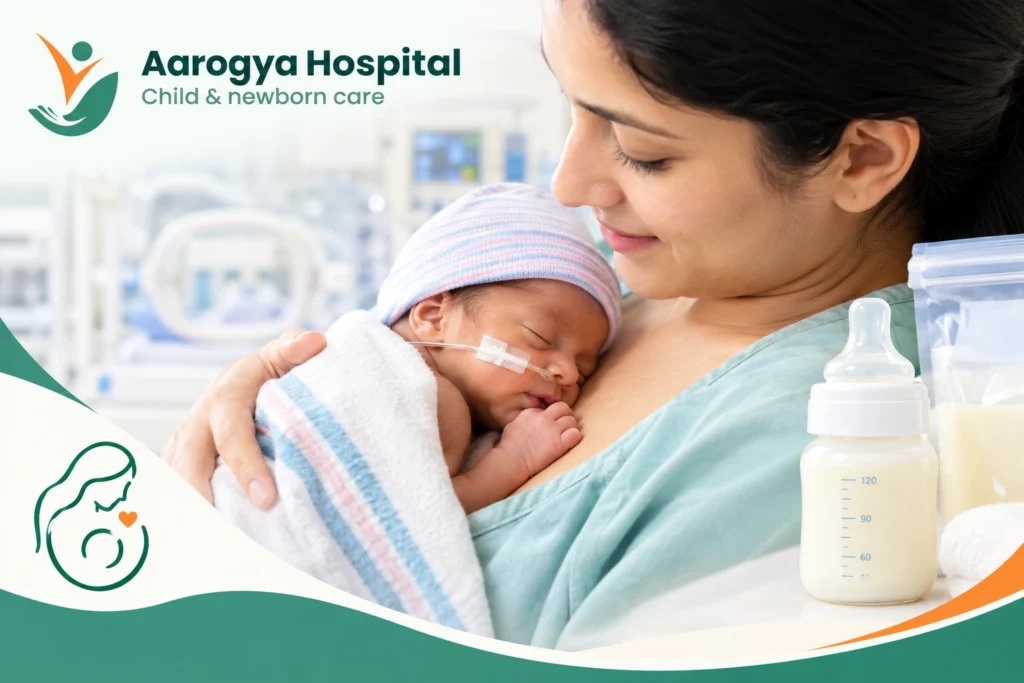
Kangaroo Mother Care and Breast Milk in the NICU

When a baby is born early or has a low birth weight, they may need extra care. These babies often need treatment in a Neonatal Intensive Care Unit (NICU). Two important parts of newborn care are Kangaroo Mother Care (KMC) and breast milk feeding. Both can help support a baby’s growth and health. At Aarogya Hospital in Khudda Lahora, near PGI Chandigarh, parents can ask about newborn care, skin-to-skin contact, and feeding support. The right care depends on each baby’s health and medical needs. What Is Kangaroo Mother Care (KMC)? Kangaroo Mother Care is a way to care for a baby through skin-to-skin contact. During KMC, a baby is placed against the parent’s bare chest and held safely. KMC is especially helpful for premature babies and babies with low birth weight. It helps parents bond with their babies and take part in their care. However, the baby must be ready for KMC. If a baby needs intensive treatment, the NICU team will decide when and how to start it safely. Benefits of Kangaroo Mother Care for Premature Babies Kangaroo Mother Care can offer several benefits when provided safely. 1. Helps Keep the Baby Warm Premature and low-birth-weight babies can lose body heat quickly. Skin-to-skin contact helps keep their body temperature stable. 2. Supports Breastfeeding KMC can help mothers start and continue breastfeeding. It also gives babies a chance to develop their feeding skills when they are ready. 3. Builds a Strong Bond Holding a baby close helps parents feel connected to their newborn. It also gives them a chance to take an active role in their baby’s care. 4. Supports Healthy Growth KMC, along with proper feeding and medical care, can help support healthy growth in premature and low-birth-weight babies. 5. Helps Support Body Stability KMC may help keep a baby’s heart rate and breathing more stable. However, the NICU team must check the baby and decide when skin-to-skin contact is safe. Why Is Breast Milk Important for NICU Babies? Breast milk gives babies important nutrients for growth. It also contains natural protective substances that help support their immune system. Mother’s own milk is usually the first choice for premature and low-birth-weight babies. These babies may have a higher risk of infection and feeding problems. If the mother cannot provide enough milk, the medical team may suggest screened donor human milk, if available, or suitable preterm formula. The feeding plan depends on the baby’s age, weight, health, and ability to digest milk. Some premature babies may also need extra nutrients as advised by their doctor. Key Benefits of Breast Milk for Newborns Provides Important Nutrients Breast milk contains nutrients that help babies grow. Its composition also changes as the baby develops. Helps Protect Against Infections Breast milk contains antibodies and other protective substances. These help support the baby’s developing immune system. Supports Digestion Human milk is generally easy for babies to digest. It can be especially useful for premature babies with sensitive digestive systems. Supports Brain Development and Growth Good nutrition helps support brain development, weight gain, and overall growth. Some premature babies may need extra nutrients to meet their needs. How Can Mothers Provide Breast Milk in the NICU? Some babies cannot breastfeed directly because they are born early or need medical treatment. In these cases, mothers may express their milk for their babies. The NICU team can guide mothers through these steps. Step 1: Start Expressing Breast Milk When possible, mothers can start expressing colostrum. Colostrum is the first milk produced after birth. Even small amounts can be valuable for a newborn. Step 2: Collect and Store Milk Safely Mothers should wash their hands before expressing milk. They should also follow the hospital’s instructions for collecting, labelling, and storing milk. These steps help keep the milk clean and safe for the baby. Step 3: Feed the Baby as Advised Depending on the baby’s condition, expressed breast milk may be given through a feeding tube or another method recommended by the medical team. Direct breastfeeding can begin when the baby is ready. Step 4: Express Milk Regularly Regular milk expression can help mothers build and maintain their milk supply. The healthcare team or lactation specialist can guide mothers on how often to express milk. Step 5: Combine KMC With Feeding Support When it is safe, KMC and breast milk feeding can work together to support newborn care. The NICU team can show parents how to hold their baby safely and support feeding. Can Babies in the NICU Receive Kangaroo Mother Care? Yes, many babies in the NICU can receive Kangaroo Mother Care. This includes some premature babies and babies with low birth weight. However, every baby has different medical needs. Some babies need breathing support, medicines through a vein, or close monitoring. In these cases, trained staff may need to help move and position the baby safely. Parents should never move a critically ill baby or disconnect medical equipment without help from the NICU team. When Can a Premature Baby Start Breastfeeding? Every baby develops at a different pace. Some premature babies can breastfeed early, while others need more time. A baby must be able to suck, swallow, and breathe safely during feeding. Until the baby is ready, the medical team may recommend giving expressed breast milk through a feeding tube. As the baby grows stronger, the team will check when direct breastfeeding can begin. They can also guide the mother through the process. NICU Care at Aarogya Hospital, Chandigarh Aarogya Hospital is located in Khudda Lahora, near PGI Chandigarh. The hospital provides newborn and paediatric care. Parents of premature babies or newborns who need medical support can contact the hospital to ask about available NICU services. Newborn care may include: Help with keeping the baby warm Feeding and breast milk support Close monitoring of the baby’s health Breathing support when needed Guidance for parents on newborn care The treatment plan depends on the baby’s condition and the doctor’s advice. Families from Chandigarh, Mohali, Panchkula, and nearby areas […]
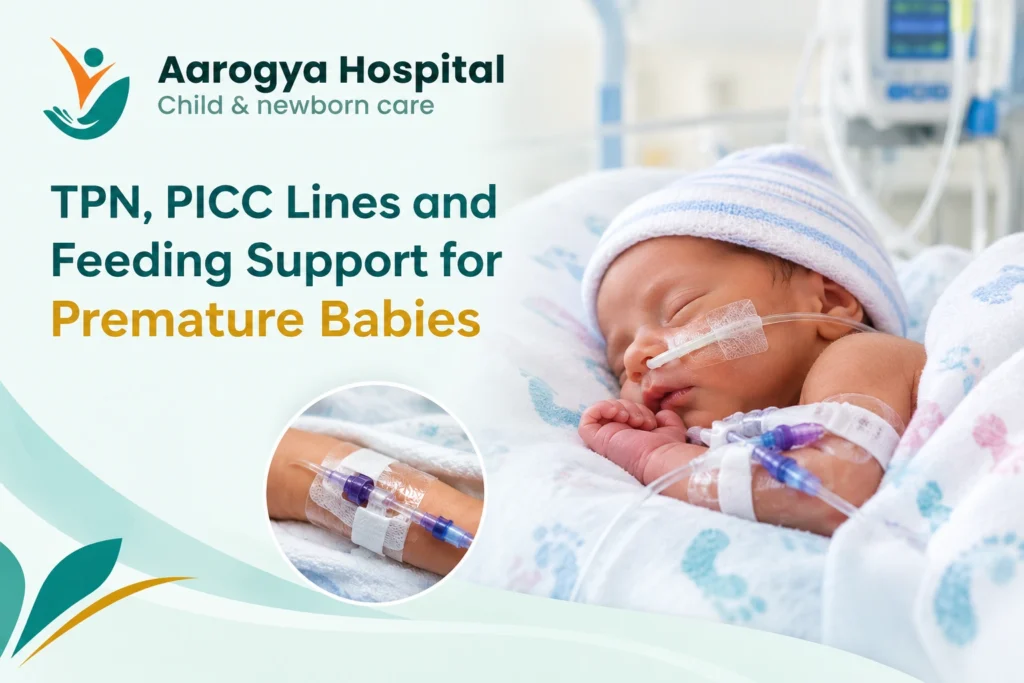
TPN and PICC lines for premature babies
BLOG

TPN, PICC Lines and Feeding Support for Premature Babies

Introduction Premature babies are born before 37 weeks of pregnancy. Their bodies are still growing. Therefore, they may need extra help with feeding and nutrition. Some premature babies cannot drink enough milk. Others have trouble digesting milk or need special medical care. In such cases, doctors may suggest TPN, a PICC line, or tube feeding. These treatments help babies get the nutrients they need to grow and stay healthy. However, every baby is different. Doctors choose the best feeding method based on the baby’s health, weight, and growth. At Aarogya Hospital, Chandigarh, parents can ask about premature baby care, newborn feeding, and NICU services. Why Do Premature Babies Need Special Feeding Support? Premature babies may have trouble feeding because their bodies are not fully develop. They may also find it hard to suck, swallow, and breathe at the same time. As a result, some babies need extra help to get enough nutrition. Common reasons include: Poor sucking and swallowing: The baby may not be ready to drink milk safely. Low birth weight: The baby needs enough nutrients to grow. Immature digestion: The baby’s stomach and intestines may need more time to develop. Breathing problems: Babies who need help with breathing may also need feeding support. Serious illness: Some babies need extra nutrition while they recover. Higher nutritional needs: Premature babies need enough energy, protein, vitamins, and minerals to grow. Meanwhile, the neonatologist, a doctor who specialises in newborn care, assesses the baby’s health and plans the most suitable feeding method. What Is TPN (Total Parenteral Nutrition)? TPN stands for Total Parenteral Nutrition. In other words, it is a method of delivering nutrients directly into a baby’s bloodstream through an IV line. Doctors may use TPN when a premature baby cannot get enough nutrition through milk. TPN contains important nutrients, such as: Glucose: Gives the baby energy. Amino acids: Help the body grow and repair itself. Fats: Provide energy and support healthy growth. Vitamins and minerals: Help the body work properly. Electrolytes: Help maintain the right balance of fluids and minerals. Doctors adjust the TPN mixture according to the baby’s weight, age, blood tests, and nutritional needs. When Does a Premature Baby Need TPN? Doctors may suggest TPN when: The baby is born very early. Baby has a very low birth weight. The baby cannot take enough milk. The baby has certain stomach or intestinal problems. Recovering from a serious illness. Safely receive enough milk for medical reasons. Some babies can receive small amounts of milk while also getting TPN. As the baby starts taking more milk, doctors may slowly reduce TPN when it is safe to do so. How Do Doctors Monitor TPN? TPN needs careful monitoring because a premature baby’s needs can change quickly. Doctors and nurses may check: Blood sugar levels. Blood tests for salts and minerals. Fluid intake and urine output. Weight gain and growth. Liver health when needed. Signs of infection or problems with the IV line. As a result, these checks help the medical team provide the right amount of nutrition and identify any problems early. What Is a PICC Line in a Premature Baby? A PICC line is a thin, soft tube place into a vein, usually in the baby’s arm or leg. A PICC stands for Peripherally Inserted Central Catheter. In this procedure, a thin tube is insert through a vein and guide into a larger vein near the heart. Doctors check its position before using it. Additionally, a PICC line can be use to deliver TPN, certain medicines, and other essential treatments directly into the bloodstream. Why Might a Premature Baby Need a PICC Line? Doctors may suggest a PICC line when a baby needs IV nutrition or medicines for several days or longer. A PICC line can: Provide steady access to a vein. Allow doctors to give certain strong nutrition solutions. Reduce the need for repeated short-term IV lines. Help the medical team continue treatment in the NICU. However, not every premature baby needs a PICC line. Some babies can receive treatment through a regular IV line. How Is a PICC Line Care For? A PICC line needs careful handling to reduce the risk of infection and other problems. Doctors and nurses may: Keep the area clean and covered. Check the skin around the line. Use clean, sterile methods when handling the line. Look for redness, swelling, or fluid leakage. Check the line’s position when needed. Parents should never touch, flush, adjust, or remove the line themselves. Tell the nurse or doctor immediately if you notice any unusual changes around the line. What Is Feeding Support for Premature Babies? Feeding support helps premature babies get enough nutrition while they grow. Therefore, doctors choose the most suitable feeding method based on the baby’s age, breathing, digestion, and ability to swallow safely. The main feeding methods include breast milk, tube feeding, and feeding by mouth. 1. Breast Milk Feeding Mother’s breast milk is usually the first choice for premature babies when it is available and suitable. It provides important nutrients that help the baby grow. It also contains substances that help protect the baby from some infections. Additionally, some premature babies need fortified breast milk. This means extra nutrients are add to provide more protein, minerals, and calories to support healthy growth. Additionally, if the mother’s milk is not available, donor breast milk may be considered where it is available and suitable for the baby. Doctors may also suggest special formula made for premature babies. 2. Tube Feeding Some premature babies are too young or weak to drink milk safely. In such cases, doctors may suggest tube feeding. A thin tube is pass through the baby’s nose or mouth into the stomach. Milk is then give through the tube in small, measure amounts. Tube feeding helps babies get enough nutrition while they develop their feeding skills. Doctors and nurses check how well the baby handles the milk. They also watch for vomiting, tummy swelling, and poor weight gain. 3. Moving to Breastfeeding […]

When does a newborn need a ventilator
BLOG

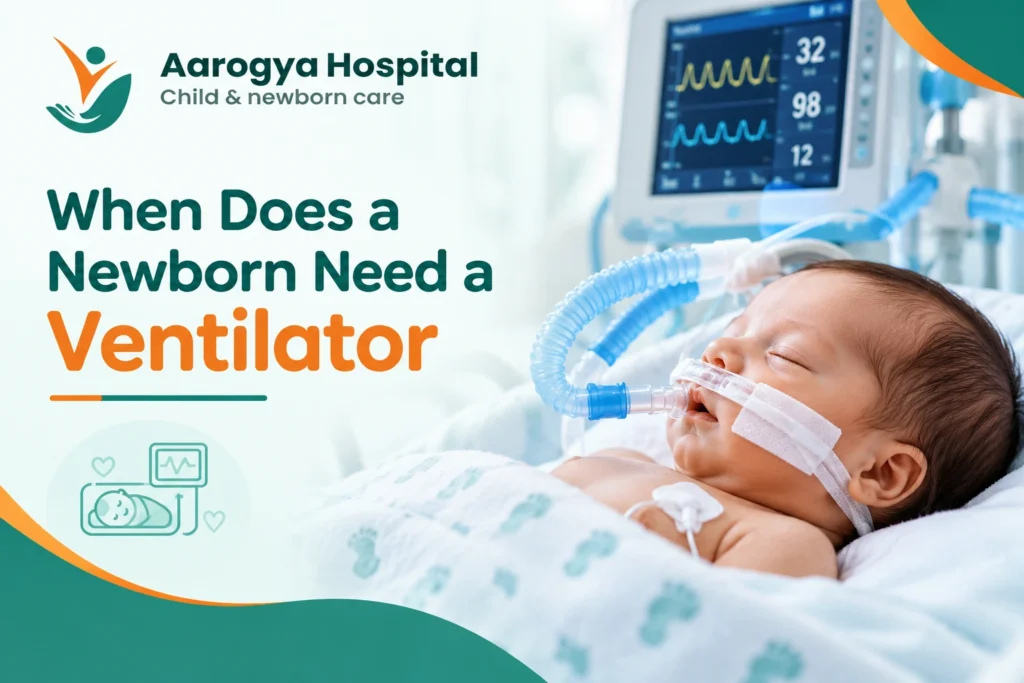
When Does a Newborn Need a Ventilator

Introduction Some newborn babies need help with breathing after birth. Some have mild breathing problems, while others need special medical care. In these cases, doctors may use a ventilator in a Neonatal Intensive Care Unit (NICU). A ventilator helps a baby breathe when the lungs cannot take in enough oxygen or remove enough carbon dioxide. However, not every baby with breathing problems needs a ventilator. Doctors first check the baby’s condition and then choose the right treatment. At Aarogya Hospital, Chandigarh, parents can learn about newborn breathing problems, ventilator support, and the need for early medical care. What Is a Ventilator for Newborn Babies? A ventilator is a machine that helps a baby breathe. It sends air and oxygen into the lungs through a tube placed in the windpipe. Doctors use a ventilator when a baby cannot breathe well enough without help. The type of breathing support depends on the baby’s age, weight, lung growth, and health. Newborns may need different types of breathing support, such as: CPAP or high-flow nasal support: These methods help babies breathe without a tube in the windpipe. Mechanical ventilation: A machine helps the baby breathe through a tube placed in the windpipe. Advanced ventilation: Some babies with serious breathing problems need special breathing support. Doctors choose the best method based on the baby’s needs. When Does a Newborn Need a Ventilator? A newborn may need a ventilator when breathing becomes very difficult. It may also be needed when the baby cannot get enough oxygen or remove enough carbon dioxide. Here are some common reasons why a newborn may need a ventilator. 1. Severe Breathing Problems Some newborns breathe very fast or make grunting sounds. Their chest may also pull inward with each breath. These signs may mean that the baby is struggling to breathe. If the baby does not improve with basic treatment, doctors may give more breathing support. In serious cases, a ventilator may be need. 2. Premature Birth Premature babies are born before their bodies are fully ready. Their lungs may not be fully develop. As a result, they may have trouble breathing on their own. Some premature babies develop a condition called respiratory distress syndrome. This happens when their lungs do not have enough surfactant. Surfactant helps keep the tiny air sacs in the lungs open. Depending on the baby’s condition, treatment may include CPAP, surfactant medicine, or a ventilator. 3. Low Oxygen Levels Newborns need enough oxygen for their brain, heart, and other organs to work well. However, some lung or heart problems can lower oxygen levels. Doctors check the baby’s breathing and oxygen levels. If oxygen support is not enough, the baby may need CPAP or a ventilator. 4. Serious Infections Serious infections, such as neonatal sepsis and pneumonia, can affect a newborn’s breathing. In some cases, the baby may have trouble breathing or become very weak. Doctors may give antibiotics, oxygen, and other treatments. If the baby has severe breathing problems, a ventilator may be needed. 5. Meconium Aspiration Syndrome Before or during birth, some babies may breathe in fluid containing their first stool, called meconium. This can block or harm the airways and make breathing difficult. Mild cases may improve with medical care. However, babies with serious breathing problems may need a ventilator. 6. Lack of Oxygen Around Birth Sometimes, a baby does not get enough oxygen around the time of birth. This can affect the brain and other organs. Some babies may have weak breathing and need urgent medical help. Doctors check the baby’s breathing, blood flow, and overall health before choosing the right treatment. Some babies may also develop a brain condition called hypoxic-ischaemic encephalopathy (HIE). These babies may need special care to reduce the risk of brain injury. 7. Other Serious Health Problems Some babies are born with problems that affect their lungs, heart, or airways. These problems can make breathing difficult. Doctors examine the baby to find the cause. They then decide whether the baby needs a ventilator or another type of breathing support. What Are the Warning Signs of Breathing Problems in Newborns? Parents should watch their baby’s breathing carefully, especially during the first few days after birth. Common warning signs include: Very fast or difficult breathing. Grunting sounds while breathing. Chest pulling inward with each breath. Nostrils widening while breathing. Blue or grey lips, tongue, or skin. Pauses in breathing. Unusual sleepiness or difficulty waking up. Poor feeding along with other signs of illness. Seek emergency medical care if your newborn struggles to breathe, has blue or grey lips, or stops breathing. Do not wait for these signs to improve at home. These signs do not always mean that a ventilator is needed. However, they need urgent medical attention. How Do Doctors Decide If a Newborn Needs a Ventilator? Doctors check the baby’s health before deciding whether a ventilator is need. They also check if the baby improves with basic treatment. The check-up may include: Breathing check: Doctors check how fast the baby breathes and how the chest moves. Oxygen check: A small device called a pulse oximeter checks the oxygen level in the blood. Blood tests: These tests help doctors check oxygen, carbon dioxide, and acid levels in the blood. Chest X-ray: This helps doctors look for some lung problems. Infection tests: Blood tests may help find signs of infection. Treatment check: Doctors see whether the baby improves with oxygen or CPAP. After these checks, doctors choose the right type of breathing support for the baby. How Long Does a Newborn Need Ventilator Support? Every baby is different. Some newborns need a ventilator for a short time. Others may need it for several days or longer. The time depends on the baby’s lung growth, infection, birth age, and the seriousness of the illness. Doctors regularly check the baby’s breathing and oxygen levels. They also watch for signs of recovery. When the baby can breathe better, doctors slowly reduce the ventilator support. This process is weaning. Some babies may then […]

ROP screening for premature babies and retinal eye care
BLOG

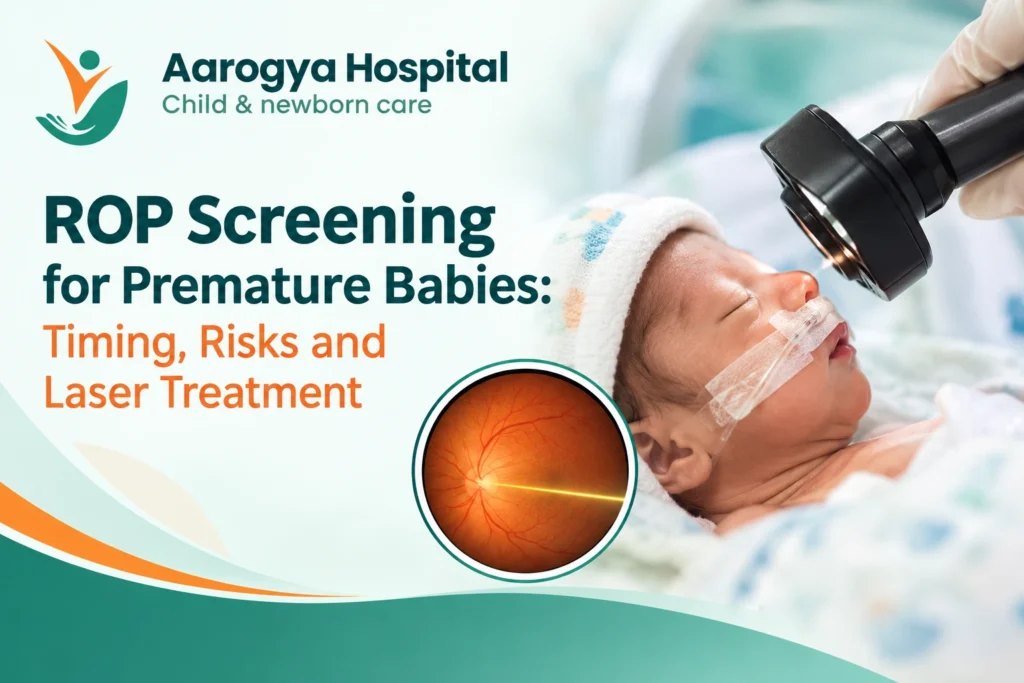
ROP Screening for Premature Babies: Timing, Risks and Laser Treatment

Babies born too early need special care to stay healthy and grow well. ROP screening for premature babies is an important eye test. It helps doctors find eye problems early and protect the baby’s eyesight. Retinopathy of Prematurity (ROP) is an eye problem that can affect babies born too early, especially those with low birth weight. In some babies, it gets better on its own. However, severe ROP can damage the retina (the light-sensitive part of the eye) and cause permanent vision loss if it is not treated on time. Therefore, early screening and proper treatment are important for your baby’s eye health. At Aarogya Hospital, Chandigarh, parents can learn about premature baby care and the importance of timely eye screening. What Is Retinopathy of Prematurity (ROP)? Retinopathy of Prematurity, also called ROP, is an eye condition that affects the growth of blood vessels in a premature baby’s eye. The retina is the part at the back of the eye that helps us see. It sends visual signals to the brain. In babies born too early, the blood vessels in the retina may not grow properly. This can cause abnormal blood vessels to grow and damage the retina. ROP often has no clear signs in the early stages. This means parents may not notice any eye problems. So, babies at risk of ROP need an eye check-up by a trained eye doctor, even if their eyes look normal. Why Do Premature Babies Need ROP Screening? ROP screening helps doctors check whether the blood vessels in the baby’s retina are growing normally. This test is important because severe ROP can develop without visible signs. Early screening helps doctors: Find ROP before it causes serious eye damage. Check how the blood vessels in the retina are growing. Find babies who may need laser treatment or other care. Lower the risk of permanent vision loss. Decide when the baby needs another eye check-up. Most importantly, regular screening helps doctors find problems and treat them at the right time. When Should ROP Screening Be Done? The right time for ROP screening depends on when the baby was born, the baby’s birth weight, and their health. Under Indian screening guidelines, the following babies generally need ROP screening: Babies born at or before 34 weeks of pregnancy. Babies with a birth weight of 2,000 grams or less. Other premature babies who have additional risk factors. The first eye check-up is usually recommended within 25–30 days after birth. However, some very premature babies or babies with very low birth weight may need an eye check-up earlier, around 2–3 weeks after birth. The baby’s doctor and eye specialist will decide the best time for the first examination. Important: Do not delay ROP screening after your baby leaves the NICU. Before discharge or transfer to another hospital, confirm the screening date and follow-up plan with the medical team. Which Babies Have a Higher Risk of ROP? ROP mainly affects babies born too early. However, some babies have a higher risk of developing severe ROP. 1. Low Birth Weight Babies born with very low birth weight have a higher risk of ROP. This is because the blood vessels in their eyes may not be fully developed. 2. Very Early Birth The earlier a baby is born, the less time their retinal blood vessels have to grow. Therefore, very premature babies have a higher risk of ROP. 3. Oxygen Support Some premature babies need extra oxygen to help them breathe. Doctors closely monitor the baby’s oxygen levels because too little or too much oxygen can be harmful. Keeping oxygen levels within the recommended range helps lower the risk of complications. Parents should never change their baby’s oxygen settings without medical advice. 4. Infection and Other Health Problems Some health problems can increase the risk of severe ROP. These include infections, breathing difficulties, and other problems during newborn care. Therefore, premature babies need close medical care and regular check-ups. 5. Poor Weight Gain Babies who do not gain enough weight after birth may have a higher risk of ROP. Proper feeding, good nutrition, and regular weight checks help support healthy growth. How Is ROP Screening Done? A trained eye specialist examines the baby’s retina during ROP screening. The examination usually includes these steps: Preparing the baby: The medical team checks the baby’s condition before the test. Using eye drops: Special drops make the pupils larger. This helps the doctor see the retina clearly. Checking the eyes: The doctor uses special equipment to check the blood vessels in the retina. Planning the next step: The doctor decides whether the baby needs another eye check-up or treatment. The examination may cause some temporary discomfort. However, the medical team takes steps to keep the baby comfortable and monitor their condition. ROP screening is not always a one-time test. Some babies need several eye check-ups until the blood vessels in their eyes develop properly or the condition gets better. What Is Laser Treatment for ROP? Laser treatment is use when ROP becomes severe and may harm the baby’s eyesight. During the treatment, the eye specialist uses a laser on specific areas of the retina. This helps reduce abnormal blood vessel growth and lowers the risk of further damage. Laser treatment is generally recommend for severe ROP that threatens vision. However, not every baby with ROP needs laser treatment. Some babies have mild ROP that improves without treatment. The eye specialist will decide the best treatment after checking the stage and severity of ROP. What Happens After Laser Treatment? After laser treatment, the baby needs regular eye check-ups. These visits help the doctor check whether the treatment is working and whether more treatment is need. Some babies may need another treatment. In certain cases, the doctor may recommend injections into the eye. Advanced ROP may need surgery. Long-term eye check-ups are also important. They help doctors monitor the baby’s eyesight and find problems such as squint or difficulty seeing clearly. The treatment and follow-up plan will […]

Phototherapy treatment for newborn jaundice at a hospital
BLOG

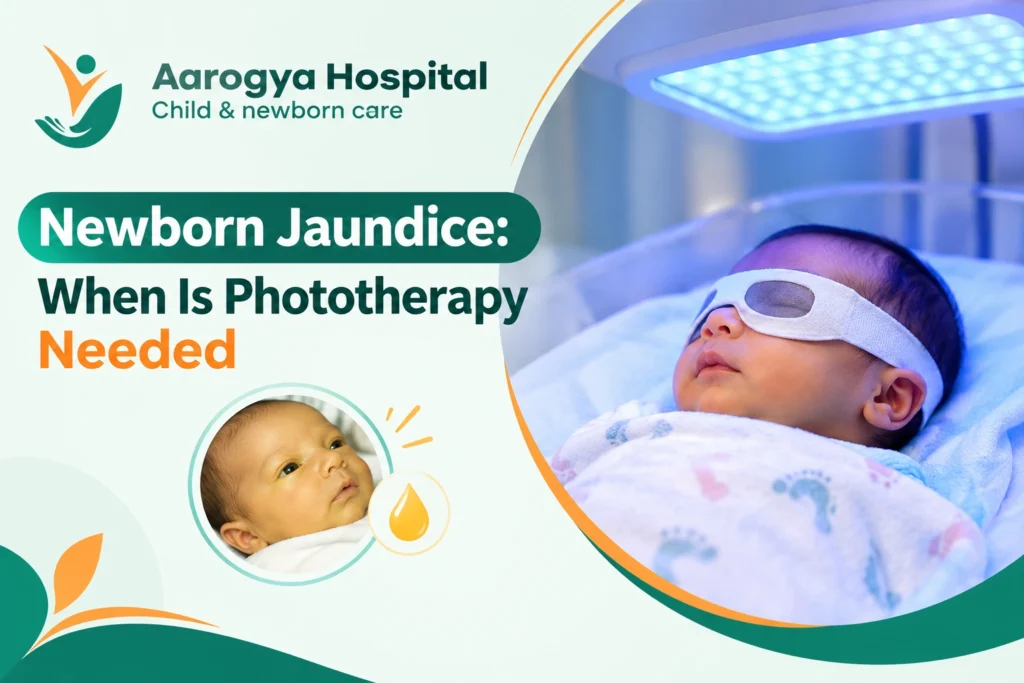
Newborn Jaundice When Is Phototherapy Needed

Newborn jaundice is common in babies. It makes a baby’s skin and eyes look yellow. This happens when bilirubin builds up in the blood. Bilirubin is a yellow substance that forms when red blood cells break down. A newborn’s liver is still developing. So, it may not remove bilirubin from the blood fast enough. Because of this, the baby’s skin and eyes may turn yellow. Mild jaundice often goes away on its own. However, some babies need medical care. One common treatment is phototherapy. It uses a special light to lower bilirubin levels in the baby’s blood. At Aarogya Hospital, Chandigarh, parents can learn about newborn jaundice, its warning signs, and when their baby needs medical care. What Causes Newborn Jaundice? Newborn jaundice happens when bilirubin builds up in a baby’s blood. This is often because the baby’s liver is still developing and cannot remove bilirubin quickly enough. Here are some common causes: Premature birth: Babies born early may have a liver that is not fully developed. Feeding problems: When a baby does not get enough milk, bilirubin may leave the body more slowly. Blood group differences: A difference between the mother’s and baby’s blood groups may cause red blood cells to break down faster. Bruising during birth: Bruising can increase bilirubin as the body breaks down extra blood cells. Health problems: Certain infections and blood disorders can raise bilirubin levels. Therefore, regular check-ups are important, especially during the first few days after birth. What Is Phototherapy for Newborn Jaundice? Phototherapy is a treatment that uses a special blue light to lower bilirubin levels in a baby’s body. The light changes bilirubin into a form that the body can remove more easily. The baby can then pass it through urine and stools. During treatment, the baby usually lies in a cot under a special light. Sometimes, doctors use a special light pad or blanket. The baby’s eyes are covered for protection when needed. The medical team checks the baby’s temperature, feeding, and fluid levels. Doctors also do blood tests again to check if bilirubin levels are going down. Phototherapy is generally safe when given under medical care. When Is Phototherapy Needed for Newborn Jaundice? Not every baby with jaundice needs phototherapy. Doctors check the baby’s age, bilirubin level, and overall health before deciding if treatment is needed. Phototherapy may be needed in the following situations. 1. When Bilirubin Levels Are Too High Doctors may check bilirubin through a skin test or a blood test. If the level reaches the treatment limit for the baby’s age and health, the doctor may recommend phototherapy. 2. When Jaundice Starts Within the First 24 Hours If your baby’s skin or eyes turn yellow during the first 24 hours after birth, seek urgent medical care. If the baby’s skin turns yellow too early, it may be a sign of another health problem. Doctors may do tests to find the cause and choose the right treatment. 3. When a Baby Is Born Too Early Premature babies have a higher risk of serious jaundice because their livers are not fully developed yet. Because of this, doctors may start treatment even when bilirubin levels are lower in some premature babies. The decision depends on the baby’s age, health, and other risks. 4. When Bilirubin Levels Rise Quickly Sometimes, bilirubin levels rise very quickly. This may happen when red blood cells break down too fast or when the baby has another health problem. Doctors may do blood tests again to check bilirubin levels. If needed, they may use phototherapy to lower these levels. 5. When a Baby Has Other Health Problems Some infections and blood disorders can increase the risk of complications from jaundice. In these cases, doctors may start treatment even when bilirubin levels are lower. This depends on the baby’s health and other risk factors. Important: The treatment limit is different for every baby. Doctors consider the baby’s age in hours, weeks of pregnancy at birth, bilirubin level, and other health risks before starting phototherapy. What Happens During Phototherapy? Parents may feel worried when their baby needs treatment. However, phototherapy is a common way to treat newborn jaundice. Here is what happens during treatment: Bilirubin test: The doctor checks the baby’s bilirubin level. Special light: The baby receives treatment under a special medical light. Regular checks: The team checks the baby’s temperature and fluid levels. Feeding support: The baby continues breastfeeding or receives other suitable feeds as advised. Follow-up tests: Doctors repeat bilirubin tests to check if the treatment is working. The treatment time varies from baby to baby. Some babies need only a few hours, while others may need a day or longer. Warning Signs of Newborn Jaundice Parents Should Know Parents should watch their baby closely during the first few days after birth. Contact a healthcare professional promptly if you notice: Yellow skin or eyes. Yellowing that spreads or becomes darker. Poor feeding or refusal to drink milk. Unusual sleepiness or difficulty waking the baby. Dark urine or pale, white stools. Fewer wet nappies than expected. Some signs need emergency care. Seek emergency medical help if your baby is difficult to wake, has trouble breathing, develops unusual jerking movements, becomes very floppy or stiff, or has an unusually high or low temperature. Jaundice that starts within the first 24 hours also needs urgent medical attention. Do not wait for the yellow colour to become severe before seeking help. Can Newborn Jaundice Be Managed at Home? Mild jaundice may go away without treatment. However, a doctor should check your baby and decide whether treatment or repeat tests are needed. You can support your baby’s care by following these steps: Feed your baby regularly as advised by a healthcare professional. Ask for help if your baby has trouble feeding. Attend all recommended check-ups and bilirubin tests. Keep track of feeding, wet nappies, and stools. Follow the doctor’s advice about treatment and follow-up visits. However, do not use direct sunlight to treat newborn jaundice. Sunlight is not […]

Warning signs of neonatal sepsis and newborn infection
BLOG

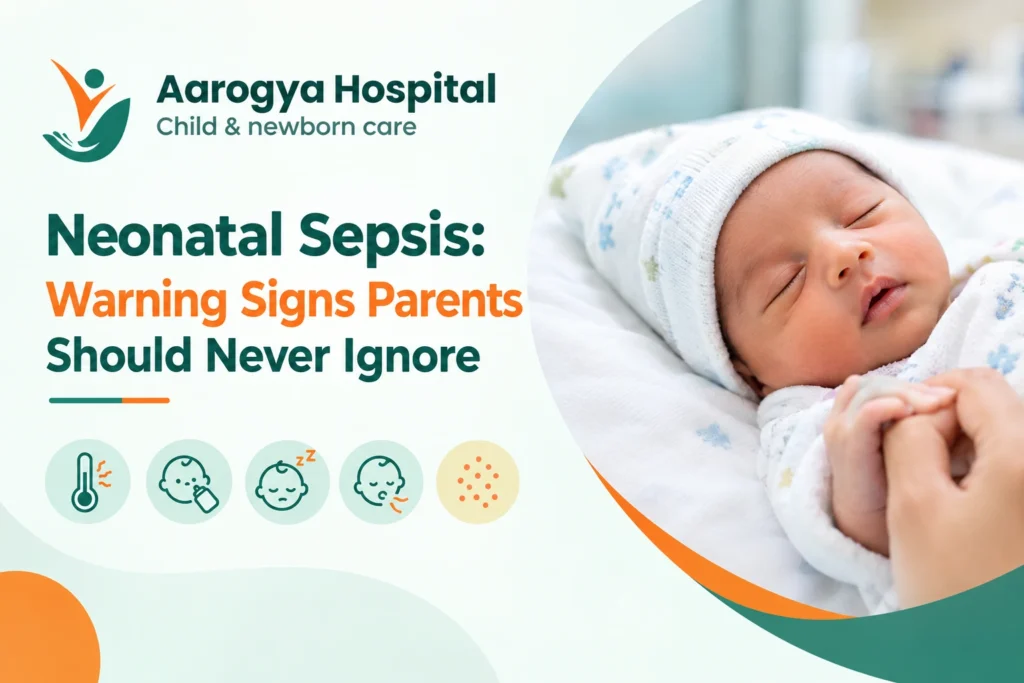
Neonatal Sepsis Warning Signs Parents Should Never Ignore

Newborn babies need special care. Their bodies are still growing, and their immune systems are not fully developed. Therefore, they can get infections easily. One serious infection is called neonatal sepsis. It can make a newborn very sick within a short time. Without quick treatment, it can become life-threatening. Parents should know the warning signs of neonatal sepsis. Early medical care can help protect a baby’s health. At Aarogya Hospital, Chandigarh, parents can learn more about newborn health and the importance of early treatment. What Is Neonatal Sepsis? Neonatal sepsis is a serious infection in a baby during the first 28 days of life. It happens when harmful germs enter the baby’s body and cause an infection. Bacteria are a common cause, but other germs can also cause it. The infection can affect important parts of the body, including the lungs and brain. Newborn babies may find it harder to fight infections because their immune systems are still developing. Early diagnosis and quick treatment are very important. What Are the Warning Signs of Neonatal Sepsis? The signs of neonatal sepsis may be hard to notice at first. Sometimes, a baby may simply drink less milk or sleep more than usual. However, parents should never ignore these changes. 1. Poor Feeding or Refusing Milk Newborn babies need milk regularly. However, a sick baby may not feed as usual. Watch for these signs: Your baby refuses breast milk or formula. Baby drinks much less milk than usual. Your baby has trouble sucking. Too weak or sleepy to feed. If your baby suddenly feeds less, seek urgent medical help. 2. Fever or Low Body Temperature A change in body temperature can be a sign of infection. Your baby may have a temperature of 38°C or higher. However, some babies with an infection may have a body temperature that is too low. Therefore, do not assume your baby is healthy just because there is no fever. Important: A temperature of 38°C or higher in a newborn needs immediate medical attention. Do not wait for other signs to appear. 3. Fast or Difficult Breathing A serious infection can affect your baby’s breathing. Look for these warning signs: Your baby breathes faster than usual. Your baby makes grunting sounds while breathing. The skin pulls inward around the ribs. Your baby has pauses in breathing. Your baby’s lips, tongue, or skin look blue or grey. If your baby has trouble breathing, seek emergency medical care immediately. 4. Unusual Sleepiness or Less Movement Newborn babies sleep a lot. However, unusual sleepiness can be a warning sign. A sick baby may: Be difficult to wake. Sleep through feeding times. Move less than usual. Feel weak or floppy. Cry very softly. Respond less to touch or sound. If your baby is difficult to wake or does not respond normally, seek emergency medical help. 5. Changes in Skin Colour Changes in your baby’s skin colour can be another warning sign. Your baby may look unusually pale, grey, or blue. The skin may also look patchy. Some babies develop yellow skin or yellow eyes. This is called jaundice. Jaundice can happen for different reasons. However, if your baby also feeds poorly, seems very sleepy, or looks unwell, seek prompt medical care. 6. Vomiting or a Swollen Tummy Some babies bring up a little milk after feeding. This can be normal. However, repeated vomiting or a swollen tummy may be a sign of a serious problem. Watch for these signs: Your baby vomits again and again. Baby vomits green fluid. Tummy looks swollen or feels hard. Your baby vomits and refuses milk. You notice blood in the vomit or stool. Seek urgent medical help if these signs appear, especially if your baby seems unwell. 7. Fewer Wet Nappies Wet nappies help parents check whether their baby is getting enough milk. However, a sick baby may pass less urine than usual. This can happen when the baby drinks less milk or becomes seriously ill. Pay attention if your baby has fewer wet nappies than usual. If your baby also feeds poorly or seems weak, seek urgent medical advice. 8. Seizures or Unusual Movements In severe cases, neonatal sepsis can affect the brain. Your baby may have a seizure or repeated unusual jerking movements. Your baby may also become less responsive. A seizure, unresponsiveness, or difficulty waking is a medical emergency. Seek emergency care immediately. Which Babies Have a Higher Risk of Neonatal Sepsis? Any newborn can develop neonatal sepsis. However, some babies have a higher risk. These include: Babies born before 37 weeks of pregnancy. born with low birth weight. Whose mothers had certain infections during pregnancy or labour. Mothers had a fever around delivery. Need intensive care or certain medical procedures. However, even a healthy-looking newborn can develop an infection. Therefore, parents should watch for warning signs in every baby. What Causes Neonatal Sepsis? Neonatal sepsis happens when harmful germs cause an infection in a newborn’s body. The infection may start before birth, during delivery, or after birth. Doctors may divide neonatal sepsis into two types: Early-onset sepsis: The infection develops soon after birth. Late-onset sepsis: The infection develops later in the newborn period. The timing used for these groups can vary between hospitals. Possible causes include: Germs passing from the mother to the baby. An infection developing during or after birth. Contact with germs through unclean hands or equipment. Some infections linked to hospital care. Washing hands and keeping feeding equipment clean can help lower the risk of infection. However, not all infections can be prevented. How Do Doctors Diagnose Neonatal Sepsis? Doctors check your baby’s symptoms, medical history, and general health. They may also perform tests to look for an infection. These tests may include: Blood tests: These help doctors look for signs of infection. Blood culture: This test helps find germs in the blood. Urine tests: These help check for a urine infection. Spinal fluid test: Doctors may test the fluid around the brain and spinal cord if needed. […]

Low birth weight baby care
BLOG

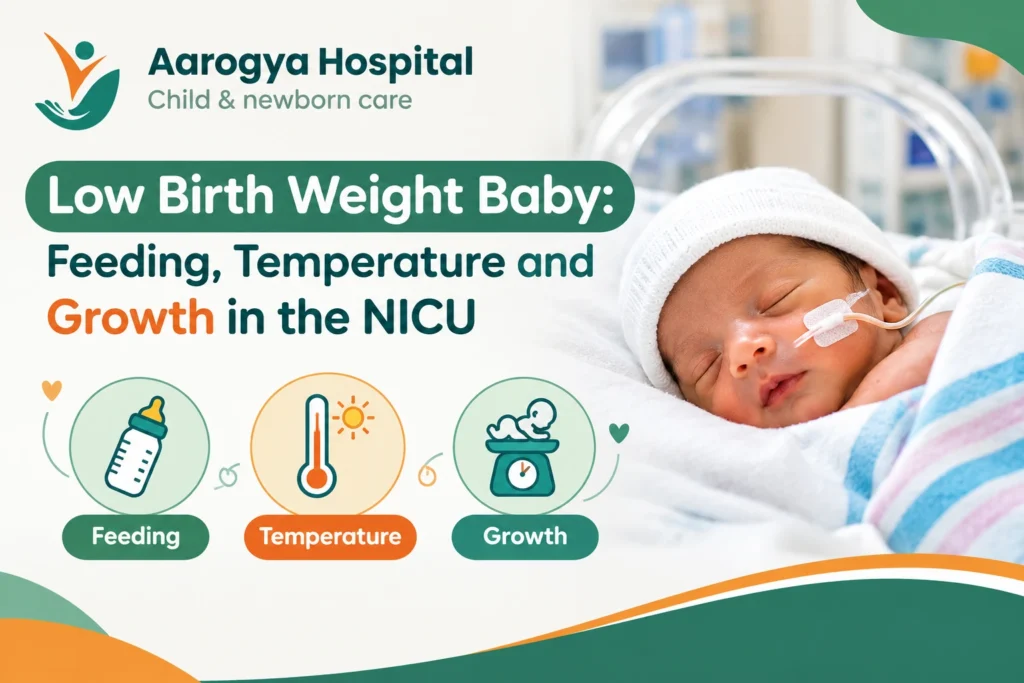
Low Birth Weight Baby: Feeding, Temperature and Growth in the NICU

A low birth weight baby needs extra care to grow and stay healthy. These babies may need help with feeding, keeping warm, and gaining weight. Therefore, some babies need care in a Neonatal Intensive Care Unit (NICU). At Aarogya Hospital in Chandigarh, doctors check each baby’s health, feeding, body temperature, and growth. The care plan depends on the baby’s weight at birth, weeks of pregnancy, and medical needs. What Is a Low Birth Weight Baby? A low birth weight baby is a newborn who weighs less than 2,500 grams (2.5 kg) at birth. This applies even if the baby is born at full term. There are several reasons why a baby may have a low birth weight. For example, the baby may be born early or may not grow well inside the womb. Common causes include: Birth before 37 weeks of pregnancy Slow growth inside the womb Problems with the placenta Certain health problems in the mother Pregnancy with twins or triplets However, not every low birth weight baby needs NICU care. Doctors check the baby’s breathing, feeding, temperature, blood sugar, and overall health before deciding on the right care. Why Does a Low Birth Weight Baby Need NICU Care? Low birth weight babies may need more time to adjust to life outside the womb. They may find it difficult to stay warm, feed properly, or maintain normal blood sugar levels. Therefore, doctors may recommend NICU care if the baby needs extra monitoring or treatment. NICU care may include: Checking breathing and heart rate Keeping the baby warm Helping with breast milk feeding Checking blood sugar levels Monitoring weight gain and growth Finding and treating health problems Some babies need only a short period of monitoring. Others may need more specialised care, depending on their health. 1. Feeding a Low Birth Weight Baby in the NICU Feeding is an important part of caring for a low birth weight baby. Proper nutrition helps the baby grow, develop, and recover. However, some babies may be too small or weak to breastfeed properly. This is more common in babies born early. Breast Milk for Low Birth Weight Babies Mother’s breast milk is usually the preferred food for newborns, including premature and low birth weight babies. It provides important nutrients that help the baby grow. It also contains protective factors that help the baby fight infections. If the baby cannot breastfeed directly, the mother can express her breast milk. The NICU team will decide how to feed the baby safely. Feeding Methods in the NICU The feeding method depends on the baby’s age, health, and ability to feed. Common feeding methods include: Direct breastfeeding: The baby feeds directly from the mother’s breast when they can suck, swallow, and breathe safely. Expressed breast milk: The baby receives the mother’s milk without feeding directly from the breast. Tube feeding: A small tube carries milk into the baby’s stomach when they cannot feed safely by mouth. Nutrition through a vein: In some cases, nutrients are give through a vein when milk feeding is not enough or is not yet possible. Some premature babies also need extra nutrients to support healthy growth. Doctors may add special nutrients to breast milk when needed. How Often Should a Low Birth Weight Baby Be Fed? Feeding times depend on the baby’s weight, age, health, and feeding method. Some babies need small feeds more often. Others may need feeding through a tube until they can feed by mouth. Therefore, parents should follow the feeding plan given by the NICU team. Every baby has different feeding needs. 2. Keeping a Low Birth Weight Baby Warm in the NICU Low birth weight babies can lose body heat quickly. This is because they have less body fat and may find it difficult to control their body temperature. Therefore, keeping the baby warm is an important part of NICU care. Why Is Keeping the Baby Warm Important? A baby’s body uses energy to stay warm. If the baby becomes too cold, the body uses more energy and oxygen to produce heat. As a result, being too cold can affect blood sugar, breathing, and overall health. Keeping the baby warm helps save energy for growth and recovery. How Do Doctors Keep Babies Warm in the NICU? Doctors and nurses use different methods to keep babies warm, including: Incubators: These provide a warm, controlled space for the baby. Radiant warmers: These keep the baby warm while doctors provide treatment. Temperature checks: Nurses check the baby’s temperature regularly and adjust care when needed. Kangaroo mother care: This involves placing the baby against a parent’s bare chest for skin-to-skin contact. It can help keep the baby warm and support breastfeeding when the baby is stable enough. The NICU team checks the baby’s temperature regularly to make sure it stays within the recommended range. Parents should never use heating pads or hot water bottles to warm a newborn without medical advice. 3. Monitoring Growth and Weight Gain in the NICU Weight gain helps doctors understand how well a low birth weight baby is growing. However, weight is not the only thing they check. Doctors also measure the baby’s length and head size. They check feeding, hydration, and overall health, too. How Do Doctors Check Weight Gain? The NICU team weighs the baby regularly. How often they do this depends on the baby’s condition and the hospital’s care plan. Some weight loss during the first few days after birth can be normal. However, low birth weight and premature babies need careful monitoring. As feeding improves, doctors check whether the baby is gaining enough weight for their age and health needs. What Helps a Low Birth Weight Baby Gain Weight? Several things help a baby grow well: Enough breast milk or prescribed nutrition Feeding at the recommended times Keeping the baby at a stable temperature Treating infections and other health problems Regular weight and growth checks Support for breastfeeding and expressing milk Some babies need extra nutrition because they require more support […]

Inhaled nitric oxide for newborns
BLOG

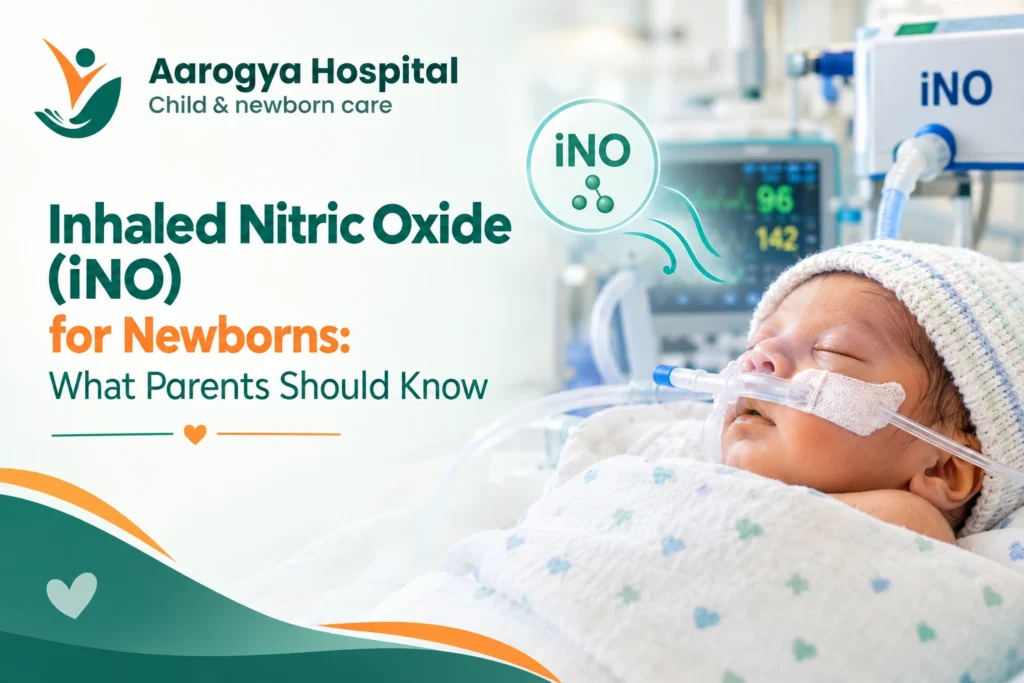
Inhaled Nitric Oxide (iNO) for Newborns: What Parents Should Know

When a newborn has trouble breathing, parents may feel worried and confused. Some babies need extra help to get enough oxygen. In certain cases, doctors may use a treatment called inhaled nitric oxide (iNO). This treatment helps improve blood flow through the lungs. It can help some newborns who have serious breathing problems. However, iNO is not need by every baby. Doctors decide whether it is suitable after checking the baby’s condition. In this guide, we explain what inhale nitric oxide is, how it works, and when doctors may use it. What Is Inhale Nitric Oxide (iNO) for Newborns? Inhaled nitric oxide (iNO) is a special gas use to treat certain newborns with serious breathing problems. It helps relax the blood vessels inside the lungs. As a result, blood can flow through the lungs more easily and collect oxygen. Doctors usually consider iNO when a newborn has a condition called persistent pulmonary hypertension of the newborn (PPHN). In PPHN, the blood vessels in the lungs remain too tight after birth. This makes it harder for blood to collect enough oxygen. As a result, the baby may have low oxygen levels even when receiving breathing support. Inhaled nitric oxide may help improve oxygen levels in selected babies. When Do Newborns Need Inhaled Nitric Oxide? Doctors may recommend iNO when a newborn has serious breathing problems and low oxygen levels. Some common situations include: Persistent pulmonary hypertension of the newborn (PPHN): Blood vessels in the lungs remain tight, making it difficult for blood to collect oxygen. Meconium aspiration syndrome: A baby breathes in meconium, or the first stool, before or during birth. This can affect breathing. Pneumonia or lung infection: A serious infection can affect the baby’s breathing and oxygen levels. Other serious breathing conditions: Some babies develop low oxygen levels because of problems affecting their lungs and blood flow. However, not every baby with these conditions needs iNO. Doctors assess the baby’s oxygen levels, test results, and response to other treatments before making a decision. How Does Inhaled Nitric Oxide Work? Inhaled nitric oxide works mainly by relaxing the blood vessels in the lungs. Here is how it may help a newborn: The baby receives the gas: iNO is deliver through special breathing equipment. Blood vessels in the lungs relax: This allows blood to move through the lungs more easily. Blood collects oxygen: Better blood flow may help the baby receive more oxygen. Doctors check the response: The medical team monitors the baby’s oxygen levels and overall condition. The main aim is to improve oxygen levels and reduce strain on the baby’s body. iNO does not directly treat every cause of breathing difficulty. The baby may also need other treatments, depending on the underlying problem. How Is iNO Give to Newborns? Inhaled nitric oxide is give through special medical equipment. It is usually deliver with breathing support, such as a ventilator. The gas enters the baby’s lungs during breathing. Doctors control the amount of gas given to the baby. During treatment, the medical team carefully checks: Oxygen levels and breathing. Heart rate and blood pressure. Blood test results, when needed. The baby’s response to treatment. Possible side effects. Doctors may adjust the treatment based on these checks. The amount of iNO is reduce gradually when the baby improves. Stopping it too quickly can cause oxygen levels to fall. Therefore, the medical team follows a planned process. Is Inhale Nitric Oxide Safe for Newborns? iNO can be helpful when used for the right medical reason. However, like other treatments, it may cause side effects. Possible risks include: Changes in blood pressure. Increased levels of methemoglobin, which can reduce the blood’s ability to carry oxygen. Increased nitrogen dioxide levels, which may harm the lungs. A drop in oxygen levels if treatment is stop too quickly. For these reasons, iNO must be give under specialist medical supervision. Doctors use monitoring equipment and blood tests when needed to check for side effects. Parents should not worry about managing the gas or its dose themselves. The medical team takes responsibility for giving the treatment safely. How Long Does a Newborn Need iNO Treatment? The treatment time varies from baby to baby. Some newborns improve within a short period. Others may need treatment for longer, depending on their condition. Doctors consider several factors, including: The cause of the breathing problem. The baby’s oxygen levels. The response to iNO. The need for a ventilator or other breathing support. Results of medical tests. When the baby improves, doctors gradually reduce the gas and check whether oxygen levels remain stable. There is no fixed treatment time for every newborn. The care plan depends on the baby’s progress. What Is the Difference Between iNO and a Ventilator? Both treatments may help newborns with serious breathing problems. However, they work in different ways. A ventilator helps move air into and out of the lungs. It supports breathing when a baby cannot breathe well enough without assistance. Inhaled nitric oxide is a gas that helps relax blood vessels in the lungs. It may improve blood flow and oxygen levels in babies with certain conditions, especially PPHN. Some newborns need both treatments at the same time. Doctors decide which support is suitable based on the baby’s condition and response to treatment. What Should Parents Ask the Doctor About iNO? It is natural for parents to have questions when their newborn needs special breathing support. You can ask the doctor: Why does my baby need iNO? What is causing my baby’s low oxygen levels? How will you check if the treatment is working? What side effects should we know about? Will my baby need a ventilator or other treatment? How will you decide when to reduce or stop iNO? What other care may be need during recovery? These questions can help you understand your baby’s treatment plan. The medical team can explain the baby’s condition, the expected benefits, and any possible risks. When Should Parents Seek Emergency Medical Care? Breathing problems in newborns need […]

Newborn breathing support with CPAP, HFNC and ventilator care in the NICU.
BLOG

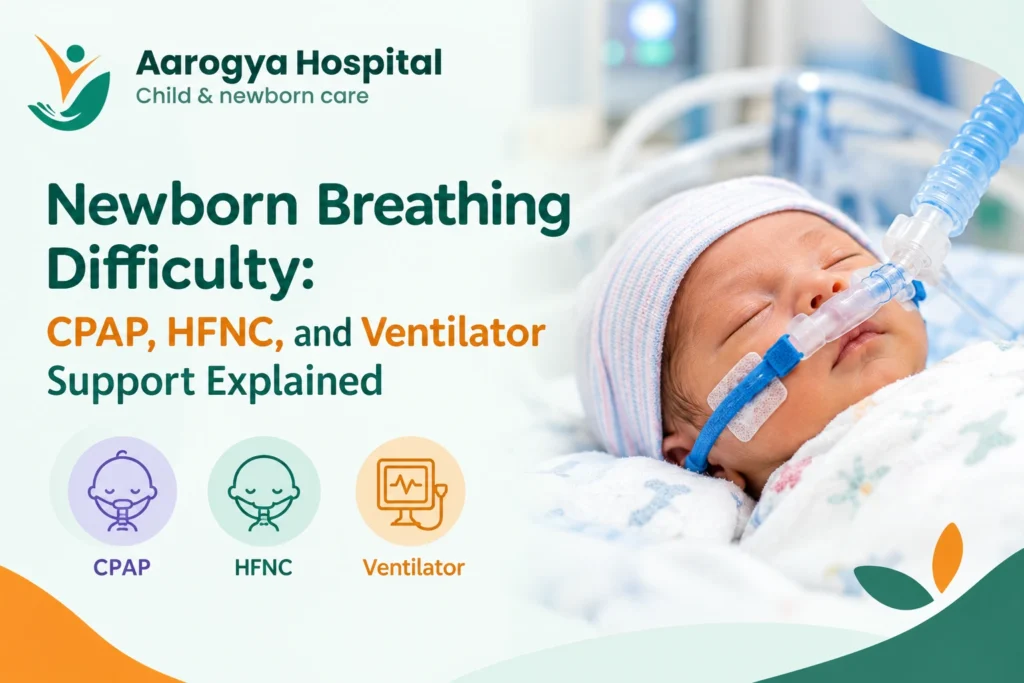
Newborn Breathing Difficulty: CPAP, HFNC, and Ventilator Support Explained

Newborn babies may sometimes have trouble breathing, especially if they are born early. Their lungs may not be fully developed yet. As a result, they may need extra help to breathe after birth. In such cases, doctors may provide breathing support to help the baby get enough oxygen. At Aarogya Hospital Chandigarh, knowing the causes of newborn breathing problems and the available treatments can help parents understand their baby’s care. Depending on the baby’s condition, doctors may use CPAP, HFNC, or a ventilator to help the baby breathe. What Causes Breathing Difficulty in Newborn Babies? Breathing problems can develop shortly after birth or during the first few days of life. Some common causes include: Premature birth: A premature baby’s lungs may not produce enough surfactant, a substance that helps keep the air sacs open. Respiratory distress syndrome (RDS): This condition occurs when a baby’s lungs are not mature enough to work properly. Transient tachypnoea of the newborn (TTN): Extra fluid in the lungs can cause fast breathing after birth. Infections: Conditions such as pneumonia or newborn sepsis may affect breathing. Meconium aspiration: A baby may breathe in meconium-stained fluid before or during birth. Other medical conditions: Some heart or lung problems can also cause breathing difficulties. Newborn breathing problems can become serious very quickly. Therefore, early medical check-ups are important to help doctors find the cause and provide the right treatment on time. Signs of Breathing Difficulty in Newborns Parents and caregivers should look for these warning signs: Fast or difficult breathing Grunting sounds with each breath Nostrils widening while breathing Skin pulling in around the ribs or below the chest Bluish or grey lips, tongue, or skin Pauses in breathing Difficulty feeding because of breathing problems Unusual sleepiness or reduced responsiveness Get emergency medical help immediately if your newborn has blue or grey lips, struggles to breathe, repeatedly stops breathing, or does not respond. Do not wait for these signs to go away on their own. What Is CPAP for Newborn Babies? CPAP stands for Continuous Positive Airway Pressure. It gently pushes air through small nasal tubes or a mask to help keep the baby’s airways open. Doctors can adjust the oxygen level according to the baby’s needs. CPAP helps keep a baby’s airways and tiny air sacs in the lungs open. This makes breathing easier and reduces the effort needed to breathe. When Is CPAP Use? Doctors may recommend CPAP for babies who: Have respiratory distress but can breathe on their own. Are born prematurely and need help keeping their lungs open. Have certain types of respiratory distress syndrome. Need additional breathing support after birth. CPAP does not breathe completely for the baby. Instead, it supports the baby’s own breathing. What Is HFNC for Newborn Babies? HFNC stands for High-Flow Nasal Cannula. It delivers warm, moist air or a mix of air and oxygen through small tubes placed in the baby’s nose. This helps support the baby’s breathing. HFNC helps babies breathe more comfortably and reduces the effort needed to breathe. It may also help keep the airways open, but its effect is less reliable than CPAP. When Is HFNC Use? Doctors may use HFNC for some newborns who need help breathing. The choice depends on the baby’s age, health problem, and overall condition. It may be use for: Mild to moderate breathing difficulties in suitable babies. Some babies who are being step down from stronger respiratory support. Selected cases where a less intrusive breathing support method is appropriate. However, HFNC is not right for every newborn. Some premature babies may need CPAP first, especially if they have a higher risk of breathing problems. Doctors will closely monitor the baby and change the treatment if needed. What Is a Ventilator for Newborn Babies? A mechanical ventilator is a machine that helps a baby breathe when they cannot breathe well enough on their own. Depending on the baby’s condition, doctors may place a breathing tube into the windpipe. The ventilator then helps the baby breathe by giving controlled breaths or supporting their own breathing. Some special breathing methods can also help without using a breathing tube. When Does a Newborn Need Ventilator Support? Doctors may recommend mechanical ventilation when a baby: Has severe respiratory distress. Cannot maintain adequate oxygen or carbon dioxide levels. Has repeated or prolonged pauses in breathing. Has severe lung disease or certain complications of prematurity. Needs breathing support during critical illness. A neonatal care team closely monitors babies who need a ventilator. Doctors adjust the machine’s settings based on the baby’s breathing, oxygen levels, blood test results, and overall health. CPAP vs HFNC vs Ventilator: What Is the Difference? Although all three methods support breathing, they work differently. Feature CPAP HFNC Mechanical Ventilator Main purpose Keeps airways and air sacs open Delivers warmed, humidified high-flow gas Provides or assists breaths How it is deliver Usually through nasal prongs or a mask Through small nasal tubes Often through a breathing tube in the windpipe Baby’s own breathing Baby breathes independently Baby breathes independently Machine assists or controls breathing as needed Typical use Respiratory distress requiring continuous pressure Selected babies needing non-invasive support Severe breathing problems or inadequate ventilation Monitoring Close neonatal monitoring Close neonatal monitoring Intensive monitoring and adjustment Important: No single breathing support method is right for every newborn. Doctors choose the best option based on how early the baby was born, the breathing problem, oxygen needs, breathing effort, and response to treatment. How Do Doctors Decide Which Breathing Support a Baby Needs? The neonatal team assesses several factors before choosing a treatment. 1. Breathing Rate and Effort Doctors check the baby’s breathing rate and look for signs of breathing difficulty, such as the chest pulling inward or grunting sounds. 2. Oxygen Levels A pulse oximeter checks the baby’s oxygen levels. Doctors may also do blood tests to check oxygen and carbon dioxide levels in the blood. 3. Gestational Age and Birth Weight Premature and low-birth-weight babies may have less mature lungs and need […]

Premature baby receiving specialised care inside a neonatal intensive care unit (NICU)
BLOG

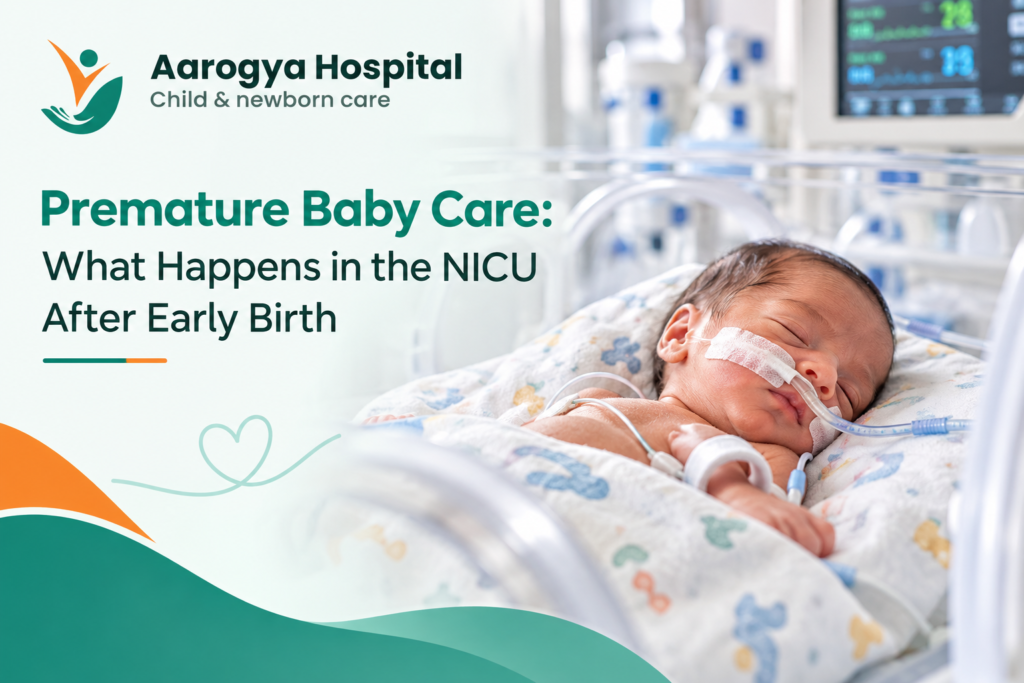
Premature Baby Care: What Happens in the NICU After Early Birth?

A baby born before 37 weeks of pregnancy is call premature baby. These babies may need extra care because their organs are not fully develop. Therefore, doctors may recommend keeping them in a Neonatal Intensive Care Unit (NICU) for special medical care. An early birth can be stressful and emotional for parents. However, learning about premature baby care can help you feel more prepared. In this guide, we explain what happens in the NICU, how doctors care for premature babies, and what parents can expect during their baby’s hospital stay. What Is a NICU and Why Do Premature Babies Need It? A Neonatal Intensive Care Unit (NICU) is a special hospital unit for newborn babies who need close monitoring and extra medical care. Premature babies may need NICU care for several reasons: Breathing difficulties: Their lungs may not be fully develop, making breathing harder. Low birth weight: They may need extra help with feeding and gaining weight. Temperature control: They may find it difficult to keep their body warm. Feeding problems: They may not yet be strong enough to suck and swallow properly. Risk of infection: Their immune systems are still developing, so they may be more likely to get infections. The care a baby needs depends on how many weeks early they were born, their birth weight, their health, and how well they are growing. What Happens in the NICU After a Premature Baby Is Born? Every premature baby needs different care. Therefore, the NICU team makes a care plan based on the baby’s health and needs. 1. Initial Assessment and Monitoring After birth, doctors check the baby’s breathing, heartbeat, body temperature, and overall health. They may also check the baby’s blood sugar and oxygen levels. Special machines help doctors and nurses keep a close eye on the baby’s health. They can quickly provide extra care if the baby’s condition changes. 2. Support for Breathing Some premature babies need help breathing because their lungs are not fully develop. Depending on the baby’s health, doctors may provide extra oxygen to help them breathe. They may use CPAP, which helps keep the airways open, or a ventilator to support breathing. In some cases, doctors may recommend other advanced breathing treatments. The medical team regularly reviews the baby’s breathing and adjusts support as needed. 3. Keeping the Baby Warm Premature babies have less body fat, so they can lose body heat quickly. Therefore, keeping them warm and maintaining a steady body temperature is an important part of NICU care. Doctors may place the baby in an incubator or under a special warmer to keep them warm. This helps maintain the right body temperature while the baby grows stronger. 4. Feeding and Nutrition Support Some premature babies may not be able to feed from the breast or bottle at first. They may need extra help to get enough nutrition to grow and develop properly. Depending on the baby’s health, doctors may give expressed breast milk through a feeding tube. If the baby cannot get enough milk, they may provide nutrients through a vein for some time. Breast milk is usually encourage when possible because it provides important nutrients and helps protect the baby from infections. The NICU team can guide parents on how to express and store breast milk safely. 5. Preventing and Treating Infections Premature babies have a higher risk of infections. Therefore, the NICU team follows strict hygiene practices and checks babies regularly for signs of illness. If doctors suspect an infection, they may recommend blood tests or other checks. They may also give antibiotics if needed to treat the infection. Parents and visitors should wash or clean their hands properly and follow the NICU’s rules to help protect babies from infections. 6. Monitoring Growth and Development The NICU team regularly checks the baby’s weight, feeding, body temperature, breathing, and other important signs to make sure the baby is doing well. Some babies may need extra health checks depending on how early they were born and their medical condition. These may include eye tests, hearing tests, or brain scans if needed. The aim is to help the baby grow well and find and treat any health problems early. Advanced NICU Care for Premature Babies Some premature babies need special medical care, especially if they are born very early or have serious health problems. Depending on the baby’s needs and available facilities, advanced NICU care may include: Breathing support: Helps babies who have difficulty breathing. Continuous monitoring: Tracks the baby’s vital signs and helps doctors notice changes. aEEG/CFM monitoring: Helps doctors check brain activity in selected babies. Therapeutic hypothermia: Control cooling may be use for eligible newborns with certain types of brain injury cause by a lack of oxygen. Specialist assessment: Neonatologists and other specialists check babies who need extra medical care. Not every premature baby needs these treatments. Doctors decide which tests and treatments are need base on the baby’s health. How Long Does a Premature Baby Stay in the NICU? Every premature baby needs a different length of stay in the NICU. It depends on how early the baby was born, their birth weight, breathing, feeding, and overall health. Some babies need to stay in the NICU for only a short time, while others may need care for several weeks or longer. Before discharge, the medical team generally checks whether the baby can: Maintain a stable body temperature. Breathe safely without the level of support they no longer need. Feed adequately and show appropriate growth. Remain medically stable with a suitable follow-up plan. Every baby grows and improves at their own pace. The NICU team will explain when your baby can go home and how to care for them safely. How Can Parents Support Their Premature Baby in the NICU? Parents play an important role in their baby’s care. The NICU may feel new and unfamiliar, but small steps can help parents stay involved in their baby’s care. Ask questions: Speak with the doctors and nurses about your baby’s […]

Aarogya Support 1

Aarogya Hospital Chandigarh

Doctor Avatar
Welcome to Aarogya Hospital (Near PGI Chandigarh) 🏥
I'm your assistant here to help with your medical enquiry.
Doctor Avatar
Which of our services or departments are you interested in?